Originally published in 1948, this powerful novel follows a U.S. Army infantry battalion in Europe through the last months of the Second World War—through the Battle of the Bulge, the Allied sweep across Germany, and the discovery of the Nazi death camps. Jacob Levy, a young soldier from St. Louis, has never given much thought to politics, world affairs, or his own Jewish heritage, but after the liberation of Dachau, he confronts the horror of the Holocaust and takes his own violent revenge. Jolted into a new understanding of humanity’s connectedness, he comes to terms with his own Jewish identity and grapples with questions of individual moral responsibility that are still contemporary fifty years later. In her afterword, Martha Gellhorn traces the roots of the novel in her own experience as a war correspondent who first heard of the Nazi concentration camps during the Spanish Civil War and herself got to Dachau a week after American soldiers discovered the camp at the end of a village street.
This volume collects twenty-three interviews given over the course of the last two decades by Jacques Derrida. It illustrates the extraordinary breadth of his concerns, touching upon such subjects as the teaching of philosophy, sexual difference and feminine identity, the media, AIDS, language and translation, nationalism, politics, and Derrida's early life and the history of his writings. Often, as in the interview on Heidegger, or that on drugs, or on the nature of poetry, these interviews offer not only an introduction to other discussions, but something available nowhere else in his work. When did feminist discourse become an indispensable consideration for deconstruction? What was the impact on Derrida's work of his being an Algerian Jew growing up during World War II? Is there an ineradicable gap between language-based attitude such as those found in a deconstruction and subjectivity-oriented critical models such as those developed by Foucault and Lacan? Such questions as these are answered with great thoughtfulness and intensity. Derrida's oral style is patient, generous, and helpful. His tone varies with the questioners and the subject matter—militant, playful, strategic, impassioned, analytic: difference in modulation can sometimes be heard within the same dialogue. The informality of the interview process frequently leads to the most succinct and lucid explications to be found of many of the most important and influential aspects of Derrida's thought. Sixteen of the interviews appear here for the first time in English, including an interview, conducted especially for this volume, concerning the recent exchange of letters in the New York Review of Books.
This volume collects twenty-three interviews given over the course of the last two decades by Jacques Derrida. It illustrates the extraordinary breadth of his concerns, touching upon such subjects as the teaching of philosophy, sexual difference and feminine identity, the media, AIDS, language and translation, nationalism, politics, and Derrida's early life and the history of his writings. Often, as in the interview on Heidegger, or that on drugs, or on the nature of poetry, these interviews offer not only an introduction to other discussions, but something available nowhere else in his work. When did feminist discourse become an indispensable consideration for deconstruction? What was the impact on Derrida's work of his being an Algerian Jew growing up during World War II? Is there an ineradicable gap between language-based attitude such as those found in a deconstruction and subjectivity-oriented critical models such as those developed by Foucault and Lacan? Such questions as these are answered with great thoughtfulness and intensity. Derrida's oral style is patient, generous, and helpful. His tone varies with the questioners and the subject matter—militant, playful, strategic, impassioned, analytic: difference in modulation can sometimes be heard within the same dialogue. The informality of the interview process frequently leads to the most succinct and lucid explications to be found of many of the most important and influential aspects of Derrida's thought. Sixteen of the interviews appear here for the first time in English, including an interview, conducted especially for this volume, concerning the recent exchange of letters in the New York Review of Books.
This book is about learning and ethnography in the context of technologies. Simultaneously, it portrays young people's "thinking attitudes" in computer-based learning environments, and it describes how the practice of ethnography is changing in a digital world. The author likens this form of interaction to "the double helix," where learning and ethnography are intertwined to tell an emergent story about partnerships with technology. Two school computer cultures were videotaped for this study. Separated not only by geography -- one school is on the east coast of New England and the other on the west coast of British Columbia on Vancouver Island -- they are also separated in other ways: ethnic make-up and inner-city vs. rural settings to name only two. Yet these two schools are joined by a strong thread: a change in their respective cultures with the advent of intensive computer-use on the part of the students. Both school communities have watched their young people gain literacy and competence, and their tools have changed from pen to computer, video camera, multimedia and the Internet. Perhaps most striking is that the way they think of themselves as learners has also changed: they see themselves as an active participant, in the pilot's seat or director's chair, as they chart new connections between diverse and often unpredictable worlds of knowledge.
This book is about learning and ethnography in the context of technologies. Simultaneously, it portrays young people's "thinking attitudes" in computer-based learning environments, and it describes how the practice of ethnography is changing in a digital world. The author likens this form of interaction to "the double helix," where learning and ethnography are intertwined to tell an emergent story about partnerships with technology. Two school computer cultures were videotaped for this study. Separated not only by geography -- one school is on the east coast of New England and the other on the west coast of British Columbia on Vancouver Island -- they are also separated in other ways: ethnic make-up and inner-city vs. rural settings to name only two. Yet these two schools are joined by a strong thread: a change in their respective cultures with the advent of intensive computer-use on the part of the students. Both school communities have watched their young people gain literacy and competence, and their tools have changed from pen to computer, video camera, multimedia and the Internet. Perhaps most striking is that the way they think of themselves as learners has also changed: they see themselves as an active participant, in the pilot's seat or director's chair, as they chart new connections between diverse and often unpredictable worlds of knowledge.
Since the late 1960s, when he introduced Theodor Adorno’s work on literature and cultural critique to an English-speaking public, Samuel Weber has stimulated the discovery of new and unexpected links within a broad spectrum of humanistic disciplines, including critical theory and psychoanalysis, media studies and literary analysis, continental philosophy and theater studies. The international group of scholars who contribute to Points of Departure demonstrate the persistent fecundity of Weber’s work. Centered around his essay on the Ghost of Hamlet, as reflected in the writings of Walter Benjamin and Carl Schmitt, the volume is broadly divided into explorations of the nature of spectrality, on the one hand, and the dynamics of reading, on the other. Each of the twelve essays thus takes its point of departure from “Weber’s singular path between languages, cultures, and traditions”—to quote Jacques Derrida, whose fictive “interview with a passing journalist” is published here for the first time.
The new book spanning the genres of poetry, fiction, and theater, by the highly-acclaimed Thalia Field. The wonderful writings in Thalia Field's long-awaited new book Point and Line deny categorization, they are "nicheless." Perhaps describable as "epic poetries," these riveting pieces represent a confluence of genres in which Thalia Field has been involved over the course of her career: fiction, theater, and poetry. Written from a constructivist, post-genre sensibility, they elude classification, and present the author's concern with clarity in a world that resists it. For instance, in "Hours" and "Setting, the Table," Field uses indeterminate performance techniques to emphasize the categorical/conceptual nature of thought. Other pieces use generative schemes, portraits of mental shapes, which create meaning out of noise. Visually, each chapter is captivating, showing the author's need for shapes and colors in her work, her fascination with the contours of speech.
Point of Sale offers the first significant attempt to center media retail as a vital component in the study of popular culture. It brings together fifteen essays by top media scholars with their fingers on the pulse of both the changes that foreground retail in a digital age and the history that has made retail a fundamental part of the culture industries. The book reveals why retail matters as a site of transactional significance to industries as well as a crucial locus of meaning and interactional participation for consumers. In addition to examining how industries connect books, DVDs, video games, lifestyle products, toys, and more to consumers, it also interrogates the changes in media circulation driven by the collision of digital platforms with existing retail institutions. By grappling with the contexts in which we buy media, Point of Sale uncovers the underlying tensions that define the contemporary culture industries.
Point of Sale offers the first significant attempt to center media retail as a vital component in the study of popular culture. It brings together fifteen essays by top media scholars with their fingers on the pulse of both the changes that foreground retail in a digital age and the history that has made retail a fundamental part of the culture industries. The book reveals why retail matters as a site of transactional significance to industries as well as a crucial locus of meaning and interactional participation for consumers. In addition to examining how industries connect books, DVDs, video games, lifestyle products, toys, and more to consumers, it also interrogates the changes in media circulation driven by the collision of digital platforms with existing retail institutions. By grappling with the contexts in which we buy media, Point of Sale uncovers the underlying tensions that define the contemporary culture industries.
"Whether responding to a CNN.com survey or voting for the NFL All-Pro team, computer users are becoming more and more comfortable with Internet polls. Computer use in the United States continues to grow—more than half of all American households now have a personal computer. The next question, then, becomes obvious. Should Americans be able to use the Internet in the most important polls of all? Some advocates of Internet voting argue that Americans are well suited to casting their ballots online in political elections. They are eager to make use of new technology, and they have relatively broad access to the Internet. Voting would become easier for people stuck at home, at the office, or on the road. Internet voting might encourage greater political participation among young adults, a group that stays away from the polling place in droves. It would hold special appeal for military personnel overseas, whose ability to vote is a growing concern. There are serious concerns, however, regarding computer security and voter fraud, unequal Internet access across socioeconomic lines (the ""digital divide""), and the civic consequences of moving elections away from schools and other polling places and into private homes and offices. After all, showing up to vote is the most public civic activity many Americans engage in, and it is often their only overt participation in the democratic process. In Point, Click, and Vote, voting experts Michael Alvarez and Thad Hall make a strong case for greater experimentation with Internet voting. In their words, ""There is no way to know whether any argument regarding Internet voting is accurate unless real Internet voting systems are tested, and they should be tested in small-scale, scientific trials so that their successes and failures can be evaluated."" In other words, you never know until you try, and it's time to try harder. The authors offer a realistic plan for putting pilot remote Internet voting programs into effect nationwide. Such programs would allow U.S. voters in selected areas to cast their ballots over any Internet connection; they would not even need to leave home. If these pilot programs are successful, the next step is to consider how they might be implemented on a larger scale in future elections. "
Recalls education and daily life at Point of Pines and also provides the background for the scientific papers that have resulted from the research that was undertaken there. Appendixes list contributions to Point of Pines archaeology, staff members and students, and institutions represented by attendees.
A masterwork of World War I short stories portraying the experiences of Marines in battle.Points of Honor: Short Stories of the Great War by a US Combat Marine is based on author Thomas Alexander Boyd’s personal experiences as an enlisted Marine. First published in 1925 and long out of print, this edition rescues from obscurity a vivid, kaleidoscopic vision of American soldiers, US Marines mostly, serving in a global conflict a century ago. It is a true forgotten masterpiece of World War I literature.The stories in Points of Honor deal almost entirely with Marines in the midst of battle—or faced with the consequences of military violence. The eleven stories in this collection offer a panoramic view of war experience and its aftermath, what Boyd described as “a mass of more human happenings.” The themes are often antiheroic: dehumanization, pettiness, betrayal by loved ones at home, and the cruelty of military justice. But Boyd’s vision also accommodates courage and loyalty. Like all great works of war literature, this collection underscores the central paradox of armed conflict—its ability to bring out both the best and worst in human beings.This reissue of Points of Honor is edited, annotated, and introduced by Steven Trout. Trout provides an overview of Thomas Boyd’s war experience and writing career and situates the stories within the broader context of World War I American literature.Points of Honor received strong reviews at the time of its initial publication and remains an overwhelming reading experience today. While each of the stories is a freestanding work of art, when read together they carry the force of a novel.
The book aims at presenting a detailed and mathematically rigorous exposition of the theory and applications of a class of point processes and piecewise deterministic p- cesses. The framework is suf?ciently general to unify the treatment of several classes of stochastic phenomena: point processes, Markov chains and other Markov processes in continuous time, semi-Markov processes, queueing and storage models, and li- lihood processes. There are applications to ?nance, insurance and risk, population models, survival analysis, and congestion models. A major aim has been to show the versatility of piecewise deterministic Markov processes for applications and to show how they may also become useful in areas where thus far they have not been much in evidence. Originally the plan was to develop a graduate text on marked point processes - dexed by time which would focus on probabilistic structure and be essentially se- contained. However, it soon became apparent that the discussion should naturally include a traditional class of continuous time stochastic processes constructed from certain marked point processes. This class consists of ‘piecewise deterministic p- cesses’; that is, processes with ?nitely many jumps on ?nite time intervals which, roughly speaking, develop deterministically between the random jump times. The - position starts with the point process theory and then uses this to treat the piecewise deterministic processes.
The golden age of radio is often recalled as a time when the medium unified the nation, when families gathered around the radios in homes across the country to listen to live, commercially sponsored network broadcasts. In Points on the Dial, Alexander Russo revises our understanding of radio’s past by revealing the hidden histories of production, distribution, and reception practices during this era, which extended from the 1920s into the 1950s. Russo brings to light a tiered broadcasting system with intermingling but distinct national, regional, and local programming forms, sponsorship patterns, and methods of program distribution. Examining a wide range of practices, including regional networking, sound-on-disc transcription, the use of station representatives, spot advertising, and programming aimed at homes with several radios, he not only recasts our understanding of the relationship between national networks and local stations but also charts the development of new ways of listening-often distractedly rather than attentively-that set the stage for radio in the second half of the twentieth century.
The golden age of radio is often recalled as a time when the medium unified the nation, when families gathered around the radios in homes across the country to listen to live, commercially sponsored network broadcasts. In Points on the Dial, Alexander Russo revises our understanding of radio’s past by revealing the hidden histories of production, distribution, and reception practices during this era, which extended from the 1920s into the 1950s. Russo brings to light a tiered broadcasting system with intermingling but distinct national, regional, and local programming forms, sponsorship patterns, and methods of program distribution. Examining a wide range of practices, including regional networking, sound-on-disc transcription, the use of station representatives, spot advertising, and programming aimed at homes with several radios, he not only recasts our understanding of the relationship between national networks and local stations but also charts the development of new ways of listening-often distractedly rather than attentively-that set the stage for radio in the second half of the twentieth century.
Investigations by Baire, Lebesgue, Hausdorff, Marczewski, and othes have culminated invarious schemes for classifying point sets. This important reference/text bringstogether in a single theoretical framework the properties common to these classifications.Providing a clear, thorough overview and analysis of the field, Point Set Theoryutilizes the axiomatically determined notion of a category base for extending generaltopological theorems to a higher level of abstraction ... axiomatically unifies analogiesbetween Baire category and Lebesgue measure . .. enhances understanding of thematerial with numerous examples and discussions of abstract concepts ... and more.Imparting a solid foundation for the modem theory of real functions and associated areas,this authoritative resource is a vital reference for set theorists, logicians, analysts, andresearch mathematicians involved in topology, measure theory, or real analysis. It is anideal text for graduate mathematics students in the above disciplines who havecompleted undergraduate courses in set theory and real analysis.
Maintaining the excellent features that made the first edition so popular, this outstanding reference/text presents the only comprehensive treatment of the theory of point processes and statistical inference for point processes-highlighting both pointprocesses on the real line and sp;,.tial point processes. Thoroughly updated and revised to reflect changes since publication of the firstedition, the expanded Second EdiLion now contains a better organized and easierto-understand treatment of stationary point processes ... expanded treatment ofthe multiplicative intensity model ... expanded treatment of survival analysis . ..broadened consideration of applications ... an expanded and extended bibliographywith over 1,000 references ... and more than 3('() end-of-chapter exercises.
Gold Medallion award-winning author, Carolyn Nystrom, uses intriguing stories, told in the first person, to bring to life the personality and God-given mission of this well-loved Bible character. By focusing on the godly trait in the character's life, the author highlights qualities that children can learn to imitate.
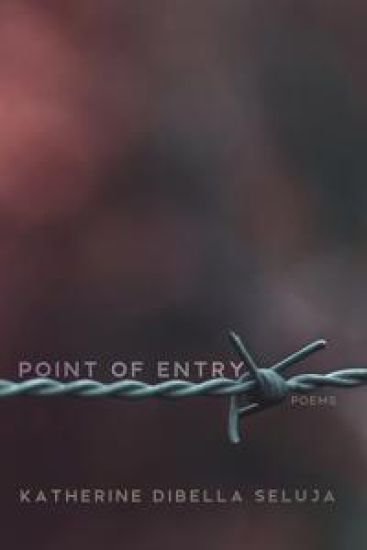
In this remarkable collection, Katherine DiBella Seluja explores issues surrounding human migration, juxtaposing poems about the current struggles along the US-Mexican border with her ancestors' experiences of migrating from Italy. Rich in sonic and sensory detail, these poems speak to the strength and resilience of those who leave their ancestral homes in search of safety and opportunities to thrive.
A new collection of unseen photographs of New York City's 1970s punk heyday, by one of the icons of the city's golden age of new wave, Blondie's Chris Stein.A new collection of unseen photographs of New York City's 1970s punk heyday, by one of the icons of the city's golden age of music, Blondie's Chris Stein.For the duration of the 1970s - from his days as a student at the School of Visual Arts through the foundation of the era-defining band Blondie and his subsequent reign as epicenter of punk's golden age - Chris Stein kept an unrivaled photographic record of the downtown New York City scene. Following in the footsteps of the successful book Negative, this spectacular new book presents a more personal and more visceral collection of Stein's photographs of the era. The images presented here take readers from self-portraits in his run-down East-Village apartment to candid photographs of pop-cultural icons of the time and evocative shots of New York City streetscapes in all their most longed-for romance and dereliction. An eclectic cast of cultural characters - from William Burroughs to Debbie Harry, Andy Warhol to Iggy Pop - appear here exactly as they were in the day, juxtaposed with children playing hopscotch on torn-down blocks, riding the graffiti-ridden subway, or cruising the burgeoning clubs of the Bowery. At once a chronicle of one music icon's life among his punk and New-Wave heroes and peers, and a love letter to the city that was the backdrop and inspiration for those scenes, Point of View transports us to another place and time.