

Kirjahaku
Etsi kirjoja tekijän nimen, kirjan nimen tai ISBN:n perusteella.
1000 tulosta hakusanalla Preethi Chinthada



Sigillanti per canali radicolari
Preeti Mishra; Sachin Gupta; Vineeta Nikhil
Edizioni Sapienza
2026
pokkari

Materialy do wypelniania kanalów korzeniowych
Preeti Mishra; Sachin Gupta; Vineeta Nikhil
Wydawnictwo Nasza Wiedza
2026
pokkari

Selantes para canais radiculares
Preeti Mishra; Sachin Gupta; Vineeta Nikhil
Edicoes Nosso Conhecimento
2026
pokkari

Application de l'irradiation par faisceau d'électrons dans la transformation des aliments
Preetha Palanisamy; Aniesrani Delfiya Dhanapaul Selvaraj
Editions Notre Savoir
2026
nidottu
L'irradiation des aliments est un processus dans lequel les produits alimentaires sont expos s une quantit contr l e d' nergie rayonnante afin d'accro tre leur s curit et de prolonger leur dur e de conservation. L'irradiation est galement connue sous le nom de rayonnement ionisant. Les types de rayonnement qui pr sentent le plus d'int r t pour la conservation des aliments sont les rayons gamma, les rayons X et les faisceaux d' lectrons (E-beam).


Chemistry Of Chlorosulfonyl Isocyanate, The
Preeti Dhar; Durga Nath Dhar
World Scientific Publishing Co Pte Ltd
2002
sidottu
Numerous articles have been published on cholorosulfonyl isocyanate (CSI), but no book compiling research on this versatile reagent has been available up to now. This book fills that gap. It provides an overview of the research on CSI, including information about commercially exploitable patented products involving the use of CSI.The book is divided into two parts. The first part outlines the reactions of CSI with a wide variety of substrates. The second part outlines the applications of CSI in the preparation of useful products. These applications are classified as: herbicides, pesticides, and insecticides; antiviral and anticancer compounds; biologically active compounds; antibiotics; and miscellaneous compounds.The Chemistry of Chlorosulfonyl Isocyanate is an important book that should serve as a one-stop ready reference for researchers interested in the study of CSI.
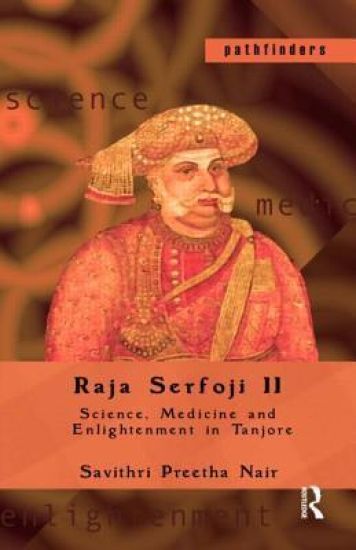
In the early nineteenth century, the south Indian kingdom of Tanjore, which had come under the control of the East India Company, flourished as a ‘centre’ of enlightenment. This book traces the contours of the Tanjore enlightenment, which produced a knowledge that was at once modern and deeply rooted in the indigenous tradition. The chief protagonist of this first ever full-length study on Tanjore at the turn of the nineteenth century is Raja Serfoji II (r. 1798–1832), in whose world science and God coexisted comfortably. Tanjore at this time was a thriving contact-zone, linked to several centres through extensive local and global networks. Its court attracted a great number of visitors, including Christian missionaries, high-ranking Company officials, princely contemporaries, naturalists, and medical practitioners. Dwelling on the locatedness of science and enlightenment modernity in the context of the colonial periphery, the book describes how the Raja deployed certain ‘vectors of assemblage’ — an array of practices, instruments, theories and people, including his vast collection of manuscripts, books and scientific instruments, a Devanagari printing press, a menagerie, health establishments and a large retinue of trained experts and artists — to invent Tanjore as a contemporary ‘centre’. Shunning reductionist and diffusionist explanations of the transmission of Western science in colonial settings, the study uses hitherto unexplored archival sources to reconstruct the Tanjore enlightenment as the outcome of globally situated cross-cultural exchanges. It celebrates the openness and confidence with which European science was engaged with, assimilated, translated and reinvented in a ‘contact-zone’ located in the colonial backwaters of south India. The book will be of interest to historians, sociologists and those interested in history of science and medicine, anthropologists, cultural studies scholars, as well as the general reader.
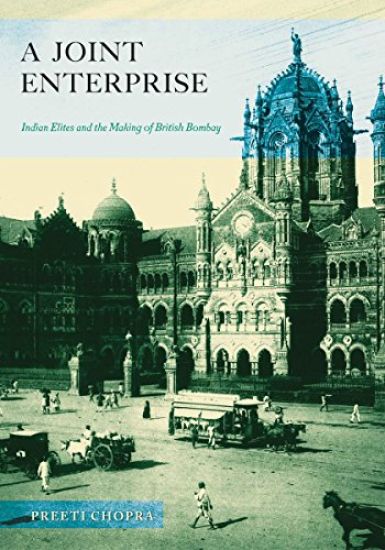
It was the era of the Raj, and yet A Joint Enterprise reveals the unexpected role of native communities in the transformation of the urban fabric of British Bombay from 1854 to 1918. Preeti Chopra demonstrates how British Bombay was, surprisingly, a collaboration of the colonial government and the Indian and European mercantile and industrial elite who shaped the city to serve their combined interests.Chopra shows how the European and Indian engineers, architects, and artists worked with each other to design a city—its infrastructure, architecture, public sculpture—that was literally constructed by Indian laborers and craftsmen. Beyond the built environment, Indian philanthropists entered into partnerships with the colonial regime to found and finance institutions for the general public. Too often thought to be the product of the singular vision of a founding colonial regime, British Bombay is revealed by Chopra as an expression of native traditions meshing in complex ways with European ideas of urban planning and progress. The result, she argues, was the creation of a new shared landscape for Bombay’s citizens that ensured that neither the colonial government nor the native elite could entirely control the city’s future.

The Healthcare Little Black Book: 10 Secrets to a Better Healthcare Experience
Esq Preethy Kaibara MD
Tpk LLC
2015
nidottu
This is the first in-depth and analytical biography of an Asian woman scientist—Edavaleth Kakkat Janaki Ammal (1897–1984). Using a wide range of archival sources, it presents a dazzling portrait of the twentieth century through the eyes of a pioneering Indian woman scientist, who was highly mobile, and a life that intersected with several significant historical events—the rise of Nazi Germany and World War II, the struggle for Indian Independence, the social relations of science movement, the Lysenko affair, the green revolution, the dawn of environmentalism and the protest movement against a proposed hydro-electric project in the Silent Valley in the 1970s and 1980s.The volume brings into focus her work on mapping the origin and evolution of cultivated plants across space and time, to contribute to a grand history of human evolution, her works published in peer-reviewed Indian and international journals of science, as well as her co-authored work, Chromosome Atlas of Cultivated Plants (1945), considered a bible by practitioners of the discipline. It also looks at her correspondence with major personalities of the time, including political leaders like Jawaharlal Nehru, biologists like Cyril D. Darlington, J. B. S. Haldane and H. H. Bartlett, geographers like Carl Sauer and social activists like Hilda Seligman, who all played significant roles in shaping her world view and her science.A story spanning over North America, Europe and Asia, this biography is a must-have for scholars and researchers of science and technology studies, gender studies, especially those studying women in the sciences, history and South Asian studies. It will also be a delight for the general reader.
This is the first in-depth and analytical biography of an Asian woman scientist—Edavaleth Kakkat Janaki Ammal (1897–1984). Using a wide range of archival sources, it presents a dazzling portrait of the twentieth century through the eyes of a pioneering Indian woman scientist, who was highly mobile, and a life that intersected with several significant historical events—the rise of Nazi Germany and World War II, the struggle for Indian Independence, the social relations of science movement, the Lysenko affair, the green revolution, the dawn of environmentalism and the protest movement against a proposed hydro-electric project in the Silent Valley in the 1970s and 1980s.The volume brings into focus her work on mapping the origin and evolution of cultivated plants across space and time, to contribute to a grand history of human evolution, her works published in peer-reviewed Indian and international journals of science, as well as her co-authored work, Chromosome Atlas of Cultivated Plants (1945), considered a bible by practitioners of the discipline. It also looks at her correspondence with major personalities of the time, including political leaders like Jawaharlal Nehru, biologists like Cyril D. Darlington, J. B. S. Haldane and H. H. Bartlett, geographers like Carl Sauer and social activists like Hilda Seligman, who all played significant roles in shaping her world view and her science.A story spanning over North America, Europe and Asia, this biography is a must-have for scholars and researchers of science and technology studies, gender studies, especially those studying women in the sciences, history and South Asian studies. It will also be a delight for the general reader.
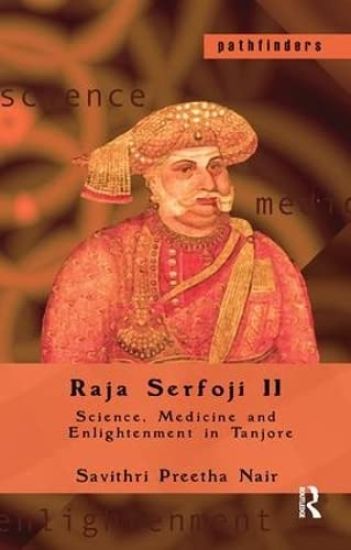
In the early nineteenth century, the south Indian kingdom of Tanjore, which had come under the control of the East India Company, flourished as a ‘centre’ of enlightenment. This book traces the contours of the Tanjore enlightenment, which produced a knowledge that was at once modern and deeply rooted in the indigenous tradition. The chief protagonist of this first ever full-length study on Tanjore at the turn of the nineteenth century is Raja Serfoji II (r. 1798–1832), in whose world science and God coexisted comfortably. Tanjore at this time was a thriving contact-zone, linked to several centres through extensive local and global networks. Its court attracted a great number of visitors, including Christian missionaries, high-ranking Company officials, princely contemporaries, naturalists, and medical practitioners. Dwelling on the locatedness of science and enlightenment modernity in the context of the colonial periphery, the book describes how the Raja deployed certain ‘vectors of assemblage’ — an array of practices, instruments, theories and people, including his vast collection of manuscripts, books and scientific instruments, a Devanagari printing press, a menagerie, health establishments and a large retinue of trained experts and artists — to invent Tanjore as a contemporary ‘centre’. Shunning reductionist and diffusionist explanations of the transmission of Western science in colonial settings, the study uses hitherto unexplored archival sources to reconstruct the Tanjore enlightenment as the outcome of globally situated cross-cultural exchanges. It celebrates the openness and confidence with which European science was engaged with, assimilated, translated and reinvented in a ‘contact-zone’ located in the colonial backwaters of south India. The book will be of interest to historians, sociologists and those interested in history of science and medicine, anthropologists, cultural studies scholars, as well as the general reader.
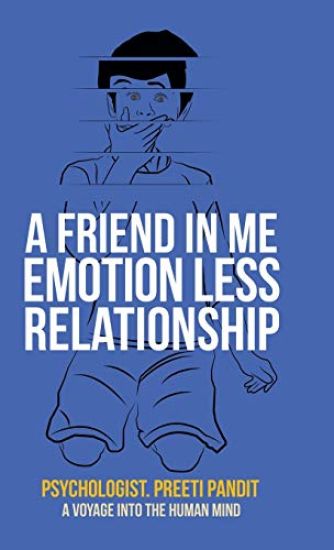
A Friend in Me Emotion Less Relationship
Psychologist Preeti Pandit
Partridge Publishing Singapore
2020
sidottu
Mental illness is as serious, if not more, when compared to any physical ailment - but society tends to look at one with sympathy and the other as a weakness. Dr. Preeti Pandit, a practicing psychotherapist, seeks to promote a better understanding of mental illness in this book. She seeks to answer questions such as: How do experiences in childhood form a foundation for you later in life? What can you do to move past negative experiences from long ago? How can you overcome your most troubling fears? How does an imbalance in relationships create long-lasting impact on your psyche? The author's ultimate purpose is to showcase that when someone is afflicted with mental illness, there are reasons why. Coming to terms with those reasons can help individuals confront bottled-up feelings and move forward to achieve their life purpose. Join the author and a fascinating cast of characters as they go on a roller-coaster journey of intrigue, disbelief, and the unexpected - and leave with a greater awareness of the issues surrounding mental illness.

A Friend in Me Emotion Less Relationship
Psychologist Preeti Pandit
Partridge Publishing Singapore
2020
pokkari
Mental illness is as serious, if not more, when compared to any physical ailment - but society tends to look at one with sympathy and the other as a weakness. Dr. Preeti Pandit, a practicing psychotherapist, seeks to promote a better understanding of mental illness in this book. She seeks to answer questions such as: How do experiences in childhood form a foundation for you later in life? What can you do to move past negative experiences from long ago? How can you overcome your most troubling fears? How does an imbalance in relationships create long-lasting impact on your psyche? The author's ultimate purpose is to showcase that when someone is afflicted with mental illness, there are reasons why. Coming to terms with those reasons can help individuals confront bottled-up feelings and move forward to achieve their life purpose. Join the author and a fascinating cast of characters as they go on a roller-coaster journey of intrigue, disbelief, and the unexpected - and leave with a greater awareness of the issues surrounding mental illness.
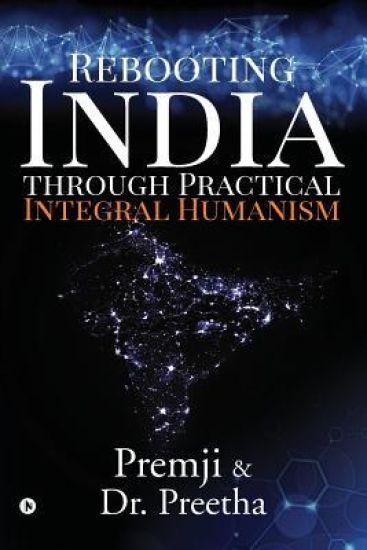
Rebooting India Through Practical Integral Humanism
Dr Preetha; Premji
Notion Press, Inc
2018
nidottu
Pandit Deendayal Upadhyaya is well-known for his holistic philosophy of Integral Humanism and the supreme challenge of today; is to convert his ideological-base to actual practice. The key objective of Integral Humanism is to develop an indigenous economic model, based on Bharatiya culture, to solve the problems faced by India. An indigenous economic operating system, with Dharma as its central pillar, is the need of the hour so that India will emerge as the strongest economy of the world in a purely ethical manner. Here in this book the authors try to propose such a developmental strategy by blending Blockchain technologies with Integral Humanism.
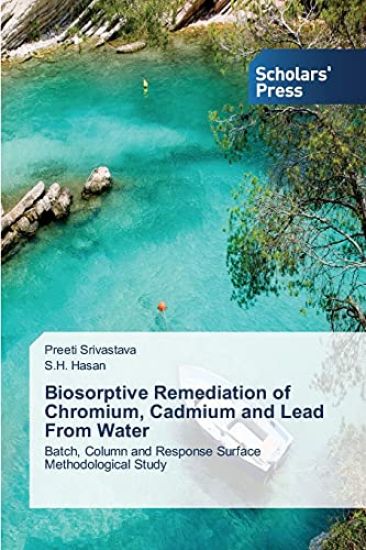
Biosorptive Remediation of Chromium, Cadmium and Lead from Water
Srivastava Preeti
Scholars' Press
2014
pokkari
Factors Supporting Growth of Raphanus Sativus CV. Newar in India
Singh Preeti
LAP Lambert Academic Publishing
2013
pokkari