Kirjojen hintavertailu. Mukana 11 627 220 kirjaa ja 12 kauppaa.

Kirjahaku

Etsi kirjoja tekijän nimen, kirjan nimen tai ISBN:n perusteella.

1000 tulosta hakusanalla Richard Howe Earl Howe

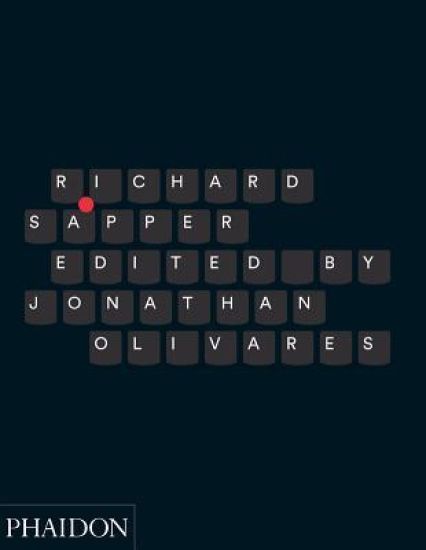
Richard Sapper

Richard Sapper

Jonathan Olivares

Phaidon Press Ltd
2016
sidottu
An in-depth study of the work of German-born industrial designer Richard Sapper, most famous for designs such as the Tizio lamp and the Brionvega radio. Richard Sapper (1932-2015) a German-born designer who was based in Milan most of his working career, is considered one of the most important designers of his generation. Within his lifetime, he received numerous international design accolades, including ten prestigious Compasso d'Oro awards. Sapper developed and designed a wide variety of products, ranging from ships and cars, to computers and electronics as well as furniture and kitchen appliances. His clients included Alessi, Artemide, B&B Italia, Brionvega, FIAT, Heuer, Kartell, Knoll, IBM, Lenovo, Lorenz Milano, Magis, Molteni, Pirelli and many others. This investigation of Sapper's work, based on over forty hours of interviews with the designer Jonathan Olivares, studies his objects, the circumstances that shaped them and the resulting ideals that emerge. The inter-generational conversation explores themes that reoccur throughout Sapper's oeuvre, and which have a particular importance for a younger generation of designers and those with a desire to understand Sapper's work from a fresh perspective. An illustrated timeline, packed with images from Sapper's personal archives, reveals the incredible variety and technical brilliance of his work. Richard Sapper died in Milan on 31 December 2015. Designed by SM Associati, the agency of Marco Velardi from Apartamento magazine, the book opens with an image essay featuring candid commissioned photography by Ramak Fazel.
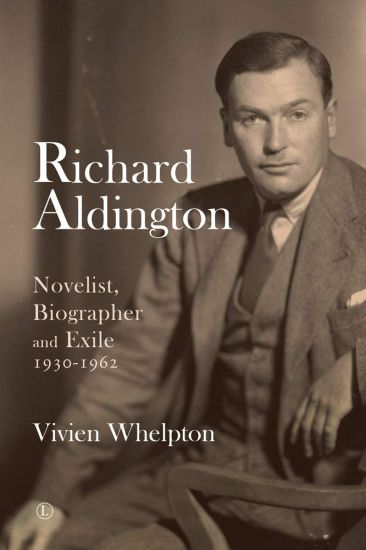
Richard Aldington 2

Richard Aldington 2

Vivien Whelpton

Lutterworth Press
2019
nidottu
The story of Richard Aldington, outstanding Imagist poet and author of the bestselling war novel Death of a Hero (1929), takes place against the backdrop of some of the most turbulent and creative years of the twentieth century. Vivien Whelpton provides a remarkably detailed and sensitive portrayal of the writer from the age of thirty-eight to his death from a heart attack in 1962. The first volume, Richard Aldington: Poet, Soldier and Lover, described Aldington's life as a stalwart of the pre-war London literary scene, his experience as an infantryman on the Western Front and his postwar personal and creative crises; this second volume seeks to balance the stories of Aldington's subsequent public and private lives through a careful reading of his novels, poems and letters with his circle of acquaintances. The ways in which Aldington's dysfunctional childhood and survivor's guilt continued to haunt him through the inter-war years and beyond are masterfully untangled by an author with gifted psychological insight into her subject. Volume Two covers Aldington's personal and public lives as he transformed himself from poet to novelist and from novelist to biographer and explores his debacles and triumphs, particularly in the wake of his hugely controversial attack on the reputation of T.E. Lawrence. This authoritative biography recounts the life of one of the most underrated writers of the last century.
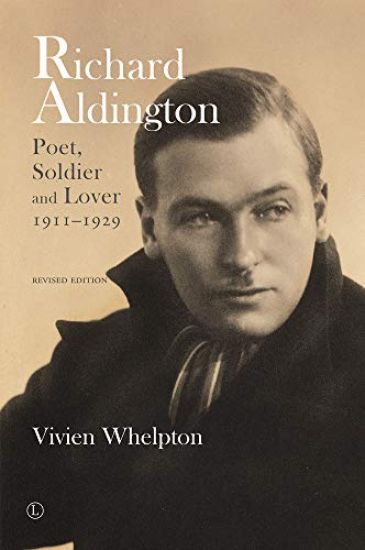
Richard Aldington (revised edition)

Richard Aldington (revised edition)

Vivien Whelpton

Lutterworth Press
2019
nidottu
The story of Richard Aldington, outstanding Imagist poet and author of the bestselling war novel, Death of a Hero (1929), takes place against the backdrop of some of the most turbulent and creative years of the twentieth century. Vivien Whelpton provides a remarkably detailed and sensitive portrayal of the writer from early adolescence. His life as a stalwart of the pre-war London literary scene, as a soldier, and in the difficult aftermath of the First World War is deftly rendered through a careful and detailed analysis of the novels, poems and letters of the writer himself and his close circle of acquaintance. The complexities of London's Bohemia, with its scandalous relationships, social grandstanding and incredible creative output, are masterfully untangled, and the spotlight placed firmly on the talented group of poets christened by Ezra Pound as 'Imagistes'. The author demonstrates profound psychological insight into Aldington's character and childhood in her nuanced analysis of his post-war survivor's guilt, and consideration of the three most influential women in his life: his wife, the gifted American poet, H.D.; Dorothy Yorke, the woman he left her for; and Brigit Patmore, his brilliant and fascinating older mistress.Richard Aldington: Poet, Soldier and Lover vividly reveals Aldington's warm and passionate nature and the vitality which characterised his life and works, concluding with his triumphant personal and literary resurrection with the publication of Death of a Hero.
Richard Brome

Richard Brome

Matthew Steggle

Manchester University Press
2004
sidottu
Richard Brome was the leading comic playwright of 1630s London. Starting his career as a manservant to Ben Jonson, he wrote a string of highly successful comedies which were influential in British theatre long after Brome's own playwriting career was cut short by the closure of the theatres in 1642.This book offers the first full-length chronological account of Brome's life and works, drawing on a wide range of recently rediscovered manuscript sources. It traces the early hostility to Brome from those who wrote him off as a mere servant; his continuing struggles with plague closures, contract disputes and theatrical takeover bids; and his literary relationships with Jonson, Shakespeare and others. Each of the surviving plays is discussed in relation to its social and political context, and its sense of place. A final chapter reviews Brome's enduring stageworthiness into the eighteenth and nineteenth centuries, and the most recent Brome revivals.
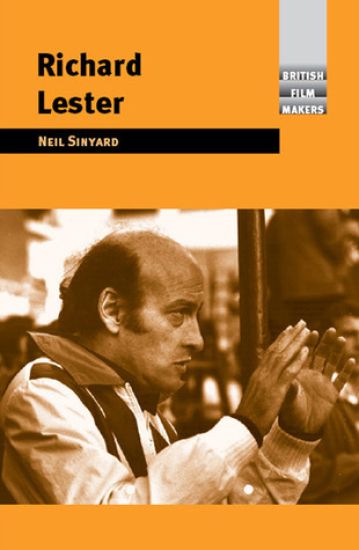
Richard Lester

Richard Lester

Neil Sinyard

Manchester University Press
2010
sidottu
Richard Lester is of the most significant yet misunderstood directors of the post-war era. Indelibly associated with the Beatles and the ‘swinging Sixties’ because of his direction of A Hard Day’s Night and Help and his joyous sex comedy The Knack, Lester has tended to be categorised as a modish director whose heyday passed when that decade’s optimism slid into disillusionment and violence.This book offers a critical appreciation and reappraisal of his work, arguing that it had much greater depth and variety than he has been given credit for. His versatility encompasses the Brechtian anti-heroics of How I Won the War; the surreal nuclear comedy of The Bed-Sitting Room and the swashbuckling adventure of The Musketeers films. He has even, in his instinctively iconoclastic manner, cut Superman down to size.The book should win new admirers for a director with a gift of making movies whose visual wit and imaginative imagery reveal an intelligent and enquiring scepticism about heroes and society. Including comments from Lester himself and illustrations from his own private collection, the book is a must for film scholars and enthusiasts alike.
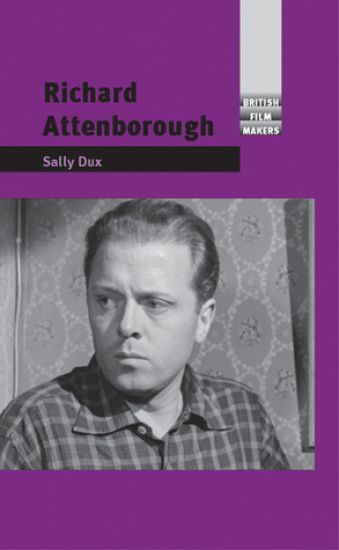
Richard Attenborough

Richard Attenborough

Sally Dux

Manchester University Press
2013
sidottu
Richard Attenborough’s film career has stretched across seven decades; surprisingly, Sally Dux’s book is the first detailed scholarly analysis of his work as a filmmaker. Concentrating on his work behind the camera, she explores his initial role as a producer, including his partnerships with Bryan Forbes in Beaver Films (1959–64) and with Allied Film Makers (1960–64). As we know, Attenborough went on to direct twelve films, many of which achieved great acclaim, most notably Gandhi, which won eight Academy Awards in 1982Attenborough is most renowned for his biographical films including Young Winston, Cry Freedom, Chaplin and Shadowlands, which helped to establish the genre within British cinema. Although his work has often attracted controversy, particularly regarding the representation of individuals and historical events, his films are noted for extracting acclaimed performances from unknown actors such as Ben Kingsley (Gandhi), while maintaining his moral and thematic concerns.
Richard Wainwright, the Liberals and Liberal Democrats

Richard Wainwright, the Liberals and Liberal Democrats

Matt Cole

Manchester University Press
2013
nidottu
Richard Wainwright, the Liberals and Liberal Democrats: Unfinished Business now available in paperback, offers new research on familiar themes involving loyalties of politics, faith and locality. Richard Wainwright was a Liberal MP for seventeen years during the Party’s recovery, but his life tells us about much more than this. Wainwright grew up in prosperity, but learned from voluntary work about poverty; he refused to fight in World War Two, but saw war at its cruellest; he joined the Liberal Party when most had given up on it, but gave his fortune to it; lost a by-election but caused the only Labour loss in Harold Wilson’s landslide of 1966. He then played a key role in the fall of Jeremy Thorpe, the Lib-Lab Pact and the formation of the SDP-Liberal Alliance and the Liberal Democrats; he represented a unique Yorkshire constituency which reflected his pride and hope for society; and though he gave his life to the battle to be in the Commons, he refused a seat in the Lords.Richard Wainwright's story is central to the story of the Liberal Party and sheds light on the reasons for its survival and the state of its prospects. At the same time this book is a parable of politics for anyone who wants to represent an apparently lost cause, who wants to motivate people who have been neglected, and who wants to follow their convictions at the highest level.
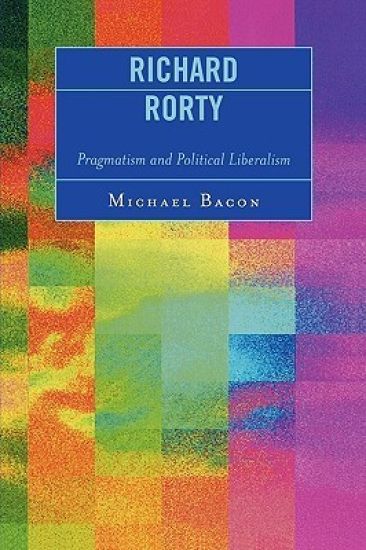
Richard Rorty

Richard Rorty

Michael Bacon

Lexington Books
2007
sidottu
Richard Rorty is both the most prominent and the most provocative recent exponent of pragmatism. This book offers a sympathetic reconstruction of Rorty's account of pragmatism, in which the aspiration to underwrite inquiry by reference to standards outside of any particular community is given up in favor of a view of inquiry as answerable exclusively to the norms implicit within contingent human practices. Rorty hopes that pragmatism so conceived can help effect a transition towards what he calls an "anti-authoritarian" society, a society in which responsibility is owed solely to one's fellow citizens. The book examines the relationship between pragmatism and political liberalism, a form of liberalism which sets aside discussion of truth and value and seeks instead to derive a constitutional settlement in which citizens can freely pursue their individual projects and purposes. It presents a critical assessment of Rorty's ideal of a liberal utopia, inhabited by strong poets and liberal ironists. By focusing on the relationship between the philosophical and political, the book argues that Rorty provides a compelling statement of pragmatism, containing insights that command the attention of contemporary liberal philosophers. Through textual analysis and reconstruction, it argues that while Rorty's account needs to be amended at several points, it remains a powerful and attractive one, and not the incoherent and pernicious folly that critics often take it to be. Well researched, lively, and succinct, Richard Rorty: Pragmatism and Political Liberalism is ideally suited to specialists and graduate students in philosophy and political theory.
Richard Rorty

Richard Rorty

Michael Bacon

Lexington Books
2008
nidottu
Richard Rorty is both the most prominent and the most provocative recent exponent of pragmatism. This book offers a sympathetic reconstruction of Rorty's account of pragmatism, in which the aspiration to underwrite inquiry by reference to standards outside of any particular community is given up in favor of a view of inquiry as answerable exclusively to the norms implicit within contingent human practices. Rorty hopes that pragmatism so conceived can help effect a transition towards what he calls an 'anti-authoritarian' society, a society in which responsibility is owed solely to one's fellow citizens. The book examines the relationship between pragmatism and political liberalism, a form of liberalism which sets aside discussion of truth and value and seeks instead to derive a constitutional settlement in which citizens can freely pursue their individual projects and purposes. It presents a critical assessment of Rorty's ideal of a liberal utopia, inhabited by strong poets and liberal ironists. By focusing on the relationship between the philosophical and political, the book argues that Rorty provides a compelling statement of pragmatism, containing insights that command the attention of contemporary liberal philosophers. Through textual analysis and reconstruction, it argues that while Rorty's account needs to be amended at several points, it remains a powerful and attractive one, and not the incoherent and pernicious folly that critics often take it to be. Well researched, lively, and succinct, Richard Rorty: Pragmatism and Political Liberalism is ideally suited to specialists and graduate students in philosophy and political theory.
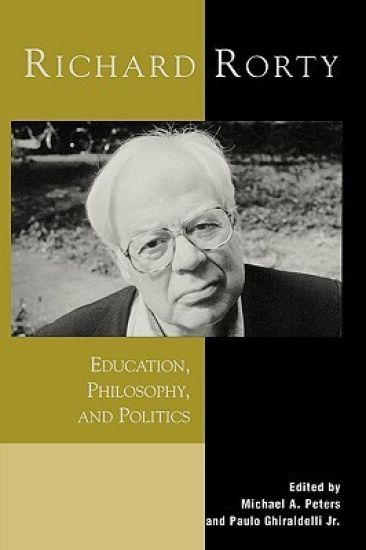
Richard Rorty

Richard Rorty

Michael A. Peters; Paulo Ghiraldelli

Rowman Littlefield Publishers
2001
nidottu
Richard Rorty's neopragmatist philosophy marks him as one of the most gifted and controversial thinkers of his time. Antifoundationalism and antirepresentationalism are the guiding motifs in his thought. He wants to jettison a set of philosophical distinctions—appearance/reality, mind/body, morality/prudence—that have dominated and shaped the history of Western philosophy since the time of Plato. It is a position that has propelled him into a series of heated debates with philosophers who are the most influential of their generation—analytic philosophers such as Quine, Davidson, Rawls, and Putnam; as well as Continental philosophers, including Habermas, Derrida, Foucault, and Lyotard. At the same time, Rorty's work has helped to break down the artificial separation between these two wings of Western philosophy by acting as an intellectual bridge between them. This distinctive collection by scholars from around the world focuses upon the cultural, educational, and political significance of his thought. The nine essays which comprise the collection examine a variety of related themes: Rorty's neopragmatism, his view of philosophy, his philosophy of education and culture, Rorty's comparison between Dewey and Foucault, his relation to postmodern theory, and, also his form of political liberalism.
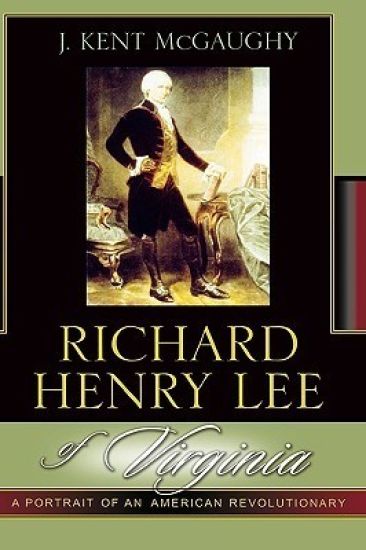
Richard Henry Lee of Virginia

Richard Henry Lee of Virginia

Kent J. McGaughy

Rowman Littlefield Publishers
2003
sidottu
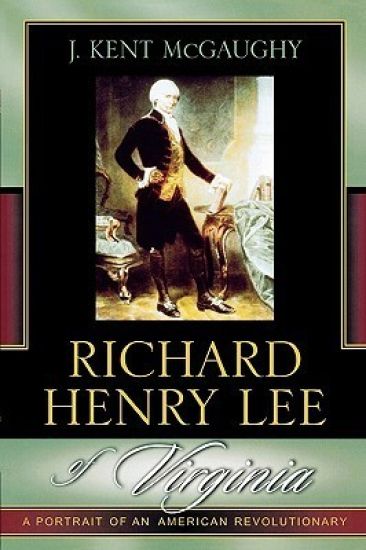
Richard Henry Lee played a pivotal role during the American Revolution, yet he remains one of the most misunderstood revolutionaries. His contemporaries, as well as modern historians, deemed him a political opportunist or dismissed him as an enigma. In bridging the gap between Lee's private interests and public career, J. Kent McGaughy seeks to overturn many of the misconceptions about Lee and shows that, throughout his life, he remained dedicated to his family and public service. By separating fact from fiction and unraveling the history of Lee's life and the times in which he lived, J. Kent McGaughy brings to light not only the truth about Lee, but also the hidden history of the American Revolution.
Richard Henry Lee of Virginia

Richard Henry Lee of Virginia

Kent J. McGaughy

Rowman Littlefield Publishers
2003
nidottu
Richard Henry Lee played a pivotal role during the American Revolution, yet he remains one of the most misunderstood revolutionaries. His contemporaries, as well as modern historians, deemed him a political opportunist or dismissed him as an enigma. In bridging the gap between Lee's private interests and public career, J. Kent McGaughy seeks to overturn many of the misconceptions about Lee and shows that, throughout his life, he remained dedicated to his family and public service. By separating fact from fiction and unraveling the history of Lee's life and the times in which he lived, J. Kent McGaughy brings to light not only the truth about Lee, but also the hidden history of the American Revolution.
Richard Nixon and the Rise of Affirmative Action

Richard Nixon and the Rise of Affirmative Action

Kevin Yuill

Rowman Littlefield Publishers
2006
sidottu
Richard Nixon is hardly remembered for his civil rights policies but there is no denying that, more than any other president, he is responsible for affirmative action. Noting Nixon's hostility towards busing, his political allegiances with segregationists, and the hostility of leading civil rights figures at the time, historians and political scientists have avoided explaining why the origins of modern affirmative action lie in the Nixon era. In this enlightening and original new work, Kevin Yuill combines extensive archival research with a careful analysis of the intellectual climate of the era to examine not only the conditions that made Nixon's policy decisions possible in the 1970s but also what motivated Nixon to act in the way that he did. He argues that in order to fully understand why Nixon embraced affirmative action, one must fully take into account the shifting context of American liberalism in the 1970s. In particular, Yuill contends that although government-enforced affirmative action did not fit into the postwar, growth-oriented liberalism, it emerged as an important regulatory policy blueprint in an era increasingly characterized by diminished horizons for social policy. Nixon's efforts in moving the focus of U.S. race relations from reform to indemnifying damages, Yuill argues, at least equals his contribution to the origins of affirmative action through policy innovations. Controversial and far-reaching, Richard Nixon and the Rise of Affirmative Action brings fresh research and a much-needed reinterpretation of a crucial yet still enigmatic period, president and policy.
Richard Nixon and the Rise of Affirmative Action

Richard Nixon and the Rise of Affirmative Action

Kevin Yuill

Rowman Littlefield Publishers
2006
nidottu
Richard Nixon is hardly remembered for his civil rights policies but there is no denying that, more than any other president, he is responsible for affirmative action. Noting Nixon's hostility towards busing, his political allegiances with segregationists, and the hostility of leading civil rights figures at the time, historians and political scientists have avoided explaining why the origins of modern affirmative action lie in the Nixon era. In this enlightening and original new work, Kevin Yuill combines extensive archival research with a careful analysis of the intellectual climate of the era to examine not only the conditions that made Nixon's policy decisions possible in the 1970s but also what motivated Nixon to act in the way that he did. He argues that in order to fully understand why Nixon embraced affirmative action, one must fully take into account the shifting context of American liberalism in the 1970s. In particular, Yuill contends that although government-enforced affirmative action did not fit into the postwar, growth-oriented liberalism, it emerged as an important regulatory policy blueprint in an era increasingly characterized by diminished horizons for social policy. Nixon's efforts in moving the focus of U.S. race relations from reform to indemnifying damages, Yuill argues, at least equals his contribution to the origins of affirmative action through policy innovations. Controversial and far-reaching, Richard Nixon and the Rise of Affirmative Action brings fresh research and a much-needed reinterpretation of a crucial yet still enigmatic period, president and policy.
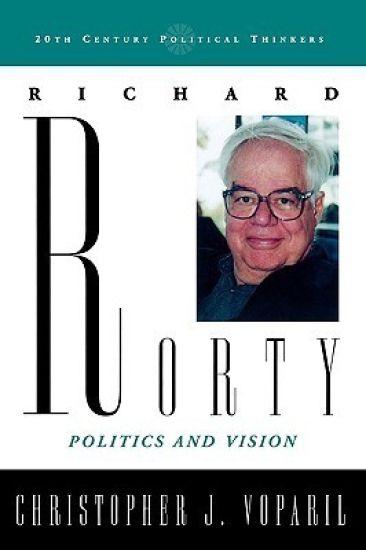
Richard Rorty

Richard Rorty

Christopher J. Voparil

Rowman Littlefield Publishers
2006
sidottu
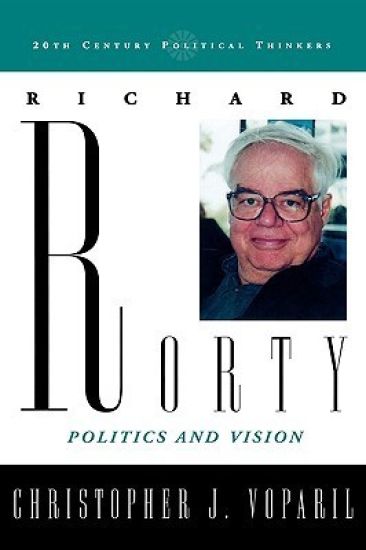
The first full-length work devoted to Richard Rorty from the perspective of political theory, this book offers a fresh assessment of the promise of the renowned pragmatist's project. Framing Rorty's discourse as one of meaning and persuasion rather than truth and accuracy of representation, Voparil sheds new light on many of Rorty's most misunderstood and maligned stances, including his practice of 'redescription' and disavowal of 'getting it right,' as well as his embrace of the novel and 'sentimental education.' As political theory, Rorty's perspective, not unlike Sheldon Wolin's, values the imagination, the ability to come up with new metaphors and angles of vision, and is driven by a deep desire to reinvigorate a moribund and detached contemporary left. Voparil's account engages the full range of Rorty's intellectual forebears, grounding his thought in an American tradition that extends beyond the classical pragmatists to include Emerson, Whitman, Harriet Beecher Stowe, and James Baldwin, in addition to chapters that trace Rorty's connection to such diverse figures as Marx, Mill, Dickens, Isaiah Berlin, and Milan Kundera.
Richard Rorty

Richard Rorty

Christopher J. Voparil

Rowman Littlefield Publishers
2006
nidottu
The first full-length work devoted to Richard Rorty from the perspective of political theory, this book offers a fresh assessment of the promise of the renowned pragmatist's project. Framing Rorty's discourse as one of meaning and persuasion rather than truth and accuracy of representation, Voparil sheds new light on many of Rorty's most misunderstood and maligned stances, including his practice of "redescription" and disavowal of "getting it right," as well as his embrace of the novel and "sentimental education." As political theory, Rorty's perspective, not unlike Sheldon Wolin's, values the imagination, the ability to come up with new metaphors and angles of vision, and is driven by a deep desire to reinvigorate a moribund and detached contemporary left. Voparil's account engages the full range of Rorty's intellectual forebears, grounding his thought in an American tradition that extends beyond the classical pragmatists to include Emerson, Whitman, Harriet Beecher Stowe, and James Baldwin, in addition to chapters that trace Rorty's connection to such diverse figures as Marx, Mill, Dickens, Isaiah Berlin, and Milan Kundera.
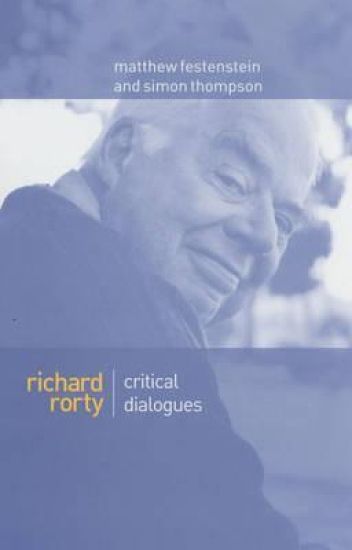
Richard Rorty

Richard Rorty

Polity Press
2001
sidottu
Richard Rorty is one of the most influential and provocative figures in contemporary intellectual life. He argues that many of philosophy's traditional concerns are redundant, and that the goal of inquiry should not be truth but human betterment. In this collection a distinguished team of scholars grapples with the implications of his writings for social and political thought. Avoiding mindless adulation or ritual denunciation, they offer careful but critical investigations of the meaning of Rorty's work for a range of important issues. Topics explored include anti-foundationalism; irony and commitment; justice; liberalism and utopianism; reason and aesthetics; humanism and anti-humanism; the Holocaust; the theory of international relations; social democracy and the pragmatist tradition. Each essay is followed by a reply written for this volume by Rorty. The volume also includes a substantial essay by Rorty on 'Justice as a Larger Loyalty'. This volume is indispensable for any reader interested in Rorty's work, or in contemporary debates in social, political or ethical theory. Contributors: Molly Cochran; Daniel Conway; Matthew Festenstein; Norman Geras; John Horton; David Owen; Richard Rorty; Kate Soper; Simon Thompson.