Kirjojen hintavertailu. Mukana 12 256 025 kirjaa ja 12 kauppaa.

Kirjahaku

Etsi kirjoja tekijän nimen, kirjan nimen tai ISBN:n perusteella.

1000 tulosta hakusanalla Roberto Gutierrez Laboy

Living Thought

Living Thought

Roberto Esposito

Stanford University Press
2012
sidottu
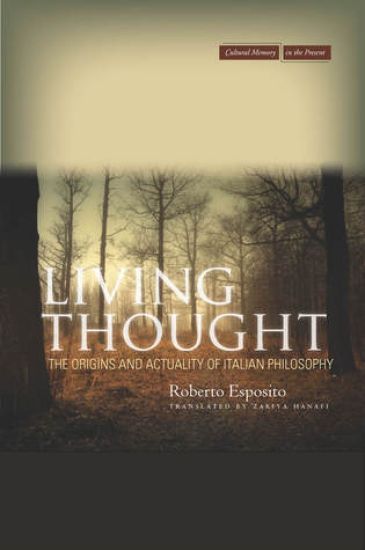
The work of contemporary Italian thinkers, what Roberto Esposito refers to as Italian Theory, is attracting increasing attention around the world. This book explores the reasons for its growing popularity, its distinguishing traits, and why people are turning to these authors for answers to real-world issues and problems. The approach he takes, in line with the keen historical consciousness of Italian thinkers themselves, is a historical one. He offers insights into the great "unphilosophical" philosophers of life—poets, painters, politicians and revolutionaries, film-makers and literary critics—who have made Italian thought, from its beginnings, an "impure" thought. People like Machiavelli, Croce, Gentile, and Gramsci were all compelled to fulfill important political roles in the societies of their times. No wonder they felt that the abstract vocabulary and concepts of pure philosophy were inadequate to express themselves. Similarly, artists such as Dante, Leonardo Da Vinci, Leopardi, or Pasolini all had to turn to other disciplines outside philosophy in order to discuss and grapple with the messy, constantly changing realities of their lives. For this very reason, says Esposito, because Italian thinkers have always been deeply engaged with the concrete reality of life (rather than closed up in the introspective pursuits of traditional continental philosophy) and because they have looked for the answers of today in the origins of their own historical roots, Italian theory is a "living thought." Hence the relevance or actuality that it holds for us today. Continuing in this tradition, the work of Roberto Esposito is distinguished by its interdisciplinary breadth. In this book, he passes effortlessly from literary criticism to art history, through political history and philosophy, in an expository style that welcomes non-philosophers to engage in the most pressing problems of our times. As in all his works, Esposito is inclusive rather than exclusive; in being so, he celebrates the affirmative potency of life.
Living Thought

Living Thought

Roberto Esposito

Stanford University Press
2012
pokkari
The work of contemporary Italian thinkers, what Roberto Esposito refers to as Italian Theory, is attracting increasing attention around the world. This book explores the reasons for its growing popularity, its distinguishing traits, and why people are turning to these authors for answers to real-world issues and problems. The approach he takes, in line with the keen historical consciousness of Italian thinkers themselves, is a historical one. He offers insights into the great "unphilosophical" philosophers of life—poets, painters, politicians and revolutionaries, film-makers and literary critics—who have made Italian thought, from its beginnings, an "impure" thought. People like Machiavelli, Croce, Gentile, and Gramsci were all compelled to fulfill important political roles in the societies of their times. No wonder they felt that the abstract vocabulary and concepts of pure philosophy were inadequate to express themselves. Similarly, artists such as Dante, Leonardo Da Vinci, Leopardi, or Pasolini all had to turn to other disciplines outside philosophy in order to discuss and grapple with the messy, constantly changing realities of their lives. For this very reason, says Esposito, because Italian thinkers have always been deeply engaged with the concrete reality of life (rather than closed up in the introspective pursuits of traditional continental philosophy) and because they have looked for the answers of today in the origins of their own historical roots, Italian theory is a "living thought." Hence the relevance or actuality that it holds for us today. Continuing in this tradition, the work of Roberto Esposito is distinguished by its interdisciplinary breadth. In this book, he passes effortlessly from literary criticism to art history, through political history and philosophy, in an expository style that welcomes non-philosophers to engage in the most pressing problems of our times. As in all his works, Esposito is inclusive rather than exclusive; in being so, he celebrates the affirmative potency of life.
Ronsard's Contentious Sisters

Ronsard's Contentious Sisters

Roberto Campo

The University of North Carolina Press
1998
nidottu
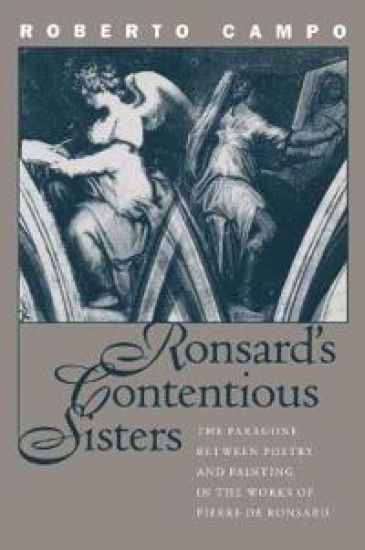
Examining Ronsard's participation in the ""paragone"" debate between poets and painters, this text is broadly concerned with his notions about the differences between poems and pictures - whether therefore it is the poet or painter who holds the highest station in the hierarchy of human creativity.
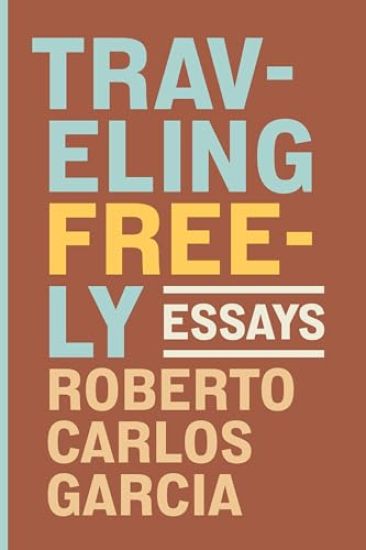
Traveling Freely

Traveling Freely

Roberto Carlos Garcia

NORTHWESTERN UNIVERSITY PRESS
2024
nidottu
A poet’s debut essay collection exploring American faults through the eyes of a Dominican American In Traveling Freely: Essays, Roberto Carlos Garcia explores intersecting topics such as race, identity, American socioeconomic inequality, police violence, our inability to partake in our culture as innocents, and our complicity as Americans in all that’s wrong with the United States from the author’s specific vantage point as a Black Dominican American man. The voice in these essays is both clear and nuanced, and as readers move through the collection, the various themes cohere into a multilayered investigation of institutional racism and the inherent exploitations of capitalism. In essays that are uniquely straightforward and accessible, Garcia insists that in order to resist state-sanctioned violence against marginalized bodies and populations, we must understand our shared history of oppression—so that we can rise against it effectively and find new paths forward.
Distant Star

Distant Star

Roberto Bolano; Chris Andrews

New Directions Publishing Corporation
2004
pokkari
The star of Roberto Bolano's hair-raising novel Distant Star is Alberto Ruiz-Tagle, an air force pilot who exploits the 1973 coup to launch his own version of the New Chilean Poetry, a multimedia enterprise involving sky-writing, poetry, torture, and photo exhibitions.For our unnamed narrator, who first encounters this "star" in a college poetry workshop, Ruiz-Tagle becomes the silent hand behind every evil act in the darkness of Pinochet's regime. The narrator, unable to stop himself, tries to track Ruiz-Tagle down, and sees signs of his activity over and over again. A corrosive, mocking humor sparkles within Bolano's darkest visions of Chile under Pinochet. In Bolano's world there's a big graveyard and there's a big graveyard laugh. (He once described his novel By Night in Chile as "a tale of terror, a situation comedy, and a combination pastoral-gothic novel.")Many Chilean authors have written about the "bloody events of the early Pinochet years, the abductions and murders," Richard Eder commented in the The New York Times "None has done it in so dark and glittering a fashion as Roberto Bolano."
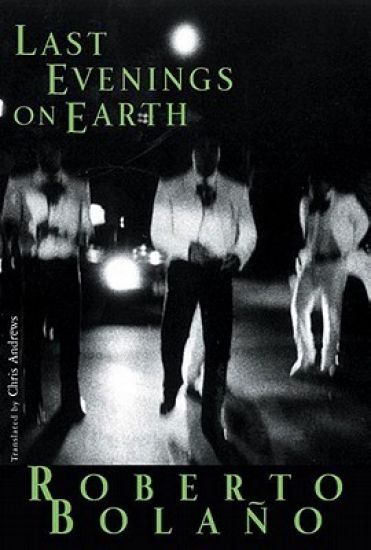
Last Evenings on Earth

Last Evenings on Earth

Roberto Bolano

New Directions Publishing Corporation
2007
pokkari
Fourteen dark tales about the tragic qualities of exile feature protagonists who are struggling with marginal lives and private, often ill-fated, quests, in a collection set in the Chilean exile diaspora of Latin America and Europe. Reprint.
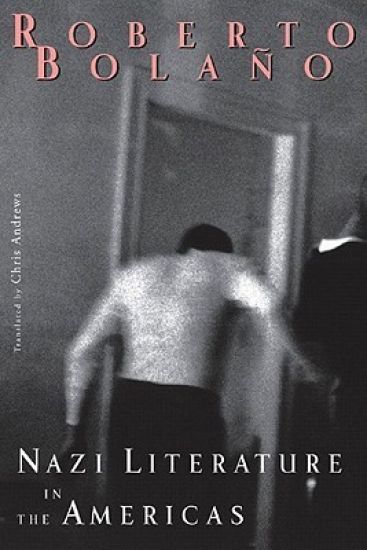
Nazi Literature in the Americas

Nazi Literature in the Americas

Roberto Bolaño

NEW DIRECTIONS PUBLISHING CORPORATION
2008
sidottu
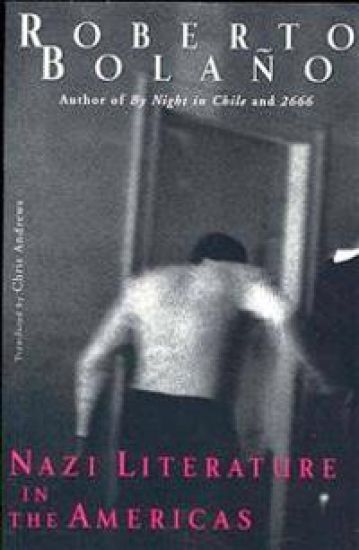
Written as a biographical dictionary of twentieth- and twenty-first-century contributors who espoused extreme right-wing ideologies, a series of fictional character portraits is thematically organized under such headings as "Forerunners and Figures of the Anti-Enlightenment" and "North American Poets."
Amulet

Amulet

Roberto Bolano; Chris (TRN) Andrews

New Directions Publishing Corporation
2008
pokkari
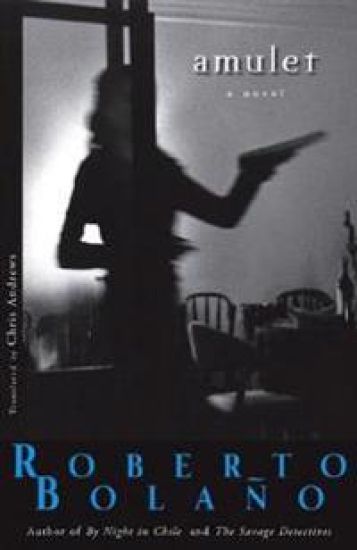
Amulet is a monologue, like Bolano's acclaimeddebut in English, By Night in Chile. The speaker is AuxilioLacouture, a Uruguayan woman who moved to Mexico in the 1960s, becomingthe "Mother of Mexican Poetry," hanging out with the youngpoets in the cafes and bars of the University. She's tall, thin, and blonde, and her favorite young poet in the 1970s is none other thanArturo Belano (Bolano's fictional stand-in throughout his books). As well as her young poets, Auxilio recalls three remarkable women: the melancholic young philosopher Elena, the exiled Catalan painterRemedios Varo, and Lilian Serpas, a poet who once slept with Che Guevara.And in the course of her imaginary visit to the house of Remedios Varo, Auxilio sees an uncanny landscape, a kind of chasm. This chasm reappearsin a vision at the end of the book: an army of children is marchingtoward it, singing as they go. The children are the idealistic youngLatin Americans who came to maturity in the '70s, and the last wordsof the novel are: "Andthat song is our amulet."
Tres

Tres

Roberto Bolaño

NEW DIRECTIONS PUBLISHING CORPORATION
2011
sidottu
Roberto Bolan o's Tres is a showcase of the author's willingness to freely cross genres, with poems in prose, stories in verse, and flashes of writing that can hardly be categorized. As the title implies, the collection is composed of three sections. "Prose from Autumn in Gerona," a cinematic series of prose poems, slowly reveals a subtle and emotional tale of unrequited love by presenting each scene, shattering it, and piecing it all back together, over and over again. The second part, "The Neochileans," is a sort of On the Road in verse, which narrates the travels of a young Chilean band on tour in the far reaches of their country. Finally, the collection ends with a series of short poems that take us on "A Stroll Through Literature" and remind us of Bolan o's masterful ability to walk the line between the comically serious and the seriously comical.
Antwerp

Antwerp

Roberto Bolano; Natasha (TRN) Wimmer

New Directions Publishing Corporation
2012
pokkari
Written when he was only twenty-seven, Antwerp can be viewed as the Big Bang of Roberto Bolano s fictional universe. This novel presents the genesis of Bolano s enterprise in prose; all the elements are here, highly compressed, at the moment when his talent explodes. From this springboard which Bolano chose to publish in 2002, twenty years after he d written it ( and even that I can t be certain of ) as if testing out a high dive, he would plunge into the unexplored depths of the modern novel.Voices speak from a dream, from a nightmare, from passersby, from an omniscient narrator, from Roberto Bolano. Antwerp s fractured narration in fifty-four sections moves in multiple directions and cuts to the bone.
The Secret of Evil

The Secret of Evil

Roberto Bola±o; Chris (TRN) Andrews; Natasha (TRN) Wimmer

New Directions Publishing Corporation
2014
pokkari
A North American journalist in Paris is woken at 4 a.m. by a mysterious caller with urgent information. For V. S. Naipaul, the prevalence of sodomy in Argentina is a symptom of the nation s political ills. Daniela de Montecristo (familiar to readers of Nazi Literature in the Americas and 2666) recounts the loss of her virginity. Arturo Belano returns to Mexico City and meets the last disciples of Ulises Lima, who play in a band called The Asshole of Morelos. Belano s son Geronimo disappears in Berlin during the Days of Chaos in 2005. Memories of a return to the native land. Argentine writers as gangsters. Zombie schlock as allegory "
A Little Lumpen Novelita

A Little Lumpen Novelita

Roberto Bolaño; Natasha (TRN) Wimmer

New Directions Publishing Corporation
2014
sidottu
Now I am a mother and a married woman, but not long ago I led a life of crime: so Bianca begins her tale of growing up the hard way in Rome in A Little Lumpen Novelita. Orphaned overnight as a teenager our parents died in a car crash on their first vacation without us she drops out of school, gets a crappy job, sees a terrible brightness at night, and drifts into bad company. Her little brother brings home two petty criminals who need a place to stay. As the four of them share the family apartment and plot a strange crime, Bianca learns she can drift lower Electric, tense with foreboding, and written in jagged, propulsive short chapters, A Little Lumpen Novelita one of the first novels Roberto Bolano ever published delivers a surprising, fractured tale of taking control of one s fate."
A Little Lumpen Novelita

A Little Lumpen Novelita

Roberto Bolaño

NEW DIRECTIONS PUBLISHING CORPORATION
2016
nidottu
"Now I am a mother and a married woman, but not long ago I led a life of crime" so Bianca begins her tale of growing up the hard way in Rome. Orphaned overnight as a teenager--"our parents died in a car crash on their first vacation without us"--she drops out of school, gets a crappy job, and drifts into bad company. Her younger brother brings home two petty criminals who need a place to stay. As the four of them share the family apartment and plot a strange crime, Bianca learns how low she can fall. Electric, tense with foreboding, and written in jagged, propulsive chapters, A Little Lumpen Novelita delivers a surprising, fractured fable of seizing control of one's fate.
Esperanto and Its Rivals

Esperanto and Its Rivals

Roberto Garvía

University of Pennsylvania Press
2015
sidottu
The problems of international communication and linguistic rights are recurring debates in the present-day age of globalization. But the debate truly began over a hundred years ago, when the increasingly interconnected world of the nineteenth century fostered a desire for the development of a global lingua franca. Many individuals and social movements competed to create an artificial language unencumbered by the political rivalries that accompanied English, German, and French. Organizations including the American Philosophical Society, the International Association of Academies, the International Peace Bureau, the Comintern, and the League of Nations intervened in the debate about the possibility of an artificial language, but of the numerous tongues created before World War II, only Esperanto survives today. Esperanto and Its Rivals sheds light on the factors that led almost all artificial languages to fail and helped English to prevail as the global tongue of the twenty-first century. Exploring the social and political contexts of the three most prominent artificial languages-VolapÜk, Esperanto, and Ido-Roberto GarvÍa examines the roles played by social movement leaders and inventors, the strategies different organizations used to lobby for each language, and other early decisions that shaped how those languages spread and evolved. Through the rise and fall of these artificial languages, Esperanto and Its Rivals reveals the intellectual dilemmas and political anxieties that troubled the globalizing world at the turn of the twentieth century.
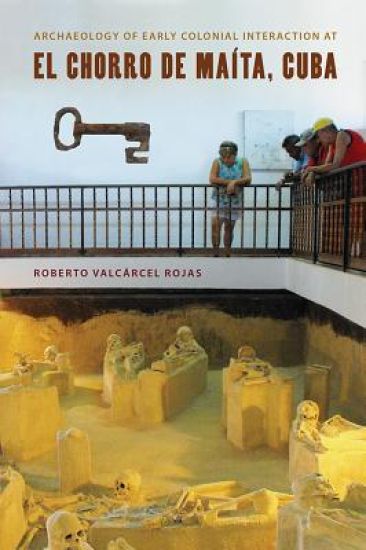
Archaeology of Early Colonial Interaction at El Chorro de Maita, Cuba

Archaeology of Early Colonial Interaction at El Chorro de Maita, Cuba

Roberto Valcárcel Rojas

University Press of Florida
2016
sidottu
During Spanish colonization of the Greater Antilles, the islands' natives were forced into labor under the encomienda system. The indigenous people became ""Indios,"" their language, appearance, and identity transformed by the domination imposed by a foreign model that Christianized and ""civilized"" them. Yet El Chorro de Maíta retained many of its indigenous characteristics.In this volume-one of the first in English to examine and document an archaeological site in Cuba-Roberto Valcárcel Rojas analyzes the construction of colonial authority and the various attitudes and responses of natives and other ethnic groups. His pioneering study reveals the process of transculturation in which new individuals emerged-Indians, mestizos, criollos-and helps construct the vital link between the pre-Columbian world and the development of an integrated and new history.