Kirjojen hintavertailu. Mukana 12 083 983 kirjaa ja 12 kauppaa.

Kirjahaku

Etsi kirjoja tekijän nimen, kirjan nimen tai ISBN:n perusteella.

1000 tulosta hakusanalla Roberto Podda

Digital Art and Meaning

Digital Art and Meaning

Roberto Simanowski

University of Minnesota Press
2011
nidottu
In a world increasingly dominated by the digital, the critical response to digital art generally ranges from hype to counterhype. Popular writing about specific artworks seldom goes beyond promoting a given piece and explaining how it operates, while scholars and critics remain unsure about how to interpret and evaluate them. This is where Roberto Simanowski intervenes, demonstrating how such critical work can be done. Digital Art and Meaning offers close readings of varied examples from genres of digital art such as kinetic concrete poetry, computer-generated text, interactive installation, mapping art, and information sculpture. For instance, Simanowski deciphers the complex meaning of words that not only form an image on a screen but also react to the viewer’s behavior; images that are progressively destroyed by the human gaze; text machines generating nonsense sentences out of a Kafka story; and a light show above Mexico City’s historic square, created by Internet users all over the world. Simanowski combines these illuminating explanations with a theoretical discussion that employs art philosophy and history to achieve a deeper understanding of each particular example of digital art and, ultimately, of the genre as a whole.
Periscopio

Periscopio

Roberto Severino; Maria Rosaria Falconi

University Press of America
1986
nidottu
This workbook provides glimpses of modern Italian culture through an approach to language learning which is both innovative and highly structured. Develops and refines Italian language students' written and oral skills while, at the same time, assisting them to review grammatical, structural and stylistic features of contemporary Italian. Includes a short Italian-English vocabulary list. Of interest to Italian language students and scholars.
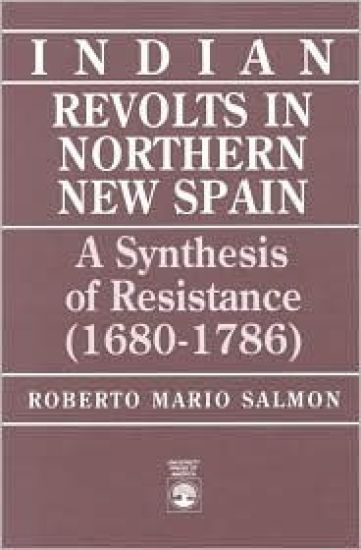
Indian Revolts in Northern New Spain

Indian Revolts in Northern New Spain

Roberto Mario Salmon

University Press of America
1990
sidottu
This book surveys and evaluates Indian revolts in northern New Spain during the years 1680-1786 in terms of specific Indian revolts, Spanish Indian policy over time, and relations between Spaniards, mestizo frontiersmen, and Indians. In this study, northern New Spain refers to what is now the Mexican North and the southwestern United States. This northern frontier came to encompass the provinces of Nueva Vizcaya, New Mexico, Sonora, Coahuila, Texas, Sinaloa, and the two Californias. This territory eventually became a separate, distinct administrative unit of colonial Spanish America. Contents: Settlement of Northern New Spain; Times of Trouble: Rise of the Tepehuan and Tarahumara Barrier; The Pueblo and Tarahumara Revolts; Missionaries and Bureaucrats: A Chaotic Arrangement; Frontier Warfare: A Legacy of Revolt 1724-1754; The Reorganization of Presidio Defenses; Creation of the Commandancy General and the Yuma Bid for Freedom, 1776-1782; Seri, Tarahumara, and Gileno Resist Military Defense on the Northern Frontier.
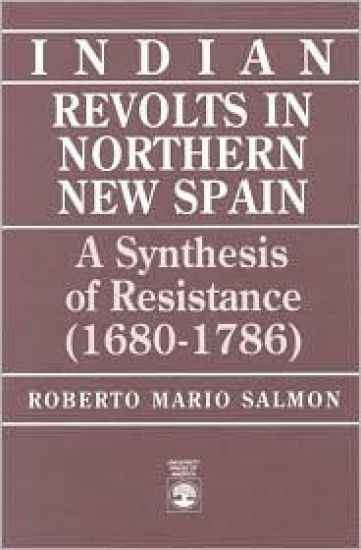
Indian Revolts in Northern New Spain

Indian Revolts in Northern New Spain

Roberto Mario Salmon

University Press of America
1990
nidottu
This book surveys and evaluates Indian revolts in northern New Spain during the years 1680-1786 in terms of specific Indian revolts, Spanish Indian policy over time, and relations between Spaniards, mestizo frontiersmen, and Indians. In this study, northern New Spain refers to what is now the Mexican North and the southwestern United States. This northern frontier came to encompass the provinces of Nueva Vizcaya, New Mexico, Sonora, Coahuila, Texas, Sinaloa, and the two Californias. This territory eventually became a separate, distinct administrative unit of colonial Spanish America. Contents: Settlement of Northern New Spain; Times of Trouble: Rise of the Tepehuan and Tarahumara Barrier; The Pueblo and Tarahumara Revolts; Missionaries and Bureaucrats: A Chaotic Arrangement; Frontier Warfare: A Legacy of Revolt 1724-1754; The Reorganization of Presidio Defenses; Creation of the Commandancy General and the Yuma Bid for Freedom, 1776-1782; Seri, Tarahumara, and Gileno Resist Military Defense on the Northern Frontier.
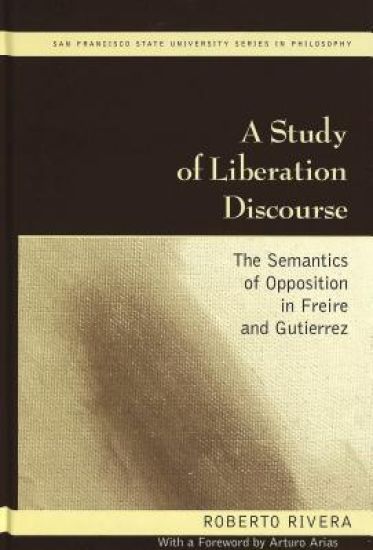
A Study of Liberation Discourse

A Study of Liberation Discourse

Roberto Rivera; Arturo Arias

Peter Lang Publishing Inc
2004
sidottu
This book counters postmodernist critiques of liberation discourses by drawing on the contributions to hermeneutics made by Paul Ricoeur and J rgen Habermas. Ultimately, its defense of liberation discourses relies on the concept of transculturation as developed by Fernando Ortiz. A Study of Liberation Discourse extends this concept in the light of contributions to the theory of ideology by such authors as Valentin Volosinov, Michel Pecheux, Terry Eagleton, and Norman Fairclough.
Annuities and Other Retirement Products

Annuities and Other Retirement Products

Roberto Rocha; Dimitri Vittas; Heinz P. Rudolph

World Bank Publications
2011
nidottu
Increasing longevity, globalized competition, and market fluidity have created a new landscape for the development of retirement products. Complete reliance on traditional social security systems and defined benefit pensions is no longer an alternative in emerging economies. The development of defined contribution pension systems during both the accumulation and the payout phases has been attracting attention from policy makers, who realize that valuable lessons can be gleaned from the experiences of countries that are ahead in the reform process.Many countries that have implemented systemic pension reforms and introduced private pension systems are now facing the challenge of organizing the payout phase for retiring workers. This effort entails introducing a well-regulated and well- supervised market for retirement products, including marketing activities, providers, and intermediaries. However, in-depth analysis of the related policy issues, constraints, and options is rare. The literature on the payout phase is narrowly focused on a few countries, mainly the United Kingdom and the United States, and it does not address in sufficient detail the institutional and regulatory issues faced by policy makers in reforming countries.Annuities and Other Retirement Products: Designing the Payout Phase aims to fill the gap in the literature. The book initially focuses on the policy issues and constraints confronting the design of the payout phase and examines risk factors for both pensioners and providers. It then scrutinizes the pension systems of five representative countries - Australia, Chile, Denmark, Sweden, and Switzerland - which provide a rich variety of experiences and policy lessons applicable to other reforming countries. The five study countries have large mandatory or quasi-mandatory private pension systems operating primarily on a defined contribution basis, and they have already entered the payout phase. A comparative analysis of the similarities and differences between the systems in these countries rounds out the investigation.
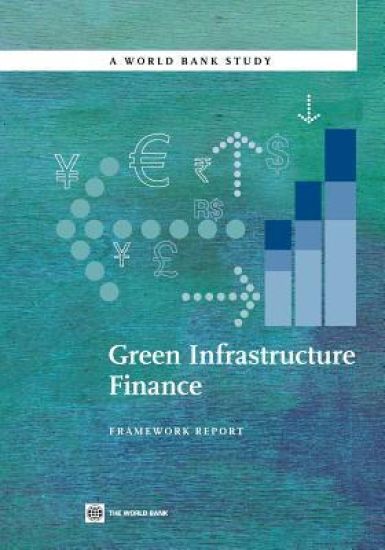
Green Infrastructure Finance

Green Infrastructure Finance

Roberto La Rocca; Andrey Shlyakhtenko

World Bank Publications
2012
nidottu
This report builds on the conclusions of the Green Infrastructure Finance: Leading Initiatives and Research report and lays out a simple and elegant way in which scarce public financing can leverage market interest in ‘greening’ infrastructure, particularly in the East Asia and Pacific Region. The framework introduced in the report bridges ideas and concepts between environmental economics and project finance practices and consists largely of an analytical methodology for determining the financial viability gap of low-emission projects and an approach for assessing and strengthening the green investment climate in a given country environment. The authors argue that the solution to the financing challenge of low-emission investments lies in understanding the causes of a given project’s financial viability gap, and then investigating how specific actions, including concessional financing, strategic subsidies and other public policy interventions and reforms, can be deployed in a complementary fashion to close the gap. The approach provides suggestions for appropriately allocating risks and responsibilities to various stakeholders for financing portions of the financial viability gap and recommends using multiple instruments and tools to make green investments viable. Governments, for example, could rebalance their own policy distortions with a mix of domestic instruments such as feed-in tariffs, direct subsidies, domestic carbon taxes, and other financing and fiscal incentives. The international community could contribute international instruments for monetizing the global externality benefits of green investments through concessional financing and direct grants. Such an approach results in hybrid financing structures designed to maximize the leveraging effect of public interventions.
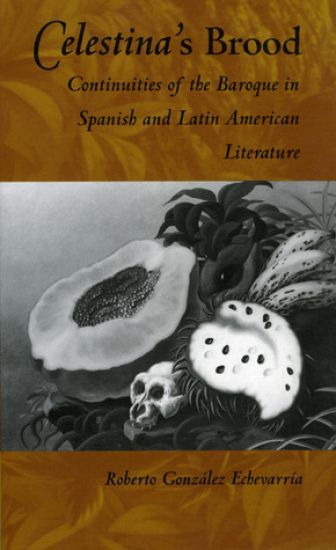
Celestina's Brood

Celestina's Brood

Roberto González Echevarría

Duke University Press
1993
sidottu
Published in 1499 and centered on the figure of a bawd and witch, Fernando de Rojas' dark and disturbing Celestina was destined to become the most suppressed classic in Spanish literary history. Routinely ignored in Spanish letters, the book nonetheless echoes through contemporary Spanish and Latin American literature. This is the phenomenon that Celestina's Brood explores.Roberto González Echevarría, one of the most eminent and influential critics of Hispanic literature writing today, uses Rojas' text as his starting point to offer an exploration of modernity in the Hispanic literary tradition, and of the Baroque as an expression of the modern. His analysis of Celestina reveals the relentless probing of the limits of language and morality that mark the work as the beginning of literary modernity in Spanish, and the start of a tradition distinguished by a penchant for the excesses of the Baroque. González Echevarría pursues this tradition and its meaning through the works of major figures such as Cervantes, Lope de Vega, Calderón de la Barca, Alejo Carpentier, Carlos Fuentes, Gabriel García Márquez, Nicolás Guillén, and Severo Sarduy, as well as through the works of lesser-known authors.By revealing continuities of the Baroque, Celestina's Brood cuts across conventional distinctions between Spanish and Latin American literary traditions to show their profound and previously unimagined affinity.
Celestina's Brood

Celestina's Brood

Roberto González Echevarría

Duke University Press
1993
pokkari
Published in 1499 and centered on the figure of a bawd and witch, Fernando de Rojas' dark and disturbing Celestina was destined to become the most suppressed classic in Spanish literary history. Routinely ignored in Spanish letters, the book nonetheless echoes through contemporary Spanish and Latin American literature. This is the phenomenon that Celestina's Brood explores.Roberto González Echevarría, one of the most eminent and influential critics of Hispanic literature writing today, uses Rojas' text as his starting point to offer an exploration of modernity in the Hispanic literary tradition, and of the Baroque as an expression of the modern. His analysis of Celestina reveals the relentless probing of the limits of language and morality that mark the work as the beginning of literary modernity in Spanish, and the start of a tradition distinguished by a penchant for the excesses of the Baroque. González Echevarría pursues this tradition and its meaning through the works of major figures such as Cervantes, Lope de Vega, Calderón de la Barca, Alejo Carpentier, Carlos Fuentes, Gabriel García Márquez, Nicolás Guillén, and Severo Sarduy, as well as through the works of lesser-known authors.By revealing continuities of the Baroque, Celestina's Brood cuts across conventional distinctions between Spanish and Latin American literary traditions to show their profound and previously unimagined affinity.
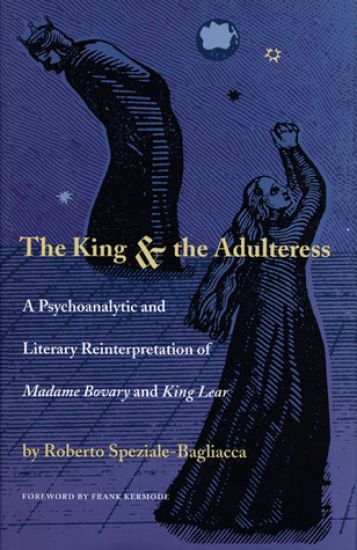
The King and the Adulteress

The King and the Adulteress

Roberto Speziale-Bagliacca

Duke University Press
1998
sidottu
The King and the Adulteress brings together two essays that propose radically revisionary readings of two of the most important literary works in the Western canon, Flaubert’s Madame Bovary and Shakespeare’s King Lear. In offering a new understanding of a deeply sadomasochistic relationship and of an authoritarian pathology, renowned psychoanalyst Roberto Speziale-Bagliacca combines psychoanalysis with literary studies to challenge the conventional judgments of readers and the stereotyped interpretations of literary critics to these masterpieces.Approaching the characters in Bovary and Lear from both an analytic and a critical viewpoint, Speziale-Bagliacca reinterprets many issues and events that involve archetypal figures of modern literary mythology. In fact, he reverses much of the received opinion about them. Charles Bovary, for example, far from being a victim of his wife’s neurotic restlessness or the epitome of a passive imbecile, is a masochist of the highest order who makes a decisive contribution to Emma’s miserable end. Lear, rather than a tragedy involving the sweet Cordelia, noble Kent, and the Fool as good and loyal supporters of an old king driven to madness by his overbearing evil daughters, is precisely the opposite. The sympathetic understanding of the reader should go, Speziale-Bagliacca suggests, also to Regan, Goneril, and Edmund, while the king, whose crisis is interpreted in the light of psychoanalytic findings on depression, finally becomes the true unbeloved "bastard" of the play. Roberto Speziale-Bagliacca is a psychoanalyst and Professor of Psychotherapy at the Medical School of the University of Genoa. He is the author of On the Shoulders of Freud and many other works.
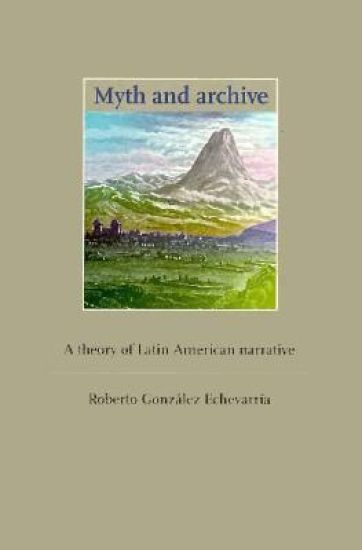
Myth and Archive

Myth and Archive

Roberto González Echevarría

Duke University Press
1998
pokkari
Myth and Archive presents a new theory of the origin and evolution of Latin American literature and the emergence of the modern novel. In this influential, award-winning exploration of Latin American writing from colonial times to the present, Roberto GonzÁlez EchevarrÍa dispenses with traditional literary history to reveal the indebted relationship of the novel to legal, scientific, and anthropological discourses. Providing ways to link literary and nonliterary narratives, GonzÁlez EchevarrÍa examines a variety of archival writings-from the chronicles of the discovery and conquest of the New World to scientific travel narratives and records of criminal confessions-and explores the relationship of these writings to novels by authors such as GarcÍa MÁrquez, Borges, Barnet, Sarmiento, Carpentier, and Garcilaso de la Vega. Moving beyond demonstrating that early forms of creative narrative had their geneses in the sixteenth-century authoritative discourse of the Spanish Empire, GonzÁlez EchevarrÍa shows how this same originating process has been repeated in other key moments in the history of the Latin American narrative. He shows how the discourse of scientific discovery was the model for much nineteenth-century literature, as well as how anthropological writings on the nature of language and myth have come to shape the ideology and form of literature in the twentieth century. This most recent form of Latin American narrative creates its own mythic form through an atavistic return to its legal origins-the archive. This acclaimed book-originally published in 1990-will be of continuing interest to historians, anthropologists, literary theorists, and students of Latin American culture.
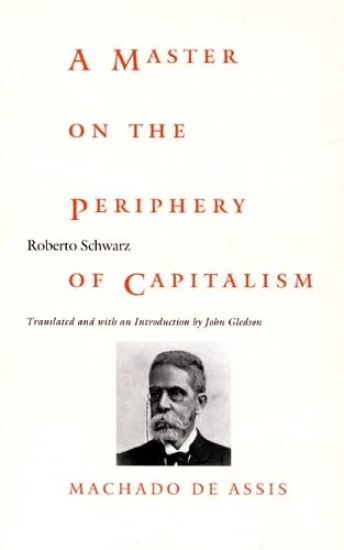
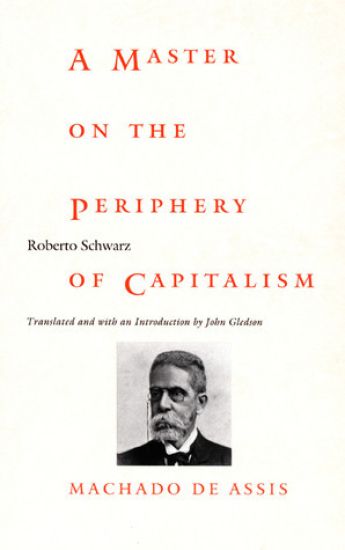
A Master on the Periphery of Capitalism

A Master on the Periphery of Capitalism

Roberto Schwarz

Duke University Press
2001
sidottu
A Master on the Periphery of Capitalism is a translation (from the original Portuguese) of Roberto Schwarz’s renowned study of the work of Brazilian novelist Machado de Assis (1839–1908). A leading Brazilian theorist and author of the highly influential notion of “misplaced ideas,” Schwarz focuses his literary and cultural analysis on Machado’s The Posthumous Memoirs of Brás Cubas, which was published in 1880. Writing in the Marxist tradition, Schwarz investigates in particular how social structure gets internalized as literary form, arguing that Machado’s style replicates and reveals the deeply embedded class divisions of nineteenth-century Brazil. Widely acknowledged as the most important novelist to have written in Latin America before 1940, Machado had a surprisingly modern style. Schwarz notes that the unprecedented wit, sarcasm, structural inventiveness, and mercurial changes of tone and subject matter found in The Posthumous Memoirs of Brás Cubas marked a crucial moment in the history of Latin American literature. He argues that Machado’s vanguard narrative reflects the Brazilian owner class and its peculiar status in both national and international contexts, and shows why this novel’s success was no accident. The author was able to confront some of the most prestigious ideologies of the nineteenth century with some uncomfortable truths, not the least of which was that slavery remained the basis of the Brazilian economy.A Master on the Periphery of Capitalism will appeal to those with interests in Latin American literature, nineteenth century history, and Marxist literary theory.
A Master on the Periphery of Capitalism

A Master on the Periphery of Capitalism

Roberto Schwarz

Duke University Press
2001
pokkari
A translation of Roberto Schwarz's study of Machado de Assis's "The Posthumous Memoirs of Bras Cubas". Writing in the Marxist tradition, it examines how social structure gets internalized as literary form, arguing that Machado's style reveals the class divisions of 19th-century Brazil.
Mad Toy

Mad Toy

Roberto Arlt

Duke University Press
2002
sidottu
Roberto Arlt, celebrated in Argentina for his tragicomic, punch-in-the-jaw writing during the 1920s and 1930s, was a forerunner of Latin American “boom” and “postboom” novelists such as Gabriel García Márquez and Isabel Allende. Mad Toy, acclaimed by many as Arlt’s best novel, is set against the chaotic background of Buenos Aires in the early twentieth century. Set in the badlands of adolescence, where acts of theft and betrayal become metaphors for creativity, Mad Toy is equal parts pulp fiction, realism, detective story, expressionist drama, and creative memoir. An immigrant son of a German father and an Italian mother, Arlt as a youth was a school dropout, poor and often hungry. In Mad Toy, he incorporates his personal experience into the lives of his characters. Published in 1926 as El juguete rabioso, the novel follows the adventures of Silvio Astier, a poverty-stricken and frustrated youth who is drawn to gangs and a life of petty crime. As Silvio struggles to bridge the gap between exuberant imagination and the sordid reality around him, he becomes fascinated with weapons, explosives, vandalism, and thievery, despite a desperate desire to rise above his origins. Flavored with a dash of romance, a hint of allegory, and a healthy dose of irony, the novel’s language varies from the cultured idiom of the narrator to the dialects and street slang of the novel’s many colorful characters. Mad Toy has appeared in numerous Spanish editions and has been adapted for the stage and for film. It is the second of Arlt’s novels to be translated into English.
Mad Toy

Mad Toy

Roberto Arlt

Duke University Press
2002
pokkari
Roberto Arlt, celebrated in Argentina for his tragicomic, punch-in-the-jaw writing during the 1920s and 1930s, was a forerunner of Latin American “boom” and “postboom” novelists such as Gabriel García Márquez and Isabel Allende. Mad Toy, acclaimed by many as Arlt’s best novel, is set against the chaotic background of Buenos Aires in the early twentieth century. Set in the badlands of adolescence, where acts of theft and betrayal become metaphors for creativity, Mad Toy is equal parts pulp fiction, realism, detective story, expressionist drama, and creative memoir. An immigrant son of a German father and an Italian mother, Arlt as a youth was a school dropout, poor and often hungry. In Mad Toy, he incorporates his personal experience into the lives of his characters. Published in 1926 as El juguete rabioso, the novel follows the adventures of Silvio Astier, a poverty-stricken and frustrated youth who is drawn to gangs and a life of petty crime. As Silvio struggles to bridge the gap between exuberant imagination and the sordid reality around him, he becomes fascinated with weapons, explosives, vandalism, and thievery, despite a desperate desire to rise above his origins. Flavored with a dash of romance, a hint of allegory, and a healthy dose of irony, the novel’s language varies from the cultured idiom of the narrator to the dialects and street slang of the novel’s many colorful characters. Mad Toy has appeared in numerous Spanish editions and has been adapted for the stage and for film. It is the second of Arlt’s novels to be translated into English.
Europe (in Theory)

Europe (in Theory)

Roberto M. Dainotto

Duke University Press
2007
sidottu
Europe (in Theory) is an innovative analysis of eighteenth- and nineteenth-century ideas about Europe that continue to inform thinking about culture, politics, and identity today. Drawing on insights from subaltern and postcolonial studies, Roberto M. Dainotto deconstructs imperialism not from the so-called periphery but from within Europe itself. He proposes a genealogy of Eurocentrism that accounts for the way modern theories of Europe have marginalized the continent’s own southern region, portraying countries including Greece, Italy, Spain, and Portugal as irrational, corrupt, and clan-based in comparison to the rational, civic-minded nations of northern Europe. Dainotto argues that beginning with Montesquieu’s The Spirit of Laws (1748), Europe not only defined itself against an “Oriental” other but also against elements within its own borders: its South. He locates the roots of Eurocentrism in this disavowal; internalizing the other made it possible to understand and explain Europe without reference to anything beyond its boundaries.Dainotto synthesizes a vast array of literary, philosophical, and historical works by authors from different parts of Europe. He scrutinizes theories that came to dominate thinking about the continent, including Montesquieu’s invention of Europe’s north-south divide, Hegel’s “two Europes,” and Madame de Staël’s idea of opposing European literatures: a modern one from the North, and a pre-modern one from the South. At the same time, Dainotto brings to light counter-narratives written from Europe’s margins, such as the Spanish Jesuit Juan Andrés’s suggestion that the origins of modern European culture were eastern rather than northern and the Italian Orientalist Michele Amari’s assertion that the South was the cradle of a social democracy brought to Europe via Islam.
Europe (in Theory)

Europe (in Theory)

Roberto M. Dainotto

Duke University Press
2007
pokkari
Europe (in Theory) is an innovative analysis of eighteenth- and nineteenth-century ideas about Europe that continue to inform thinking about culture, politics, and identity today. Drawing on insights from subaltern and postcolonial studies, Roberto M. Dainotto deconstructs imperialism not from the so-called periphery but from within Europe itself. He proposes a genealogy of Eurocentrism that accounts for the way modern theories of Europe have marginalized the continent’s own southern region, portraying countries including Greece, Italy, Spain, and Portugal as irrational, corrupt, and clan-based in comparison to the rational, civic-minded nations of northern Europe. Dainotto argues that beginning with Montesquieu’s The Spirit of Laws (1748), Europe not only defined itself against an “Oriental” other but also against elements within its own borders: its South. He locates the roots of Eurocentrism in this disavowal; internalizing the other made it possible to understand and explain Europe without reference to anything beyond its boundaries.Dainotto synthesizes a vast array of literary, philosophical, and historical works by authors from different parts of Europe. He scrutinizes theories that came to dominate thinking about the continent, including Montesquieu’s invention of Europe’s north-south divide, Hegel’s “two Europes,” and Madame de Staël’s idea of opposing European literatures: a modern one from the North, and a pre-modern one from the South. At the same time, Dainotto brings to light counter-narratives written from Europe’s margins, such as the Spanish Jesuit Juan Andrés’s suggestion that the origins of modern European culture were eastern rather than northern and the Italian Orientalist Michele Amari’s assertion that the South was the cradle of a social democracy brought to Europe via Islam.
The Professional Guinea Pig

The Professional Guinea Pig

Roberto Abadie

Duke University Press
2010
sidottu
The Professional Guinea Pig documents the emergence of the professional research subject in Phase I clinical trials testing the safety of drugs in development. Until the mid-1970s Phase I trials were conducted on prisoners. After that practice was outlawed, the pharmaceutical industry needed a replacement population and began to aggressively recruit healthy, paid subjects, some of whom came to depend on the income, earning their living by continuously taking part in these trials. Drawing on ethnographic research among self-identified “professional guinea pigs” in Philadelphia, Roberto Abadie examines their experiences and views on the conduct of the trials and the risks they assume by participating. Some of the research subjects he met had taken part in more than eighty Phase I trials. While the professional guinea pigs tended to believe that most clinical trials pose only a moderate health risk, Abadie contends that the hazards presented by continuous participation, such as exposure to potentially dangerous drug interactions, are discounted or ignored by research subjects in need of money. The risks to professional guinea pigs are also disregarded by the pharmaceutical industry, which has become dependent on the routine participation of experienced research subjects. Arguing that financial incentives compromise the ethical imperative for informed consent to be freely given by clinical-trials subjects, Abadie confirms the need to reform policies regulating the participation of paid subjects in Phase I clinical trials.
The Professional Guinea Pig

The Professional Guinea Pig

Roberto Abadie

Duke University Press
2010
pokkari
The Professional Guinea Pig documents the emergence of the professional research subject in Phase I clinical trials testing the safety of drugs in development. Until the mid-1970s Phase I trials were conducted on prisoners. After that practice was outlawed, the pharmaceutical industry needed a replacement population and began to aggressively recruit healthy, paid subjects, some of whom came to depend on the income, earning their living by continuously taking part in these trials. Drawing on ethnographic research among self-identified “professional guinea pigs” in Philadelphia, Roberto Abadie examines their experiences and views on the conduct of the trials and the risks they assume by participating. Some of the research subjects he met had taken part in more than eighty Phase I trials. While the professional guinea pigs tended to believe that most clinical trials pose only a moderate health risk, Abadie contends that the hazards presented by continuous participation, such as exposure to potentially dangerous drug interactions, are discounted or ignored by research subjects in need of money. The risks to professional guinea pigs are also disregarded by the pharmaceutical industry, which has become dependent on the routine participation of experienced research subjects. Arguing that financial incentives compromise the ethical imperative for informed consent to be freely given by clinical-trials subjects, Abadie confirms the need to reform policies regulating the participation of paid subjects in Phase I clinical trials.
Terms of the Political

Terms of the Political

Roberto Esposito

Fordham University Press
2012
sidottu
Terms of the Political: Community, Immunity, Biopolitics presents a decade of thought about the origins and possibilities of political theory from one of contemporary Italy's most prolific and engaging political theorists, Roberto Esposito. He has coined a number of critical concepts in current debates about the past, present, and future of biopolitics—from his work on the implications of the etymological and philosophical kinship of community (communitas) and immunity (immunitas) to his theorizations of the impolitical and the impersonal. Taking on interlocutors from throughout the Western philosophical tradition, from Aristotle and Augustine to Weil, Arendt, Nancy, Foucault, and Agamben, Esposito announces the eclipse of a modern political lexicon—"freedom," "democracy," "sovereignty," and "law"—that, in its attempt to protect human life, has so often produced its opposite (violence, melancholy, and death). Terms of the Political calls for the opening of political thought toward a resignification of these and other operative terms—such as "community," "immunity," "biopolitics," and "the impersonal"—in ways that affirm rather than negate life. An invaluable introduction to the breadth and rigor of Esposito's thought, the book will also welcome readers already familiar with Esposito's characteristic skill in overturning and breaking open the language of politics.