Kirjojen hintavertailu. Mukana 12 016 292 kirjaa ja 12 kauppaa.

Kirjahaku

Etsi kirjoja tekijän nimen, kirjan nimen tai ISBN:n perusteella.

1000 tulosta hakusanalla SIDNEY RANDALL

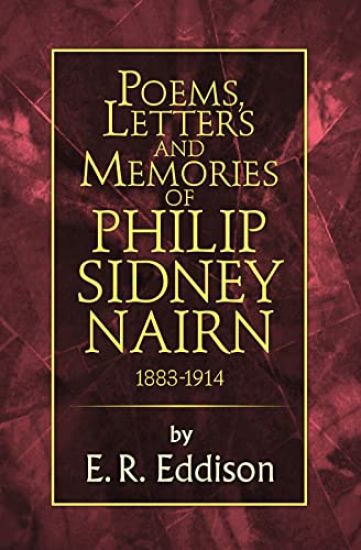
Poems, Letters and Memories of Philip Sidney Nairn

Poems, Letters and Memories of Philip Sidney Nairn

E. R. Eddison

HARPERCOLLINS PUBLISHERS
2014
nidottu
A poignant memoir and tribute to the Oxford poet Nairnby the author who went on to create The Worm Ouroborosand the groundbreaking Zimiamvia fantasy trilogy. Eric Rucker Eddison’s first book, originally published privately in hardback during the First World War, is a poignant memoir and tribute to the Oxford poet Philip Sidney Fletcher Nairn, whose work was so inspired by his Scottish ancestry, life in the Lake District, and his subsequent travels across Asia. This first official paperback edition includes a poignant and evocative biography, a dozen photographs, and more than 50 of Nairn’s poems, and marks the centenary of his untimely death in Kuala Lumpur in May 1914, aged just 30 years old.
The Correspondence (c. 1626–1659) of Dorothy Percy Sidney, Countess of Leicester

The Correspondence (c. 1626–1659) of Dorothy Percy Sidney, Countess of Leicester

Michael G. Brennan; Noel J. Kinnamon

Ashgate Publishing Limited
2010
sidottu
The letters of Dorothy Percy Sidney, Countess of Leicester, dating predominantly from about 1636 until 1643, cover a wide range of issues and vividly illustrate her centrality to her illustrious family's personal and public affairs. These c.100 letters are here for the first time fully transcribed and edited. The edition includes a biographical and historical introduction, setting the context of the Sidneys' family and political activities at the time of Dorothy's marriage to Robert in 1615 and then tracing the major events and involvements of her life until her death in 1659. A key to the cipher used in the letters to disguise identities of individuals is also supplied. Following the introduction is the complete text of each of Dorothy Percy Sidney's letters to her husband, Robert, second Earl of Leicester, and to and from William Hawkins, the Sidney family solicitor, along with several others, including letters from Dorothy to Archbishop Laud and the Earl of Holland. Her husband's account of her last moments in 1659, and testamentary directions relating to her will, are also included. The letters are arranged in chronological order and supported by a series of footnotes that elucidate their historical context and briefly to identify key individuals, places, political issues and personal concerns. These notes are further supported by selective quotations from Dorothy's incoming correspondence and other related letters and documents. A glossary supplies more detailed information on 'Persons and Places.' Dorothy Percy Sidney's letters eloquently convey how, even with her undoubted personal potency and shrewd intelligence, the multifaceted roles expected of an able and determined aristocratic early modern Englishwoman-especially when her husband was occupied abroad on official business-were intensely demanding and testing.
The Inevitability of Communism; a Critique of Sidney Hook's Interpretation of Marx
This work has been selected by scholars as being culturally important and is part of the knowledge base of civilization as we know it.This work is in the public domain in the United States of America, and possibly other nations. Within the United States, you may freely copy and distribute this work, as no entity (individual or corporate) has a copyright on the body of the work.Scholars believe, and we concur, that this work is important enough to be preserved, reproduced, and made generally available to the public. To ensure a quality reading experience, this work has been proofread and republished using a format that seamlessly blends the original graphical elements with text in an easy-to-read typeface.We appreciate your support of the preservation process, and thank you for being an important part of keeping this knowledge alive and relevant.
The Inevitability of Communism; a Critique of Sidney Hook's Interpretation of Marx
This work has been selected by scholars as being culturally important and is part of the knowledge base of civilization as we know it.This work is in the public domain in the United States of America, and possibly other nations. Within the United States, you may freely copy and distribute this work, as no entity (individual or corporate) has a copyright on the body of the work.Scholars believe, and we concur, that this work is important enough to be preserved, reproduced, and made generally available to the public. To ensure a quality reading experience, this work has been proofread and republished using a format that seamlessly blends the original graphical elements with text in an easy-to-read typeface.We appreciate your support of the preservation process, and thank you for being an important part of keeping this knowledge alive and relevant.
The Correspondence (c. 1626–1659) of Dorothy Percy Sidney, Countess of Leicester

The Correspondence (c. 1626–1659) of Dorothy Percy Sidney, Countess of Leicester

Michael G. Brennan; Noel J. Kinnamon

TAYLOR FRANCIS LTD
2024
nidottu
The letters of Dorothy Percy Sidney, Countess of Leicester, dating predominantly from about 1636 until 1643, cover a wide range of issues and vividly illustrate her centrality to her illustrious family's personal and public affairs. These c.100 letters are here for the first time fully transcribed and edited. The edition includes a biographical and historical introduction, setting the context of the Sidneys' family and political activities at the time of Dorothy's marriage to Robert in 1615 and then tracing the major events and involvements of her life until her death in 1659. A key to the cipher used in the letters to disguise identities of individuals is also supplied. Following the introduction is the complete text of each of Dorothy Percy Sidney's letters to her husband, Robert, second Earl of Leicester, and to and from William Hawkins, the Sidney family solicitor, along with several others, including letters from Dorothy to Archbishop Laud and the Earl of Holland. Her husband's account of her last moments in 1659, and testamentary directions relating to her will, are also included. The letters are arranged in chronological order and supported by a series of footnotes that elucidate their historical context and briefly to identify key individuals, places, political issues and personal concerns. These notes are further supported by selective quotations from Dorothy's incoming correspondence and other related letters and documents. A glossary supplies more detailed information on 'Persons and Places.' Dorothy Percy Sidney's letters eloquently convey how, even with her undoubted personal potency and shrewd intelligence, the multifaceted roles expected of an able and determined aristocratic early modern Englishwoman-especially when her husband was occupied abroad on official business-were intensely demanding and testing.
Terence. with Six Illustrations by Sidney Paget.

Terence. with Six Illustrations by Sidney Paget.

Bithia Mary Croker

British Library, Historical Print Editions
2011
pokkari
Title: Terence ... With six illustrations by Sidney Paget.Publisher: British Library, Historical Print EditionsThe British Library is the national library of the United Kingdom. It is one of the world's largest research libraries holding over 150 million items in all known languages and formats: books, journals, newspapers, sound recordings, patents, maps, stamps, prints and much more. Its collections include around 14 million books, along with substantial additional collections of manuscripts and historical items dating back as far as 300 BC.The FICTION & PROSE LITERATURE collection includes books from the British Library digitised by Microsoft. The collection provides readers with a perspective of the world from some of the 18th and 19th century's most talented writers. Written for a range of audiences, these works are a treasure for any curious reader looking to see the world through the eyes of ages past. Beyond the main body of works the collection also includes song-books, comedy, and works of satire. ++++The below data was compiled from various identification fields in the bibliographic record of this title. This data is provided as an additional tool in helping to insure edition identification: ++++ British Library Croker, Bithia Mary; 1899.]. viii. 342 p.; 8 . 012622.f.53.
The Complete Works of William Shakespeare: Cymbeline: With Annotations and a General Introduction by Sidney Lee
The Complete Works of William Shakespeare Cymbeline with Annotations and a General Introduction by Sidney Lee By William Shakespeare Introduction If it could be assumed, with any strong probability, that "Cymbeline," which ends the First Folio, was really the last play which Shakespeare wrote, several difficulties which present themselves in connection with it might be resolved at once. It contains one of the most perfect of Shakespeare's women, two gallant boys, a notable villain; with rapid, summarising studies in jealousy, a murderous queen, a royal clown, done as if from memory or on second thoughts. There are pastoral scenes in it which can only be compared with the pastoral scenes in "The Winter's Tale"; and they are written in verse of the same free and happy cadence. Yet the play is thrown together loosely, rather as if it were a novel, to be read, than a play, to be acted. The action is complicated here, neglected there. A scene of sixteen lines is introduced to say that the tribunes are required to raise more forces for the war, and that Lucius is to be general. The last scene is five hundred lines long, and has to do as much business as all the rest of the play. The playwright seems no longer to have patience with his medium; it is as if his interest had gone out of it, and he were using it as the only makeshift at hand. Most artists, at the end of their careers, become discontented with the form in which they have worked. They have succeeded through obedience to this form, but it seems to them that a rarer success lies, uncaptured, outside those limits. They are tempted by what seems lawless in life itself; by what is certainly various and elastic in life. They are impatient with the slowness of results, with their rigidity, inside those inexorable limits. The technique which they have perfected seems to them too perfect; something cries out of chains, and they would set the voice, or Ariel, free. That spirit, I think, we see in the later plays of Shakespeare, in which not only does metre dissolve and reform, in some new, fluctuant way of its own, but the whole structure becomes vaporous, and floats out through the solid walls of the theatre. Even "The Tempest," when I have seen it acted, lost the greater part of its magic, and was no longer that "cloudcapt" promontory in "faery seas forlorn," the last foothold of human life on the edge of the world. What sense of loss do we feel when we see "Othello" acted? "Othello" has nothing to lose; the playwright has never forgotten the walls of his theatre. In "Cymbeline" he is frankly tired of them. "Cymbeline" is a romance, made out of Holinshed, and Boccaccio, and perhaps nursery stories, and it is that happiest kind of romance... ------------------------------------------------------------------------------------------------------------------------------------------ Windham Press is committed to bringing the lost cultural heritage of ages past into the 21st century through high-quality reproductions of original, classic printed works at affordable prices. This book has been carefully crafted to utilize the original images of antique books rather than error-prone OCR text. This also preserves the work of the original typesetters of these classics, unknown craftsmen who laid out the text, often by hand, of each and every page you will read. Their subtle art involving judgment and interaction with the text is in many ways superior and more human than the mechanical methods utilized today, and gave each book a unique, hand-crafted feel in its text that connected the reader organically to the art of bindery and book-making. We think these benefits are worth the occasional imperfection resulting from the age of these books at the time of scanning, and their vintage feel provides a connection to the past that goes beyond the mere words of the text.
You're Not a Proper Pirate, Sidney Green!
A hilarious read-aloud picture book for any child aged 3-6 with a big imagination!Sidney Green loves going on rip-roaring adventures with his dog, Jemima. Together, they race cars, sail all the way to Africa and build an enormous castle, complete with a moat full of crocodiles. But Captain Shipshape and his pirate band are NOT happy. They think it's time for Sidney Green to become a Proper Pirate - right now, not "in a minute". What will Sidney Green do?A witty and poignant tale by rising star Ruth Quayle and with artwork by award-winning Deborah Allwright, illustrator of The Night Pirates and There is No Dragon in This Story.
You're Not a Proper Pirate, Sidney Green!
A hilarious read-aloud picture book for any child aged 3-6 with a big imagination!Sidney Green loves going on rip-roaring adventures with his dog, Jemima. Together, they race cars, sail all the way to Africa and build an enormous castle, complete with a moat full of crocodiles. But Captain Shipshape and his pirate band are NOT happy. They think it's time for Sidney Green to become a Proper Pirate - right now, not "in a minute". What will Sidney Green do?A witty and poignant tale by rising star Ruth Quayle and with artwork by award-winning Deborah Allwright, illustrator of The Night Pirates and There is No Dragon in This Story.
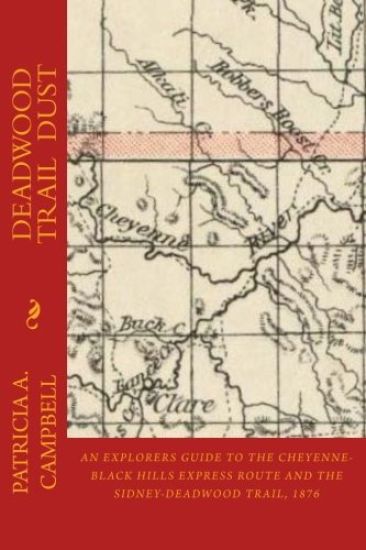
Deadwood Trail Dust: An Explorers Guide to the Cheyenne-Black Hills Express Route and the Sidney-Deadwood Trail, 1876
1876 was a momentous year during the Black Hills Gold Rush. The author's research on the famous Cheyenne-Black Hills Stage and Express Route, led her to numerous maps and descriptions about the trail, with dashes and dots, and a few geographical features. To better understand these stage stations and her ancestor's role as shotgun messengers, the author began to document what can still be seen today. Using the locations in this book, you can see where many of the stations used to be situated, including old horse corrals, telegraph wire roads, relics of possible stations, and numerous trail ruts made by heavy freight across the prairie. Campbell relates, "While it's been difficult to know exactly where the wheels on the famous coach rolled all of the time, it is possible to see many aspects of the Deadwood Stage route using satellite imagery based on early maps. All the credit goes to those dedicated individuals who preserved the trail years ago before there were computers. Thankfully, we no longer need to use a surveyor's measuring wheel and give dimensions in chains to study the old trail."