Kirjojen hintavertailu. Mukana 12 016 292 kirjaa ja 12 kauppaa.

Kirjahaku

Etsi kirjoja tekijän nimen, kirjan nimen tai ISBN:n perusteella.

1000 tulosta hakusanalla Sean P. Cunningham

The Law of Waiver, Variation and Estoppel

The Law of Waiver, Variation and Estoppel

Sean Wilken; Karim Ghaly

Oxford University Press
2012
sidottu
The doctrines of waiver, variation and estoppel are relied upon to justify or criticize a party's changed position as to its contractual obligations. This book provides a complete practitioner guide to these complex but important doctrines, analysing their basic foundations and their relationship with other areas of law including contract, restitution, and equity. As well as clarifying and explaining these doctrines in relation to other areas it also considers their application in various aspects of commercial law. This new edition provides a thorough analysis of the increasing trend in commercial parties to insert "no waiver" clauses into contracts and considers the behaviour adopted by the courts in relation to these and other matters. It also includes coverage of important cases such as the House of Lords decision in Yeoman v Cobbe, Dallah Real Estate v Pakistan Ministry of Religious Affairs and those such as the Scottish decision in City Inns which demonstrate an on-going confusion and uncertainty in the analysis and application of these doctrines.
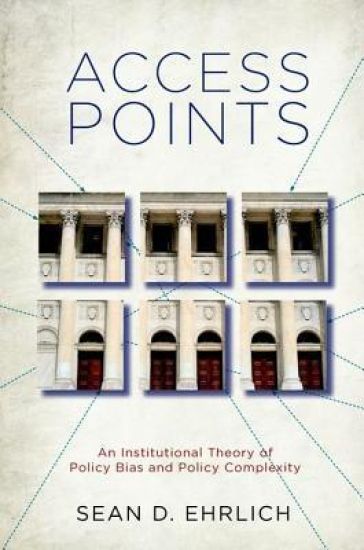
Access Points

Access Points

Sean D. Ehrlich

Oxford University Press Inc
2011
sidottu
Access Points develops a new theory about how democratic institutions influence policy outcomes. Access Point Theory argues that the more points of access that institutions provide to interest groups, the cheaper lobbying will be, and, thus, the more lobbying will occur. This will lead to more complex policy, as policymakers insert specific provisions to benefit special interests, and, if one side of the debate has a lobbying advantage, to more biased policy, as the advantaged side is able to better take advantage of the cheaper lobbying. This book then uses Access Point Theory to explain why some countries have more protectionist and more complex trade policies than other; why some countries have stronger environmental and banking regulations than others; and why some countries have more complicated tax codes than others. In policy area after policy area, this book finds that more access points lead to more biased and more complex policy. Access Points provides scholars with a powerful tool to explain how political institutions matter and why countries implement the policies they do.
Access Points

Access Points

Sean D. Ehrlich

Oxford University Press Inc
2011
nidottu
Access Points develops a new theory about how democratic institutions influence policy outcomes. Access Point Theory argues that the more points of access that institutions provide to interest groups, the cheaper lobbying will be, and, thus, the more lobbying will occur. This will lead to more complex policy, as policymakers insert specific provisions to benefit special interests, and, if one side of the debate has a lobbying advantage, to more biased policy, as the advantaged side is able to better take advantage of the cheaper lobbying. This book then uses Access Point Theory to explain why some countries have more protectionist and more complex trade policies than other; why some countries have stronger environmental and banking regulations than others; and why some countries have more complicated tax codes than others. In policy area after policy area, this book finds that more access points lead to more biased and more complex policy. Access Points provides scholars with a powerful tool to explain how political institutions matter and why countries implement the policies they do.
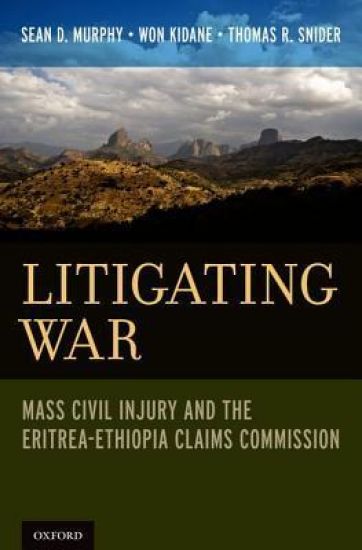
Litigating War

Litigating War

Sean D. Murphy; Won Kidane; Thomas R. Snider

Oxford University Press Inc
2013
sidottu
Litigating War offers an in-depth examination of the law and procedure of the Eritrea-Ethiopia Claims Commission, which was tasked with deciding, through binding arbitration, claims for losses, damages, and injuries resulting from the 1998-2000 Eritrean-Ethiopian war. After providing an overview of the war, the authors describe how the Commission was established, its jurisdiction, the sources of law it applied, its treatment of nationality and evidentiary issues, and the relief it rendered. Separate chapters then address particular topics, such as the initiation of the war, battlefield conduct, belligerent occupation, aerial bombardment, prisoners of war, enemy aliens and their property, diplomats and diplomatic property, and general economic loss. A final chapter examines the lessons that might be learned from the experience of the Claims Commission, especially with an eye to the establishment of such commissions in the future. The volume includes a preface from James Crawford and also reproduces all the key documents relating to the Commission: the bilateral agreement establishing the Commission; its rules of procedure; and its numerous decisions and arbitral awards. The analytical portion of the volume contains extensive cross-references to these primary documents. Further, a comprehensive table of contents and indexes relating to subject matter, treaties, and cases provide ready access to all the material contained within.
Congress: The First Branch

Congress: The First Branch

Sean M. Theriault; Mickey Edwards

Oxford University Press
2019
nidottu
Written by an award-winning political scientist and a former member of the U.S. House of Representatives who is now an instructor, Congress: The First Branch introduces students to the inner workings of Congress. The text examines the process by which laws are made and passed and the many factors that influence congressional decisions. Presenting the standard material covered in the typical Congress class, this text also pays special attention to the overarching trends in the legislature--specifically hyper-partisanship and the high rates of reelection for incumbents in the midst of very low public regard for the institution. Given all that is at stake, Congress: The First Branch highlights the role of Congress as a critical component in the separation-of-powers system and in creating law and policy for the United States. The combination of these elements creates a unique text that provides students with an insider's look at real life on Capitol Hill.
Work in Progress

Work in Progress

Sean Alexander Gurd

Oxford University Press Inc
2012
sidottu
Work in Progress offers an in-depth study of the role of literary revision in the compositional practices and representational strategies of Roman authors at the end of the republic and the beginning of the principate. It focuses on Cicero, Horace, Quintilian, Martial, and Pliny the Younger, but also offers discussions of Isocrates, Plato, and Hellenistic poetry. The book's central argument is that revision made textuality into a medium of social exchange. Revisions were not always made by authors working alone: often, they were the result of conversations between an author and friends or literary contacts, and these conversations exemplified a commitment to collective debate and active collaboration. Revision was thus much more than an unavoidable element in literary genesis: it was one way in which authorship became a form of social agency. Consequently, when we think about revision for authors of the late republic and early empire we should not think solely of painstaking attendance to craft aimed exclusively at the perfection of a literary work. Nor should we think of the resulting texts as closed and invariant statements sent from an author to his reader. So long as an author was still willing to revise, his text served as a temporary platform around and in which a community came into being. The theories of revision that guide the author's study come from the new genetic criticism that has been successfully applied, especially in Europe, to modern authors. While many of the tools of analysis applicable to modern authors (author-written manuscripts, corrected proofs, etc.) are not available for ancient authors, Sean Gurd has amassed a surprising number of passages in ancient texts about revision, its importance to the author, and the circle of critics involved in the process of rewriting.
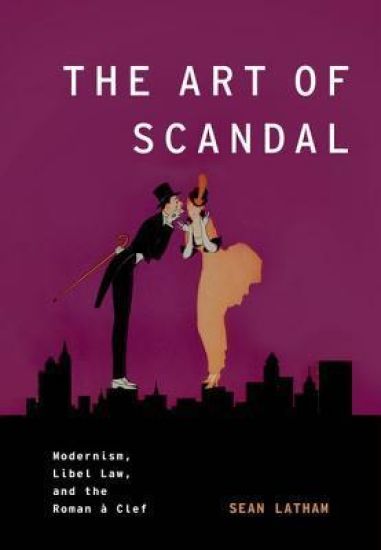
The Art of Scandal

The Art of Scandal

Sean Latham

Oxford University Press Inc
2012
nidottu
The Art of Scandal advances a relatively simple claim with far-reaching consequences for modernist studies: writers and readers throughout the early twentieth century revived the long-despised codes and habits of the roman á clef as a key part of that larger assault on Victorian realism we now call modernism. In the process, this resurgent genre took on a life of its own, reconfiguring the intricate relationship between literature, celebrity, and the law. Sean Latham summons cases of the novel's social notoriety--and the numerous legal scandals the form provoked--to articulate the material networks of reception and circulation through which modernism took shape, revealing a little explored popular history within its development. Producers as well as consumers used elements of the controversial roman á clef, a genre that challenges the idea of fiction as autonomous from the social and political world. In turn, this widespread practice provoked not only a generative aesthetic crisis, but also a gradually unfolding legal quandary that led Britain's highest courts to worry that fiction itself might be illegal. Modernism sat squarely, for a time, between literature and the law. With skillful close readings aided by extensive archival research, Latham illuminates the world of backbiting, gossip, litigation, and sensationalism through chapters on Oscar Wilde's trial, Joyce's Ulysses, celebrity salons, and Parisian bohemia. Original, colorful, and perceptive, The Art of Scandal both salvages the reputation of the roman á clef form and traces its curious itinerary through the early twentieth century. Seeking out the best new interdisciplinary work, this series explores the cultural bearings of literary modernism across multiple fields, geographies, symbolic forms, and media.
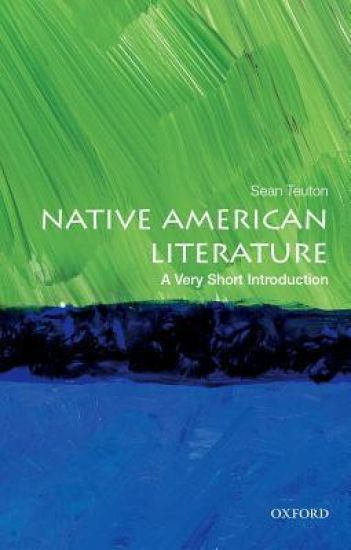
Native American Literature

Native American Literature

Sean Teuton

Oxford University Press Inc
2018
nidottu
In North America, the Indigenous literature we know today reaches back thousands of years to when the continent's original inhabitants first circled fires and shared tales of emergence and creation, journey and quest, heroism and trickery. Sean Teuton tells the story of Indigenous literature, from the time when oral narrative inspired the first Indigenous writers in English, through later writers' appropriation of genres to serve the creative and political needs of the times. In this lucid narrative he leads readers into the Indigenous worlds from which the literatures grows, where views about land and society and the role of humanity in the cosmos continue to enliven western understanding. In setting Indigenous literature in historical moments he elucidates its various purposes, from its ancient role in bringing rain or healing the body, to its later service in resisting European invasion and colonization, into its current place as a world literature that confronts dominance while it celebrates imagination and the resilience of Indigenous lives. Along the way readers encounter the diversity of Indigenous peoples who, owing to their differing lands, livelihoods, and customs, evolved literatures adapted to a nation's specific needs. While, in the nineteenth century, public lecture and journalism fortified eastern Indigenous writers against removal west, nearly a century later autobiography enabled western Indigenous authors to tell their side of the winning of the west. Throughout he treats Indigenous literature with such complexity. He describes the single-handed invention of a written Indigenous language, the first Indigenous language newspaper, and the literary occupation of Alcatraz Island. Returning to contemporary poetry, drama, and novel by authors such as D'Arcy McNickle, Leslie Silko, Sherman Alexie, Louise Erdrich, Craig Womack, Teuton demonstrates that, like Indigenous people, Indigenous literature survives because it adapts, honoring the past yet reaching for the future. ABOUT THE SERIES: The Very Short Introductions series from Oxford University Press contains hundreds of titles in almost every subject area. These pocket-sized books are the perfect way to get ahead in a new subject quickly. Our expert authors combine facts, analysis, perspective, new ideas, and enthusiasm to make interesting and challenging topics highly readable.
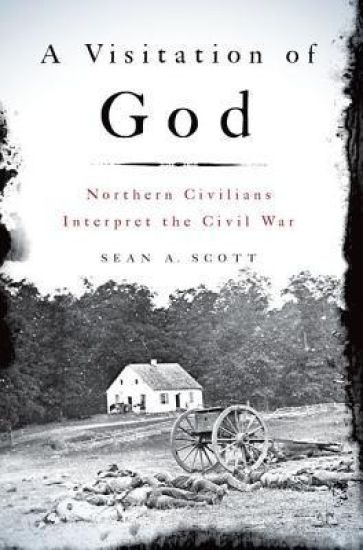
A Visitation of God

A Visitation of God

Sean A. Scott

Oxford University Press Inc
2013
nidottu
This book examines the Civil War from the perspective of the northern laity, those religious civilians whose personal faith influenced their views on politics and slavery, helped them cope with physical separation and death engendered by the war, and ultimately enabled them to discern the hand of God in the struggle to preserve the national Union. From Lincoln's election to his assassination, the book weaves together political, military, social, and intellectual history into a religious narrative of the Civil War on the northern home front. Packed with compelling human interest stories, this account draws on letters, diaries, newspapers and church records along with published sources to conclusively demonstrate that many devout civilians regarded the Civil War as a contest imbued with religious meaning. In the process of giving their loyal support to the government as individual citizens, religious Northerners politicized the church as a collective institution and used it to uphold the Union so the purified nation could promote Christianity around the world. Christian patriotism helped win the war, but the politicization of religion did not lead to the redemption of the state.
Human Work

Human Work

Sean Borodale

Vintage
2015
pokkari
Implicit in ingredients are the stories of matter itself: without food there can be no other stories. Like the poems of Bee Journal these poems started life in notebooks, in situ.
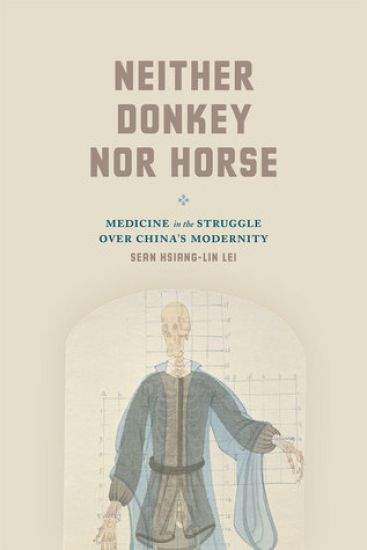
Neither Donkey nor Horse

Neither Donkey nor Horse

Sean Hsiang-lin Lei

University of Chicago Press
2014
sidottu
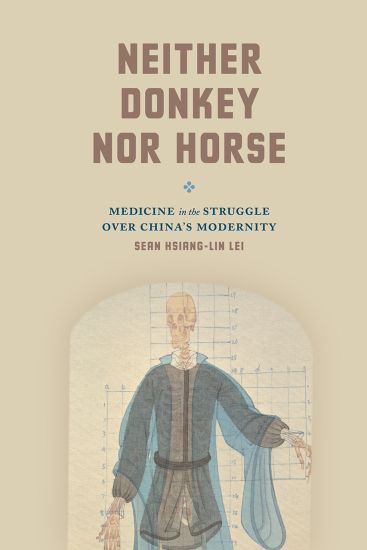
Neither Donkey nor Horse tells the story of how Chinese medicine was transformed from the antithesis of modernity in the early twentieth century into a potent symbol of and vehicle for China's exploration of its own modernity half a century later. Instead of viewing this transition as derivative of the political history of modern China, Scan Hsiang-lin Lei argues that China's medical history had a lite of its own, one that times directly influenced the ideological struggle over the meaning of China's modernity and the Chinese state. Far from being a remnant of China's premodern past, Chinese medicine in the twentieth century coevolved with Western medicine and the Nationalist state, undergoing a profound transformation-institutionally, epistemologically, and materially - that resulted in the creation of a modern Chinese medicine. This new medicine was derided as "neither donkey nor horse" because it necessarily betrayed both of the parental traditions and therefore was doomed to fail. Yet this hybrid medicine survived, through self-innovation and negotiation, thus challenging the conception of modernity that rejected the possibility of productive crossbreeding between the modern and the traditional. By exploring the production of modern Chinese medicine and China's modernity in tandem, Lei offers both a political history of medicine and a medical history of the Chinese state.
Reading Sounds

Reading Sounds

Sean Zdenek

University of Chicago Press
2015
sidottu
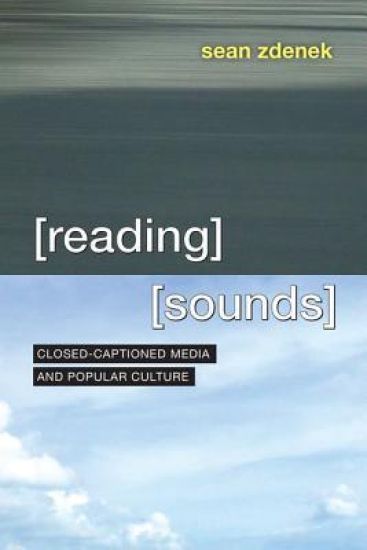
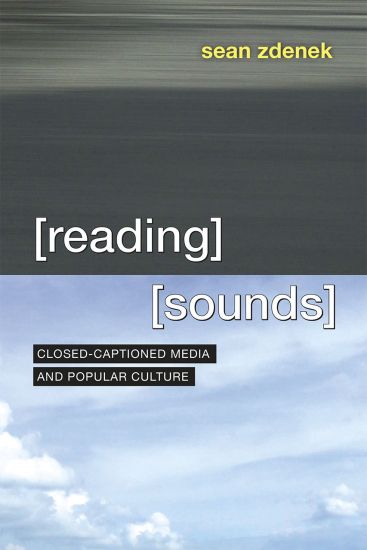
Imagine a common movie scene: a hero confronts a villain. Captioning such a moment would at first glance seem as basic as transcribing the dialogue. But consider the choices involved: How do you convey the sarcasm in a comeback? Do you include a henchman's muttering in the background? Does the villain emit a scream, a grunt, or a howl as he goes down? And how do you note a gunshot without spoiling the scene? These are the choices closed captioners face every day. Captioners must decide whether and how to describe background noises, accents, laughter, musical cues, and even silences. When captioners describe a sound-or choose to ignore it-they are applying their own subjective interpretations to otherwise objective noises, creating meaning that does not necessarily exist in the soundtrack or the script. Reading Sounds looks at closed-captioning as a potent source of meaning in rhetorical analysis. Through nine engrossing chapters, Sean Zdenek demonstrates how the choices captioners make affect the way deaf and hard of hearing viewers experience media. He draws on hundreds of real-life examples, as well as interviews with both professional captioners and regular viewers of closed captioning. Zdenek's analysis is an engrossing look at how we make the audible visible, one that proves that better standards for closed captioning create a better entertainment experience for all viewers.
Reading Sounds – Closed–Captioned Media and Popular Culture
Imagine a common movie scene: a hero confronts a villain. Captioning such a moment would at first glance seem as basic as transcribing the dialogue. But consider the choices involved: How do you convey the sarcasm in a comeback? Do you include a henchman's muttering in the background? Does the villain emit a scream, a grunt, or a howl as he goes down? And how do you note a gunshot without spoiling the scene? These are the choices closed captioners face every day. Captioners must decide whether and how to describe background noises, accents, laughter, musical cues, and even silences. When captioners describe a sound-or choose to ignore it-they are applying their own subjective interpretations to otherwise objective noises, creating meaning that does not necessarily exist in the soundtrack or the script. Reading Sounds looks at closed-captioning as a potent source of meaning in rhetorical analysis. Through nine engrossing chapters, Sean Zdenek demonstrates how the choices captioners make affect the way deaf and hard of hearing viewers experience media. He draws on hundreds of real-life examples, as well as interviews with both professional captioners and regular viewers of closed captioning. Zdenek's analysis is an engrossing look at how we make the audible visible, one that proves that better standards for closed captioning create a better entertainment experience for all viewers.
Neither Donkey nor Horse

Neither Donkey nor Horse

Sean Hsiang-lin Lei

University of Chicago Press
2016
nidottu
Neither Donkey nor Horse tells the story of how Chinese medicine was transformed from the antithesis of modernity in the early twentieth century into a potent symbol of and vehicle for China's exploration of its own modernity half a century later. Instead of viewing this transition as derivative of the political history of modern China, Sean Hsiang-lin Lei argues that China's medical history had a life of its own, one that at times directly influenced the ideological struggle over the meaning of China's modernity and the Chinese state. Far from being a remnant of China's premodern past, Chinese medicine in the twentieth century coevolved with Western medicine and the Nationalist state, undergoing a profound transformation-institutionally, epistemologically, and materially-that resulted in the creation of a modern Chinese medicine. This new medicine was derided as "neither donkey nor horse" because it necessarily betrayed both of the parental traditions and therefore was doomed to fail. Yet this hybrid medicine survived, through self-innovation and negotiation, thus challenging the conception of modernity that rejected the possibility of productive crossbreeding between the modern and the traditional. By exploring the production of modern Chinese medicine and China's modernity in tandem, Lei offers both a political history of medicine and a medical history of the Chinese state.
Automatic Architecture

Automatic Architecture

Sean Keller

University of Chicago Press
2018
sidottu
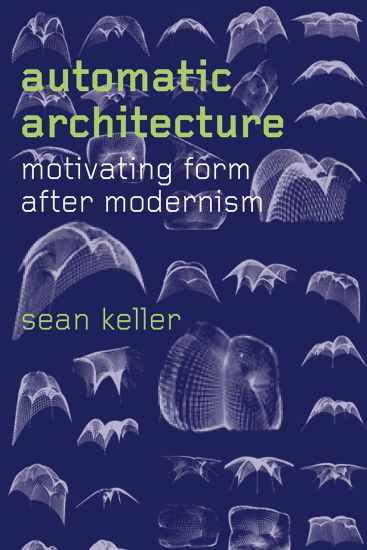
In the 1960s and '70s, architects, influenced by recent developments in computing and the rise of structuralist and poststructuralist thinking, began to radically rethink how architecture could be created. Though various new approaches gained favor, they had one thing in common: they advocated moving away from the traditional reliance on an individual architect's knowledge and instincts and toward the use of external tools and processes that were considered objective, logical, or natural. Automatic architecture was born. The quixotic attempts to formulate such design processes extended modernist principles and tried to draw architecture closer to mathematics and the sciences. By focusing on design methods, and by examining evidence at a range of scales from institutions to individual buildings Automatic Architecture offers an alternative to narratives of this period that have presented postmodernism as a question of style, as the methods and techniques traced here have been more deeply consequential than the many stylistic shifts of the past half century. Sean Keller closes the book with an analysis of the contemporary condition, suggesting future paths for architectural practice that work through, but also beyond, the merely automatic.
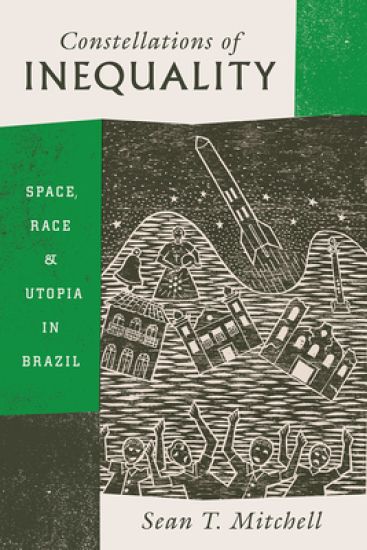
Constellations of Inequality

Constellations of Inequality

Sean T. Mitchell

University of Chicago Press
2017
sidottu
In 1982, the Brazilian Air Force arrived on the Alcantara peninsula to build a state-of-the-art satellite launch facility. They displaced some 1,500 Afro-Brazilians from coastal land to inadequate inland villages, leaving many more threatened with displacement. The project was a vast undertaking, and the decades since its 1990 completion have seen it mired in controversy. Constellations of Inequality tells that story, offering a uniquely insightful ethnography of Brazil's inequality politics. Sean T. Mitchell analyzes conflicts over land, ethnoracial identity, mobilization among descendants of escaped slaves, failures and military-civilian conflict in the launch program, and international intrigue. Throughout, he illuminates inequality and political consciousness. How people conceptualize and act upon the unequal conditions in which they find themselves, he shows, is as much a cultural and historical matter a material one. Deftly broadening our understanding of STS, economic issues, and consciousness on local, national, and global levels, Constellations of Inequality paints a portrait of struggles over race, technology, development, and inequality that will interest a broad spectrum of readers.
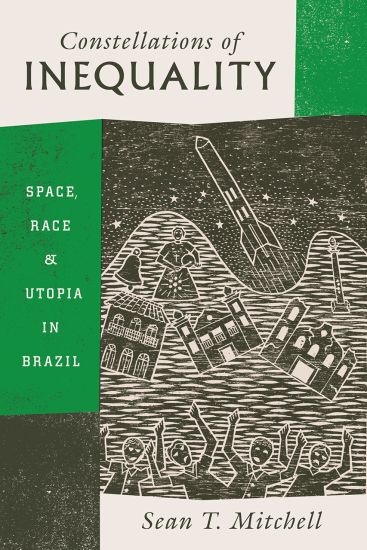
Constellations of Inequality

Constellations of Inequality

Sean T. Mitchell

University of Chicago Press
2017
nidottu
In 1982, the Brazilian Air Force arrived on the Alcantara peninsula to build a state-of-the-art satellite launch facility. They displaced some 1,500 Afro-Brazilians from coastal land to inadequate inland villages, leaving many more threatened with displacement. The project was a vast undertaking, and the decades since its 1990 completion have seen it mired in controversy. Constellations of Inequality tells that story, offering a uniquely insightful ethnography of Brazil's inequality politics. Sean T. Mitchell analyzes conflicts over land, ethnoracial identity, mobilization among descendants of escaped slaves, failures and military-civilian conflict in the launch program, and international intrigue. Throughout, he illuminates inequality and political consciousness. How people conceptualize and act upon the unequal conditions in which they find themselves, he shows, is as much a cultural and historical matter a material one. Deftly broadening our understanding of STS, economic issues, and consciousness on local, national, and global levels, Constellations of Inequality paints a portrait of struggles over race, technology, development, and inequality that will interest a broad spectrum of readers.
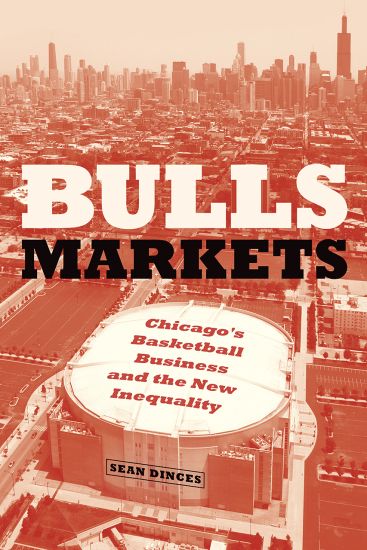
Bulls Markets

Bulls Markets

Sean Dinces

University of Chicago Press
2018
sidottu
An unvarnished look at the economic and political choices that reshaped contemporary Chicago—arguably for the worse. ? The 1990s were a glorious time for the Chicago Bulls, an age of historic championships and all-time basketball greats like Scottie Pippen and Michael Jordan. It seemed only fitting that city, county, and state officials would assist the team owners in constructing a sparkling new venue to house this incredible team that was identified worldwide with Chicago. That arena, the United Center, is the focus of Bulls Markets, an unvarnished look at the economic and political choices that forever reshaped one of America’s largest cities—arguably for the worse. Sean Dinces shows how the construction of the United Center reveals the fundamental problems with neoliberal urban development. The pitch for building the arena was fueled by promises of private funding and equitable revitalization in a long-blighted neighborhood. However, the effort was funded in large part by municipal tax breaks that few ordinary Chicagoans knew about, and that wound up exacerbating the rising problems of gentrification and wealth stratification. In this portrait of the construction of the United Center and the urban life that developed around it, Dinces starkly depicts a pattern of inequity that has become emblematic of contemporary American cities: governments and sports franchises collude to provide amenities for the wealthy at the expense of poorer citizens, diminishing their experiences as fans and—far worse—creating an urban environment that is regulated and surveilled for the comfort and protection of that same moneyed elite.
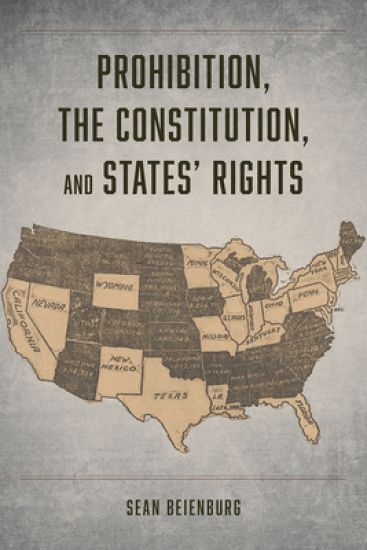
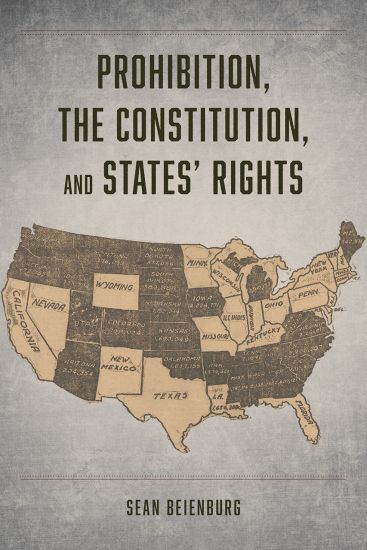
Prohibition, the Constitution, and States' Rights

Prohibition, the Constitution, and States' Rights

Sean Beienburg

University of Chicago Press
2019
sidottu
Colorado’s legalization of marijuana spurred intense debate about the extent to which the Constitution preempts state-enacted laws and statutes. Colorado’s legal cannabis program generated a strange scenario in which many politicians, including many who freely invoke the Tenth Amendment, seemed to be attacking the progressive state for asserting states’ rights. Unusual as this may seem, this has happened before—in the early part of the twentieth century, as America concluded a decades-long struggle over the suppression of alcohol during Prohibition. Sean Beienburg recovers a largely forgotten constitutional debate, revealing how Prohibition became a battlefield on which skirmishes of American political development, including the debate over federalism and states’ rights, were fought. Beienburg focuses on the massive extension of federal authority involved in Prohibition and the passage of the Eighteenth Amendment, describing the roles and reactions of not just Congress, the presidents, and the Supreme Court but political actors throughout the states, who jockeyed with one another to claim fidelity to the Tenth Amendment while reviling nationalism and nullification alike. The most comprehensive treatment of the constitutional debate over Prohibition to date, the book concludes with a discussion of the parallels and differences between Prohibition in the 1920s and debates about the legalization of marijuana today.
Prohibition, the Constitution, and States' Rights

Prohibition, the Constitution, and States' Rights

Sean Beienburg

University of Chicago Press
2019
nidottu
Colorado’s legalization of marijuana spurred intense debate about the extent to which the Constitution preempts state-enacted laws and statutes. Colorado’s legal cannabis program generated a strange scenario in which many politicians, including many who freely invoke the Tenth Amendment, seemed to be attacking the progressive state for asserting states’ rights. Unusual as this may seem, this has happened before—in the early part of the twentieth century, as America concluded a decades-long struggle over the suppression of alcohol during Prohibition. Sean Beienburg recovers a largely forgotten constitutional debate, revealing how Prohibition became a battlefield on which skirmishes of American political development, including the debate over federalism and states’ rights, were fought. Beienburg focuses on the massive extension of federal authority involved in Prohibition and the passage of the Eighteenth Amendment, describing the roles and reactions of not just Congress, the presidents, and the Supreme Court but political actors throughout the states, who jockeyed with one another to claim fidelity to the Tenth Amendment while reviling nationalism and nullification alike. The most comprehensive treatment of the constitutional debate over Prohibition to date, the book concludes with a discussion of the parallels and differences between Prohibition in the 1920s and debates about the legalization of marijuana today.