Kirjojen hintavertailu. Mukana 12 381 843 kirjaa ja 12 kauppaa.

Kirjahaku

Etsi kirjoja tekijän nimen, kirjan nimen tai ISBN:n perusteella.

1000 tulosta hakusanalla Sharon Graham

Feature Writing for Journalists

Feature Writing for Journalists

Sharon Wheeler

Routledge
2009
nidottu
Feature Writing for Journalists considers both newspapers and magazines and helps the new or aspiring journalist to become a successful feature writer.Using examples from a wide range of papers, specialist and trade magazines and 'alternative' publications, Sharon Wheeler considers the different types of material that come under the term 'feature' including human interest pieces, restaurant reviews and advice columns.With relevant case studies as well as interviews with practitioners, Feature Writing for Journalists is exactly what you need to understand and create exciting and informative features.
Difficult Heritage

Difficult Heritage

Sharon Macdonald

Routledge
2008
sidottu
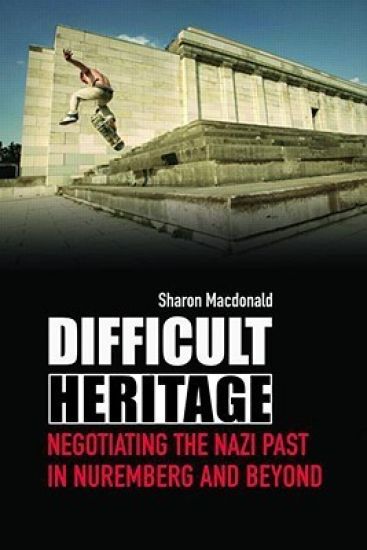
How does a city and a nation deal with a legacy of perpetrating atrocity? How are contemporary identities negotiated and shaped in the face of concrete reminders of a past that most wish they did not have? Difficult Heritage focuses on the case of Nuremberg – a city whose name is indelibly linked with Nazism – to explore these questions and their implications. Using an original in-depth research, using archival, interview and ethnographic sources, it provides not only fascinating new material and perspectives, but also more general original theorizing of the relationship between heritage, identity and material culture. The book looks at how Nuremberg has dealt with its Nazi past post-1945. It focuses especially, but not exclusively, on the city’s architectural heritage, in particular, the former Nazi party rally grounds, on which the Nuremburg rallies were staged. The book draws on original sources, such as city council debates and interviews, to chart a lively picture of debate, action and inaction in relation to this site and significant others, in Nuremberg and elsewhere. In doing so, Difficult Heritage seeks to highlight changes over time in the ways in which the Nazi past has been dealt with in Germany, and the underlying cultural assumptions, motivations and sources of friction involved. Whilst referencing wider debates and giving examples of what was happening elsewhere in Germany and beyond, Difficult Heritage provides a rich in-depth account of this most fascinating of cases. It also engages in comparative reflection on developments underway elsewhere in order to contextualize what was happening in Nuremberg and to show similarities to and differences from the ways in which other ‘difficult heritages’ have been dealt with elsewhere. By doing so, the author offers an informed perspective on ways of dealing with difficult heritage, today and in the future, discussing innovative museological, educational and artistic practice.
Difficult Heritage

Difficult Heritage

Sharon Macdonald

Routledge
2008
nidottu
How does a city and a nation deal with a legacy of perpetrating atrocity? How are contemporary identities negotiated and shaped in the face of concrete reminders of a past that most wish they did not have? Difficult Heritage focuses on the case of Nuremberg – a city whose name is indelibly linked with Nazism – to explore these questions and their implications. Using an original in-depth research, using archival, interview and ethnographic sources, it provides not only fascinating new material and perspectives, but also more general original theorizing of the relationship between heritage, identity and material culture. The book looks at how Nuremberg has dealt with its Nazi past post-1945. It focuses especially, but not exclusively, on the city’s architectural heritage, in particular, the former Nazi party rally grounds, on which the Nuremburg rallies were staged. The book draws on original sources, such as city council debates and interviews, to chart a lively picture of debate, action and inaction in relation to this site and significant others, in Nuremberg and elsewhere. In doing so, Difficult Heritage seeks to highlight changes over time in the ways in which the Nazi past has been dealt with in Germany, and the underlying cultural assumptions, motivations and sources of friction involved. Whilst referencing wider debates and giving examples of what was happening elsewhere in Germany and beyond, Difficult Heritage provides a rich in-depth account of this most fascinating of cases. It also engages in comparative reflection on developments underway elsewhere in order to contextualize what was happening in Nuremberg and to show similarities to and differences from the ways in which other ‘difficult heritages’ have been dealt with elsewhere. By doing so, the author offers an informed perspective on ways of dealing with difficult heritage, today and in the future, discussing innovative museological, educational and artistic practice.
Memorylands

Memorylands

Sharon Macdonald

Routledge
2013
sidottu
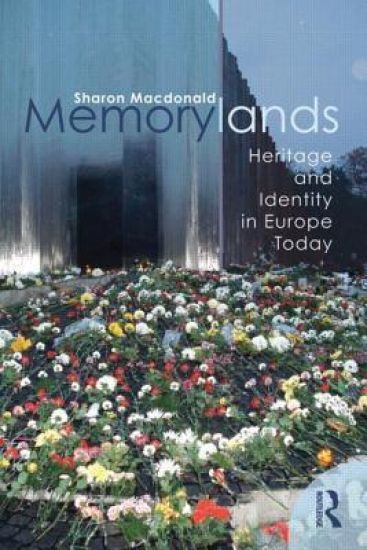
Memorylands is an original and fascinating investigation of the nature of heritage, memory and understandings of the past in Europe today. It looks at how Europe has become a ’memoryland’ – littered with material reminders of the past, such as museums, heritage sites and memorials; and at how this ‘memory phenomenon’ is related to the changing nature of identities – especially European, national and cosmopolitan. In doing so, it provides new insights into how memory and the past are being performed and reconfigured in Europe – and with what effects. Drawing especially, though not exclusively, on cases, concepts and arguments from social and cultural anthropology, Memorylands argues for a deeper and more nuanced understanding of the cultural assumptions involved in relating to the past. It theorizes the various ways in which ‘materializations’ of identity work and relates these to different forms of identification within Europe. The book also addresses questions of methodology, including discussion of historical, ethnographic, interdisciplinary and innovative methods. Through a wide-range of case-studies from across Europe, Sharon Macdonald argues that Europe is home to a much greater range of ways of making the past present than is usually realized – and a greater range of forms of ‘historical consciousness’. At the same time, however, she seeks to highlight what she calls ‘the European memory complex’ – a repertoire of prevalent patterns in forms of recollection and ‘past presencing’. The examples in Memorylands are drawn from both the margins and metropolitan centres, from the relatively small-scale and local, the national and the avant-garde. The book looks at pasts that are potentially identity-disrupting – or ‘difficult’ – as well as those that affirm identities or offer possibilities for transcending national identities or articulating more cosmopolitan futures. Topics covered include authenticity, temporalities, embodiment, commodification, nostalgia and Ostalgie, the musealization of everyday and folk-life, Holocaust commemoration and tourism, narratives of war, the heritage of Islam, transnationalism, and the future of the past. Memorylands is engagingly written and accessible to general readers as well as offering a new synthesis for advanced researchers in memory and heritage studies. It is essential reading for those interested in identities, memory, material culture, Europe, tourism and heritage.
Memorylands

Memorylands

Sharon Macdonald

Routledge
2013
nidottu
Memorylands is an original and fascinating investigation of the nature of heritage, memory and understandings of the past in Europe today. It looks at how Europe has become a ’memoryland’ – littered with material reminders of the past, such as museums, heritage sites and memorials; and at how this ‘memory phenomenon’ is related to the changing nature of identities – especially European, national and cosmopolitan. In doing so, it provides new insights into how memory and the past are being performed and reconfigured in Europe – and with what effects. Drawing especially, though not exclusively, on cases, concepts and arguments from social and cultural anthropology, Memorylands argues for a deeper and more nuanced understanding of the cultural assumptions involved in relating to the past. It theorizes the various ways in which ‘materializations’ of identity work and relates these to different forms of identification within Europe. The book also addresses questions of methodology, including discussion of historical, ethnographic, interdisciplinary and innovative methods. Through a wide-range of case-studies from across Europe, Sharon Macdonald argues that Europe is home to a much greater range of ways of making the past present than is usually realized – and a greater range of forms of ‘historical consciousness’. At the same time, however, she seeks to highlight what she calls ‘the European memory complex’ – a repertoire of prevalent patterns in forms of recollection and ‘past presencing’. The examples in Memorylands are drawn from both the margins and metropolitan centres, from the relatively small-scale and local, the national and the avant-garde. The book looks at pasts that are potentially identity-disrupting – or ‘difficult’ – as well as those that affirm identities or offer possibilities for transcending national identities or articulating more cosmopolitan futures. Topics covered include authenticity, temporalities, embodiment, commodification, nostalgia and Ostalgie, the musealization of everyday and folk-life, Holocaust commemoration and tourism, narratives of war, the heritage of Islam, transnationalism, and the future of the past. Memorylands is engagingly written and accessible to general readers as well as offering a new synthesis for advanced researchers in memory and heritage studies. It is essential reading for those interested in identities, memory, material culture, Europe, tourism and heritage.
The Arts and Emergent Bilingual Youth

The Arts and Emergent Bilingual Youth

Sharon Verner Chappell; Christian J. Faltis

Routledge
2013
sidottu
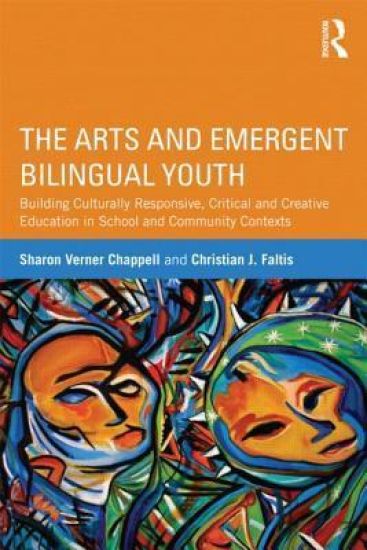
The Arts and Emergent Bilingual Youth offers a critical sociopolitical perspective on working with emerging bilingual youth at the intersection of the arts and language learning. Utilizing research from both arts and language education to explore the ways they work in tandem to contribute to emergent bilingual students’ language and academic development, the book analyzes model arts projects to raise questions about “best practices” for and with marginalized bilingual young people, in terms of relevance to their languages, cultures, and communities as they envision better worlds. A central assumption is that the arts can be especially valuable for contributing to English learning by enabling learners to experience ideas, patterns, and relationship (form) in ways that lead to new knowledge (content). Each chapter features vignettes showcasing current projects with ELL populations both in and out of school and visual art pieces and poems, to prompt reflection on key issues and relevant concepts and theories in the arts and language learning. Taking a stance about language and culture in English learners’ lives, this book shows the intimate connections among art, narrative, and resistance for addressing topics of social injustice.
The Arts and Emergent Bilingual Youth

The Arts and Emergent Bilingual Youth

Sharon Verner Chappell; Christian J. Faltis

Routledge
2013
nidottu
The Arts and Emergent Bilingual Youth offers a critical sociopolitical perspective on working with emerging bilingual youth at the intersection of the arts and language learning. Utilizing research from both arts and language education to explore the ways they work in tandem to contribute to emergent bilingual students’ language and academic development, the book analyzes model arts projects to raise questions about “best practices” for and with marginalized bilingual young people, in terms of relevance to their languages, cultures, and communities as they envision better worlds. A central assumption is that the arts can be especially valuable for contributing to English learning by enabling learners to experience ideas, patterns, and relationship (form) in ways that lead to new knowledge (content). Each chapter features vignettes showcasing current projects with ELL populations both in and out of school and visual art pieces and poems, to prompt reflection on key issues and relevant concepts and theories in the arts and language learning. Taking a stance about language and culture in English learners’ lives, this book shows the intimate connections among art, narrative, and resistance for addressing topics of social injustice.
Shame and the Anti-Feminist Backlash

Shame and the Anti-Feminist Backlash

Sharon Crozier-De Rosa

Routledge
2017
sidottu
Shame and the Anti-Feminist Backlash examines how women opposed to the feminist campaign for the vote in early twentieth-century Britain, Ireland, and Australia used shame as a political tool. It demonstrates just how proficient women were in employing a diverse vocabulary of emotions – drawing on concepts like embarrassment, humiliation, honour, courage, and chivalry – in the attempt to achieve their political goals. It looks at how far nationalist contexts informed each gendered emotional community at a time when British imperial networks were under extreme duress. The book presents a unique history of gender and shame which demonstrates just how versatile and ever-present this social emotion was in the feminist politics of the British Empire in the early decades of the twentieth century. It employs a fascinating new thematic lens to histories of anti-feminist/feminist entanglements by tracing national and transnational uses of emotions by women to police their own political communities. It also challenges the common notion that shame had little place in a modernizing world by revealing how far groups of patriotic womanhood, globally, deployed shame to combat the effects of feminist activism.
Intellectual Property, Traditional Knowledge and Cultural Property Protection
International developments since the mid-1990s have signalled an awareness of the importance and validity of traditional knowledge and cultural property. The adoption of the Convention on Biological Diversity, and the establishment of the WIPO Intergovernmental Committee on Intellectual Property and Genetic Resources, Traditional Knowledge and Folklore demonstrate an emerging trend towards the recognition of the rights of communities and the importance of culture in shaping international law and policy.This book examines how developments to protect collectively held knowledge transpose to circumstances which may not meet the usually understood criteria of what is considered to be an indigenous or traditional group. This includes communally derived cultural products which have emerged out of communities and subsequently formed a part of the national or popular culture. The book considers the steel pan of Trinidad and Tobago, punta rock music from Belize, Brazilian capoeira, and the cajón of Peru as key cases studies of this.By exploring the impact of past and recent international developments to protect traditional knowledge, Sharon Le Gall highlights a category of cultural signifiers which lies outside the scope of intellectual property protection, as well as the protection proposed for traditional knowledge and advocated for intangible cultural property. The book proposes a reinterpretation of Joseph Raz’s interest theory of group rights in order to accommodate the rights advocated for collectively derived cultural signifiers on the basis of their value as symbols of identity. In doing so, Le Gall offers an original account of how those signifiers, which may not be described as exclusively ‘traditional’ or ‘indigenous’ and held in ways which are not ‘traditional’ or ‘customary’, may be accommodated in emerging traditional knowledge laws.
Foundations of Offender Rehabilitation

Foundations of Offender Rehabilitation

Sharon Casey; Andrew Day; Jim Vess; Tony Ward

Routledge
2012
sidottu
The past three decades has seen dramatic changes in the way in which the criminal justice system responds to those who break the law. The old claim in the field of correctional psychology that "nothing works" has strongly been refuted in the face of evidence from rehabilitation programmes that do make a difference. The graduate student in forensic psychology could easily be overwhelmed by the plethora of information now available. This new textbook offers a comprehensive approach to forensic and correctional psychology, demonstrating how theory and practise can be applied and integrated. Written by intentionally recognized experts within the field, the authors guide the students through the core theories and concepts that underpin forensic practise within the legal systems of different countries (UK, USA, Canada, Australia and Singapore), show how this knowledge informs current thinking in offender rehabilitation and reintegration and provide a series of case studies looking at sexual offenders, female offender, juveniles and offenders with mental disorders. This book is the perfect overview for graduate students of forensic and correctional psychology engaged with offender rehabilitation and assessment and the psychology of law.
Foundations of Offender Rehabilitation

Foundations of Offender Rehabilitation

Sharon Casey; Andrew Day; Jim Vess; Tony Ward

Routledge
2012
nidottu
The past three decades has seen dramatic changes in the way in which the criminal justice system responds to those who break the law. The old claim in the field of correctional psychology that "nothing works" has strongly been refuted in the face of evidence from rehabilitation programmes that do make a difference. The graduate student in forensic psychology could easily be overwhelmed by the plethora of information now available. This new textbook offers a comprehensive approach to forensic and correctional psychology, demonstrating how theory and practise can be applied and integrated. Written by intentionally recognized experts within the field, the authors guide the students through the core theories and concepts that underpin forensic practise within the legal systems of different countries (UK, USA, Canada, Australia and Singapore), show how this knowledge informs current thinking in offender rehabilitation and reintegration and provide a series of case studies looking at sexual offenders, female offender, juveniles and offenders with mental disorders. This book is the perfect overview for graduate students of forensic and correctional psychology engaged with offender rehabilitation and assessment and the psychology of law.
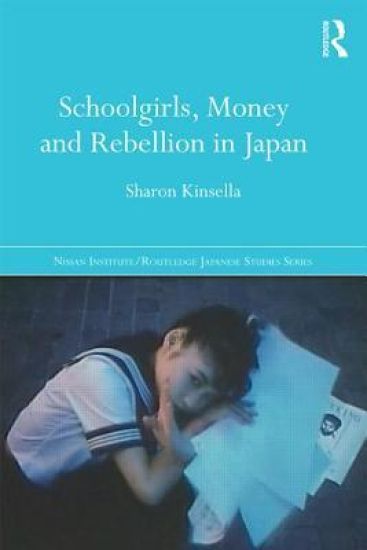
Schoolgirls, Money and Rebellion in Japan
Japanese society in the 1990s and 2000s produced a range of complicated material about sexualized schoolgirls, and few topics have caught the imagination of western observers so powerfully. While young Japanese girls had previously been portrayed as demure and obedient, in training to become the obedient wife and prudent mother, in recent years less than demure young women have become central to urban mythology and the content of culture. The cultic fascination with the figure of a deviant school girl, which has some of its earliest roots in the nineteenth and early twentieth centuries, likewise re-emerged and proliferated in fascinating and timely ways in the 1990s and 2000s.Through exploring the history and politics underlying the cult of girls in contemporary Japanese media and culture, this book presents a striking picture of contemporary Japanese society from the 1990s to the start of the 2010s. At its core is an in-depth case study of the media delight and panic surrounding delinquent prostitute schoolgirls. Sharon Kinsella traces this social panic back to male anxieties relating to gender equality and female emancipation in Japan. In each chapter in turn, the book reveals the conflicted, nostalgic, pornographic, and at times distinctly racialized manner, in which largely male sentiments about this transformation of gender relations have been expressed. The book simultaneously explores the stylistic and flamboyant manner in which young women have reacted to the weight of an obsessive and accusatory male media gaze. Covering the often controversial subjects of compensated dating (enjo kôsai), the role of porn and lifestyle magazines, the historical sources and politicized social meanings of the schoolgirl, and the racialization of fashionable girls, Schoolgirls, Money, Rebellion in Japan will be invaluable to students and scholars of Japanese culture and society, sociology, anthropology, gender and women's studies.
Schoolgirls, Money and Rebellion in Japan
Japanese society in the 1990s and 2000s produced a range of complicated material about sexualized schoolgirls, and few topics have caught the imagination of western observers so powerfully. While young Japanese girls had previously been portrayed as demure and obedient, in training to become the obedient wife and prudent mother, in recent years less than demure young women have become central to urban mythology and the content of culture. The cultic fascination with the figure of a deviant school girl, which has some of its earliest roots in the nineteenth and early twentieth centuries, likewise re-emerged and proliferated in fascinating and timely ways in the 1990s and 2000s.Through exploring the history and politics underlying the cult of girls in contemporary Japanese media and culture, this book presents a striking picture of contemporary Japanese society from the 1990s to the start of the 2010s. At its core is an in-depth case study of the media delight and panic surrounding delinquent prostitute schoolgirls. Sharon Kinsella traces this social panic back to male anxieties relating to gender equality and female emancipation in Japan. In each chapter in turn, the book reveals the conflicted, nostalgic, pornographic, and at times distinctly racialized manner, in which largely male sentiments about this transformation of gender relations have been expressed. The book simultaneously explores the stylistic and flamboyant manner in which young women have reacted to the weight of an obsessive and accusatory male media gaze. Covering the often controversial subjects of compensated dating (enjo kôsai), the role of porn and lifestyle magazines, the historical sources and politicized social meanings of the schoolgirl, and the racialization of fashionable girls, Schoolgirls, Money, Rebellion in Japan will be invaluable to students and scholars of Japanese culture and society, sociology, anthropology, gender and women's studies.
Impressions of Southern Italy

Impressions of Southern Italy

Sharon Ouditt

Routledge
2013
sidottu
Naples was conventionally the southernmost stop of the Grand Tour beyond which, it was assumed, lay violent disorder: earthquakes, malaria, bandits, inhospitable inns, few roads and appalling food. On the other hand, Southern Italy lay at the heart of Magna Graecia, whose legends were hard-wired into the cultural imaginations of the educated. This book studies the British travellers who visited Italy's Southern territories. Spanning the late eighteenth century to the mid-twentieth century, the author considers what these travellers discovered, not in the form of a survey, but as a series of unfolding impressions disclosing multiple Southern Italies. Of the numerous travellers analysed within this volume, the central figures are Henry Swinburne, Craufurd Tait Ramage and Norman Douglas, whose Old Calabria (1915) remains in print. Their appeal is that they take the region seriously: Southern Italy wasn't simply a testing ground for their superior sensibilities, it was a vibrant curiosity, unknown but within reach. Was the South simply behind on the road to European integration; or was it beyond a fault line, representing a viable alternative to Northern neuroses? The travelogues analysed in this book address a wide variety of themes which continue to shape discussions about European identity today.
Women Writers of the First World War: An Annotated Bibliography
'They also serve who only stand and wait' The idea of there being a 'women's writing' during the First World War is often dismissed. The war, the story goes, was a masculine domain, and as women did not fight, it is also assumed that they were excluded from a war experience. This bibliography challenges that view by listing and annotating hundreds of published books, articles, memoirs, diaries and letters written by women during the First World War. Included are: * Virginia Woolf * Katherine Mansfield * G.B Stern * Brenda Girvin * known and unknown autobiographers and diarists * writers of pro and anti-war propaganda * journal and magazine articles * literary, cultural and historical criticism
Stanislavsky in Focus

Stanislavsky in Focus

Sharon Marie Carnicke

Routledge
2008
sidottu
Stanislavsky in Focus brilliantly examines the history and actual premises of Stanislavsky’s 'System', separating myth from fact with forensic skill. The first edition of this now classic study showed conclusively how the 'System' was gradually transformed into the Method, popularised in the 1950s by Lee Strasberg and the Actor’s Studio. It looked at the gap between the original Russian texts and what most English-speaking practitioners still imagine to be Stanislavsky’s ideas.This thoroughly revised new edition also delves even deeper into:the mythical depiction of Stanislavsky as a tyrannical director and teacheryoga, the mind-body-spirit continuum and its role in the ‘System’how Stanislavsky used subtexts to hide many of his ideas from Soviet censors. The text has been updated to address all of the relevant scholarship, particularly in Russia, since the first edition was published. It also features an expanded glossary on the System's terminology and its historical exercises, as well as more on the political context of Stanislavsky's work, its links with cognitive science, and the System's relation to contemporary developments in actor-training. It will be a vital part of every practitioner's and historian's library.
Stanislavsky in Focus

Stanislavsky in Focus

Sharon Marie Carnicke

Routledge
2008
nidottu
Stanislavsky in Focus brilliantly examines the history and actual premises of Stanislavsky’s 'System', separating myth from fact with forensic skill. The first edition of this now classic study showed conclusively how the 'System' was gradually transformed into the Method, popularised in the 1950s by Lee Strasberg and the Actor’s Studio. It looked at the gap between the original Russian texts and what most English-speaking practitioners still imagine to be Stanislavsky’s ideas.This thoroughly revised new edition also delves even deeper into:the mythical depiction of Stanislavsky as a tyrannical director and teacheryoga, the mind-body-spirit continuum and its role in the ‘System’how Stanislavsky used subtexts to hide many of his ideas from Soviet censors. The text has been updated to address all of the relevant scholarship, particularly in Russia, since the first edition was published. It also features an expanded glossary on the System's terminology and its historical exercises, as well as more on the political context of Stanislavsky's work, its links with cognitive science, and the System's relation to contemporary developments in actor-training. It will be a vital part of every practitioner's and historian's library.
The Subject of Race in American Science Fiction
While the connections between science fiction and race have largely been neglected by scholars, racial identity is a key element of the subjectivity constructed in American SF. In his Mars series, Edgar Rice Burroughs primarily supported essentialist constructions of racial identity, but also included a few elements of racial egalitarianism. Writing in the 1930s, George S. Schuyler revised Burroughs' normative SF triangle of white author, white audience, and white protagonist and promoted an individualistic, highly variable concept of race instead. While both Burroughs and Schuyler wrote SF focusing on racial identity, the largely separate genres of science fiction and African American literature prevented the similarities between the two authors from being adequately acknowledged and explored. Beginning in the 1960s, Samuel R. Delany more fully joined SF and African American literature. Delany expands on Schuyler's racial constructionist approach to identity, including gender and sexuality in addition to race. Critically intertwining the genres of SF and African American literature allows a critique of the racism in the science fiction and a more accurate and positive portrayal of the scientific connections in the African American literature. Connecting the popular fiction of Burroughs, the controversial career of Schuyler, and the postmodern texts of Delany illuminates a gradual change from a stable, essentialist construction of racial identity at the turn of the century to the variable, social construction of poststructuralist subjectivity today.
Relational Theory for Clinical Practice
Relational Theory for Clinical Practice offers students and practitioners a conceptual framework for thinking relationally about social work with clients within a biological, psychological, and socio-cultural framework. Integrating relational theory with the principles of clinical practice, and demonstrating how this can be applied to social work practice, this book has been revised and updated to be suitable for students. Using plenty of case material to demonstrate the theory in action, the new edition incorporates teaching points to aid readers in drawing out the practice principles developed in each chapter. Keeping relationships at the center of the text, this edition includes substantially expanded chapters on assessment and intervention, and takes into account recent research on issues such as the impact of trauma and stress; neuroscience and brain research; and the necessity of practicing in a culturally sensitive way with diverse populations. It broadens the feminist focus of relational-cultural theory by extending and applying it to men also.Designed for use on master's level courses in practice, as well as courses on human behavior and the social environment, this concise and practical book is a valuable text for social work and counseling students.
Relational Theory for Clinical Practice
Relational Theory for Clinical Practice offers students and practitioners a conceptual framework for thinking relationally about social work with clients within a biological, psychological, and socio-cultural framework. Integrating relational theory with the principles of clinical practice, and demonstrating how this can be applied to social work practice, this book has been revised and updated to be suitable for students. Using plenty of case material to demonstrate the theory in action, the new edition incorporates teaching points to aid readers in drawing out the practice principles developed in each chapter. Keeping relationships at the center of the text, this edition includes substantially expanded chapters on assessment and intervention, and takes into account recent research on issues such as the impact of trauma and stress; neuroscience and brain research; and the necessity of practicing in a culturally sensitive way with diverse populations. It broadens the feminist focus of relational-cultural theory by extending and applying it to men also.Designed for use on master's level courses in practice, as well as courses on human behavior and the social environment, this concise and practical book is a valuable text for social work and counseling students.