

Kirjahaku
Etsi kirjoja tekijän nimen, kirjan nimen tai ISBN:n perusteella.
1000 tulosta hakusanalla Society Promoting Christian Knowledge
Society of the Machine: Leon
Justin A. Smith
Createspace Independent Publishing Platform
2011
nidottu

Society, Reason, Sexuality: The Dominions of Man
Phillip Ray Greaves 2nd
Createspace Independent Publishing Platform
2012
nidottu
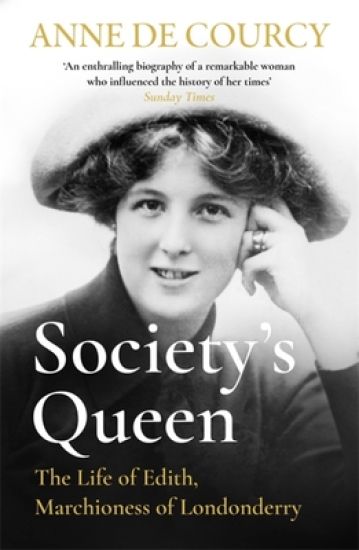
From the author of the critically acclaimed THE VICEROY'S DAUGHTERS, the story of a glittering aristocrat who was also at the heart of political society in the interwar years.At the age of twenty-one, Edith Chaplin married one of the most eligible bachelors of the day, the eldest son of the sixth Marquess of Londonderry. Her husband served in the Ulster cabinet and was Air Minister in the National Government of 1934-5. Edith founded the Women's Legion during the First World War and was also an early campaigner for women's suffrage. She created the renowned Mount Stewart Gardens in County Down that are now owned by the National Trust.All her life, Edith remained at the heart of politics both in Westminster and Ireland. She is perhaps best known for her role as 'society's queen' - a hostess to the rich and famous. Her close circle of friends included Winston Churchill, Lady Astor, Neville Chamberlain and Harold Macmillan who congregated in her salon, known as 'The Ark'. Other members included artists and writers such as John Buchan, Sean O'Casey. Britain's first Labour prime minister, Ramsey MacDonald, became romantically obsessed by her.

For the first time, a guide to the sociology of health and healthcare that addresses the needs of both sociologists and health professionals. Written by a career health professional with a medical sociology background, Thomas applies sociological concepts to current healthcare issues, incorporates the latest findings from health services research, and provides clear examples of the uses of sociology in understanding the U.S. healthcare system. Each chapter contains illustrative boxed material, exhibits highlighting key information, suggested readings, and useful websites for more information. With over 30 years of experience, the author provides valuable insights into the social aspects of health behavior and reveals an in-depth understanding of the social dimensions of the health delivery system. The book is a textbook for students of sociology and health, as well as a reference book for instructors and practitioners in the healthcare and sociology fields.
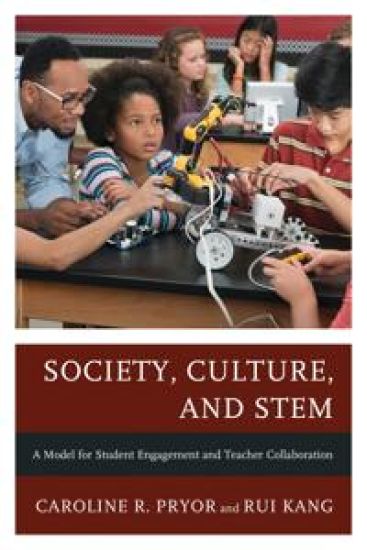
Too often students are asked to participate in rather generic classroom activities, such as worksheets, essays, and rote memorization, which may not capture cultural interest or experience. In Society, Culture, and STEM: A Model for Student Engagement and Teacher Collaboration, teachers will learn a team-based approach to incorporating local and international cultural perspectives and experiences into a curriculum of STEM subjects. This book presents a six-phase process, Pryor-Kang Socio-cultural STEM Curriculum Development Model, for designing a socio-cultural STEM curriculum that is integrative, expansive, personal, and achievement-oriented. The Model focuses on a teacher-student-community outreach process, ongoing evaluation, solicitation of feedback, and continuous improvement through curriculum redesign or reconfiguration. In this process, a selected set of curriculum goals, interdisciplinary content learning standards, and resources are coordinated purposefully to capture multiple perspectives and needs. This book provides a newly developed pathway to enhancing STEM learning experiences!
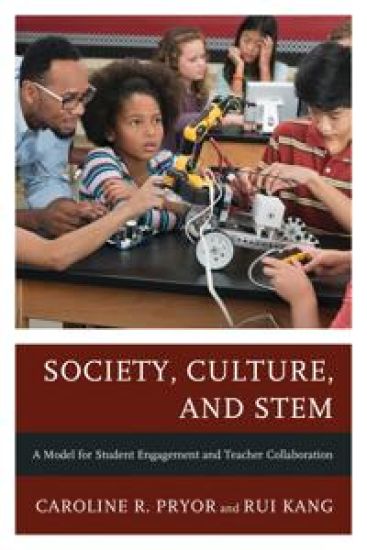
Too often students are asked to participate in rather generic classroom activities, such as worksheets, essays, and rote memorization, which may not capture cultural interest or experience. In Society, Culture, and STEM: A Model for Student Engagement and Teacher Collaboration, teachers will learn a team-based approach to incorporating local and international cultural perspectives and experiences into a curriculum of STEM subjects. This book presents a six-phase process, Pryor-Kang Socio-cultural STEM Curriculum Development Model, for designing a socio-cultural STEM curriculum that is integrative, expansive, personal, and achievement-oriented. The Model focuses on a teacher-student-community outreach process, ongoing evaluation, solicitation of feedback, and continuous improvement through curriculum redesign or reconfiguration. In this process, a selected set of curriculum goals, interdisciplinary content learning standards, and resources are coordinated purposefully to capture multiple perspectives and needs. This book provides a newly developed pathway to enhancing STEM learning experiences!
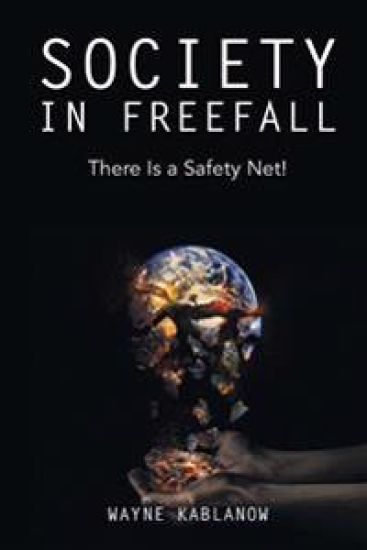
"The religious landscape is littered with theories, predictions, assumptions, and speculations. Society in Freefall cuts through the clutter and delivers a much-needed analysis of the Bible's great, overarching themes, connecting the reader with a reliable understanding of the vital subjects relevant to where we are in the stream of history. Although time is running out for Planet Earth, eternity beckons. This book will provide you with an explanation, encouragement, and inspiration as you journey towards the future God has prepared for you."John BradshawPresident, It Is Written"If there exists somewhere in the universe an all-knowing, all-powerful, and all-present God who has a message for you during the final plunge of earth's history, would you want to know that message? The reality is God does exist, and His heart is filled with love and compassion for you, and He has sent you a message of hope. That message is found in the fourteenth chapter of the book of Revelation. This book unpacks that message. You will experience fear being replaced by love, suspicion by trust, and anxiety by hope."Wayne KablanowAuthor


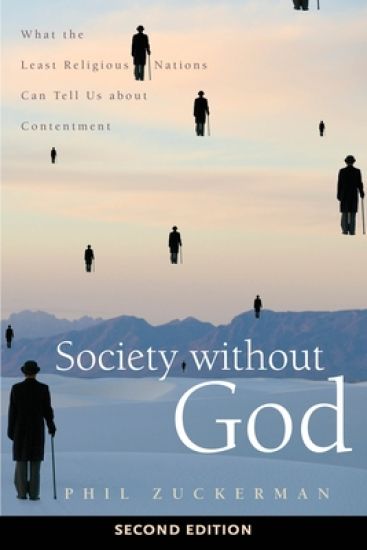
An updated edition showcasing the social health of the least religious nations in the world Religious conservatives around the world often claim that a society without a strong foundation of faith would necessarily be an immoral one, bereft of ethics, values, and meaning. Indeed, the Christian Right in the United States has argued that a society without God would be hell on earth. In Society without God, Second Edition sociologist Phil Zuckerman challenges these claims. Drawing on fieldwork and interviews with more than 150 citizens of Denmark and Sweden, among the least religious countries in the world, he shows that, far from being inhumane, crime-infested, and dysfunctional, highly secular societies are healthier, safer, greener, less violent, and more democratic and egalitarian than highly religious ones. Society without God provides a rich portrait of life in a secular society, exploring how a culture without faith copes with death, grapples with the meaning of life, and remains content through everyday ups and downs. This updated edition incorporates new data from recent studies, updated statistics, and a revised Introduction, as well as framing around the now more highly developed field of secular studies. It addresses the dramatic surge of irreligion in the United States and the rise of the "nones," and adds data on societal health in specific US states, along with fascinating context regarding which are the most religious and which the most secular.
An updated edition showcasing the social health of the least religious nations in the world Religious conservatives around the world often claim that a society without a strong foundation of faith would necessarily be an immoral one, bereft of ethics, values, and meaning. Indeed, the Christian Right in the United States has argued that a society without God would be hell on earth. In Society without God, Second Edition sociologist Phil Zuckerman challenges these claims. Drawing on fieldwork and interviews with more than 150 citizens of Denmark and Sweden, among the least religious countries in the world, he shows that, far from being inhumane, crime-infested, and dysfunctional, highly secular societies are healthier, safer, greener, less violent, and more democratic and egalitarian than highly religious ones. Society without God provides a rich portrait of life in a secular society, exploring how a culture without faith copes with death, grapples with the meaning of life, and remains content through everyday ups and downs. This updated edition incorporates new data from recent studies, updated statistics, and a revised Introduction, as well as framing around the now more highly developed field of secular studies. It addresses the dramatic surge of irreligion in the United States and the rise of the "nones," and adds data on societal health in specific US states, along with fascinating context regarding which are the most religious and which the most secular.

Summer. 1990. West Germany. Conversation over a sketchbook outside Museum Holstentor reveals a foreignerOs errand. Drawings show me various oddities hammered by her kinsman from a burial megalith. Cast into the Baltic Sea in 1582, these occult reductions have seen resurfacing. Society Ludvika is a lyrical collection of suppressed paths and pathfinders, that an arsonistOs sketchbook survives solely to bring to light.

Society's Collapse: A Long Road Ahead
Jeremy Lock
Createspace Independent Publishing Platform
2014
nidottu

Society 3.0: Mastering the Global Transition on Our Way to
Van Den Ronald Hoff
Createspace Independent Publishing Platform
2014
nidottu