

Kirjahaku
Etsi kirjoja tekijän nimen, kirjan nimen tai ISBN:n perusteella.
1000 tulosta hakusanalla Stephen Springwell



Ten years ago, Stephen Matheson was a troubled 19-year-old Alpha who struggled between living in two worlds.Although his Type 4 Status should have placed him among the elite, he was the lone exception to a Lower Type bloodline. With his family's reputation keeping him from the preferred lifestyle, and his Type 4 Status isolating him from the community he was born into, Stephen decided drugs were his only answer. But when his younger Omega brother found his hidden stash and overdosed, his family and authorities blamed him. Now, ten years later, Stephen is back in Tauris City to prove he is not the lost soul and waste of a human he once was.When Stephen stumbles into South Street Tavern and meets the pioneering Omega bar owner Alexander Daventry, he believes fate itself has intervened. The instinctual pull tells Stephen he has found what every Alpha waits his entire life for: his Fated Mate. There's only one problem. Alexander doesn't feel the same for him. Instead, he is completely disgusted by the Alpha's former reputation and can't believe he's been coerced into offering him a job as his bar back. But Stephen is convinced Alexander is meant to be his and will do what it takes to break down Alexander's tough exterior.

This exciting book introduces readers to the life and career of basketball star Stephen Curry. Colorful spreads, fun facts, interesting sidebars, and a map of important places in his life make this a thrilling read for young sports fans.

This exciting book introduces readers to the life and career of basketball star Stephen Curry. Colorful spreads, fun facts, interesting sidebars, and a map of important places in his life make this a thrilling read for young sports fans.
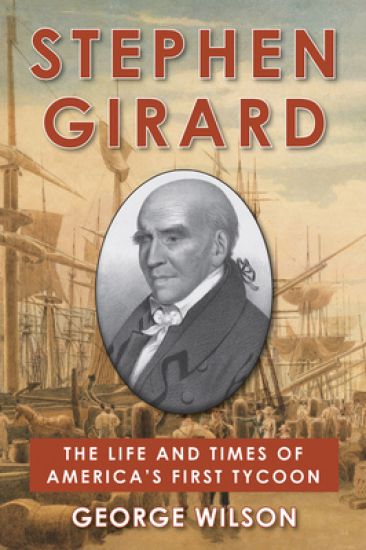
The Inspiring and Insightful Life of an American LegendLike a mirror of the young America he thrived in, Stephan Girard (1750-1831) displayed inexhaustible initiative, courage, tenacity, foresight, and compassion. Reflecting his creed of valuing deeds over words, he was in many ways the American Dream personified. George Wilson, a former columnist and editorial writer for The Philadelphia Inquirer, presents the inspiring true story of Girard's epic journey from ship captain to mercantilist to philanthropist-a genuine rags-to-riches tale in which Girard became one of the wealthiest Americans of all time. Born to a French sea captain, the self-educated Girard went to sea as a cabin boy on a merchant vessel when he was just 14. He later spent several years trading in the West Indies as a ship captain. In 1776, a British naval blockade drove him to dock in Philadelphia. Destitute and in debt, Girard settled there and opened a small store. It was here that his financial acumen and novel business methods shined, and his wealth grew. He sold supplies during the Revolutionary War and founded his own mercantile fleet after the war. By 1807 he'd become America's first millionaire. Girard earned praise and respect for selflessly remaining in Philadelphia to help nurse victims of several yellow fever epidemics, even as most other prominent figures fled.Despite his extraordinary achievements, Girard faced significant challenges and hardships: born with a deformity that left him blind in one eye he persevered without the aid of family support, and he had the financial and emotional burden of caring for his mentally ill wife. Yet, in the face of these difficulties, he prospered and helped others. Following his death in 1931 most of Girard's vast fortune was left to philanthropic causes, including support for Girard College (initially a school for poor orphan boys) to provide educational opportunity for those in greatest need. Today Stephen Girard is remembered for his generous legacy of humanitarian public service and charity as much as his extraordinary financial success; a shining example of a truly great American. Wilson's Stephen Girard is the definitive biography of Girard's compelling life story.

Stephen King's the Dark Tower: Beginnings Omnibus
Stephen King; Peter David; Robin Furth
Gallery 13
2023
sidottu
Stephen King's the Dark Tower: The Gunslinger Omnibus
Stephen King; Peter David; Robin Furth
Gallery 13
2023
sidottu
Stephen King's the Dark Tower: The Drawing of the Three Omnibus
Stephen King; Peter David; Robin Furth
Gallery 13
2023
sidottu

The great Confucian saying "Humility is the solid foundation of all virtues" can be clearly seen in the life and legacy of An-Shu Stephen Hayes. How he came to be who he was as a person and as a martial artists can definitely serve as motivation for us all. To reach the heights that he has reached, see the places he's seen, interacted with the students he's taught and teachers he's learned from - it's really one for the books... this book, to be exact
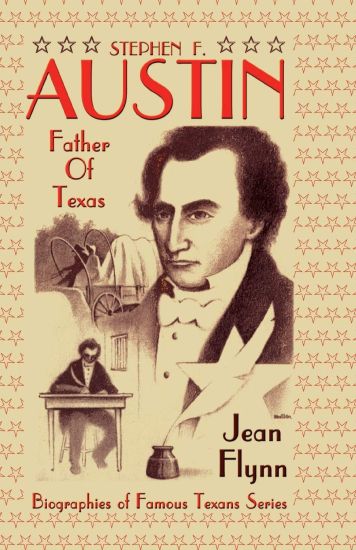
Stephen F. Austin established the first successful Anglo-American colony in what would become Texas. He brought 300 families to Texas in 1825 and while he led the effort for settlers to get along with the Mexican government, he would eventually become a leader in the effort for Texas independence. Today he is recognized as "The Father of Texas."

Stephen Shore: Stereograph
Aperture Direct
2018
muu

Stephen Shore: The Gardens at Giverny (Signed Edition): A View of Monet's World
Aperture Direct
2005
sidottu

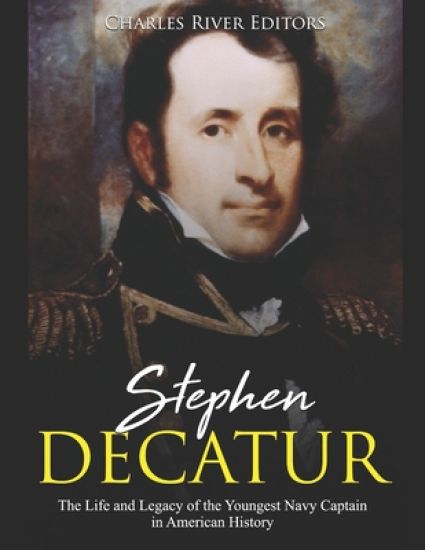
Stephen Decatur: The Life and Legacy of the Youngest Navy Captain in American History
Charles River
Independently Published
2019
nidottu
*Includes pictures*Includes a bibliography for further reading"Our country, right or wrong." - Stephen DecaturBetween the Revolutionary War and the Civil War, the United States engaged in several wars that have mostly been overlooked. The War of 1812 is one of America's forgotten conflicts, and the stalemated nature of the war (which resolved virtually none of either side's war aims) has also ensured that it is often given merely a cursory overview. Great Britain, as the leader of several coalitions of conservative European countries trying to isolate and snuff out the revolutionary spirit and the ambitions of Napoleon, had been at war with France almost continuously since 1792. Under President Thomas Jefferson (1801-1809) and James Madison (1809-1817), the United States tried to steer a course that would keep it from being drawn into the European war and defend its neutrality on the high seas. However, both Britain and France wanted to hurt the other side economically by keeping goods out of their enemy's hands. Thus, they did not faithfully respect the rights of neutral nations. The British government in 1807 had issued the "Orders in Council," which enforced a naval blockade against France, and with a shortage of seamen to man the Royal Navy, Britain also felt justified in stopping and sometimes firing on ships flying the American flag in the name of apprehending escaped British sailors. In the same vein, American shipping was disrupted by piracy across the globe, especially in the Mediterranean, leading to multiple conflicts known as the Barbary Wars. Americans had few things to celebrate during the Barbary Wars or the War of 1812, but one of them was the growing prestige of the U.S. Navy, and among those who were instrumental in its development, few were as influential as Stephen Decatur Jr. Decatur had an impact on nearly every war America fought in between the 1780s until his death in 1820, and his stardom ensured that he was a fixture among Washington, D.C.'s elite in his own lifetime. As with John Paul Jones during the American Revolution, Decatur's activities helped instantly associate his name with the fledgling country's success at sea.Stephen Decatur: The Life and Legacy of the Youngest Navy Captain in American History chronicles the various roles he played for the Navy and how he became one of America's most memorable naval heroes. Along with pictures depicting important people, places, and events, you will learn about Decatur like never before.

Stephen Decatur: The Life and Legacy of the Youngest Navy Captain in American History
Charles River
Independently Published
2019
nidottu
*Includes pictures*Includes a bibliography for further reading"Our country, right or wrong." - Stephen DecaturBetween the Revolutionary War and the Civil War, the United States engaged in several wars that have mostly been overlooked. The War of 1812 is one of America's forgotten conflicts, and the stalemated nature of the war (which resolved virtually none of either side's war aims) has also ensured that it is often given merely a cursory overview. Great Britain, as the leader of several coalitions of conservative European countries trying to isolate and snuff out the revolutionary spirit and the ambitions of Napoleon, had been at war with France almost continuously since 1792. Under President Thomas Jefferson (1801-1809) and James Madison (1809-1817), the United States tried to steer a course that would keep it from being drawn into the European war and defend its neutrality on the high seas. However, both Britain and France wanted to hurt the other side economically by keeping goods out of their enemy's hands. Thus, they did not faithfully respect the rights of neutral nations. The British government in 1807 had issued the "Orders in Council," which enforced a naval blockade against France, and with a shortage of seamen to man the Royal Navy, Britain also felt justified in stopping and sometimes firing on ships flying the American flag in the name of apprehending escaped British sailors. In the same vein, American shipping was disrupted by piracy across the globe, especially in the Mediterranean, leading to multiple conflicts known as the Barbary Wars. Americans had few things to celebrate during the Barbary Wars or the War of 1812, but one of them was the growing prestige of the U.S. Navy, and among those who were instrumental in its development, few were as influential as Stephen Decatur Jr. Decatur had an impact on nearly every war America fought in between the 1780s until his death in 1820, and his stardom ensured that he was a fixture among Washington, D.C.'s elite in his own lifetime. As with John Paul Jones during the American Revolution, Decatur's activities helped instantly associate his name with the fledgling country's success at sea.Stephen Decatur: The Life and Legacy of the Youngest Navy Captain in American History chronicles the various roles he played for the Navy and how he became one of America's most memorable naval heroes. Along with pictures depicting important people, places, and events, you will learn about Decatur like never before.

Stephen Decatur and Oliver Hazard Perry: The Lives and Careers of America's Most Famous Naval Officers during the War of 1812
Charles River
Independently Published
2019
nidottu
*Includes pictures*Includes a bibliography"We have met the enemy and they are ours." - Oliver Hazard PerrySandwiched between the Revolution and the Civil War, the War of 1812 is one of America's forgotten conflicts, and the stalemated nature of the war (which resolved virtually none of either side's war aims) has also ensured that it is often given merely a cursory overview. Great Britain, as the leader of several coalitions of conservative European countries trying to isolate and snuff out the revolutionary spirit and the ambitions of Napoleon, had been at war with France almost continuously since 1792. Under President Thomas Jefferson (1801-1809) and James Madison (1809-1817), the United States tried to steer a course that would keep it from being drawn into the European war and defend its neutrality on the high seas. However, both Britain and France wanted to hurt the other side economically by keeping goods out of their enemy's hands. Thus, they did not faithfully respect the rights of neutral nations. The British government in 1807 had issued the "Orders in Council," which enforced a naval blockade against France, and with a shortage of seamen to man the Royal Navy, Britain also felt justified in stopping and sometimes firing on ships flying the American flag in the name of apprehending escaped British sailors. The other main cause of war was distress on the Northwestern frontier, where the British in Canada were supporting Indian resistance to American settlement. So-called "War Hawks" from that region in Congress pushed for a declaration of war. Some hoped that a war would not only stop Indian depredations but evict the British from Canada and lead to completion of some unfinished business from the American Revolution, namely Canada joining the U.S. Americans had few things to celebrate during the Barbary Wars or the War of 1812, but one of them was the growing prestige of the U.S. Navy, and among those who were instrumental in its development, few were as influential as Stephen Decatur Jr. Decatur had an impact on nearly every war America fought in between the 1780s until his death in 1820, and his stardom ensured that he was a fixture among Washington, D.C.'s elite in his own lifetime. As with John Paul Jones during the American Revolution, Decatur's activities helped instantly associate his name with the fledgling country's success at sea.One of the only major victories the Americans won throughout the War of 1812 came at the Battle of Lake Erie in September 1813, and that action made Oliver Hazard Perry, a veteran of the Barbary Wars and commander of the USS Lawrence, a legend whose name has endured for over 200 years. Perry was so instrumental in the victory that British historian C.S. Forester noted "it was as fortunate for the Americans that the Lawrence still possessed a boat that would float, as it was that Perry was not hit." As one of the biggest naval battles of the war, the results meant that America maintained control of Lake Erie, an important location from which they could recover Detroit and be better positioned to confront the British and Shawnee leader Tecumseh's confederacy. For his part, Perry would forever be remembered as the "Hero of Lake Erie," even as he and compatriot Captain Jesse Elliot would feud over their respective actions during the battle for the rest of Perry's life.Perry received a Congressional Gold Medal and the Thanks of Congress for compelling the surrender of the entire British squadron, the first time that had ever happened, but he wouldn't have much time to enjoy it. He fought in the Second Barbary War in 1815 but died of yellow fever while on a mission in Venezuela in 1819. Despite being just 34 at the time of his death, he was one of the most famous military heroes in the young nation's history, and he has been commemorated with countless monuments across America ever since.

Stephen Decatur and Oliver Hazard Perry: The Lives and Careers of America's Most Famous Naval Officers during the War of 1812
Charles River
Independently Published
2019
nidottu
*Includes pictures*Includes a bibliography"We have met the enemy and they are ours." - Oliver Hazard PerrySandwiched between the Revolution and the Civil War, the War of 1812 is one of America's forgotten conflicts, and the stalemated nature of the war (which resolved virtually none of either side's war aims) has also ensured that it is often given merely a cursory overview. Great Britain, as the leader of several coalitions of conservative European countries trying to isolate and snuff out the revolutionary spirit and the ambitions of Napoleon, had been at war with France almost continuously since 1792. Under President Thomas Jefferson (1801-1809) and James Madison (1809-1817), the United States tried to steer a course that would keep it from being drawn into the European war and defend its neutrality on the high seas. However, both Britain and France wanted to hurt the other side economically by keeping goods out of their enemy's hands. Thus, they did not faithfully respect the rights of neutral nations. The British government in 1807 had issued the "Orders in Council," which enforced a naval blockade against France, and with a shortage of seamen to man the Royal Navy, Britain also felt justified in stopping and sometimes firing on ships flying the American flag in the name of apprehending escaped British sailors. The other main cause of war was distress on the Northwestern frontier, where the British in Canada were supporting Indian resistance to American settlement. So-called "War Hawks" from that region in Congress pushed for a declaration of war. Some hoped that a war would not only stop Indian depredations but evict the British from Canada and lead to completion of some unfinished business from the American Revolution, namely Canada joining the U.S. Americans had few things to celebrate during the Barbary Wars or the War of 1812, but one of them was the growing prestige of the U.S. Navy, and among those who were instrumental in its development, few were as influential as Stephen Decatur Jr. Decatur had an impact on nearly every war America fought in between the 1780s until his death in 1820, and his stardom ensured that he was a fixture among Washington, D.C.'s elite in his own lifetime. As with John Paul Jones during the American Revolution, Decatur's activities helped instantly associate his name with the fledgling country's success at sea.One of the only major victories the Americans won throughout the War of 1812 came at the Battle of Lake Erie in September 1813, and that action made Oliver Hazard Perry, a veteran of the Barbary Wars and commander of the USS Lawrence, a legend whose name has endured for over 200 years. Perry was so instrumental in the victory that British historian C.S. Forester noted "it was as fortunate for the Americans that the Lawrence still possessed a boat that would float, as it was that Perry was not hit." As one of the biggest naval battles of the war, the results meant that America maintained control of Lake Erie, an important location from which they could recover Detroit and be better positioned to confront the British and Shawnee leader Tecumseh's confederacy. For his part, Perry would forever be remembered as the "Hero of Lake Erie," even as he and compatriot Captain Jesse Elliot would feud over their respective actions during the battle for the rest of Perry's life.Perry received a Congressional Gold Medal and the Thanks of Congress for compelling the surrender of the entire British squadron, the first time that had ever happened, but he wouldn't have much time to enjoy it. He fought in the Second Barbary War in 1815 but died of yellow fever while on a mission in Venezuela in 1819. Despite being just 34 at the time of his death, he was one of the most famous military heroes in the young nation's history, and he has been commemorated with countless monuments across America ever since.