Observera att förlaget som ger ut denna produkt baserar innehållet i sina produkter på fria källor som Wikipedia. Boken är med stor sannolikhet endast ett utdrag ur dessa informationskällor, alltså inte en vanlig bok i den bemärkelsen.
Set during the Civil War, against a backdrop of grand estates, unimaginable riches, and deadly secrets, three teenagers in Mystic Falls, Virginia enter a torrid love triangle that will span eternity. Brothers Stefan and Damon Salvatore are inseparable until they meet Katherine, a stunning, mysterious woman who turns their world upside down. Siblings turned rivals, the Salvatores compete for Katherine's affection, only to discover that her sumptuous silk dresses and glittering gems hide a terrible secret: Katherine is a vampire. And she is intent on turning them into vampires so they can live together--forever.
In the heart-racing, captivating conclusion to Stefans Diaries, fans of the hit television show The Vampire Diaries finally find out how the once inseparable Salvatore brothers became mortal enemies.
Stefan Salvatore has come to terms with being a vampire. The events of the past few months have sobered him, and the fog of his own blood lust has begun to lift. He travels to New York City to start a new life, one that does not require him to kill humans to survive. Instead he feeds off animals in Central Park. But the quiet life he envisioned is jolted when he runs into his brother Damon, who has convinced New York high society that he is Italian royalty. While Stefan is regaining his humanity, Damon has completely lost his. Stefan will do whatever it takes to protect Damon from himself, but there is another villain present. A vampire that seeks revenge for a death the Salvatores are responsible for. Stefan and Damon will have to work together to fight the greatest evil yet.
The fourth book in the New York Times bestselling series by L.J. Smith.The Ripper is the fourth book in L.J. Smith's bestselling Stefan's Diaries series, which reveals the backstory of brothers Stefan and Damon from The Vampire Diaries series. This paperback features cover artwork from the hit CW TV series The Vampire Diaries, starring Nina Dobrev, Paul Wesley, and Ian Somerhalder. Twenty years have passed since Stefan Salvatore last saw his brother, Damon. Now living in a remote town in England, far away from the haunting memories of Mystic Falls, Stefan is finally able to start over. But when news from London reaches Stefan of a brutal killer on the loose--who goes by Jack the Ripper--Stefan suspects that the murders are the work of a vampire...his brother. Full of dark shadows and surprising twists, the fourth book in the New York Times bestselling Stefan's Diaries series raises the stakes for the Salvatore brothers as they face new loves, old treacheries, and unimaginable threats. Fans of L. J. Smith's New York Times bestselling Vampire Diaries series as well as the hit television show won't be able to put the latest Salvatore adventure down.
The fifth book in the New York Times bestselling series by L.J. Smith.The Asylum is the fifth book in L.J. Smith's bestselling Stefan's Diaries series, which reveals the backstory of brothers Stefan and Damon from The Vampire Diaries series. This paperback features cover artwork from the hit CW TV series The Vampire Diaries, starring Nina Dobrev, Paul Wesley, and Ian Somerhalder. Trust has never come easily to Stefan and Damon, but now that Samuel--a vampire from Katherine's past bent on revenge--is determined to ruin their lives, the Salvatores must join forces to defeat their foe. Samuel has already ruined Stefan's chances at a normal life, and now he's framing Damon for the Jack the Ripper murders, too. With the help of Cora, a human girl, Stefan and Damon track Samuel from the glittering ballrooms of London to the city's asylum, which Samuel uses for his own nefarious purposes. However, while finding Samuel is easy, Damon and Stefan quickly learn that stopping him may be nearly impossible. Full of dark shadows and surprising twists, the fifth book in the New York Times bestselling Stefan's Diaries series raises the stakes for the Salvatore brothers as they face new loves, old treacheries, and unimaginable threats. Fans of L. J. Smith's New York Times bestselling Vampire Diaries series as well as the hit television show won't be able to put the latest Salvatore adventure down.
The sixth book in the New York Times bestselling series by L.J. Smith.The Compelled is the sixth and final book in L.J. Smith's bestselling Stefan's Diaries series, which reveals the backstory of brothers Stefan and Damon from The Vampire Diaries series. This paperback features cover artwork from the hit CW TV series The Vampire Diaries, starring Nina Dobrev, Paul Wesley, and Ian Somerhalder. Stefan Salvatore has always had an uneasy relationship with his brother Damon. But when Damon is taken captive by Samuel--a vampire from Katherine's past bent on revenge--Stefan is determined to rescue him before it is too late...even if it means seeking help from the most unlikely of places. Stefan forms a tentative alliance with a coven of witches in order to save his brother, only to learn that Samuel's end game is far more sinister then they could have imagined. With Samuel on the brink of securing unlimited power, the brothers are in for their deadliest battle yet. Full of dark shadows and surprising twists, the sixth and final book in the New York Times bestselling Stefan's Diaries series raises the stakes for the Salvatore brothers as they face new loves, old treacheries, and unimaginable threats. Fans of L. J. Smith's New York Times bestselling Vampire Diaries series as well as the hit television show won't be able to put the latest Salvatore adventure down.
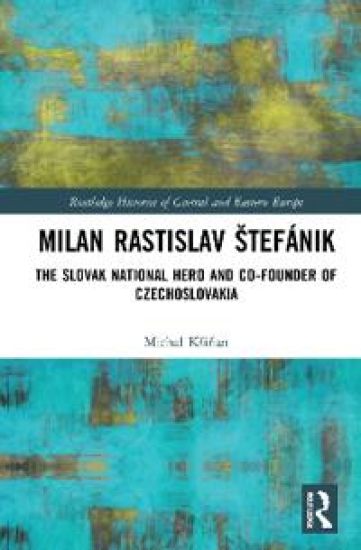
This is the first scientific biography of Milan Rastislav Štefánik (1880–1919) that is focused on analysing the process of how he became the Slovak national hero.Although he is relatively unknown internationally, his contemporaries compared him “to Choderlos de Laclos for the use of military tactics in love affairs, to Lawrence of Arabia for vision, to Bonaparte for ambition ... and to one of apostles for conviction”. He played the key role in founding an independent Czechoslovakia in 1918 through his relentless worldwide travels during the First World War in order to create the Czechoslovak Army: he visited Serbia and Romania on the eve of invasion by the Central Powers, Russia before the February revolution, the United States after it declared war on Germany, Italy dealing with the consequences of defeat in the Caporetto battle, and again when Russia plunged into Civil War.Several historical methods are used to analyse the aforementioned central research question of this biography such as social capital to explain his rise in French society, the charismatic leader to understand how he convinced and won over a relatively large number of people; more traditional political, military, and diplomatic history to show his contribution to the founding of Czechoslovakia, and memory studies to analyse his extraordinary popularity in Slovakia. By mapping his intriguing life, the book will be of interest to scholars in a broad range of areas including history of Central Europe, especially Czechoslovakia, international relations, social history, French society at the beginning of the 20th century and biographical research.
This is the first scientific biography of Milan Rastislav Štefánik (1880–1919) that is focused on analysing the process of how he became the Slovak national hero.Although he is relatively unknown internationally, his contemporaries compared him “to Choderlos de Laclos for the use of military tactics in love affairs, to Lawrence of Arabia for vision, to Bonaparte for ambition ... and to one of apostles for conviction”. He played the key role in founding an independent Czechoslovakia in 1918 through his relentless worldwide travels during the First World War in order to create the Czechoslovak Army: he visited Serbia and Romania on the eve of invasion by the Central Powers, Russia before the February revolution, the United States after it declared war on Germany, Italy dealing with the consequences of defeat in the Caporetto battle, and again when Russia plunged into Civil War.Several historical methods are used to analyse the aforementioned central research question of this biography such as social capital to explain his rise in French society, the charismatic leader to understand how he convinced and won over a relatively large number of people; more traditional political, military, and diplomatic history to show his contribution to the founding of Czechoslovakia, and memory studies to analyse his extraordinary popularity in Slovakia. By mapping his intriguing life, the book will be of interest to scholars in a broad range of areas including history of Central Europe, especially Czechoslovakia, international relations, social history, French society at the beginning of the 20th century and biographical research.
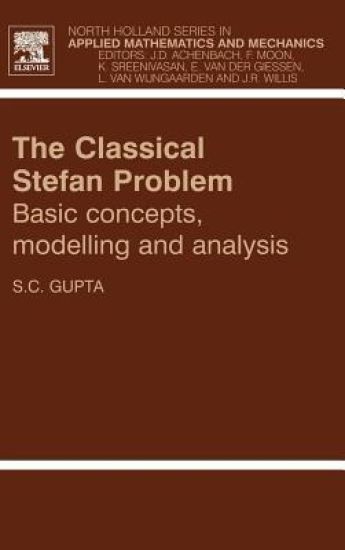
This volume emphasises studies related to classical Stefan problems. The term "Stefan problem" is generally used for heat transfer problems with phase-changes such as from the liquid to the solid. Stefan problems have some characteristics that are typical of them, but certain problems arising in fields such as mathematical physics and engineering also exhibit characteristics similar to them. The term ``classical" distinguishes the formulation of these problems from their weak formulation, in which the solution need not possess classical derivatives. Under suitable assumptions, a weak solution could be as good as a classical solution. In hyperbolic Stefan problems, the characteristic features of Stefan problems are present but unlike in Stefan problems, discontinuous solutions are allowed because of the hyperbolic nature of the heat equation. The numerical solutions of inverse Stefan problems, and the analysis of direct Stefan problems are so integrated that it is difficult to discuss one without referring to the other. So no strict line of demarcation can be identified between a classical Stefan problem and other similar problems. On the other hand, including every related problem in the domain of classical Stefan problem would require several volumes for their description. A suitable compromise has to be made. The basic concepts, modelling, and analysis of the classical Stefan problems have been extensively investigated and there seems to be a need to report the results at one place. This book attempts to answer that need.
The Classical Stefan Problem: Basic Concepts, Modelling and Analysis with Quasi-Analytical Solutions and Methods, New Edition, provides fundamental theory, concepts, modelling and analysis of the physical, mathematical, thermodynamical and metallurgical properties of classical Stefan and Stefan-like problems as applied to heat transfer problems involving phase-changes, such as from liquid to solid. This self-contained work reports and derives the results from tensor analysis, differential geometry, non-equilibrium thermodynamics, physics and functional analysis, and is thoroughly enriched with many appropriate references for an in-depth background reading on theorems. This new edition includes more than 400 pages of new material on quasi-analytical solutions and methods of classical Stefan and Stefan-like problems. The book aims to bridge the gap between the theoretical and solution aspects of the afore-mentioned problems.
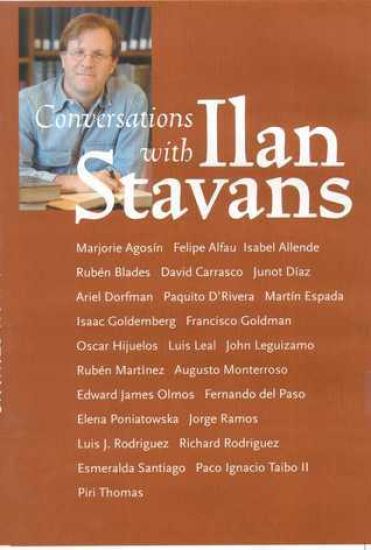
For almost twenty years, Ilan Stavans described by the Washington Post as "Latin America's liveliest and boldest critic and most innovative cultural enthusiast" has interviewed path-breaking intellectuals and artists in a wide range of media. As host of the critically acclaimed PBS series La Plaza, he interviews guests on pressing issues that affect the Western Hemisphere today, asking hard-hitting questions on immigration, religion, bilingualism, race, and democracy. This book collects for the first time in one volume Stavans's most provocative and enlightening interviews with Hispanics from both sides of the Rio Grande. Spontaneous and surprising, these conversations reflect Latino life in the United States in all its facets. Among the more than two dozen selections, Edward James Olmos talks about Hispanics in Hollywood; John Leguizamo describes how he shapes a stage show; author Richard Rodriguez reflects on his gang background; Esmeralda Santiago takes on the Puerto Rican stereotype; and Piri Thomas shares thoughts on the writing of Down These Mean Streets. "A conversation is a tango," writes Stavans, "for it takes two to dance it." Conversations with Ilan Stavans invites readers to catch the rhythm and enjoy these unique meetings of minds.
In diesem Band erscheint zum ersten Mal die bisher unveroeffentlichte Korrespondenz zwischen zwei Dichtern, die ihre literarische Laufbahn im Wien der Jahrhundertwende einschlugen. Der Briefwechsel dokumentiert die wachsende Freundschaft zweier Menschen aus grundverschiedenen sozialen Verhaeltnissen: der eine kannte das Proletarierelend der Hauptstadt aus erster Hand, der andere genoss die Privilegien seiner Herkunft aus dem juedischen Grossbuergertum. Gemeinsam war jedoch beiden das Verlangen, ihren Erlebnissen, ihren Gedanken, ihren tiefsten Wuenschen kuenstlerischen Ausdruck zu verleihen. Ein einleitender Aufsatz und umfangreiche Anmerkungen liefern den notwendigen Rahmen fuer das Verstaendnis der Korrespondenz.
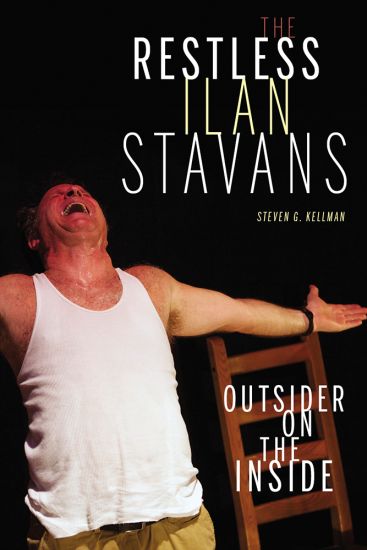
This is the first book-length study of one of the most prominent and prolific Latino academics, Ilan Stavans. He has written extensively on Latino culture, Jewish culture, dictionaries, immigration, language, Spanglish, soccer, translation, travel, selfies, and God. The Restless Ilan Stavans surveys his interests, achievements, and flaws while he is still in the midst of an extraordinarily productive career. A native of Mexico who became a U.S. citizen, he is an outsider to both the Chicano community that often resents him as an interloper and the American Jewish community that he, who grew up speaking Yiddish in Mexico City, often chides. The book examines his unlikely rise to prominence within the context of the spread of multiculturalism as a seminal principle within American culture. A self-proclaimed cosmopolitan who rejects borders, Stavans is both insider and outsider to the myriad of subjects he approaches.
Amid the din of Russia’s patriotic sentiments and Instagram instants, is there any room left for the voice of a poet? Despite the many entertainments and distractions of modern life, Anzhelina Polonskaya’s spare but cutting poems in Take Me to Stavanger declare a wholehearted “Yes.” This bilingual Russian-English volume makes a refuge for the poet and her readers, plumbing the depths of contemporary melancholy and ennui. Beautifully crafted idiosyncratic dissections of a strong individual who refuses to go along with the currents of popular culture or political jingoism invite readers to slow down and pay attention.
During his lifetime Austrian novelist Stefan Zweig (1881–1942) was among the most widely read German-language writers in the world. Always controversial, he fell into critical disfavor as writers and critics in a devastated postwar Europe attacked the poor literary quality of his works and excoriated his apolitical fiction as naïve Habsburg nostalgia. Yet in other parts of the world, Zweig’s works have enjoyed continued admiration and popularity, even canonical status.China’s Stefan Zweig unveils the extraordinary success of Zweig’s novellas in China, where he has been read in an entirely different way. During the New Culture Movement of the 1920s, Zweig’s novellas were discovered by intellectuals turning against Confucian tradition. In the 1930s, left-wing scholars criticized Zweig as a decadent bourgeois writer, yet after the communist victory in 1949 he was re-introduced as a political writer whose detailed psychological descriptions exposed a brutal and hypocritical bourgeois capitalist society. In the 1980s, after the Cultural Revolution, Zweig’s works triggered a large-scale “Stefan Zweig fever,” where Zweig-style female figures, the gentle, loving, and self-sacrificing women who populate his novels, became the feminine ideal. Zweig’s seemingly anachronistic poetics of femininity allowed feminists to criticize Maoist gender politics by praising Zweig as “the anatomist of the female heart.” As Arnhilt Hoefle makes clear, Zweig’s works have never been passively received. Intermediaries have actively selected, interpreted, and translated his works for very different purposes.China’s Stefan Zweig not only re-conceptualizes our understanding of cross-cultural reception and its underlying dynamics, but proposes a serious re-evaluation of one of the most successful yet misunderstood European writers of the twentieth century. Zweig’s works, which have inspired recent film adaptations such as Xu Jinglei’s Letter from an Unknown Woman (2005) and Wes Anderson’s Grand Budapest Hotel (2014), are only beginning to be rediscovered in Europe and North America, but the heated debate about his literary merit continues. This book, with its wealth of hitherto unexplored Chinese-language sources, sheds light on the Stefan Zweig conundrum through the lens of his Chinese reception to reveal surprising, and long overlooked, literary dimensions of his works.