What if your neighbor's son or daughter has been persuaded to join ISIS? Worse, what if the son or daughter of a friend has gone over to the terrorist group? When retired CIA operative Tony Dantry is contacted by old friend Quentin Ramos for a favor, it leads to something much ibigger and far more threatening than Tony ever imagined. Ramos suspects that his son, a clean-cut extremely likable college student, has been communicating with ISIS terrorists. Because of Dantry's CIA experience and law enforcement connections, Ramos thinks Tony can look into the situation more discreetly than he as a parent could. Ramos didn't want to snoop into the personal life of his son, but things had gotten so serious that something had to be done before it was too late to save his son. Dantry agrees to help and finds himself inextricably drawn into something that all of us read about in the news, but don't believe could happen to us. (This book was originally released as Closer Than Your Think.)
Join Georgette, George and their new friends Recca and Tony Terrific in a new adventure in the Nebraska town of Wheatley as they discover more about their new home.
FBI consultant Tony Wagner is called to the White Mountains of Arizona where his tracking skills are needed. Someone has kidnapped a cabinet secretary's daughter, murdered her bodyguard, and disappeared into the rugged landscape. With 72 hours before the ransom drop, Agent Garret's team scours the sparsely populated region, encountering residents both cooperative and antagonistic. They begin to unravel an elaborate plot involving multiple conspirators. Meanwhile, Tony tries not to let memories of his own kidnapping distract him. The investigation takes them across east central Arizona, from Pinedale to St. Johns, Holbrook to Alpine, and beyond. In this, the 9th Tony Wagner mystery, the author brings her protagonist to Arizona's Colorado Plateau where she makes her home.
From his over-bearing old man to the street fights and gang wars; Tony has survived Port Nichols and all it had done to try and keep him there. It was time to move on and become the man he was destined to be. He needed to mature and the military would help him do that and more. Life lessons are sometimes very hard but never boring. Tony will have to face personal peril many times as he decides whether to give in, or clear the shame attached to his name and become a man of honour.
Train your brain to receive abundance and wealth by following simple methods as teaches by Tony Robbins.Change your belief system to receive abundance, clear your mental blocks or governors which are stopping you to achieve tremendous wealth. Associate pain to not having money and pleasure to having it. Don't run after money instead create value for customers at large.
With its distinctive, twin-tailed design, the P-38 was one of the most recognizable fighter aircraft of World War II. It was also one of the best. The perfect balance of speed, firepower and range, it made a formable opponent during the crucial battles for the Solomon Islands and New Guinea. In response, the Japanese worked with the Germans to develop the Ki-61, a heavy air superiority fighter with an impressive array of firepower. In head-to-head match-ups, the P-38 proved the superior fighter, but individual duels often came down to the ability and experience of the individual pilots. This book recreates these fast, deadly duels in the skies of the Pacific using dramatic artwork and first-hand accounts.
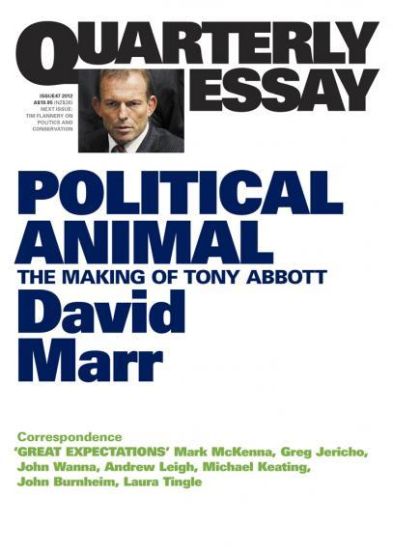
Tony Abbott is the most successful Opposition leader of the last forty years, but he has never been popular. Now Australians want to know- what kind of man is he, and how would he perform as prime minister? In this dramatic portrait, David Marr shows that as a young Catholic warrior at university, Abbott was already a brutally effective politician. He later led the way in defeating the republic and, as the self-proclaimed 'political love child' of John Howard, rose rapidly in the Liberal Party. His reputation as a head-kicker and hard-liner made him an unlikely leader, but when the time came, his opposition to the emissions trading scheme proved decisive. Marr shows that Abbott thrives on chaos and conflict. Part fighter and part charmer, he is deeply religious and deeply political. What happens, then, when his values clash with his need to win? This is the great puzzle of his career, but the closer he is to taking power, the more guarded he has become. 'Since witnessing the Hewson catastrophe at first hand, Abbott has worn a mask. He has grown and changed. Life and politics have taught him a great deal. But how this has shaped the fundamental Abbott is carefully obscured.What has been abandoned? What is merely hidden on the road to power? What makes people so uneasy about Abbott is the sense that he is biding his time, that there is a very hard operator somewhere behind that mask, waiting for power.' David Marr, Political Animal
Tony Birks was a prolific writer on art, particularly in British studio ceramics. This is the first publication to bring together his writings in a single volume.During the 1970s studio ceramic grew dramatically as a force on the international art scene. In Britain and America particularly, but also across Europe, practice flourished and powerful thinkers sought to define and describe what was happening. It was a dynamic and a controversial time, in which the nature of pottery showed itself capable of radical change. In the decades that followed this outburst, ceramic consolidated into a complex aesthetic and cultural discourse.Tony Birks was at the heart of this new wave of activity. A consummate writer and an artist himself, he supported what had happened in previous decades to generate a Modern ceramic art, and he championed the new generation blossoming around him. His publications provided crucial support to a discipline barely served by mainstream art history and criticism. He wrote monographs on major established figures, but he also had an extraordinarily perceptive eye for new talent, which served to bring attention to vibrant young artists. A number of these went on to become leading forces on the international scene.This book gathers together for the first time a comprehensive selection of Tony Birks's writing. A number of the essays are about the nature of ceramic practice, but the majority are about individual practitioners, among them are Bernard Leach, Lucie Rie, Hans Coper, Claudi Casanovas, Tony Hepburn, Andrew Lord, Ruth Duckworth and Takeshi Yasuda. Taken as a whole, the book is a window on the world of ceramic art at a crucial time in its growth - the issues and the personalities - opened for us by one of its most significant critical voices. The book also includes a catalogue of the ceramic works owned by Tony Birks that were gifted to the Sainsbury Centre at the University of East Anglia.
The Power of Mental Wealth is a cutting-edge book to help you thrive in times of chaos and change. More than twenty immensely talented contributors share their definitions of this term and their mental gifts with you in The Power of Mental Wealth. Their chapters include stories of perseverance, overcoming adversities, building self-confidence, increasing their joy, and training themselves to see the brilliance and success of their futures. In every single case, they worked hard to perfect themselves and improve their minds. They worked on this intensely, investing a good chunk of their time, for years. They all succeeded, and so can you.
These poems are universal by achieving individuality. Here is the story of one love match reaching for what is common in everybody, no matter who they love. Or, as a reviewer of the work phrased it: This line from No. 5 - "For you are Poet, to all my Poetry" - tells such a simple truth. Without our ability to feel, we would be nothing, we couldn't write a single line. So the people evoking the strongest emotions in us are the poets, which create the poetry in our connected souls and bring us to write. What a blessing is to have AC's ability to write down what lives inside all of us.
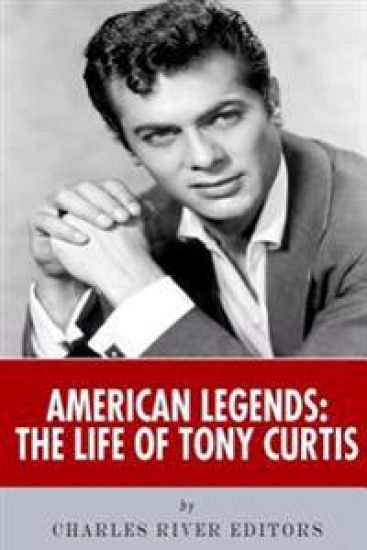
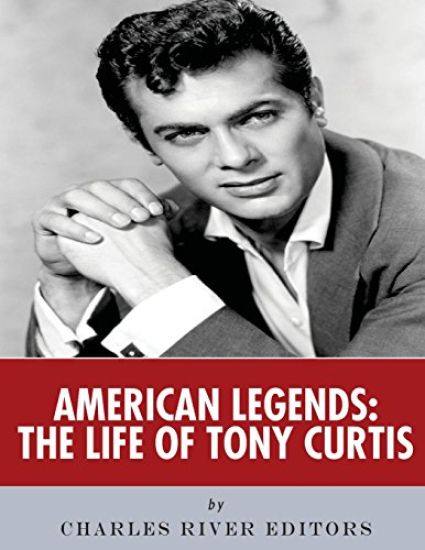
*Includes pictures *Includes Curtis' quotes about his own life and career *Includes online resources and a bibliography for further reading *Includes a table of contents "If you know how to live in Vegas you can have the best time." - Tony Curtis A lot of ink has been spilled covering the lives of history's most influential figures, but how much of the forest is lost for the trees? In Charles River Editors' American Legends series, readers can get caught up to speed on the lives of America's most important men and women in the time it takes to finish a commute, while learning interesting facts long forgotten or never known. At the height of Hollywood's "golden age" of the 1940s through the early '60s, many of the industry's brightest stars could boast of unique stories describing how they were discovered. Their distinctiveness as on-screen personalities was an important part of that stardom, but one unlikely actor, a mismatch of contrasts, dialects, looks, and personal behavior, was to become an icon of the age, revered and disdained, but in the end, fondly remembered by the movie industry and fan base. Tony Curtis was, in the beginning, considered by most of his colleagues as a hack actor, but in time, one who took it upon himself to develop into a true screen artist. At his height as a matinee idol, Curtis was blessed with "piercing blue eyes and good looks," a physicality described by the New York Times as "classically handsome." He was to set a new criteria in place for male beauty in his era, a "feminized" but rugged heroism, able to portray grisly scenes with a "pretty boy" appearance, then immediately turn "cute" and excel in light comedy. Off-screen, Curtis was one of Hollywood's most prodigious womanizers, with a "predatory sexual magnetism" that was both alluring and feared, a quality that translated directly onto the screen, where Curtis presented a mix of himself as "part rogue and part earnest, sensitive hunk." His many liaisons, numbering over a thousand, included the yet undiscovered Marilyn Monroe in her teen years, Natalie Wood, and Janet Leigh of Psycho fame. In addition to his work as an actor, Curtis became a successful painter, and held his time spent creating canvasses in higher esteem than any of his cinematic performances. The New York Museum of Modern Art has his work in its collections, and many have sold at considerable prices. He was also an accomplished amateur flautist and an occasional novelist, maintaining a professionally consistent work ethic, despite an adult life filled with alcohol and drug use. In a career filled with quirky, romantic, and unsettling roles, Curtis took part in over one hundred films. Many were based on average scripts at best, but even for these, he is beloved in retrospect, and most admired for his work in Some Like It Hot, Spartacus, The Defiant Ones, and Houdini, among others. Such was Curtis' charm that a generation of movie-goers, and even critics, looked the other way as he played everything from Shakespearian kings to Arab spin-offs, medieval knights, and Roman and Viking slaves to tremendous acclaim, all with a Bronx accent and a particularly American swagger. American Legends: The Life of Tony Curtis examines the life and career of America's most famous actors. Along with pictures of important people, places, and events, you will learn about Tony Curtis like never before, in no time at all.
Voyage a Majorque: George Sand illustre par Tony Johannot et Maurice Sand / preface et notice nouvelle...Date de l'edition originale: 1868Ce livre est la reproduction fidele d'une oeuvre publiee avant 1920 et fait partie d'une collection de livres reimprimes a la demande editee par Hachette Livre, dans le cadre d'un partenariat avec la Bibliotheque nationale de France, offrant l'opportunite d'acceder a des ouvrages anciens et souvent rares issus des fonds patrimoniaux de la BnF.Les oeuvres faisant partie de cette collection ont ete numerisees par la BnF et sont presentes sur Gallica, sa bibliotheque numerique.En entreprenant de redonner vie a ces ouvrages au travers d'une collection de livres reimprimes a la demande, nous leur donnons la possibilite de rencontrer un public elargi et participons a la transmission de connaissances et de savoirs parfois difficilement accessibles.Nous avons cherche a concilier la reproduction fidele d'un livre ancien a partir de sa version numerisee avec le souci d'un confort de lecture optimal. Nous esperons que les ouvrages de cette nouvelle collection vous apporteront entiere satisfaction.Pour plus d'informations, rendez-vous sur www.hachettebnf.fr
When, in 1948, Tony Harrison entered Leeds Grammar School as a scholarship boy, he found himself, as Richard Hoggart saw, “at the friction point of two cultures”. His schooling introduced him to the “classics”; but it also deprived him of a clear identification with the place where he grew up. His work reflects and explores this tension; and it may be seen, in some ways, as a form of “identity construction.” The book examines key texts such as v. and the School of Eloquence sequence, where this “construction” takes different forms—oscillating between identity as a state, or a process; as continuity, or change; or as the outcome of conformity, or revolt. This second edition has been extensively revised and includes a new chapter on Harrison’s Elegies.
Studienarbeit aus dem Jahr 2009 im Fachbereich Filmwissenschaft, Note: 2,0, Johann Wolfgang Goethe-Universit t Frankfurt am Main, Sprache: Deutsch, Abstract: "Video killed the Radiostar. Pictures came and broke your heart" (The Bugles, 1981). Als dieser Song 1981 zum ersten Mal mit einem dazu passenden Video ber den neugegr ndeten Sender MTV ausgestrahlt wurde, konnte noch niemand ahnen, welche Ausma e das sogenannte "Musikfernsehen" einmal auf die moderne Kultur haben w rde. Mittlerweile ist es eines der erfolgreichsten Fernsehformate weltweit und erreicht nach eigenen Angaben 508 Millionen Haushalte in 179 L ndern. Dabei beschr nkt sich "Music Television," oder kurz MTV heute nicht mehr auf das urspr ngliche Konzept ausschlie lich Videoclips zu pr sentieren, sondern besteht zu einem Gro teil aus diversen Lifestyle- und Unterhaltungsformaten. Seit den 90ern setzt der Sender auf Authentizit t und Jugendlichkeit, dies wird nicht nur in den Inhalten, sondern auch in der Machart von Clips und Sendungen deutlich. Dieser sogenannte "MTV-Style" pr gt durch die gro e Popularit t des Senders sowohl das Medienkonsumverhalten der Rezipienten, als auch die Medienlandschaft allgemein. Er zeichnet sich besonders durch Geschwindigkeit in der Montage und Improvisation beziehungsweise Spontanit t aus (Relinger S.8 f). Diese Hausarbeit besch ftigt sich damit, wie die besonderen Stilelemente von MTV auch im Hollywoodkino zum Einsatz kommen. Dabei konzentriert sie sich auf den Regisseur Tony Scott und seine Filme seit "Top Gun" (1986). Durch Beispiel aus dem Film "Man on Fire" (2004), werden die verschiedenen Videoclip-Elemente in Scotts Werken herausgearbeitet. Zum Vergleich werden einzelne Stilelemente anhand einiger Clipbeispiele verdeutlicht, die besondere Machart der heutigen Musikfernsehformate vorgestellt und diese dann mit dem postklassischen Hollywoodkino und besonders den Werken Scotts verglichen. Dabei wird auch auf die besondere Funktion der Eigenwerbung, besonders im F