Kirjojen hintavertailu. Mukana 11 699 587 kirjaa ja 12 kauppaa.

Kirjahaku

Etsi kirjoja tekijän nimen, kirjan nimen tai ISBN:n perusteella.

1000 tulosta hakusanalla V.C.Clinton- Baddeley

The Archive; v.112 (1999) c.1

The Archive; v.112 (1999) c.1

Anonymous

Hassell Street Press
2021
nidottu
This work has been selected by scholars as being culturally important and is part of the knowledge base of civilization as we know it.This work is in the public domain in the United States of America, and possibly other nations. Within the United States, you may freely copy and distribute this work, as no entity (individual or corporate) has a copyright on the body of the work.Scholars believe, and we concur, that this work is important enough to be preserved, reproduced, and made generally available to the public. To ensure a quality reading experience, this work has been proofread and republished using a format that seamlessly blends the original graphical elements with text in an easy-to-read typeface.We appreciate your support of the preservation process, and thank you for being an important part of keeping this knowledge alive and relevant.
Verner-Carlsson, C: Buch v. Angeln
Angeln macht nicht nur Spaß, sondern kann auch sehr aufregend sein - bedeutet es doch, ein Stück Natur zu entdecken. Aber man muss natürlich wissen, wie es geht: welche Ausrüstung man benötigt, was für einen Köder man benutzen sollte, wann und wo die Fische am besten beißen und noch viel mehr. Angelfreunde und solche, die es werden wollen, erfahren in diesem Buch alles, was man übers Angeln wissen muss. Übers gewöhnliche Angeln, das sich besonders für Anfänger eignet, übers Spinnangeln mit Rolle und Kunstköder und übers Eisangeln. Mit einer kurz gefassten Gewässer- und Wetterkunde, einem kleinen Fischlexikon, einer Vielzahl von Ratschlägen, Hinweisen und Tipps und mit Illustrationen, die das "schlüpfrige" Thema selbst für Angelmuffel zum vergnüglichen Nachschlagebuch machen.
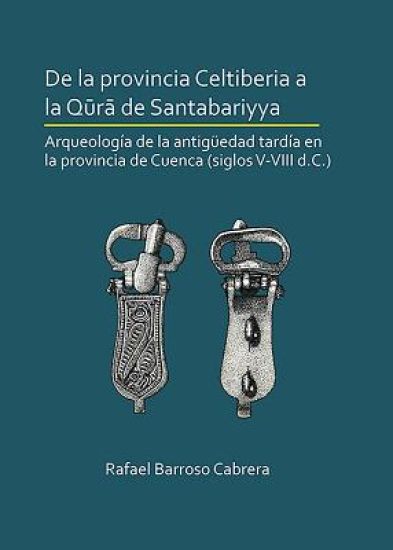
De la provincia Celtiberia a la qura de Santabariyya: Arqueología de la Antigüedad tardía en la provincia de Cuenca (siglos V-VIII d.C.)
The central position of the province of Cuenca, Spain, was a decisive factor in its relationship with Toledo, the capital of the Visigothic kingdom. Also, its location meant that, from the middle of the 6th Century, it was directly affected by some of the most relevant historical episodes of those times: the foundation of the royal city of Reccopoli, the establishment of the Servitanus monastery, the transformation of Toledo as the metropolitan seat of the Carthaginian province and the military campaigns against the imperial forces. Parallel to this, archaeological excavations document a process of disrupting the old urban centres in favour of small populations within their municipal territory. This process was resolved with a shift of power centres towards other cities supported by the political power of Toledo: Toledo itself in the case of Segobriga, Reccopoli in the Arcavica’s case and Illunum to the detriment of Valeria. In this way, the ancient Roman cities were reduced to serve as a symbolic reference of the small villages that developed in the shadow of the old urban centres. This volume presents a historical and archaeological study of the province of Cuenca in Late Antiquity. The study concludes with an examination of the archaeological collection from the province, which has been divided into three large groups: monumental sculpture and epigraphic items, ceramic productions and metalwork arts. The first group is mainly constituted by the findings made in the excavations of Cabeza de Griego (Segobriga). Most of the pottery productions correspond to vessels placed as funerary deposits. Due to the absence of excavations, the ceramics for kitchen and storage use are hardly represented, whereas there is an overrepresentation of types destined for use as libations or offerings. Finally, most of the elements of industrial arts correspond to elements of the Latin-Mediterranean fashion or Byzantine style of the 7th Century. The almost total absence of materials corresponding to the Pontic-Danubian fashion also should be noted. | La posición central de la provincia de Cuenca ha sido el factor determinante en su relación con Toledo, la capital del reino visigodo. Esta situación fue la causa también de que, desde mediados del siglo VI, se viera directamente afectada por algunos de los episodios históricos más relevantes del momento: la fundación de la ciudad regia de Recópolis, el establecimiento del monasterio Servitano, la transformación de Toledo en sede metropolitana de la provincia cartaginesa y las campañas militares contra los ejércitos imperiales. De forma paralela, las excavaciones arqueológicas documentan un proceso de desestructuración de los antiguos centros urbanos a favor de pequeñas poblaciones de su territorio. Este proceso se resolvió con un cambio de centros de poder hacia otras ciudades apoyadas por el poder político de Toledo: Toledo mismo en el caso de Segóbriga, Recópolis en el caso de Arcávica e Illunum en detrimento de Valeria. De este modo, las ciudades romanas quedaron reducidas servir como referentes simbólicos de las pequeñas poblaciones que se desarrollaron a la sombra de los antiguos centros urbanos. El presente trabajo se completa con el estudio de la colección arqueológica procedente de la provincia, que se ha dividido en tres grandes grupos: escultura monumental y epigrafía, producciones cerámicas y artes industriales. El primer grupo está constituido principalmente por los hallazgos realizados en las excavaciones de Cabeza de Griego (Segóbriga). Por otro lado, la mayoría de las producciones de cerámica corresponden a vasijas colocadas como depósitos funerarios. Debido a la ausencia de excavaciones, la cerámica de cocina y de almacenamiento apenas aparece representada, mientras que hay una sobrerrepresentación de tipos destinados a libaciones u ofrendas. Finalmente, la mayoría de los materiales de las artes industriales corresponden a elementos de la moda latino-mediterránea o del estilo bizantino del siglo VII. La ausencia casi total de materiales correspondientes a la moda póntico-danubiana es sumamente significativa.
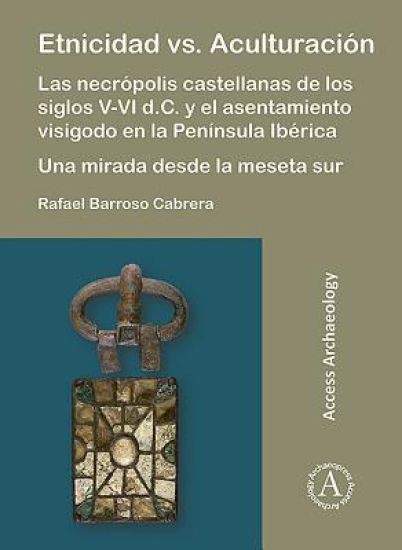
Etnicidad vs. Aculturación: Las necrópolis castellanas de los siglos V-VI d.C. y el asentamiento visigodo en la Península Ibérica. Una mirada desde la meseta sur
The Visigoth settlement in the Iberian Peninsula and its relationship with the archaeological record of the 5th-6th centuries AD continues to be one of the most controversial issues in Spanish archaeology. The controversy relates to politics as much as it relates to archaeological research with two points remaining particularly controversial: the alleged use of the Visigoth past by the Francoist intelligentsia as an ideological affirmation of the regime and the contribution of archaeologist Julio Martínez Santa-Olalla in supporting and enabling this re-interpretation of Visigothic archaeology. The purely archaeological aspect of the controversy relates to an archaeological interpretation, stemming from the ranks of the so-called New Archeology, of the Castilian necropoleis containing grave goods of Pontic-Danubian type. This interpretation places special emphasis on social and cultural phenomena above the ethnic criteria defended by the Vienna School. This volume approaches the ideological question that underlies these controversies, as well as their repercussions in the direction adopted by later archaeological investigations in relation to the history of Spain. The author attempts to deconstruct the work of Martínez Santa-Olalla and places it in the context of the scientific production of his time. At the same time, it relativizes the role played by the Visigoth period in the Francoist ideological construction. Once the discussion is framed in these terms, the author dedicates his study to a refutation of the cultural interpretation of the phenomenon of the Visigothic necropoleis of the Castilian plateau based on the archaeological data and by comparing this data with literary sources. The study also addresses two other historical problems that could be related to the Gothic settlement in the Castilian plateau: the creation of the bishopric of Segovia and the flourishing of the city of Toledo. | El asentamiento visigodo en la Península Ibérica y su relación con el registro arqueológico de los siglos V-VI d.C. continúa siendo en la actualidad una de las cuestiones más controvertidas de la arqueología española. Gran parte de esa controversia tiene que ver con aspectos que trascienden a la propia investigación arqueológica y nos sitúan en el plano de la política. Así, a la hora de abordar el problema hay dos puntos que han resultado especialmente polémicos: la presunta utilización del pasado visigodo por parte de la intelectualidad franquista como afirmación ideológica del régimen y la contribución del arqueólogo burgalés Julio Martínez Santa-Olalla en la fijación del esquema de arqueología visigoda. Por otro lado, el aspecto puramente arqueológico de la controversia tiene que ver con la interpretación que desde las filas de la denominada New Archaeology se viene realizando de las necrópolis castellanas con ajuares de tipo póntico-danubiano. Dicha interpretación hace especial hincapié en fenómenos sociales y culturales por encima de los criterios étnicos defendidos por la Escuela de Viena. El presente estudio aborda de forma lúcida la cuestión ideológica que subyace detrás de la polémica, así como las repercusiones que ha tenido en la posterior dirección adoptada por la investigación arqueológica en relación con la propia historia de España. En este sentido, el autor realiza un ejercicio de deconstrucción de la figura de Martínez Santa-Olalla y lo sitúa en el contexto de la producción científica de su época. Al mismo tiempo, relativiza el papel desempeñado por el periodo visigodo en la construcción ideológica franquista. Una vez situada la discusión en estos términos, el autor dedica su estudio a una refutación de la interpretación en clave cultural del fenómeno de las necrópolis visigodas de la meseta castellana desde los propios datos arqueológicos y a partir del cotejo de estos datos con los testimonios que proporcionan las fuentes literarias. Además, el presente estudio aborda también otros dos problemas históricos que podrían estar relacionados con el asentamiento godo en la meseta castellana: la creación de la sede episcopal segoviana y el auge de la ciudad de Toledo.
I Always Sit with My Back to the Wall: Managing Traumatic Stress and Combat Ptsd Through the R-E-C-O-V-E-R Approach for Veterans and Families
Sound, authoritative, and filled with positive, practical information, I Always Sit with My Back to the Wall is the only book of its kind to embrace the whole person of warriors and others with PTSD ready to take charge of their lives. The book is aimed at people who suffer from PTSD and their families or caregivers. It is a magical fusion of two outstanding minds and empathic hearts truly dedicated to soldiers and their families. It provides the straight story on combat trauma and PTSD that you will find nowhere else. You will learn how to manage your PTSD and combat trauma through the R-E-C-O-V-E-R approach: 1) Recognizing when PTSD is in your life. 2) Educating yourself about PTSD. 3) Connecting biology to your psychology. 4) Organizing a comprehensive care plan for PTSD. 5) Viewing your issues in a new light. 6) Empowering yourself through strong systems of support. 7) Redefining the meaning of your life: posttraumatic growth.
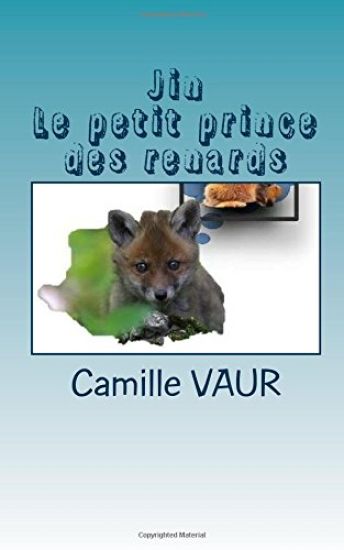
Jin, le petit prince des renards

Jin, le petit prince des renards

Camille/C Vaur/V

Createspace Independent Publishing Platform
2018
nidottu
H l ne est une superbe renarde vivant parmi les dieux et les d esses au royaume divin. C'est la d esse et repr sentante de tous les renards du monde. Un beau matin, un de ses grands amis, Kamui, dieu des canid s, lui annonce qu'elle attend un superbe petit renard. H las, la joie est de courte dur e. Le nouveau-n se perd, non sevr , dans le vaste monde terrien et se fait captur par des hommes. Mis en cage, appelant en vain, le renardeau s' puise....jusqu'au jour o deux jeunes adolescentes r ussissent le r cup rer et le sauver. A sa grande surprise, il d couvre que ces humaines savent parler avec les animaux et vivent dans une r serve ou tout survivant trouve sa place. Mais le petit Jin pleure norm ment. Sa m re lui manque et, part tenter de le faire adopter par une petite meute de loups, Camille et Ana s ignorent comment l'aider.... Jin va-t-il r ussir retrouver sa maman et sa place ? Comment les adolescentes vont-elles faire pour, finalement, sauver un renardeau en d tresse qui n'est autre que le prince des renards ?
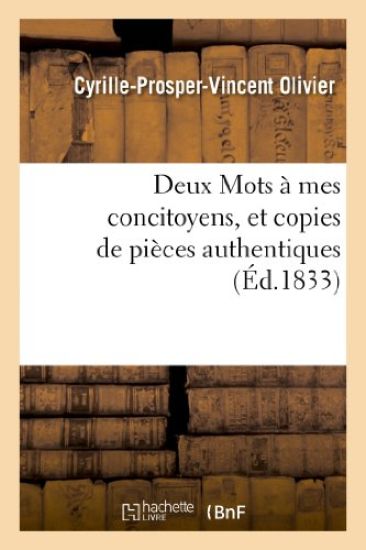
Deux Mots À Mes Concitoyens, Et Copies de Pièces Authentiques
Deux Mots a mes concitoyens, et copies de pieces authentiques; par C.-P.-V. Olivier, ...Date de l'edition originale: 1833Sujet de l'ouvrage: OlivierCe livre est la reproduction fidele d'une oeuvre publiee avant 1920 et fait partie d'une collection de livres reimprimes a la demande editee par Hachette Livre, dans le cadre d'un partenariat avec la Bibliotheque nationale de France, offrant l'opportunite d'acceder a des ouvrages anciens et souvent rares issus des fonds patrimoniaux de la BnF.Les oeuvres faisant partie de cette collection ont ete numerisees par la BnF et sont presentes sur Gallica, sa bibliotheque numerique.En entreprenant de redonner vie a ces ouvrages au travers d'une collection de livres reimprimes a la demande, nous leur donnons la possibilite de rencontrer un public elargi et participons a la transmission de connaissances et de savoirs parfois difficilement accessibles.Nous avons cherche a concilier la reproduction fidele d'un livre ancien a partir de sa version numerisee avec le souci d'un confort de lecture optimal. Nous esperons que les ouvrages de cette nouvelle collection vous apporteront entiere satisfaction.Pour plus d'informations, rendez-vous sur www.hachettebnf.fr