Kirjojen hintavertailu. Mukana 12 390 323 kirjaa ja 12 kauppaa.

Kirjahaku

Etsi kirjoja tekijän nimen, kirjan nimen tai ISBN:n perusteella.

1000 tulosta hakusanalla VERONICA SMITH

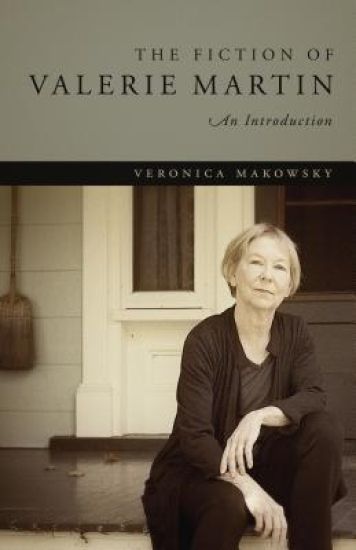
The Fiction of Valerie Martin

The Fiction of Valerie Martin

Veronica Makowsky

Louisiana State University Press
2016
sidottu
In the first book-length study of Valerie Martin's fiction, Veronica Makowsky explores the work of this lauded, but often overlooked, contemporary novelist. Winner of the Orange Prize for her novel Property (2003), Martin also won the Kafka Prize for Mary Reilly (1990), which was then translated into sixteen languages and made into a popular film. Despite these successes, her critically acclaimed novels and stories have yet to attain a broad readership. Makowsky addresses this disconnect through a detailed critical study of Martin's distinguished oeuvre, grounding each work in its historical, cultural, and theoretical contexts.Makowsky begins with a sketch of Martin's life and then considers each of her ten novels and four collections of short stories. Throughout, Makowsky's deft critique reveals Martin to be an astute observer of people and places. Pointing to both early works, like A Recent Martyr (1987), and recent books, such as The Ghost of the Mary Celeste (2014), Makowsky identifies a potent mixture of pleasure and fear in Martin's writing that emphasizes the author's nuanced exploration of human imagination. Notable, too, are Martin's literary techniques -- especially point of view -- and her allusions to masterpieces in Western literature. The works of Henry and William James in particular influenced Martin's thematic blend of intellectualism and empathy evident in her rounded depictions of women in works like Italian Fever (1999) and The Great Divorce (1994). A rich and substantive study, The Fiction of Valerie Martin demonstrates and deconstructs the mastery of this thought-provoking author, in turn firmly establishing Martin's place in the canon of contemporary writers.
Migrant Citizenship

Migrant Citizenship

Verónica Martínez-Matsuda

University of Pennsylvania Press
2020
sidottu
An examination of the Farm Security Administration's migrant camp system and the people it served Today's concern for the quality of the produce on our plates has done little to guarantee U.S. farmworkers the necessary protections of sanitary housing, medical attention, and fair labor standards. The political discourse on farmworkers' rights is dominated by the view that migrant workers are not entitled to better protections because they are "noncitizens," as either immigrants or transients. Between 1935 and 1946, however, the Farm Security Administration (FSA) intervened dramatically on behalf of migrant families to expand the principles of American democracy, advance migrants' civil rights, and make farmworkers visible beyond their economic role as temporary laborers. In more than one hundred labor camps across the country, migrant families successfully worked with FSA officials to challenge their exclusion from the basic rights afforded by the New Deal. In Migrant Citizenship, Verónica Martínez-Matsuda examines the history of the FSA's Migratory Labor Camp Program and its role in the lives of diverse farmworker families across the United States, describing how the camps provided migrants sanitary housing, full on-site medical service, a nursery school program, primary education, home-demonstration instruction, food for a healthy diet, recreational programing, and lessons in participatory democracy through self-governing councils. In these ways, she argues, the camps functioned as more than just labor centers aimed at improving agribusiness efficiency. Instead, they represented a profound "experiment in democracy" seeking to secure migrant farmworkers' full political and social participation in the United States. In recounting this chapter in the FSA's history, Migrant Citizenship provides insights into public policy concerning migrant workers, federal intervention in poor people's lives, and workers' cross-racial movements for social justice and offers a precedent for those seeking to combat the precarity in farm labor relations today.
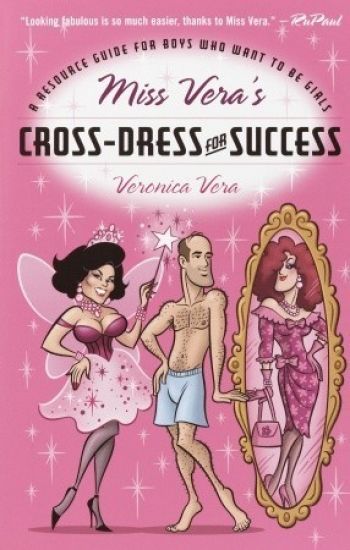
Miss Vera's Cross-dress For Success

Miss Vera's Cross-dress For Success

Veronica Vera

Villard Books
2002
nidottu
The author of Miss Vera's Finishing School for Boys Who Want to Be Girls offers transvestites advice on where to find the best products, places, services, and people--from merchants who offer privacy and discretion--on the Internet. Original. 20,000 first printing.
Earning More and Getting Less

Earning More and Getting Less

Veronica Jaris Tichenor

Rutgers University Press
2005
nidottu
For nearly two decades the wage gap between men and women has remained virtually unchanged. Women continue to earn, on average, 80 cents for every dollar that men earn. Yet despite persistent discrimination in wages, studies are also beginning to show that a growing number of women are out-earning their husbands. Nationwide, nearly one-third of working women are the chief breadwinners in their families. The trend is particularly pronounced among the demographic of highly educated women. Does this increase in earnings, however, equate to a shift in power dynamics between husbands and wives? In Earning More and Getting Less, sociologist Veronica Jaris Tichenor shows how, historically, men have derived a great deal of power over financial and household decisions by bringing home all (or most) of the family's income. Yet, financial superiority has not been a similar source of power for women. Tichenor demonstrates how wives, instead of using their substantial incomes to negotiate more egalitarian relationships, enable their husbands to perpetuate male dominance within the family. Weaving personal accounts, in-depth interviews, and compelling narrative, this important study reveals disturbing evidence that the conventional power relations defined by gender are powerful enough to undermine hierarchies defined by money. Earning More and Getting Less is essential reading in sociology, psychology, and family and gender studies.
Imagining Mount Athos

Imagining Mount Athos

Veronica della Dora; David Lowenthal

University of Virginia Press
2011
sidottu
Most writing on Athos has focused on its Byzantine history and sacred heritage. Imagining Mount Athos uncovers a set of alternative and largely unexplored perspectives, equally important in the mapping and dissemination of Athos in popular imagination. The author considers Mount Athos as the site of pre-Christian myths of Renaissance and Enlightenment scholarship, of shelter for Allied refugees during the Second World War, and of a botanical and sociological laboratory for early-twentieth-century scientists. Each chapter considers a different narrative channel through which Athos has entered Orthodox and western European imagination: the mythical, the utopian, the sacred, the scholarly, the geopolitical, and the scientific.
Imagining Mount Athos

Imagining Mount Athos

Veronica della Dora

University of Virginia Press
2012
nidottu
For more than one thousand years the monastic republic of Mount Athos has been one of the most chronicled and yet least accessible places in the Mediterranean. Difficult to reach until the last century and strictly restricted to male visitors only, the Holy Mountain of Orthodoxy has been known in the Eastern Christian world and in western Europe more through representation than through direct experience. Most writing on Athos has focused on its Byzantine history and sacred heritage. Imagining Mount Athos uncovers a set of alternative and largely unexplored perspectives, equally important in the mapping and dissemination of Athos in popular imagination. The author considers Mount Athos as the site of pre-Christian myths of Renaissance and Enlightenment scholarship, of shelter for Allied refugees during the Second World War, and of a botanical and sociological laboratory for early twentieth century scientists. Each chapter considers a different narrative channel through which Athos has entered Orthodox and western European imagination: the mythical, the utopian, the sacred, the scholarly, the geopolitical, and the scientific. Della Dora has assembled a wealth of unique textual, visual, and oral materials without ever having had the opportunity to visit this holy place. In this sense, in addition to making an important contribution to existing scholarship on Mount Athos, the book adds to current theoretical debates in cultural geography and humanities generally about the circulation of knowledge. Imagining Mount Athos's appeal is international and spans Hellenic studies, cultural geography, environmental history, cultural history, religious studies, history of cartography, and art history. The book will be of interest to scholars as well as to a general audience interested in this unique place and its fascinating history.
Swan, What Shores?

Swan, What Shores?

Veronica Lee Patterson

New York University Press
2000
sidottu
Winner of the Colorado Book Award; Winner of the Willa Literary Award As heard on Public Radio International's The Writer's Almanac! Full of music and evocative word play, Veronica Patterson's Swan, What Shores? offers alluring poems varied in form and inventive in approach. In language that is both precise and lyrical, Patterson's work, like much of the best poetry, plumbs the human condition with depth, wit, and, above all, compassion. The poems offer fine surprises, from the lyrical litany of "The Riddle of My Want" ("the stride of your eyes / a summering of skin") to the unusual elegy "Three Photographs Not of My Father" to the mysteries embodied in "Where Are My Swans?": "All movement in their dreams is theirs / that glide-without-haste, for what core of the universe / has to hurry?" Swan, What Shores? marks the blossoming of a major poetic talent.
Swan, What Shores?

Swan, What Shores?

Veronica Lee Patterson

New York University Press
2000
pokkari
Winner of the Colorado Book Award; Winner of the Willa Literary Award As heard on Public Radio International's The Writer's Almanac! Full of music and evocative word play, Veronica Patterson's Swan, What Shores? offers alluring poems varied in form and inventive in approach. In language that is both precise and lyrical, Patterson's work, like much of the best poetry, plumbs the human condition with depth, wit, and, above all, compassion. The poems offer fine surprises, from the lyrical litany of "The Riddle of My Want" ("the stride of your eyes / a summering of skin") to the unusual elegy "Three Photographs Not of My Father" to the mysteries embodied in "Where Are My Swans?": "All movement in their dreams is theirs / that glide-without-haste, for what core of the universe / has to hurry?" Swan, What Shores? marks the blossoming of a major poetic talent.
The Songs of Peire Vidal

The Songs of Peire Vidal

Veronica M. Fraser

Peter Lang Publishing Inc
2006
sidottu
Peire Vidal, one of the most celebrated of the Occitan troubadours, was a favorite performer at the courts of France, Spain, Italy, Malta, and Palestine during the late twelfth and early thirteenth centuries. His witty and humorous love-songs and satires provide a fascinating insight into the courtly society of his times. This book includes the first English translation and commentary of the complete works of Peire Vidal. It is a useful and accessible text for students and specialists of medieval literature.
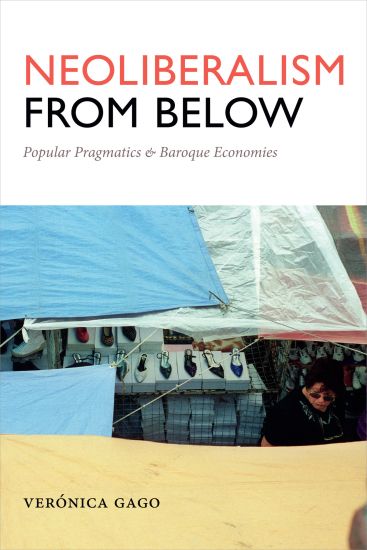
Neoliberalism from Below

Neoliberalism from Below

Verónica Gago

Duke University Press
2017
sidottu
In Neoliberalism from Below-first published in Argentina in 2014-VerÓnica Gago examines how Latin American neoliberalism is propelled not just from above by international finance, corporations, and government, but also by the activities of migrant workers, vendors, sweatshop workers, and other marginalized groups. Using the massive illegal market La Salada in Buenos Aires as a point of departure, Gago shows how alternative economic practices, such as the sale of counterfeit goods produced in illegal textile factories, resist neoliberalism while simultaneously succumbing to its models of exploitative labor and production. Gago demonstrates how La Salada's economic dynamics mirror those found throughout urban Latin America. In so doing, she provides a new theory of neoliberalism and a nuanced view of the tense mix of calculation and freedom, obedience and resistance, individualism and community, and legality and illegality that fuels the increasingly powerful popular economies of the global South's large cities.
Neoliberalism from Below

Neoliberalism from Below

Verónica Gago

Duke University Press
2017
pokkari
In Neoliberalism from Below-first published in Argentina in 2014-VerÓnica Gago examines how Latin American neoliberalism is propelled not just from above by international finance, corporations, and government, but also by the activities of migrant workers, vendors, sweatshop workers, and other marginalized groups. Using the massive illegal market La Salada in Buenos Aires as a point of departure, Gago shows how alternative economic practices, such as the sale of counterfeit goods produced in illegal textile factories, resist neoliberalism while simultaneously succumbing to its models of exploitative labor and production. Gago demonstrates how La Salada's economic dynamics mirror those found throughout urban Latin America. In so doing, she provides a new theory of neoliberalism and a nuanced view of the tense mix of calculation and freedom, obedience and resistance, individualism and community, and legality and illegality that fuels the increasingly powerful popular economies of the global South's large cities.
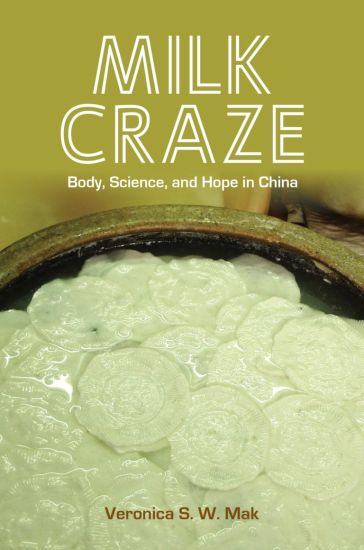
Milk Craze

Milk Craze

Veronica S. W. Mak

University of Hawai'i Press
2021
sidottu
Why do the Chinese, who are mostly lactase non-persistent, suddenly thirst for milk today? Whether it is formula milk, fresh cow milk, or tea with condensed milk, the rocketing milk consumption and production in China are of increasing global food safety, health, and environmental concerns. Milk Craze examines and compares developments in China's dairy industry and dietary dairy consumption, cross-nationally and globally, and more specifically in two localities: Shunde and Hong Kong.Through an innovative analysis of medical texts and social media, as well as careful ethnographic studies, Veronica Mak ponders why the surge in demand for Western cow milk coincides with the plunge in sales of indigenous water-buffalo milk and cheese. She reveals the multiple ways in which global industries and Chinese dairy conglomerates sabotage and destroy local dairy farms. She shows that the rise of milk consumption is not just about the globalization of cow milk production and Westernization of the Chinese diet, but also due to the crossovers between the traditional Chinese diet and medicine and modern global diets. She uses these reference points to explore the multiple meanings of dairy foods in China, such as the class and cultural attributes associated with British "milk tea" and flavored yogurt products, water buffalo curds and cheese, and the lower class associations of labor in the water-buffalo dairying industries, and then discusses these developments in China through colonial and modern global perspectives. Milk Craze argues powerfully that the Westernization or dramatic change of diet in China too often obscures structural, educational, occupational, and social stresses and constraints, while naturalizing the dubious redefinition of health, cognitive performance, and ideal body shape as individual responsibility and imperative.
Milk Craze

Milk Craze

Veronica S. W. Mak

University of Hawai'i Press
2021
nidottu
Why do the Chinese, who are mostly lactase non-persistent, suddenly thirst for milk today? Whether it is formula milk, fresh cow milk, or tea with condensed milk, the rocketing milk consumption and production in China are of increasing global food safety, health, and environmental concerns. Milk Craze examines and compares developments in China's dairy industry and dietary dairy consumption, cross-nationally and globally, and more specifically in two localities: Shunde and Hong Kong.Through an innovative analysis of medical texts and social media, as well as careful ethnographic studies, Veronica Mak ponders why the surge in demand for Western cow milk coincides with the plunge in sales of indigenous water-buffalo milk and cheese. She reveals the multiple ways in which global industries and Chinese dairy conglomerates sabotage and destroy local dairy farms. She shows that the rise of milk consumption is not just about the globalization of cow milk production and Westernization of the Chinese diet, but also due to the crossovers between the traditional Chinese diet and medicine and modern global diets. She uses these reference points to explore the multiple meanings of dairy foods in China, such as the class and cultural attributes associated with British "milk tea" and flavored yogurt products, water buffalo curds and cheese, and the lower class associations of labor in the water-buffalo dairying industries, and then discusses these developments in China through colonial and modern global perspectives. Milk Craze argues powerfully that the Westernization or dramatic change of diet in China too often obscures structural, educational, occupational, and social stresses and constraints, while naturalizing the dubious redefinition of health, cognitive performance, and ideal body shape as individual responsibility and imperative.
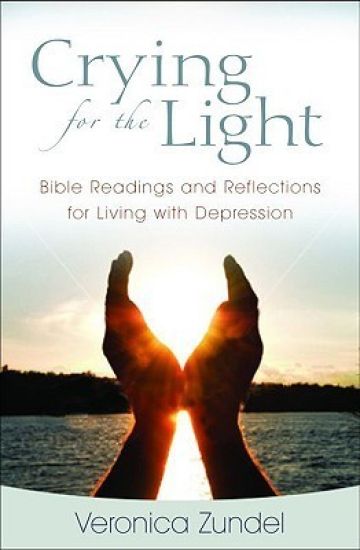
Crying for the Light

Crying for the Light

Veronica Zundel

Kregel Publications,U.S.
2009
pokkari
Veronica Zundel has lived with depression for more than thirty years, and in this insightful and compassionate book, she tells the story of her struggles with life and honestly explores the ways that depression affects faith. In addition to providing factual information about depression, Zundel also engages the reader on a deeper, emotional level and offers an opportunity to see another Christian's experience with depression. These prayers and poems speak directly to anyone suffering from depression, and the Bible readings that Zundel has selected are enlightening and encouraging. The book is divided into short, easy-to-digest sections for daily reading. Writing with great integrity, Zundel addresses real issues faced by real people who need true healing, and not just a pithy maxim.
How Neighborhoods Make Us Sick – Restoring Health and Wellness to Our Communities
Our neighborhoods are literally making us sick. Buildings with mold trigger asthma and other respiratory conditions. Geographic lack of access to food and health care increases childhood mortality. Community violence traumatizes residents. Poverty, unemployment, inadequate housing, food insecurity, racial injustice, and oppression cause physical changes in the body, resulting in disease and death. But there is hope. Loving our neighbor includes creating social environments in which people can be healthy. While working in community redevelopment and treating uninsured families, Veronica Squires and Breanna Lathrop discovered that creating healthier neighborhoods requires a commitment to health equity. Jesus' ministry brought healing through dismantling systems of oppression and overturning social norms that prevented people from living healthy lives. We can do the same in our communities through addressing social determinants that facilitate healing in under-resourced neighborhoods. Everyone deserves the opportunity for good health. The decisions we make and actions we take can promote the health of our neighbors.
An Explorer`s Guide to Julian of Norwich

An Explorer`s Guide to Julian of Norwich

Veronica Mary Rolf

IVP Academic
2018
nidottu
IVP Readers' Choice Award Publishers Weekly Starred Review "All shall be well, and all shall be well, and all manner of thing shall be well." Julian of Norwich's Revelations of Divine Love is truly an astounding work: an inspired example of Christian mysticism, a unique contribution to Christian theology, the first book in English known to have been written by a woman. But it can also be a daunting work. Veronica Mary Rolf, who has been studying Julian's text for decades, serves as a trustworthy guide for readers willing to take up and read Julian's work. Rolf not only sets Julian's life and text in its fourteenth-century context, but she also sheds light on each of Julian's sixteen revelations. She then digs deeper into Julian's theological themes, including her innovative mystical theology of the "motherhood of God," and she offers a chapter on developing a retreat based on Julian's work. Throughout, Rolf takes a deeply contemplative approach to Julian, illuminating our understanding of this extraordinary woman, her enduring work, and the revelation that "all shall be well." Books in the Explorer's Guide series are accessible guidebooks for those studying the great Christian texts and theologians from church history, helping readers explore the context in which these texts were written and navigate the rich yet complex terrain of Christian theology.
In the Eye of Bambi

In the Eye of Bambi

Veronica Gerbe Bicecci

Whitechapel Gallery
2020
nidottu
The last of four special publications to accompany a year-long display of works from Barcelona's "la Caixa" Collection at Whitechapel Gallery, selected by and featuring newly-commissioned fictional works by some of the most original English and Spanish-language writers working today. Established in Barcelona in 1985 by "la Caixa" Banking Foundation, the "la Caixa" Collection features over 1,000 works of international contemporary art from the last 30 years, includ-ing artists such as Antoni Tapies, Joseph Beuys, Cornelia Parker and Doris Salcedo. For a major four-part display running from 2019-20, Whitechapel Gallery has partnered with "la Caixa" to showcase key pieces from the Collection, with each of the four 'chapters' curated by a contemporary writer, who will also contribute a brand new work of fiction in response to their selection. Each display will be accompanied by a fully-illustrated catalogue featuring the works displayed and the new text. The final chapter, on display in Spring 2020, will be selected by Valeria Luiselli (b. Mexico City, 1983; lives in New York). She has written for The New York Times, McSweeney's, Dazed & Confused and Granta, and her published books include the novels Faces in the Crowd (2012), The Story of My Teeth (2015) and Lost Children Archive (2019), which has been longlisted for the 2019 Booker prize.
Letting Go

Letting Go

Veronica Ray

Hazelden Information Educational Services
1989
nidottu
People recovering from codependency, adult children of dysfunctional families, and those seeking healthier relationships will find welcome wisdom and inspiration in the first hour A Moment to Reflect booklets, Hazelden's newest inspirational series for Twelve Step living. Each of these four take-along booklets contains 30 topical affirmations that guide us as we work to improve our relationships. The first four booklets in this series address setting boundaries, letting go, accepting ourselves, and living our own lives. The meditations within are dedicated to the important, often difficult task of releasing our old self-defeating attitudes and behaviours. We can move forward toward greater peace and serenity by letting go of the past and the future; obsessions with other people's feelings and problems; old guilt, shame, fear, and pain; destructive relationships; impatience; perfectionism; fearfulness; pessimism; and magical thinking. Letting go frees us to live in the present and build a better future. Without the weight of our old patterns of holding us back, we can move forward along our path of spiritual growth. We can reach for new healthier, happier ways of living.
Accepting Ourselves

Accepting Ourselves

Veronica Ray

Hazelden Information Educational Services
1989
nidottu
People recovering from codependency, adult children of dysfunctional families, and those seeking healthier relationships will find welcome wisdom and inspiration in the first hour A Moment to Reflect booklets, Hazelden's newest inspirational series for Twelve Step living. Each of these four take-along booklets contains 30 topical affirmations that guide us as we work to improve our relationships. The first four booklets in this series address setting boundaries, letting go, accepting ourselves, and living our own lives. Accepting ourselves and others means finding serenity in our relationships. In accepting others, we accept what we cannot change or control. In accepting ourselves, we discover and take responsibility for what we can change. Facing people and relationships realistically, we grow in trust, forgiveness, maturity, tolerance, and faith. We discover our similarities and learn to accept our differences without feeling threatened. By accepting the realities of ourselves and others, we can open the door to caring, sharing, and living in harmony. We can take care of ourselves and allow others to do the same. True acceptance brings relief from futile struggles and unrealistic expectations and fantasies. We learn to see ourselves and others as we truly are. We learn to see the spirit beneath the body, ego, and behavior. We begin learning to understand, accept, and love ourselves and others as our Higher Power does.