Kirjojen hintavertailu. Mukana 12 016 292 kirjaa ja 12 kauppaa.

Kirjahaku

Etsi kirjoja tekijän nimen, kirjan nimen tai ISBN:n perusteella.

1000 tulosta hakusanalla Victoria Ferrante

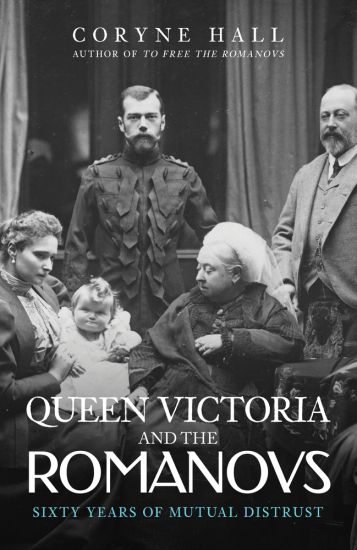
Queen Victoria and The Romanovs

Queen Victoria and The Romanovs

Coryne Hall

AMBERLEY PUBLISHING
2022
nidottu
Despite their frequent visits to England, Queen Victoria never quite trusted the Romanovs. In her letters she referred to ‘horrid Russia’ and was adamant that she did not wish her granddaughters to marry into that barbaric country. ‘Russia I could not wish for any of you,’ she said. She distrusted Tsar Nicholas I but as a young woman she was bowled over by his son, the future Alexander II, although there could be no question of a marriage. Political questions loomed large and the Crimean War did nothing to improve relations. This distrust started with the story of the Queen’s ‘Aunt Julie’, Princess Juliane of Saxe-Coburg-Saalfeld, and her disastrous Russian marriage. Starting with this marital catastrophe, Romanov expert Coryne Hall traces sixty years of family feuding that include outright war, inter-marriages, assassination, and the Great Game in Afghanistan, when Alexander III called Victoria ‘a pampered, sentimental, selfish old woman’. In the fateful year of 1894, Victoria must come to terms with the fact that her granddaughter has become Nicholas II’s wife, the Empress Alexandra Feodorovna. Eventually, distrust of the German Kaiser brings Victoria and the Tsar closer together. Permission has kindly been granted by the Royal Archives at Windsor to use extracts from Queen Victoria's journals to tell this fascinating story of family relations played out on the world stage.
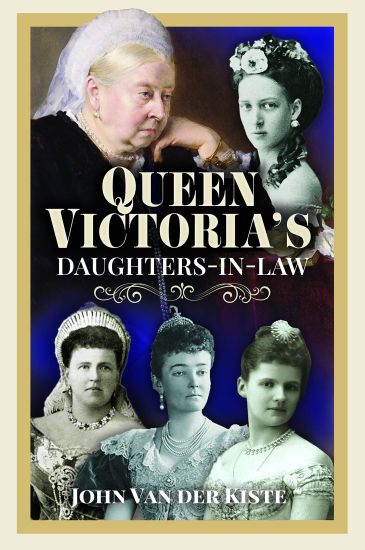
Queen Victoria's Daughters-in-Law

Queen Victoria's Daughters-in-Law

John Van der Kiste

PEN SWORD BOOKS LTD
2023
sidottu
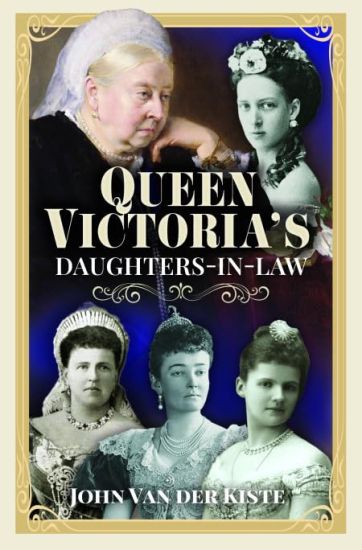
Of Queen Victoria's four sons, the eldest married a Danish princess, one a Russian Grand Duchess, and the other two princesses of German royal houses. The first to join the family of the Grandmama of Europe' was Alexandra, eldest daughter of the prince about to become King Christian IX of Denmark. Charming, ever sympathetic and widely considered one of the most attractive royal women of her time, she was prematurely deaf and suffered from a limp which was made fashionable by court ladies due to her popularity. Alexandra proved an ideal wife for the Prince of Wales, later King Edward VII. Grand Duchess Marie, daughter of Tsar Alexander II of Russia and wife of Alfred, Duke of Edinburgh and later Saxe-Coburg Gotha, was cultured and intelligent, but dowdy, haughty and, convinced of the Romanovs' superiority, resented having to give precedence at court to her in-laws. Louise of Prussia, a niece of William I, German Emperor, had the good fortune to escape from a miserable family life in Berlin and marry Arthur, Duke of Connaught, a dedicated army officer who was always the Queen's favourite among her children. Finally, Helen of Waldeck-Pyrmont, sister of Emma, Queen Consort of the Netherlands, became the wife of the cultured Leopold, Duke of Albany, but he was haemophiliac and their marriage was destined to be the briefest of all, cut short by his sudden death less than three years later. All four were very different personalities, proved themselves to be supportive wives, mothers and daughters-in-law in their own way, and dedicated workers for charity at home and abroad. Based partly on previously unpublished material from the Royal Archives at Windsor and Madrid, and the Leonie Leslie Papers, University of Chicago, this is the first book to study all four as a family group.
Queen Victoria’s Daughters-in-Law

Queen Victoria’s Daughters-in-Law

John Van der Kiste

PEN SWORD BOOKS LTD
2026
nidottu
Of Queen Victoria’s four sons, the eldest married a Danish princess, one a Russian Grand Duchess, and the other two princesses of German royal houses. The first to join the family of the ‘Grandmama of Europe’ was Alexandra, eldest daughter of the prince about to become King Christian IX of Denmark. Charming, ever sympathetic and widely considered one of the most attractive royal women of her time, she was prematurely deaf and suffered from a limp which was made fashionable by court ladies due to her popularity. Alexandra proved an ideal wife for the Prince of Wales, later King Edward VII. Grand Duchess Marie, daughter of Tsar Alexander II of Russia and wife of Alfred, Duke of Edinburgh and later Saxe-Coburg Gotha, was cultured and intelligent, but dowdy, haughty and, convinced of the Romanovs’ superiority, resented having to give precedence at court to her in-laws. Louise of Prussia, a niece of William I, German Emperor, had the good fortune to escape from a miserable family life in Berlin and marry Arthur, Duke of Connaught, a dedicated army officer who was always the Queen’s favourite among her children. Finally, Helen of Waldeck-Pyrmont, sister of Emma, Queen Consort of the Netherlands, became the wife of the cultured Leopold, Duke of Albany, but he was haemophiliac and their marriage was destined to be the briefest of all, cut short by his sudden death less than three years later. All four were very different personalities, proved themselves to be supportive wives, mothers and daughters-in-law in their own way, and dedicated workers for charity at home and abroad. Based partly on previously unpublished material from the Royal Archives at Windsor and Madrid, and the Leonie Leslie Papers, University of Chicago, this is the first book to study all four as a family group.
Queen Victoria

Queen Victoria

Kendall Paul

PEN SWORD BOOKS LTD
2022
sidottu
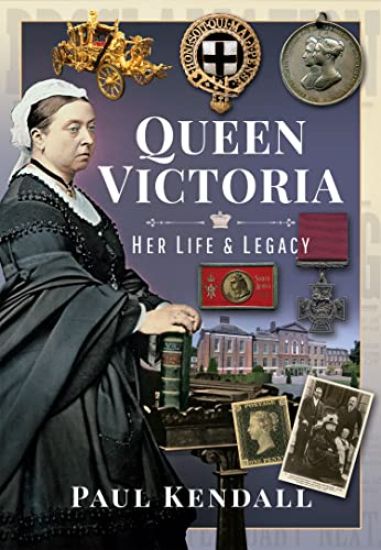
For almost 64 years, Queen Victoria reigned over Great Britain during a period which saw the country become the most powerful and prestigious in the world and one which experienced enormous social, political and industrial change. Those changes were embraced by Victoria, who became the first monarch to use the railway as a mode of transport, to use anaesthetic to alleviate pain, during childbirth, and to use a telephone. At the very start of her reign, she took an interest in politics, playing an active part in the machinations of government, and worked with ten prime ministers. She broke down barriers between sovereign and her subjects, ensuring that she was visible to the public. Victoria established the tradition of the white wedding, wearing a white bridal dress to ensure that her subjects could see her with the coronation route lengthened to maximise her exposure. She set the tradition of acknowledging her subjects from the balcony at Buckingham Palace during times of national celebration. She also paid regular visits to hospitals in England to visit wounded soldiers, and instigated the medal named after her which became the highest honour a man could receive fighting for his country. All aspects of Victoria's life from Kensington Palace, her birthplace to Frogmore Mausoleum, are covered within this volume. Her personal life as well as her public persona are examined with illustrations of many of the places and palaces that were significant in her life -such as the site of the Fox & Crown public house on West Hill, Highgate, where, the landlord stepped out to halt the horses of Victoria coach which was careering out of control, or the point along Constitution Hill where the first assassination attempt was made on Victoria's life. Equally displayed in this unique collection are fascinating artifacts that epitomise her reign, for example, the world's first pre-paid adhesive postage stamp, the Penny Black which, of course, bore her image, and the gold enamelled brooch presented by Queen Victoria to Florence Nightingale in 1855 for her work in Crimea. _Queen Victoria: Her Life and Legacy_ is a journey in gloriously-coloured images through one of Britain's greatest eras -the age of Victoria.
Queen Victoria's Favourite Granddaughter

Queen Victoria's Favourite Granddaughter

Ilana D Miller

PEN SWORD BOOKS LTD
2024
sidottu
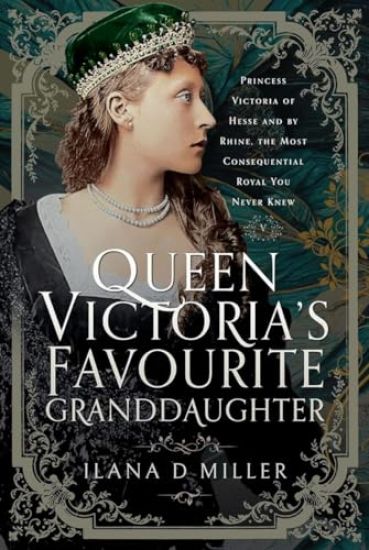
In the Fall of 1947, an eighty-four-year-old woman receives an extraordinary invitation. Though much that happened was a lifetime ago and in a different world, Princess Victoria of Hesse and by Rhine, now the Dowager Marchioness of Milford Haven, holds the heavy vellum envelop for a moment in her hands. Within is the end of a long journey seeking vindication for a husband who gave his life to the service of the Royal Navy and received, in return, ingratitude. Within is the reminder of a life lived with her family that is mostly gone. However, for one exquisite moment, it returns as she opens the envelope: _The Lord Chamberlain is commanded by Their Majesties to invite The Dowager Marchioness of Milford Haven to the Ceremony of the Marriage of Her Royal Highness The Princess Elizabeth, with Lieutenant Philip Mountbatten, Royal Navy in Westminster Abbey, on Thursday, 20th November 1947, at 11.30 o’clock, a.m._ Thus begins the story of Princess Victoria of Hesse and by Rhine. Victoria, the eldest daughter of Princess Alice and Prince Ludwig of Hesse, was born in April 1863\. One of the envied grandchildren of Queen Victoria, she was related to most of the Royal Families of Europe – a member of the fabled “Royal Mob”. The obstacles that characterized Victoria’s life began with her mother’s untimely death. Queen Victoria helped her granddaughter shoulder the responsibilities of caring for the motherless family, writing letters of advice and guidance, a correspondence lasting some thirty years. In April 1884, Victoria married the dashing Prince Louis of Battenberg, an officer in the Royal Navy, who eventually became Britain’s First Sea Lord. Their daughter, Alice, was the future mother of Prince Philip and their youngest child, another Louis, was Viceroy of India. On the eve of World War I, Prince Louis of Battenberg, was forced to resign because of his German surname, which he later changed to Mountbatten. Victoria’s sister, Alix, who had taken the name Alexandra when she married Tsar Nicholas II of Russia, and her entire family was murdered in 1918. Progressive and intelligent, Victoria was the lynchpin of her family. Through cataclysms, both familial and historical, travelling from pre-revolutionary Russia to the British Mandate of Palestine, Victoria’s life was as exciting as it was triumphant.
Queen Victoria After Albert

Queen Victoria After Albert

Ilana D Miller

PEN SWORD BOOKS LTD
2023
sidottu
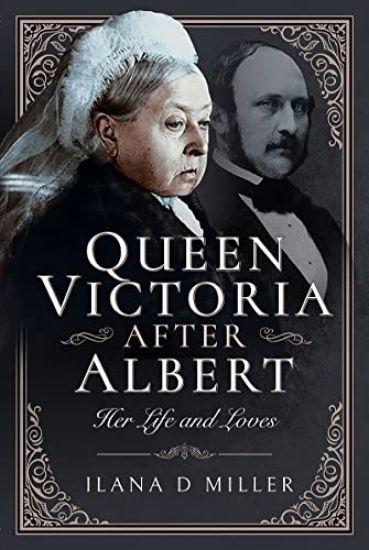
Few British monarchs have fit the time, the tone or the energy of an era quite the way Queen Victoria mastered her reign. From her ascension to the throne in 1837 to her death in 1901, her monarchy was one of spectacular advances in the British Empire. Political, scientific, and industrial wonders were changing the world. Britain's influence reached all corners of the earth. But there was one area that particularly intrigued the Queen. Men. Keenly aware of the opposite sex, her most trusted advisors were men. Lord Melbourne, her first prime minister, was an avuncular presence. Then her beloved husband Prince Albert took the reins until his death in 1861. In a widowhood of forty years, her ministers were a varied lot. She adored Disraeli, disliked Gladstone, and found genuine friendship with Lord Salisbury. Then there was Mr. Brown, the Scottish ghillie who she found wonderfully attractive. Later there was Abdul Karim, the Munshi, or teacher with whom she had a motherly relationship. She adored her son-in-law, Prince Henry of Battenberg, the 'sunshine of their lives' and was devastated when he died. She also loved her grandson-in-law, Prince Louis Battenberg, who was one of the executors of her will. Those years without Albert were not barren loveless years, they were not without happiness and pleasure, even if the queen herself might protest.
Queen Victoria and the Theatre of Her Age

Queen Victoria and the Theatre of Her Age

R. Schoch

Palgrave Macmillan
2004
sidottu
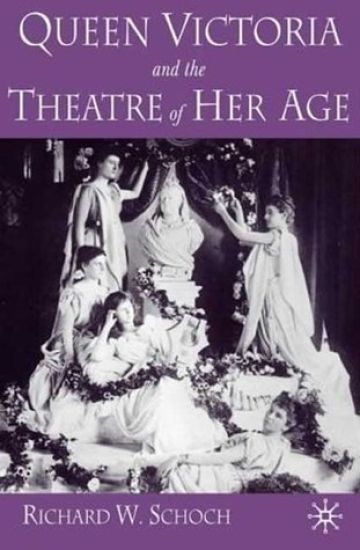
A fresh and intimate portrait of Queen Victoria 'at the play'. Through Victoria's diary, artwork and correspondence we see her as enraptured spectator, bountiful patron and tyrannical director of private theatricals. At times she appears formidable. More frequently she is impudent, high-spirited and unruly; a woman who delights in gory melodramas and circus acts. Queen Victoria and the Theatre of Her Age gives readers a deeply personal account of her lifelong devotion to the stage. It will appeal to anyone interested in monarchy's place in popular culture.
Queen Victoria's Matchmaking

Queen Victoria's Matchmaking

Deborah Cadbury

Bloomsbury Publishing PLC
2018
nidottu
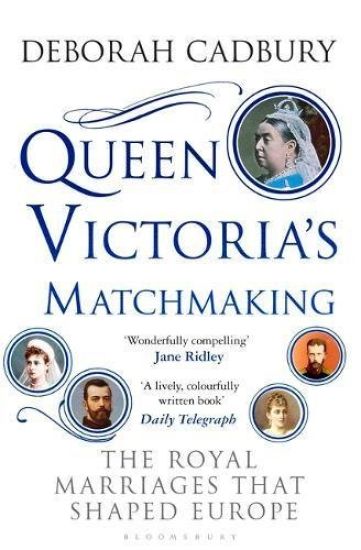
A captivating exploration of the role in which Queen Victoria exerted most international power and influence: her role as matchmaking grandmother. In the late nineteenth century, Queen Victoria had over thirty surviving grandchildren. To maintain power in Europe, she hoped to manoeuvre them into dynastic marriages with royalty across the world. Yet her grandchildren often had plans of their own, fuelled by strong wills and romantic hearts. Her matchmaking plans were further complicated by tumultuous international upheavals; revolution was in the air and after her death, her most carefully laid plans fell to ruin. Queen Victoria’s Matchmaking travels through the glittering palaces of Russia and Europe, weaving in scandals, political machinations and family tensions, to enthralling effect. It is at once an intimate portrait of the royal family and an examination of the conflict caused by the power, love and duty that shaped the marriages that Queen Victoria arranged. At the heart of it all is Queen Victoria herself: doting grandmother one moment, determined manipulator the next.
Queen Victoria's Bathing Machine

Queen Victoria's Bathing Machine

Gloria Whelan

Paula Wiseman Books
2015
sidottu
Poor Queen Victoria! She loves to swim, but can't quite figure out how to get to the water without her devoted subjects glimpsing her swimming suit. (Because, of course, such a sight would compromise her regal dignity.) Fortunately for the water-loving monarch, it's Prince Albert to the rescue with an invention fit for a queen! This quirky tale about the longest reigning monarch in British history is as fun as it is authentic, and the book includes a picture of the actual bathing machine Prince Albert created.