Kirjojen hintavertailu. Mukana 12 016 292 kirjaa ja 12 kauppaa.

Kirjahaku

Etsi kirjoja tekijän nimen, kirjan nimen tai ISBN:n perusteella.

1000 tulosta hakusanalla Wilhelm Busch

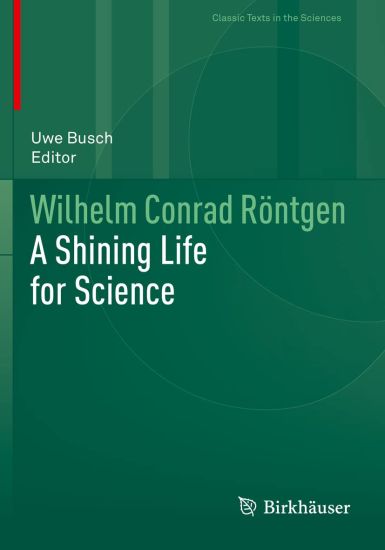
Wilhelm Conrad Röntgen

Wilhelm Conrad Röntgen

Springer Nature Switzerland AG
2021
sidottu
It was one of the great moments of humanity when Wilhelm Conrad Röntgen (1845– 1923) discovered a new kind of radiation on 8 November 1895. He himself modestly called them “X-rays”. Röntgen’s name and his rays became world famous. On 10 December 1901, Röntgen received the ?rst Nobel Prize in Physics. X-rays have lost none of their appeal since then. They still permeate all areas of science, technology and medicine and accompany us in our everyday lives.However, Röntgen’s scienti?c work cannot be reduced to this one great discovery alone. He was an excellent natural scientist, and his spirit of research is still an example for many scientists today. Röntgen’s very special interest in precision physics is also more topical than ever.This carefully curated volume offers a multifaceted view of an outstanding natural scientist and provides insights into his personal legacy.
Wilhelm Conrad Röntgen

Wilhelm Conrad Röntgen

Springer Nature Switzerland AG
2022
nidottu
It was one of the great moments of humanity when Wilhelm Conrad Röntgen (1845– 1923) discovered a new kind of radiation on 8 November 1895. He himself modestly called them “X-rays”. Röntgen’s name and his rays became world famous. On 10 December 1901, Röntgen received the ?rst Nobel Prize in Physics. X-rays have lost none of their appeal since then. They still permeate all areas of science, technology and medicine and accompany us in our everyday lives.However, Röntgen’s scienti?c work cannot be reduced to this one great discovery alone. He was an excellent natural scientist, and his spirit of research is still an example for many scientists today. Röntgen’s very special interest in precision physics is also more topical than ever.This carefully curated volume offers a multifaceted view of an outstanding natural scientist and provides insights into his personal legacy.
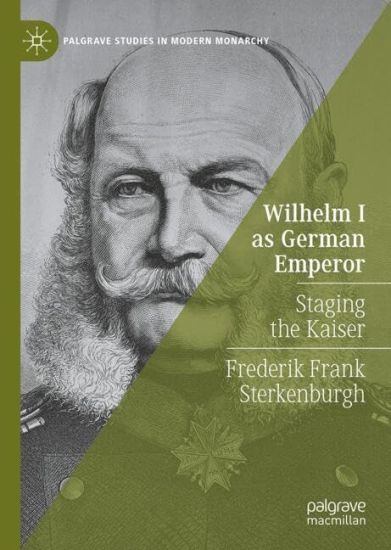
Wilhelm I as German Emperor

Wilhelm I as German Emperor

Frederik Frank Sterkenburgh

Springer International Publishing AG
2025
sidottu
This book offers the first-ever scholarly study of Wilhelm I as Germany’s first Kaiser. For decades, Wilhelm has been dismissed by historians as a political nullity and an unwilling imperial figurehead, who was perpetually overruled by chancellor Otto von Bismarck. As a result, scholars concluded that the imperial role did not reach maturity until the accession of Wilhelm II. This book challenges this assumption by analysing how Wilhelm used self-staging to effectuate his role as German emperor and set the precedent for his successors, Friedrich III and Wilhelm II. It explores how he oversaw and intervened in the political and military decision-making processes, his use of politics of history, his understanding and practicing of the imperial role towards other German states and dynasties, his self-presentation in the new German capital, and how his public persona was distorted in German cultural memory after his death in 1888. The book draws on a wealth of previously unexplored sources, including material from Wilhelm’s personal archive, the archives of the Hohenzollern monarchy, the Prussian state, and local archives. It offers a much-needed reassessment of Wilhelm I and makes an important contribution to debates on the role of the Kaiser in German politics, the political system, and culture of the early German nation state, and how the Hohenzollern monarchy adapted to the demands of generating popular support for its new German imperial role.
Wilhelm Raabe zwischen Heldenepos und Liebesroman
Die vorliegende Arbeit zeichnet nach, wie Wilhelm Raabe in seinen späten Erzählungen „Das Odfeld“ (1888) und „Hastenbeck“ (1899) den historischen Roman durch den Rückgriff auf die „Aeneis“, den „Waverley“, den „Kampf um Rom“ und „Heart of Midlothian“ als Kombination aus Heldenepos und Liebesroman deutet. Dabei wird die Tradition des Heldenepos vorwiegend im „Odfeld“ durch die Bezugnahme auf die „Ilias“, den Baldurmythos, die Dietrichsage, Klopstocks „Messias“, die „Lenore“ und Bürgers „Münchhausen“, die Tradition des Liebesromans vor allem durch die Abhängigkeit „Hastenbecks“ von der „Odyssee“, von Longos‘ „Daphnis und Chloe“, dem „Erec“, Geßners „Idyllen“, der „Luise“ und dem „Werther“ repräsentiert. Die Terminologie Gérard Genettes weist die beiden Erzählungen Raabes als Musterbeispiele für das Phänomen der Architextualität aus und erlaubt eine deutliche Abgrenzung von Inter- und Hypertextualität, deren Funktionsweise am Beispiel einer Interpretation „Altershausens“ als Hypertext der „Odyssee“ demonstriert wird.
Wilhelm Herzberg’s Jewish Family Papers (1868)
Wilhelm Herzberg’s novel Jewish Family Papers, which was first published under a pseudonym in 1868, was one of the bestselling German-Jewish books of the nineteenth century. Its numerous editions, reviews, and translations – into Dutch, English, and Hebrew – are ample proof of its impact. Herzberg’s Jewish Family Papers picks up on some of the most central contemporary philosophical, religious, and social debates and discusses aspects such as emancipation, antisemitism, Jewishness and Judaism, nationalism, and the Christian religion and culture, as well as gender roles. So far, however, the novel has not received the scholarly attention it so assuredly deserves. This bilingual volume is the first attempt to acknowledge how this outstanding source can contribute to our understanding of German-Jewish literature and culture in the nineteenth century and beyond. Through interdisciplinary readings, it will discuss this forgotten bestseller, embedding it within various contemporary discourses: religion, literature, emancipation, nationalism, culture, transnationalism, gender, theology, and philosophy.
Wilhelm Genazinos Romanfiguren

Wilhelm Genazinos Romanfiguren

Nils Lehnert

De Gruyter
2018
sidottu
Wilhelm Genazinos Romanfiguren bilden den Schlüssel zum Verständnis seiner ‚Figurenromane‘. Diese Studie leistet diesbezügliche Pionierarbeit und stellt musterhafte Figurenfacetten und Verhaltensstrategien heraus.Dabei fundiert die Arbeit künftige Forschungen zunächst durch ein Drei-Schichten-Modell, um die Einschätzung abzufedern, es handele sich bei Genazino um die gleiche Figur in Dauerschleife. Das Rückgrat der multimethodisch und interdisziplinär angelegten Studie bildet die Impression-Management-Theorie, welche im Sinne eines Theorietransfers für literaturwissenschaftliche Textanalysen fruchtbar gemacht wird, um die bestehenden Modelle zur Handlungsmotivation in einen größeren Rahmen zu setzen. Insbesondere für Genazinos postmoderne, multiple und zerrüttete Figuren übernimmt Impression Management als Selbstsicherungsmechanismus wichtige Funktionen.Die damit angesprochene ‚Gretchenfrage‘ der Figurentheorie – Sollte Figuren ‚intern‘ Motivation und Kalkül, mithin eine ‚menschliche‘ Psyche, unterstellt werden oder sind sie ‚extern‘ nur als funktionale ‚Bausteine‘ im Textgebäude zu werten? – wird im Zuge der Analyse pragmatisch beantwortet, um die in Frontstellung einander gegenüberstehenden Lager zu versöhnen.