Kirjahaku
Etsi kirjoja tekijän nimen, kirjan nimen tai ISBN:n perusteella.
1000 tulosta hakusanalla William D. Howells


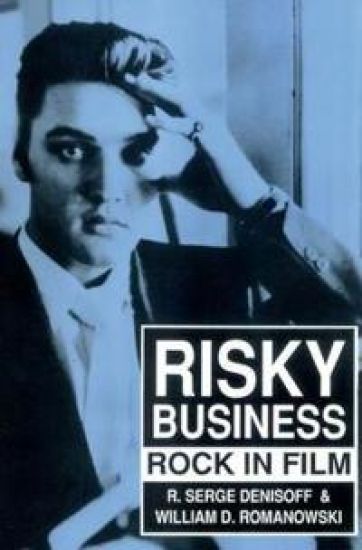
The role of motion pictures in the popularity of rock music became increasingly significant in the latter twentieth century. Rock music and its interaction with film is the subject of this significant book that re-examines and extends Serge Denisoff's pioneering observations of this relationship.Prior to Saturday Night Fever rock music had a limited role in the motion picture business. That movie's success, and the success of its soundtrack, began to change the silver screen. In 1983, with Flashdance, the situation drastically evolved and by 1984, ten soundtracks, many in the pop/rock genre, were certified platinum. Choosing which rock scores to discuss in this book was a challenging task. The authors made selections from seminal films such as The Graduate, Easy Rider, American Graffiti, Saturday Night Fever, Help!, and Dirty Dancing. However, many productions of the period are significant not because of their success, but because of their box office and record store failures.Risky Business chronicles the interaction of two major mediums of mass culture in the latter twentieth century. This book is essential for those interested in communications, popular culture, and social change.
Life and Works of Jesus According to St. Mark
William D. Murray
KESSINGER PUBLISHING CO
2004
pokkari



As World War I ends, Orin Dawes' love, Dimple Deribus, lies dead in the hay loft of her father's stable in Ramsfield, Illinois. Orin soon meets Ruby Somers, the daughter of nomadic tent preacher Rev. Jimmy. Ruby's "gift" helps her ease Orin's terminally ill mother's pain - and read people's sins. When Orin's mother dies she is buried in the family plot at the edge of the farm. Orin marries Ruby and they start a family. Over the next twenty years the dairy herd multiplies, and fifteen children, named alphabetically from Adalia to Orinthal, Jr. provide hands to milk the cows. Orin, Ruby, and their children's dark secrets of murder, arson, and worse sit mutely like ghosts at the edge of consciousness.
"Tragedy strikes us all. We differ only in how we deal with it." Leo Smith learns this lesson in the toughest time of his life. In a brief journey traversing two states and eight miles of ocean, a distraught young man will leave his mother, reunite with his father, and most important, find his brother. Walter Roberts dominates. Erudite, athletic, and indifferent to all the unwritten rules of youth, he exists only for himself and his best friend. However, Walter has a secret, one that will ultimately challenge his friendship with Leo.
William D. Lopez details the incredible strain that immigration raids place on Latino communities—and the families and friends who must recover from their aftermath.2020 International Latino Book Awards Winner First Place, Mariposa Award for Best First Book - Nonfiction Honorable Mention, Best Political / Current Affairs BookOn a Thursday in November 2013, Guadalupe Morales waited anxiously with her sister-in-law and their four small children. Every Latino man who drove away from their shared apartment above a small auto repair shop that day had failed to return—arrested, one by one, by ICE agents and local police. As the two women discussed what to do next, a SWAT team clad in body armor and carrying assault rifles stormed the room. As Guadalupe remembers it, "The soldiers came in the house. They knocked down doors. They threw gas. They had guns. We were two women with small children . . . The kids terrified, the kids screaming."In Separated, William D. Lopez examines the lasting damage done by this daylong act of collaborative immigration enforcement in Washtenaw County, Michigan. Exploring the chaos of enforcement through the lens of community health, Lopez discusses deportation's rippling negative effects on families, communities, and individuals. Focusing on those left behind, Lopez reveals their efforts to cope with trauma, avoid homelessness, handle worsening health, and keep their families together as they attempt to deal with a deportation machine that is militarized, traumatic, implicitly racist, and profoundly violent. Lopez uses this single home raid to show what immigration law enforcement looks like from the perspective of the people who actually experience it. Drawing on in-depth interviews with twenty-four individuals whose lives were changed that day in 2013, as well as field notes, records obtained under the Freedom of Information Act, and his own experience as an activist, Lopez combines rigorous research with moving storytelling. Putting faces and names to the numbers behind deportation statistics, Separated urges readers to move beyond sound bites and consider the human experience of mixed-status communities in the small towns that dot the interior of the United States.
William D. Lopez details the incredible strain that immigration raids place on Latino communities—and the families and friends who must recover from their aftermath.2020 International Latino Book Awards Winner First Place, Mariposa Award for Best First Book - Nonfiction Honorable Mention, Best Political / Current Affairs BookOn a Thursday in November 2013, Guadalupe Morales waited anxiously with her sister-in-law and their four small children. Every Latino man who drove away from their shared apartment above a small auto repair shop that day had failed to return—arrested, one by one, by ICE agents and local police. As the two women discussed what to do next, a SWAT team clad in body armor and carrying assault rifles stormed the room. As Guadalupe remembers it, "The soldiers came in the house. They knocked down doors. They threw gas. They had guns. We were two women with small children . . . The kids terrified, the kids screaming."In Separated, William D. Lopez examines the lasting damage done by this daylong act of collaborative immigration enforcement in Washtenaw County, Michigan. Exploring the chaos of enforcement through the lens of community health, Lopez discusses deportation's rippling negative effects on families, communities, and individuals. Focusing on those left behind, Lopez reveals their efforts to cope with trauma, avoid homelessness, handle worsening health, and keep their families together as they attempt to deal with a deportation machine that is militarized, traumatic, implicitly racist, and profoundly violent. Lopez uses this single home raid to show what immigration law enforcement looks like from the perspective of the people who actually experience it. Drawing on in-depth interviews with twenty-four individuals whose lives were changed that day in 2013, as well as field notes, records obtained under the Freedom of Information Act, and his own experience as an activist, Lopez combines rigorous research with moving storytelling. Putting faces and names to the numbers behind deportation statistics, Separated urges readers to move beyond sound bites and consider the human experience of mixed-status communities in the small towns that dot the interior of the United States.
Chronicles the devastating impacts of immigration raids—and the enduring resistance of immigrant communities in the aftermath.Across the United States, Immigration and Customs Enforcement (ICE) upends small towns and rural communities by staging dramatic raids and rounding up hundreds of people in a single day. These worksite raids fracture families, devastate local economies, and spread fear and trauma that lingers for years. Yet in the wake of these devastating raids, immigrant communities exhibit resistance, resilience, creativity, and an extraordinary determination to rebuild.In this powerful follow-up to his best-seller Separated: Family and Community in the Aftermath of an Immigration Raid, William D. Lopez brings us into the heart of communities targeted by large-scale ICE enforcement under the Trump administration. These are places where immigrant workers, many of whom have lived in the United States for decades, are suddenly torn from their families and livelihoods. Based on extensive fieldwork, this book highlights the voices of those who have endured these raids: the teachers left to comfort traumatized children, the faith leaders who opened their doors to families in crisis, the organizers who mobilized relief efforts overnight, and the workers and their families who fought for their right to remain.As raids continue to increase across the country, this book is an urgent and deeply human portrait of what these raids leave behind—and the fierce, often unexpected ways communities come together across class, race, and immigration status in their aftermath.
If We Can Put a Man on the Moon
William D. Eggers; John O'Leary
Harvard Business Review Press
2009
sidottu
The American people are frustrated with their government-dismayed by a series of high-profile failures (Iraq, Katrina, the financial meltdown) that seems to just keep getting longer. Yet our nation has a proud history of great achievements: victory in World War II, our national highway system, welfare reform, the moon landing. We need more successes like these to reclaim government's legacy of competence. In If We Can Put a Man on the Moon, William Eggers and John O'Leary explain how to do it. The key? Understand-and avoid-the common pitfalls that trip up public-sector leaders during the journey from idea to results. The authors identify pitfalls including: -The Partial Map Trap: Fumbling handoffs throughout project execution -The Tolstoy Syndrome: Seeing only the possibilities you want to see -Design-Free Design: Designing policies for passage through the legislature, not for implementation -The Overconfidence Trap: Creating unrealistic budgets and timelines -The Complacency Trap: Failing to recognize that a program needs change At a time of unprecedented challenges, this book, with its abundant examples and hands-on advice, is the essential guide to making our government work better. A must-read for every public official, this book will be of interest to anyone who cares about the future of democracy.
The Solution Revolution
William D. Eggers; Paul Macmillan
Harvard Business Review Press
2013
sidottu
Government Alone Can't Solve Society's Biggest Problems World hunger. Climate change. Crumbling infrastructure. It's clear that in today's era of fiscal constraints and political gridlock, we can no longer turn to government alone to tackle these and other towering social problems. What's required is a new, more collaborative and productive economic system. The Solution Revolution brings hope--revealing just such a burgeoning new economy where players from across the spectrum of business, government, philanthropy, and social enterprise converge to solve big problems and create public value. By erasing public-private sector boundaries, the solution economy is unlocking trillions of dollars in social benefit and commercial value. Where tough societal problems persist, new problem solvers are crowdfunding, ridesharing, app-developing, or impact-investing to design innovative new solutions for seemingly intractable problems. Providing low-cost health care, fighting poverty, creating renewable energy, and preventing obesity are just a few of the tough challenges that also represent tremendous opportunities for those at the vanguard of this movement. They create markets for social good and trade solutions instead of dollars to fill the gap between what government can provide and what citizens need. So what drives the solution economy? Who are these new players and how are their roles changing? How can we grow the movement? And how can we participate? Deloitte's William D. Eggers and Paul Macmillan answer these questions and more, and they introduce us to the people and organizations driving the revolution--from edgy social enterprises growing at a clip of 15 percent a year, to megafoundations, to Fortune 500 companies delivering social good on the path to profit. Recyclebank, RelayRides, and LivingGoods are just a few of the innovative organizations you'll read about in this book. Government cannot handle alone the huge challenges facing our global society--and it shouldn't. We need a different economic paradigm that can flexibly draw on resources, combine efforts, and create value, while improving the lives of citizens. The Solution Revolution shows the way.

The Last Dreamer is his first full length work of fiction. He states "I can only pray that this book will enhance those who read it, to take heed to its contents. For the story will lean towards a reality which all of us face today. Within every chapter there is a message for that third person within all of us, the true man or woman, our spiritual self, where we can find the presence of God through the Holy Ghost that resides within us.