Kirjojen hintavertailu. Mukana 11 580 510 kirjaa ja 12 kauppaa.

Kirjahaku

Etsi kirjoja tekijän nimen, kirjan nimen tai ISBN:n perusteella.

1000 tulosta hakusanalla Adrian Rodriguez

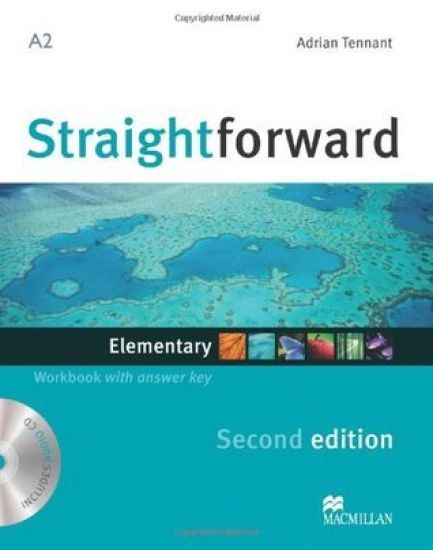
Straightforward 2nd Edition Elementary Level Workbook with key & CD
The Workbook provides extra language and vocabulary practice that supports the units of the Student's Book making it ideal for homework. This version comes with the key. READING/LISTENING - All Workbook and some Student's Book texts are read aloud on the accompanying CD - this will provide students with further listening and pronunciation practice. To provide them with integrated listening and writing practice there is also a series of dictations for them to check their understanding. As they are usually working alone on the Workbook, students will be able to work at their own pace and practise key language further. TRANSLATION - Student's at this lower level are given the opportunity to link the language learnt with their own language. WRITING - Special feature at lower levels is that all Writing work is contained here, in the back of the Workbook, covering a wide variety of genres pertinent to students' every day needs. READING - Each Workbook has a complete Macmillan Reader for the relevant level at the back of the book allowing students to naturally expand their language outside of the everyday classes.

Global Perspectives Beginner Workbook Pack
The Workbooks complement and expand on the content of the Coursebook. They present the language practice activities of the eWorkbook in an easy-to-use printed format. The Workbooks also include an Audio CD for use with the listening and pronunciation activities. This version comes with the answer key.
Trade, Poverty and The Environment

Trade, Poverty and The Environment

Adrian Flint

Palgrave Macmillan
2008
sidottu
In 2000 the European Union and its 78 African-Caribbean-Pacific partners signed the Cotonou Agreement, heralding a new era in developmental politics. This comprehensive book draws attention to the limitations in the EU's approach to implementing pro-poor, environmentally sustainable development amongst its African-Caribbean-Pacific partners.
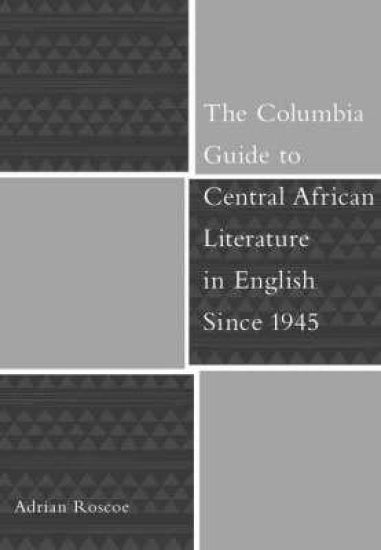
The Columbia Guide to Central African Literature in English Since 1945
Columbia's guides to postwar African literature paint a unique portrait of the continent's rich and diverse literary traditions. This volume examines the rapid rise and growth of modern literature in the three postcolonial nations of Zimbabwe, Malawi, and Zambia. It tracks the multiple political and economic pressures that have shaped Central African writing since the end of World War II and reveals its authors' heroic efforts to keep their literary traditions alive in the face of extreme poverty and AIDS. Adrian Roscoe begins with a list of key political events. Since writers were composing within both colonial and postcolonial contexts, he pays particular attention to the nature of British colonialism, especially theories regarding its provenance and motivation. Roscoe discusses such historical figures as David Livingstone, Cecil Rhodes, and Sir Harry Johnston, as well as modern power players, including Robert Mugabe, Kenneth Kaunda, and Kamuzu Banda. He also addresses efforts to create a literary-historical record from an African perspective, an account that challenges white historiographies in which the colonized was neither agent nor informer. A comprehensive alphabetical guide profiles both established and emerging authors and further illustrates issues raised in the introduction. Roscoe then concludes with a detailed bibliography recommending additional reading and sources. At the close of World War II the people of Central Africa found themselves mired in imperial fatigue and broken promises of freedom. This fueled a desire for liberation and a major surge in literary production, and in this illuminating guide Roscoe details the campaigns for social justice and political integrity, for education and economic empowerment, and for gender equity, participatory democracy, rural development, and environmental care that characterized this exciting period of development.
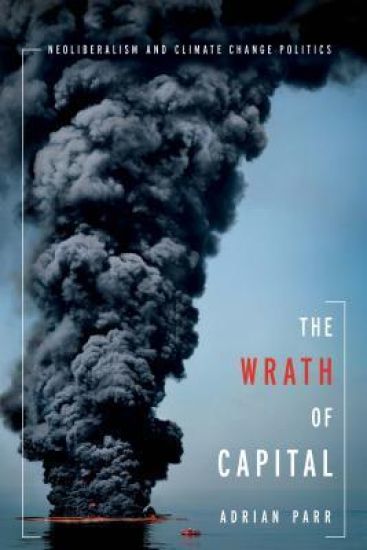
The Wrath of Capital

The Wrath of Capital

Adrian Parr

Columbia University Press
2012
sidottu
Although climate change has become the dominant concern of the twenty-first century, global powers refuse to implement the changes necessary to reverse these trends. Instead, they have neoliberalized nature and climate change politics and discourse, and there are indications of a more virulent strain of capital accumulation on the horizon. Adrian Parr calls attention to the problematic socioeconomic conditions of neoliberal capitalism underpinning the world's environmental challenges, and she argues that, until we grasp the implications of neoliberalism's interference in climate change talks and policy, humanity is on track to an irreversible crisis. Parr not only exposes the global failure to produce equitable political options for environmental regulation, but she also breaks down the dominant political paradigms hindering the discovery of viable alternatives. She highlights the neoliberalization of nature in the development of green technologies, land use, dietary habits, reproductive practices, consumption patterns, design strategies, and media. She dismisses the notion that the free market can solve debilitating environmental degradation and climate change as nothing more than a political ghost emptied of its collective aspirations. Decrying what she perceives as a failure of the human imagination and an impoverishment of political institutions, Parr ruminates on the nature of change and existence in the absence of a future. The sustainability movement, she contends, must engage more aggressively with the logic and cultural manifestations of consumer economics to take hold of a more transformative politics. If the economically powerful continue to monopolize the meaning of environmental change, she warns, new and more promising collective solutions will fail to take root.
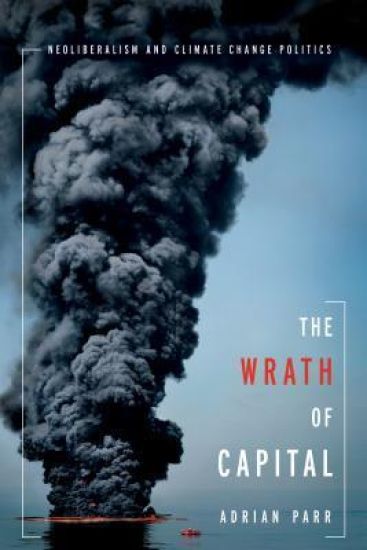
The Wrath of Capital

The Wrath of Capital

Adrian Parr

Columbia University Press
2014
pokkari
Although climate change has become the dominant concern of the twenty-first century, global powers refuse to implement the changes necessary to reverse these trends. Instead, they have neoliberalized nature and climate change politics and discourse, and there are indications of a more virulent strain of capital accumulation on the horizon. Adrian Parr calls attention to the problematic socioeconomic conditions of neoliberal capitalism underpinning the world's environmental challenges, and she argues that, until we grasp the implications of neoliberalism's interference in climate change talks and policy, humanity is on track to an irreversible crisis. Parr not only exposes the global failure to produce equitable political options for environmental regulation, but she also breaks down the dominant political paradigms hindering the discovery of viable alternatives. She highlights the neoliberalization of nature in the development of green technologies, land use, dietary habits, reproductive practices, consumption patterns, design strategies, and media. She dismisses the notion that the free market can solve debilitating environmental degradation and climate change as nothing more than a political ghost emptied of its collective aspirations. Decrying what she perceives as a failure of the human imagination and an impoverishment of political institutions, Parr ruminates on the nature of change and existence in the absence of a future. The sustainability movement, she contends, must engage more aggressively with the logic and cultural manifestations of consumer economics to take hold of a more transformative politics. If the economically powerful continue to monopolize the meaning of environmental change, she warns, new and more promising collective solutions will fail to take root.
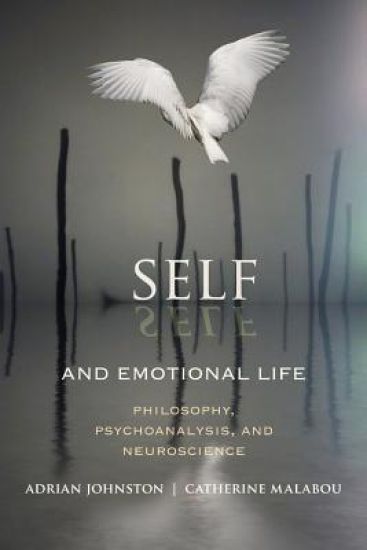
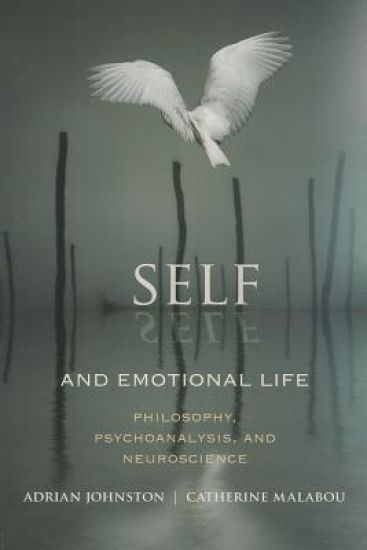
Self and Emotional Life

Self and Emotional Life

Adrian Johnston; Catherine Malabou

Columbia University Press
2013
sidottu
Adrian Johnston and Catherine Malabou defy theoretical humanities' deeply-entrenched resistance to engagements with the life sciences. Rather than treat biology and its branches as hopelessly reductive and politically suspect, they view recent advances in neurobiology and its adjacent scientific fields as providing crucial catalysts to a radical rethinking of subjectivity. Merging three distinct disciplines-European philosophy from Descartes to the present, Freudian-Lacanian psychoanalysis, and affective neuroscience-Johnston and Malabou triangulate the emotional life of affective subjects as conceptualized in philosophy and psychoanalysis with neuroscience. Their experiments yield different outcomes. Johnston finds psychoanalysis and neurobiology have the potential to enrich each other, though affective neuroscience demands a reconsideration of whether affects can be unconscious. Investigating this vexed issue has profound implications for theoretical and practical analysis, as well as philosophical understandings of the emotions. Malabou believes scientific explorations of the brain seriously problematize established notions of affective subjectivity in Continental philosophy and Freudian-Lacanian analysis. She confronts philosophy and psychoanalysis with something neither field has seriously considered: the concept of wonder and the cold, disturbing visage of those who have been affected by disease or injury, such that they are no longer affected emotionally. At stake in this exchange are some of philosophy's most important claims concerning the relationship between the subjective mind and the objective body, the structures and dynamics of the unconscious dimensions of mental life, the role emotion plays in making us human, and the functional differences between philosophy and science.
Self and Emotional Life

Self and Emotional Life

Adrian Johnston; Catherine Malabou

Columbia University Press
2013
pokkari
Adrian Johnston and Catherine Malabou defy theoretical humanities' deeply-entrenched resistance to engagements with the life sciences. Rather than treat biology and its branches as hopelessly reductive and politically suspect, they view recent advances in neurobiology and its adjacent scientific fields as providing crucial catalysts to a radical rethinking of subjectivity. Merging three distinct disciplines-European philosophy from Descartes to the present, Freudian-Lacanian psychoanalysis, and affective neuroscience-Johnston and Malabou triangulate the emotional life of affective subjects as conceptualized in philosophy and psychoanalysis with neuroscience. Their experiments yield different outcomes. Johnston finds psychoanalysis and neurobiology have the potential to enrich each other, though affective neuroscience demands a reconsideration of whether affects can be unconscious. Investigating this vexed issue has profound implications for theoretical and practical analysis, as well as philosophical understandings of the emotions. Malabou believes scientific explorations of the brain seriously problematize established notions of affective subjectivity in Continental philosophy and Freudian-Lacanian analysis. She confronts philosophy and psychoanalysis with something neither field has seriously considered: the concept of wonder and the cold, disturbing visage of those who have been affected by disease or injury, such that they are no longer affected emotionally. At stake in this exchange are some of philosophy's most important claims concerning the relationship between the subjective mind and the objective body, the structures and dynamics of the unconscious dimensions of mental life, the role emotion plays in making us human, and the functional differences between philosophy and science.
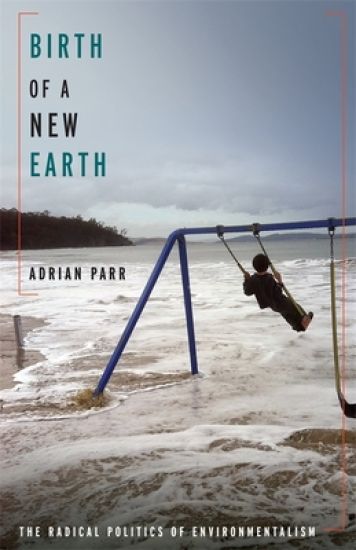
Birth of a New Earth

Birth of a New Earth

Adrian Parr

Columbia University Press
2017
sidottu
In response to unprecedented environmental degradation, activists and popular movements have risen up to fight the crisis of climate change and the ongoing devastation of the earth. The environmental movement has undeniably influenced even its adversaries, as the language of sustainability can be found in corporate mission statements, government policy, and national security agendas. However, the price of success has been compromise, prompting soul-searching and questioning of the politics of environmentalism. Is it a revolutionary movement that opposes the current system? Or is it reformist, changing the system by working within it? In Birth of a New Earth, Adrian Parr argues that this is a false choice, calling for a shift from an opposition between revolution and incremental change to a renewed collective imagination. Parr insists that environmental destruction is at its core a problem of democratization and decolonization. It requires reckoning with militarism, market fundamentalism, and global inequality and mobilizing an alternative political vision capable of freeing the collective imagination in order to replace an apocalyptic mindset frozen by the spectacle of violence. Birth of a New Earth locates the emancipatory work of environmental politics in solidarities that can bring together different constituencies, fusing opposing political strategies and paradigms by working both inside and outside the prevailing system. She discusses experiments in food sovereignty, collaborative natural-resource management, and public-interest design initiatives that test new models of economic democratization. Ultimately, Parr proclaims, environmental politics is the refusal to surrender life to the violence of global capitalism, corporate governance, and militarism. This defiance can serve as the source for the birth of a new earth.
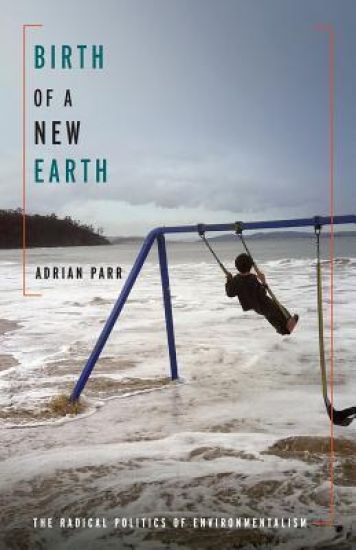
Birth of a New Earth

Birth of a New Earth

Adrian Parr

Columbia University Press
2017
pokkari
In response to unprecedented environmental degradation, activists and popular movements have risen up to fight the crisis of climate change and the ongoing devastation of the earth. The environmental movement has undeniably influenced even its adversaries, as the language of sustainability can be found in corporate mission statements, government policy, and national security agendas. However, the price of success has been compromise, prompting soul-searching and questioning of the politics of environmentalism. Is it a revolutionary movement that opposes the current system? Or is it reformist, changing the system by working within it? In Birth of a New Earth, Adrian Parr argues that this is a false choice, calling for a shift from an opposition between revolution and incremental change to a renewed collective imagination. Parr insists that environmental destruction is at its core a problem of democratization and decolonization. It requires reckoning with militarism, market fundamentalism, and global inequality and mobilizing an alternative political vision capable of freeing the collective imagination in order to replace an apocalyptic mindset frozen by the spectacle of violence. Birth of a New Earth locates the emancipatory work of environmental politics in solidarities that can bring together different constituencies, fusing opposing political strategies and paradigms by working both inside and outside the prevailing system. She discusses experiments in food sovereignty, collaborative natural-resource management, and public-interest design initiatives that test new models of economic democratization. Ultimately, Parr proclaims, environmental politics is the refusal to surrender life to the violence of global capitalism, corporate governance, and militarism. This defiance can serve as the source for the birth of a new earth.
A New German Idealism

A New German Idealism

Adrian Johnston

Columbia University Press
2018
sidottu
In 2012, philosopher and public intellectual Slavoj Žižek published what arguably is his magnum opus, the one-thousand-page tome Less Than Nothing: Hegel and the Shadow of Dialectical Materialism. A sizable sequel appeared in 2014, Absolute Recoil: Towards a New Foundation of Dialectical Materialism. In these two books, Žižek returns to the German idealist G. W. F. Hegel in order to forge a new materialism for the twenty-first century. Žižek’s reinvention of Hegelian dialectics explores perennial and contemporary concerns: humanity’s relations with nature, the place of human freedom, the limits of rationality, the roles of spirituality and religion, and the prospects for radical sociopolitical change.In A New German Idealism, Adrian Johnston offers a first-of-its-kind sustained critical response to Less Than Nothing and Absolute Recoil. Johnston, a leading authority on and interlocutor of Žižek, assesses the recent return to Hegel against the backdrop of Kantian and post-Kantian German idealism. He also presents alternate reconstructions of Hegel’s positions that differ in important respects from Žižek’s version of dialectical materialism. In particular, Johnston criticizes Žižek’s deviations from the secular naturalism and Enlightenment optimism of his chosen sources of inspiration: not only Hegel, but Karl Marx and Sigmund Freud too. In response, Johnston develops what he calls transcendental materialism, an antireductive and leftist materialism capable of preserving and advancing the core legacies of the Hegelian, Marxian, and Freudian traditions central to Žižek.
A New German Idealism

A New German Idealism

Adrian Johnston

Columbia University Press
2019
pokkari
In 2012, philosopher and public intellectual Slavoj Žižek published what arguably is his magnum opus, the one-thousand-page tome Less Than Nothing: Hegel and the Shadow of Dialectical Materialism. A sizable sequel appeared in 2014, Absolute Recoil: Towards a New Foundation of Dialectical Materialism. In these two books, Žižek returns to the German idealist G. W. F. Hegel in order to forge a new materialism for the twenty-first century. Žižek’s reinvention of Hegelian dialectics explores perennial and contemporary concerns: humanity’s relations with nature, the place of human freedom, the limits of rationality, the roles of spirituality and religion, and the prospects for radical sociopolitical change.In A New German Idealism, Adrian Johnston offers a first-of-its-kind sustained critical response to Less Than Nothing and Absolute Recoil. Johnston, a leading authority on and interlocutor of Žižek, assesses the recent return to Hegel against the backdrop of Kantian and post-Kantian German idealism. He also presents alternate reconstructions of Hegel’s positions that differ in important respects from Žižek’s version of dialectical materialism. In particular, Johnston criticizes Žižek’s deviations from the secular naturalism and Enlightenment optimism of his chosen sources of inspiration: not only Hegel, but Karl Marx and Sigmund Freud too. In response, Johnston develops what he calls transcendental materialism, an antireductive and leftist materialism capable of preserving and advancing the core legacies of the Hegelian, Marxian, and Freudian traditions central to Žižek.
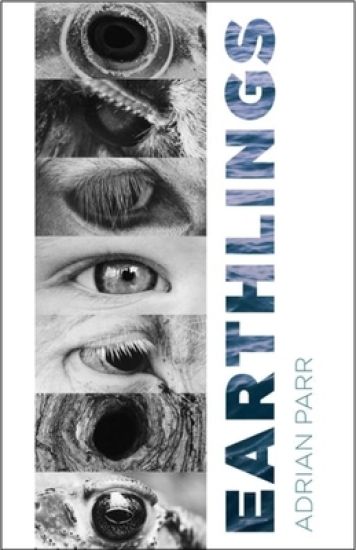
Earthlings

Earthlings

Adrian Parr

Columbia University Press
2022
sidottu
Silver Medal, 2023 Nautilus Book Awards in the category of Ecology and EnvironmentAmid environmental catastrophe, it is vital to recall what unites all forms of life. We share characteristics and genetic material extending back billions of years. More than that, we all—from humans to plants to bacteria—share a planet. We are all Earthlings.Adrian Parr calls on us to understand ourselves as existing with and among the many forms of Earthling life. She argues that human survival requires us to recognize our interdependent relationships with the other species and systems that make up life on Earth. In a series of meditations, Earthlings portrays the wonder and beauty of life with deep feeling, vivid detail, and an activist spirit. Parr invites readers to travel among the trees of the Amazonian rainforest; take flight with birds and butterflies migrating through the skies; and plunge into the oceans with whales and polar bears—as well as to encounter bodies infected with deadly viruses and maimed by the violence of global capitalism.Combining poetic observation with philosophical contemplation and scientific evidence, Parr offers a moving vision of a world in upheaval and a potent manifesto for survival. Earthlings is both a joyful celebration of the magnificence of the biosphere and an urgent call for action to save it.
Earthlings

Earthlings

Adrian Parr

Columbia University Press
2022
pokkari
Silver Medal, 2023 Nautilus Book Awards in the category of Ecology and EnvironmentAmid environmental catastrophe, it is vital to recall what unites all forms of life. We share characteristics and genetic material extending back billions of years. More than that, we all—from humans to plants to bacteria—share a planet. We are all Earthlings.Adrian Parr calls on us to understand ourselves as existing with and among the many forms of Earthling life. She argues that human survival requires us to recognize our interdependent relationships with the other species and systems that make up life on Earth. In a series of meditations, Earthlings portrays the wonder and beauty of life with deep feeling, vivid detail, and an activist spirit. Parr invites readers to travel among the trees of the Amazonian rainforest; take flight with birds and butterflies migrating through the skies; and plunge into the oceans with whales and polar bears—as well as to encounter bodies infected with deadly viruses and maimed by the violence of global capitalism.Combining poetic observation with philosophical contemplation and scientific evidence, Parr offers a moving vision of a world in upheaval and a potent manifesto for survival. Earthlings is both a joyful celebration of the magnificence of the biosphere and an urgent call for action to save it.
Infinite Greed

Infinite Greed

Adrian Johnston

Columbia University Press
2024
sidottu
Selfishness is essential to capitalism—or so both advocates and opponents claim. In Infinite Greed, Adrian Johnston argues that this consensus is mistaken. Through a novel synthesis of Marxism and psychoanalysis, he reveals how the relentless pursuit of profits is not fundamentally animated by human acquisitiveness. Instead, capitalism’s strange “infinite greed” demands that individuals sacrifice their pleasures, their well-being, and even themselves to serve inhuman capital.Johnston traces the mechanisms that compel capitalist subjects to obey the cold imperative to accumulate in perpetuity and without limits—and also without regard for the consequences for everyone and everything else. Facing crises such as spiraling wealth inequality and the profit-driven prospect of a looming ecological apocalypse, the rational self-interest of the majority would seem to dictate putting a stop to capitalist accumulation. By bringing together the Marxian critique of political economy with psychoanalytic metapsychology, Johnston shows why and how capitalism, rather than being responsive to people’s rationally selfish interests, disregards and overrides them instead.Unlike previous syntheses of Marxism and psychoanalysis, Infinite Greed pairs Freudian and Lacanian concepts with the economic heart of Marx’s historical materialism. In so doing, Johnston brings to light the complex intertwining of political and libidinal economies keeping us invested and complicit in perpetuating capitalism and its ills.
Infinite Greed

Infinite Greed

Adrian Johnston

Columbia University Press
2024
pokkari
Selfishness is essential to capitalism—or so both advocates and opponents claim. In Infinite Greed, Adrian Johnston argues that this consensus is mistaken. Through a novel synthesis of Marxism and psychoanalysis, he reveals how the relentless pursuit of profits is not fundamentally animated by human acquisitiveness. Instead, capitalism’s strange “infinite greed” demands that individuals sacrifice their pleasures, their well-being, and even themselves to serve inhuman capital.Johnston traces the mechanisms that compel capitalist subjects to obey the cold imperative to accumulate in perpetuity and without limits—and also without regard for the consequences for everyone and everything else. Facing crises such as spiraling wealth inequality and the profit-driven prospect of a looming ecological apocalypse, the rational self-interest of the majority would seem to dictate putting a stop to capitalist accumulation. By bringing together the Marxian critique of political economy with psychoanalytic metapsychology, Johnston shows why and how capitalism, rather than being responsive to people’s rationally selfish interests, disregards and overrides them instead.Unlike previous syntheses of Marxism and psychoanalysis, Infinite Greed pairs Freudian and Lacanian concepts with the economic heart of Marx’s historical materialism. In so doing, Johnston brings to light the complex intertwining of political and libidinal economies keeping us invested and complicit in perpetuating capitalism and its ills.
Gypsy Jem Mace

Gypsy Jem Mace

Adrian Besley

Andre Deutsch Ltd
2016
pokkari
A few miles from New Orleans, at LaSalle's Landing - in what is now the city of Kenner - stands a life-size bronze statue of two men in combat. One of them is the legendary Gypsy Jem Mace, the first Heavyweight Boxing Champion of the World and the last of the great bare-knuckle fighters. This is the story of Jem Mace's life. Born in Norfolk in 1931, between his first recorded fight, in October 1855, and his last - at the age of nearly 60 - he became the greatest fighter the world has ever known. But "Gypsy" Jem Mace was far more than a champion boxer: he played the fiddle in street processions in war-wrecked New Orleans; was friends with Wyatt Earp - survivor of the gunfight at the OK Corral (who refereed one of his fights), the author Charles Dickens; controversial actress Adah Mencken (he and Dickens were rivals for her affection); and the great and the good of New York and London high society; he fathered numerous children (the author is his great-great-grandson), and had countless lovers, resulting in many marriages and divorces.Gypsy Jem Mace is not simply a book about boxing, but more a narrative quest to uncover the life of a famous but forgotten ancestor, who died in poverty in 1910. This is a story that deserves to be told, one that will resonate with anyone, young or old, man or woman, who has ever sought to do something special before the light of life starts to dim.
Exploring 3D

Exploring 3D

Adrian Pennington; Carolyn Giardina

Focal Press
2012
nidottu
The vanguard of the 3D film and TV industry explains why 3D stereo techniques should become a staple visual storytelling tool, on par with lighting, set design, or sound. Words of wisdom from Jeffrey Katzenberg, Martin Scorsese, Dean DeBlois, Baz Luhrmann, Jon Landau, Barrie M. Osborne, Wim Wenders, and more, provide you with unparalleled insight into the leading minds in 3D. Not only is effective use of 3D in movies thoroughly covered, but also included is a chapter on live events, with insight from the people bringing us the FIFA World Cup in 3D, and those pushing the boundaries of 3D TV documentariesIncluding full-color imagery from many of your favorite 3D films released thus far, Exploring 3D provides a window into how those dazzling movies were created, and insight into what the future may hold.
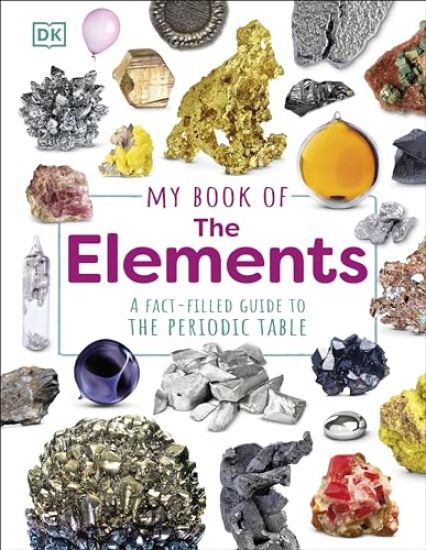
My Book of the Elements

My Book of the Elements

Adrian Dingle

DORLING KINDERSLEY LTD
2024
sidottu
Learn about the elements that make up our world and the science that defines them.My Book of the Elements is a wonderful introduction to the periodic table for children aged 5-7 who are interested in all things chemistry.Covering all the elements, from the unreactive to the radioactive, as well as key science topics, such as states of matter, this visual book is something that every young science enthusiast will want to own. Eye-catching images are featured alongside friendly illustrations, giving children plenty to take in and enjoy.This informative chemistry book for children offers:- Clear and accessible text, on a subject that is traditionally difficult, using friendly language and a clear structure.- Fact files provided for each element, with top-trump style comparisons and digestible information.- An introduction to new and interesting information in this successful series for young learners.Written by an expert author, this series is a source of information you can trust, with age-appropriate text and material that supports your child’s schoolwork. From Hydrogen to Oganesson, each element is explored in detail, with information on properties and use cases, as well as fun facts.Complete the seriesThis engaging guide on the elements is part of the My Book of series of educational books for children. Whatever your subject, why not complete the series with My Book of Cats and Kittens, My Book of Dogs and Puppies, My Book of Rocks and Minerals, My Book of Stars and Planets and My Book of Fossils?