Kirjojen hintavertailu. Mukana 12 016 292 kirjaa ja 12 kauppaa.

Kirjahaku

Etsi kirjoja tekijän nimen, kirjan nimen tai ISBN:n perusteella.

1000 tulosta hakusanalla Alan J. Singer

Entailment, Vol. II

Entailment, Vol. II

Alan Ross Anderson; Jr. Belnap; J. Michael Dunn

Princeton University Press
2017
sidottu
In spite of a powerful tradition, more than two thousand years old, that in a valid argument the premises must be relevant to the conclusion, twentieth-century logicians neglected the concept of relevance until the publication of Volume I of this monumental work. Since that time relevance logic has achieved an important place in the field of philosophy: Volume II of Entailment brings to a conclusion a powerful and authoritative presentation of the subject by most of the top people working in the area. Originally the aim of Volume II was simply to cover certain topics not treated in the first volume--quantification, for example--or to extend the coverage of certain topics, such as semantics. However, because of the technical progress that has occurred since the publication of the first volume, Volume II now includes other material. The book contains the work of Alasdair Urquhart, who has shown that the principal sentential systems of relevance logic are undecidable, and of Kit Fine, who has demonstrated that, although the first-order systems are incomplete with respect to the conjectured constant domain semantics, they are still complete with respect to a semantics based on "arbitrary objects." Also presented is important work by the other contributing authors, who are Daniel Cohen, Steven Giambrone, Dorothy L. Grover, Anil Gupta, Glen Helman, Errol P. Martin, Michael A. McRobbie, and Stuart Shapiro. Robert G. Wolf's bibliography of 3000 items is a valuable addition to the volume. Originally published in 1992. The Princeton Legacy Library uses the latest print-on-demand technology to again make available previously out-of-print books from the distinguished backlist of Princeton University Press. These editions preserve the original texts of these important books while presenting them in durable paperback and hardcover editions. The goal of the Princeton Legacy Library is to vastly increase access to the rich scholarly heritage found in the thousands of books published by Princeton University Press since its founding in 1905.
Advances in Cross-Cultural Assessment

Advances in Cross-Cultural Assessment

Ronald J. Samuda; Reuven Feuerstein; Alan S. Kaufman; John E. Lewis; Robert J. Sternberg; n/a Associates

SAGE Publications Inc
1998
nidottu
Presenting the major trends, theories, and practices in assessing culturally diverse clients, Advances in Cross-Cultural Assessment comprises chapters from some of the key leading authors in intelligence and intelligence testing. Author Ronald J. Samuda and associates contend that classic IQ tests and traditional standardized tests of cognitive ability are only appropriate for middle-class mainstream individuals, not for those of different cultural backgrounds. For those who grow up in deficient "environmental backgrounds" (inadequate rearing, serious economic stress), the traditional objective standardized tests are neither valid nor reliable in measuring intelligence. A number of scholars, some of whom are among the bookÆs contributing authors, have introduced alternative approaches to assessing cognitive ability in persons from such backgrounds. A groundbreaking volume that encourages professionals to treat individuals on an individual basis, Advances in Cross-Cultural Assessment will heighten the awareness of professionals and academics in clinical and counseling psychology, educational psychology, social work, psychology, public health, and ethnic studies.
Teaching History with Film

Teaching History with Film

Alan S. Marcus; Scott Alan Metzger; Richard J. Paxton; Jeremy D. Stoddard

CRC Press Inc
2018
sidottu
Teaching History with Film provides a fresh, engaging, and clear overview of teaching with film to effectively enhance social studies instruction. Using cases of experienced teachers to illustrate accomplished history teaching through movies, this text provides pre- and in-service teachers with ideas for implementing film-based lessons in their own classrooms and offers a deeper understanding of the thorny issues involved in using film to teach history. The second edition is completely revised and updated including: two entirely new case studies; a new chapter focusing on using international film and incorporating a more global view in the classroom; and additional material on using film to tackle difficult and controversial issues; as well as updates to all of the cases. Each section of the book focuses on how teachers can effectively support the development of students’ historical film literacy through topics such as using film to develop interpretive skills, to explore controversial issues, and to develop historical empathy. By developing the skills students need to think critically about the past or what they think they know about history, the lessons in this book illustrate how to harness the pedagogical power of film to provide the tools necessary for rigorous inquiry and democratic citizenship.Special features include: "Reflection on the Case," following each chapter, analyzing and discussing the strengths and limitations of the teacher’s approach as well as providing strategies for using and choosing films specific to the educational outcome Sample unit outlines, descriptions of class texts and films, worksheets, essay questions, viewer guides, and exercises for the classroom throughout Discussion of the practical considerations facing classroom teachers, including juggling time restraints, issues of parental permission, and meeting standards
Teaching History with Film

Teaching History with Film

Alan S. Marcus; Scott Alan Metzger; Richard J. Paxton; Jeremy D. Stoddard

CRC Press Inc
2018
nidottu
Teaching History with Film provides a fresh, engaging, and clear overview of teaching with film to effectively enhance social studies instruction. Using cases of experienced teachers to illustrate accomplished history teaching through movies, this text provides pre- and in-service teachers with ideas for implementing film-based lessons in their own classrooms and offers a deeper understanding of the thorny issues involved in using film to teach history. The second edition is completely revised and updated including: two entirely new case studies; a new chapter focusing on using international film and incorporating a more global view in the classroom; and additional material on using film to tackle difficult and controversial issues; as well as updates to all of the cases. Each section of the book focuses on how teachers can effectively support the development of students’ historical film literacy through topics such as using film to develop interpretive skills, to explore controversial issues, and to develop historical empathy. By developing the skills students need to think critically about the past or what they think they know about history, the lessons in this book illustrate how to harness the pedagogical power of film to provide the tools necessary for rigorous inquiry and democratic citizenship.Special features include: "Reflection on the Case," following each chapter, analyzing and discussing the strengths and limitations of the teacher’s approach as well as providing strategies for using and choosing films specific to the educational outcome Sample unit outlines, descriptions of class texts and films, worksheets, essay questions, viewer guides, and exercises for the classroom throughout Discussion of the practical considerations facing classroom teachers, including juggling time restraints, issues of parental permission, and meeting standards
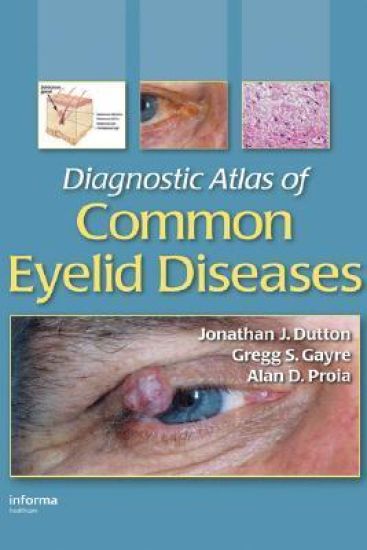
Diagnostic Atlas of Common Eyelid Diseases

Diagnostic Atlas of Common Eyelid Diseases

Jonathan J. Dutton; Gregg S. Gayre; Alan D. Proia

CRC Press Inc
2007
sidottu
Unlike any other source on the subject, this broad-ranging guide discusses the pathology, diagnosis, and treatment of 120 eyelid disorders including benign lesions, malignant tumors, and acquired and congenital malpositions and diseases. Written by leading researchers practiced in the analysis and management of these conditions, this source is a must-have reference for all ophthalmologists, optometrists, dermatologists, otolaryngologists, and general plastic and reconstructive surgeons caring for patients with eyelid and ocular adnexal disease.
A Wakeful Faith: Spiritual Practice in the Real World

A Wakeful Faith: Spiritual Practice in the Real World

J. Marshall Jenkins; Alan Jenkins

Upper Room Books
2000
nidottu
In the harried, expect-the-unexpected flow of everyday life, faith seems far away for many people. Your car breaks down. The bills are due. The kids need school supplies. The business report remains unwritten.In A Wakeful Faith, Jenkins asserts that living awake to God in all of our daily affairs is the answer. Only when we become consciously aware of God's gracious activity in the details of the day can we transform and find purpose in our lives today."Each day brings a flood of demands for our time and attention," writes Jenkins. "Deep down, many of us feel the pace is killing us, but we do not admit it very often. After all, everyone else seems to get along okay. Something is killing us, but it is not the pace. It is the inattention to our deepest desire, the desire for God."Filled with humor and grounded in scripture, A Wakeful Faith calls us to a refreshed sense of God's presence, which can lead to spiritual well-being in all dimensions of life. Jenkins offers practical suggestions to rouse our spiritual wakefulness and alertness to God in daily living by showing how Jesus trained disciples to perceive the kingdom and to know God.Appropriate for individuals and small groups, A Wakeful Faith contains questions for reflection and discussion at the end of each chapter.
Viruses of Plants

Viruses of Plants

Alan Brunt; Karen Crabtree; Michael Dallwitz; Adrian Gibbs; Leslie J. Watson

CABI Publishing
1996
sidottu
This book is a product of the international VIDE (Virus Identification Data Exchange) project, which uses the DELTA (Description Language for Taxonomy) database system to collect diagnostic information on all plant viruses. Information on over 500 characters has been sought for each virus and stored in the VIDE database. Over two-thirds of these characters record the susceptibility, or otherwise, of a range of commonly used test plant species; the remainder represent the great range of other characters used for virus identification. Information on the known natural host range of each virus is also presented. The book covers more than 900 viruses, which represents the entire database of plant viruses from around the world. It includes all viruses of plants, not only those whose virions have been described, but also those such as umbraviruses that have no virion protein genes of their own, and use the virion proteins of their symbiotic helper viruses. Viroids and the many transmissible agents that cause virus-like diseases, but whose infectious particles have not yet been characterized, are excluded. However, the database accession numbers of the genomic sequences of satellite RNAs are included. The book also contains summaries of data for all the viruses that are definitive or tentative members of the 50 or so accepted genera or "groups". Overall, the book is a standard reference work that will prove indispensable for virologists ad plant pathologists.
On the Fractal Language of Medicine

On the Fractal Language of Medicine

Bruce J. West; W. Alan C. Mutch

TAYLOR FRANCIS LTD
2024
sidottu
On the Fractal Language of Medicine bridges a very clear gap among the knowledge gained over the last 20 years in the physical and life sciences on network theory, organ synchronicity and communication, the understanding of fractal signatures in health and disease and the importance of fractional calculus in integrating these concepts.The authors opine that the field of medicine has not appreciated this hard-won knowledge and has suffered greatly as a result. This book addresses this perceived deficiency by introducing medical researchers, clinicians, residents, first-year medical students and members of allied fields to the work of the so-called hard sciences. It seeks to facilitate effective communication between empiricists and theorists by making interdisciplinary efforts to explain complex mathematical concepts to physicians and, equally important, to elucidate complex medical concepts to physicists or mathematicians.This book will be of great interest to medical students, professionals and academics, as well as students and researchers of applied mathematics, especially those interested in fractional calculus and fractals.
How to Count

How to Count

R.B.J.T. Allenby; Alan Slomson

TAYLOR FRANCIS LTD
2024
nidottu
Emphasizes a Problem Solving ApproachA first course in combinatoricsCompletely revised, How to Count: An Introduction to Combinatorics, Second Edition shows how to solve numerous classic and other interesting combinatorial problems. The authors take an easily accessible approach that introduces problems before leading into the theory involved. Although the authors present most of the topics through concrete problems, they also emphasize the importance of proofs in mathematics.New to the Second EditionThis second edition incorporates 50 percent more material. It includes seven new chapters that cover occupancy problems, Stirling and Catalan numbers, graph theory, trees, Dirichlet’s pigeonhole principle, Ramsey theory, and rook polynomials. This edition also contains more than 450 exercises. Ideal for both classroom teaching and self-study, this text requires only a modest amount of mathematical background. In an engaging way, it covers many combinatorial tools, such as the inclusion-exclusion principle, generating functions, recurrence relations, and Pólya’s counting theorem.
How to Count

How to Count

R.B.J.T. Allenby; Alan Slomson

Chapman Hall/CRC
2010
sidottu
Emphasizes a Problem Solving ApproachA first course in combinatoricsCompletely revised, How to Count: An Introduction to Combinatorics, Second Edition shows how to solve numerous classic and other interesting combinatorial problems. The authors take an easily accessible approach that introduces problems before leading into the theory involved. Although the authors present most of the topics through concrete problems, they also emphasize the importance of proofs in mathematics.New to the Second EditionThis second edition incorporates 50 percent more material. It includes seven new chapters that cover occupancy problems, Stirling and Catalan numbers, graph theory, trees, Dirichlet’s pigeonhole principle, Ramsey theory, and rook polynomials. This edition also contains more than 450 exercises. Ideal for both classroom teaching and self-study, this text requires only a modest amount of mathematical background. In an engaging way, it covers many combinatorial tools, such as the inclusion-exclusion principle, generating functions, recurrence relations, and Pólya’s counting theorem.
Radiotherapy Treatment Planning

Radiotherapy Treatment Planning

J. Donald Chapman; Alan E. Nahum

CRC Press Inc
2015
sidottu
Understand Quantitative Radiobiology from a Radiation Biophysics PerspectiveIn the field of radiobiology, the linear-quadratic (LQ) equation has become the standard for defining radiation-induced cell killing. Radiotherapy Treatment Planning: Linear-Quadratic Radiobiology describes tumor cell inactivation from a radiation physics perspective and offers appropriate LQ parameters for modeling tumor and normal tissue responses.Explore the Latest Cell Killing Numbers for Defining Iso-Effective Cancer TreatmentsThe book compiles radiation mechanism information from biophysical publications of the past 50 years, addressing how ionizing radiation produces the killing of stem cells in human tumors. It presents several physical and chemical parameters that can modulate the radiation response of clonogenic cells in tumors. The authors describe the use of the LQ model in basic radiation mechanism studies with cells of relatively homogeneous radiation response and then extend the model to the fitting of survival data generated with heterogeneous cell populations (tumors). They briefly discuss how to use the LQ model for predicting tumor (local) control probability (TCP) and normal tissue complication probability (NTCP). The book also examines potential molecular targets related to alpha- and beta-inactivation and gives suggestions for further molecular characterizations of these two independent processes.Develop Efficacious, Patient-Friendly Treatments at Reduced CostsFocusing on quantitative radiobiology in LQ formulation, this book assists medical physicists and radiation oncologists in identifying improved cancer treatments. It also encourages investigators to translate potentially improved radiotherapy schedules based on TCP and NTCP modeling into actual patient benefit.
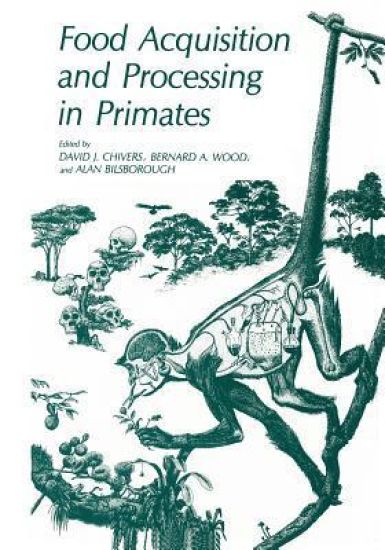
Food Acquisition and Processing in Primates

Food Acquisition and Processing in Primates

David J. Chivers; Bernard A. Wood; Alan Bilsborough

Springer-Verlag New York Inc.
2013
nidottu
This book results from a two-day symposium and three-day workshop held in Cambridge between March 22nd and March 26th 1982 and sponsored by the Primate Society of Great Britain and the Anatomical Society of Great Britain and Ireland. More than 100 primatologists attended the symposium and some 35 were invited to participate in the workshop. Speakers from Prance, Germany, the Netherlands, South Africa and the U. S. A. , as weIl as the U. K. , were invited to contribute. In recent years feeling had strengthened that primatologists in Europe did not gather together sufficiently often. Distinctive tradit­ ions in primatology have developed in Germany, France, the Netherlands, Italy and the U. K. in particular, and it was feIt that attempts to blend them could only benefit primatology. Furthermore, studies of primate ecology, behaviour, anatomy, physiology and evolution have reached the points where further advances depend on inter-disciplinary collaboration. It was resolved to arrange a regular series of round­ table discussions on primate biology in Europe at the biennial meeting of the German Society for Anthropology and Human Genetics in Heidel­ berg in September 1979, where Holger Preuschoft organised sessions on primate ecology and anatomy. In June 1980 Michel Sakka convened a most effective working group in Paris to discuss cranial morphology and evolution. In 1982 it was the turn of the U. K.
Bridge Deck Analysis

Bridge Deck Analysis

Eugene J. Obrien; Damien Keogh; Alan O'Connor

Apple Academic Press Inc.
2014
sidottu
Captures Current Developments in Bridge Design and MaintenanceRecent research in bridge design and maintenance has focused on the serviceability problems of older bridges with aging joints. The favored solution of integral construction and design has produced bridges with fewer joints and bearings that require less maintenance and deliver increased durability. Bridge Deck Analysis, Second Edition outlines this growing development, and covers the structural analysis of most common bridge forms. It introduces reliability analysis, an emergent method that allows bridge engineers to determine risk when maintaining older or damaged bridges. Explains the Background Theory along with Practical ToolsThis book includes practical examples of everyday problems in bridge engineering, and presents real-life examples of the application of reliability analysis. The authors show how reliability analysis can determine structural safety even for bridges which have failed a deterministic assessment. They also update other chapters to reflect the most current advancements towards more sophisticated analysis, and the more widespread use of finite element software. What’s New in this Edition: Incorporates new research on soil-structure interactionA new section with examples of how to analyze for the effects of creepGreatly expands the sections on 3-D brick finite elementsNow consistent with both Eurocodes and AASHTO standards An appropriate resource for senior undergraduates taking an advanced course on bridge engineering, Bridge Deck Analysis is also suitable for practicing engineers, and other professionals involved in the development of bridge design.
Congressional Procedures and the Policy Process

Congressional Procedures and the Policy Process

Walter J. Oleszek; Mark J. Oleszek; Elizabeth E. Rybicki; William Alan Heniff

CQ Press
2020
nidottu
"The book does an outstanding job in covering all the necessary details on congressional rules and procedures, most of which are not easy to understand. [...] It has been and will remain to be a must-read for all the congressional politics students and Washington insiders." – Hong Min Park, University of Wisconsin - Milwaukee Congressional Procedures and the Policy Process examines the entire arc of the legislative process—from a bill’s introduction, to its signature into law, to congressional review of the law’s administrative implementation—and the many procedural pitfalls that exist along the way. Author Walter J. Oleszek and co-authors Mark Oleszek, Elizabeth Rybicki, and Bill Heniff, Jr. do not shy away from the complexity of the topic, yet they ensure that the operations of Congress are understandable to students and practitioners alike. Through an array of interesting examples, case studies, and the authors’ personal anecdotes, this definitive work delivers timely explanation and analysis of the nation’s premier lawmaking institution.
Don't Get Killed on Taxes

Don't Get Killed on Taxes

P.J. DiNuzzo; Steven Jarvis; Russ Alan Prince

MORGAN JAMES PUBLISHING LLC
2023
pokkari
Many people get killed on their taxes each year, but that doesn’t have to be your story. The average person doesn’t need a degree in business or accounting to avoid paying too much in taxes—they simply need to discover their misconceptions about taxes and create a plan to reduce those taxes over time. In Don’t Get Killed by Taxes, P. J. DiNuzzo and Steven Jarvis bust the most common myths that keep people paying too much in taxes. They share five simple building blocks that can save money and reveal twenty of the most common tax strategies to substantially reduce an individual’s tax burden.Taxpayers have been conditioned to believe myths about taxes that are simply not true, such as:“Taxes are a fact. I have no control over how much I pay.”“As long as I get a refund, I’ve won.”“I use tax preparation software. I’m all set.”“I have a tax preparer. I’m all set.”Don’t Get Killed by Taxes offers the building blocks for anyone to reduce their taxes. Motivated readers who apply DiNuzzo and Jarvis’ strategies will:Reduce their tax rateOptimize tax deferred and tax free investmentsCreate a “paycheck” —one that will last the rest of their livesCapture every benefit they’re entitled toPay substantially less in taxes.
Frontiers of the Roman Empire: The African Frontiers

Frontiers of the Roman Empire: The African Frontiers

David J. Breeze; Sonja Jilek; David Mattingly; Alan Rushworth; Martin Sterry; Victoria Leitch

Archaeopress
2013
nidottu
The frontiers of the Roman empire together form the largest monument of one of the world’s greatest states. They stretch for some 7,500km through 20 countries which encircle the Mediterranean Sea. The remains of these frontiers have been studied by visitors and later by archaeologists for several centuries. Many of the inscriptions and sculpture, weapons, pottery and artefacts created and used by the soldiers and civilians who lived on the frontier can be seen in museums. Equally evocative of the lost might of Rome are the physical remains of the frontiers themselves. The aim of this series of books is not only to inform the interested visitor about the history of the frontiers but to act as a guidebook as well. The Roman military remains in North Africa are remarkable in their variety and in their state of preservation: they deserve to be better known. They include towers and forts, stretches of defensive lines of stone and earth with ditches broken by gates, and roads, sitting in the most amazing scenery. It is hoped that each reader of this book will enjoy learning more about North Africa’s remarkable Roman inheritance.
A Review of Ada Tasking

A Review of Ada Tasking

Alan Burns; Andrew M. Lister; Andrew J. Wellings

Springer-Verlag Berlin and Heidelberg GmbH Co. K
1987
nidottu
Ada* is unquestionably one of the most significant programming languages to emerge in the last decade. The manner of its inception and support by the US Department of Defense (DoD) ensures that it will be used extensively for the indefinite future in programming large and complex systems. The growing availability of compilers means that many organisations are already committed to using the language for sizable and significant applications. As a perhaps inevitable result of its design goals, Ada is a "large" language. It has Pascal-like control and type constructs; a mechanism for exception handling; a package structure for information hiding, decomposition and separate compilation; facilities for low-level programming; and a tasking model of concurrency. It is perhaps this last area that has generated most debate, criticism and disagreement. The purpose of this book is to review the tasking model in the light of the extensive analysis and comment which has appeared in the literature. The review is necessarily wide-ranging, including discussion of - Ada as a general purpose concurrent programming language, - Ada as a language for embedded and distributed systems, - implementation issues, with particular reference to distributed systems, - formal semantics, specification and verification, - proposed language modifications. By consolidating this discussion within the confines of a single review, potential users of the tasking facility are enabled to familiarise themselves with all the factors which may impinge upon the performance, reliability and correctness of their software. The book also provides a focus for any debate on modifications to the Ada language, or developments from it.
Dynamic and Immobilist Politics in Japan

Dynamic and Immobilist Politics in Japan

J. A. A. Stockwin; Alan Rix; Aurelia George; James Horne; Daiichi It; Martin Collick

Palgrave Macmillan
1988
sidottu
Over the past thirty years Japan has shown that it is a highly dynamic society, and its economic policy-making has often astonished the world. Japanese politics, however, though sometimes showing dynamism, are very stable and frequently strangely immobilist. In this book, six specialists on Japanese politics seek to find out why.