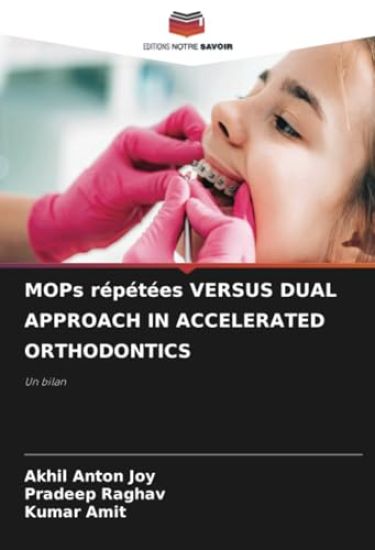
Prolonged orthodontic treatment increases the risk of dental issues like cavities, periodontal problems, discomfort, and root resorption. Accelerated orthodontics addresses these challenges by expediting orthodontic tooth movement (OTM) through surgical and non-invasive methods. Surgical techniques like corticotomy and piezoelectric bone punctures stimulate OTM by inducing controlled bone injury, triggering the Regional Acceleratory Phenomenon (RAP), which accelerates osteoclastogenesis and tooth movement. However, these invasive methods can result in pain, bleeding, and reduced patient compliance. Minimally invasive alternatives, such as piezosurgery, fiberotomy, and micro-osteoperforations (MOPs), offer similar benefits with fewer complications. Non-invasive techniques, including lasers and vibrations, have shown effectiveness in enhancing bone remodeling. Low-Level Energy Laser Therapy (LLLT) is widely used in orthodontics for its biostimulatory effects, accelerating OTM, aiding in retention, and providing pain relief. While MOPs and LLLT are effective individually, their combined impact on accelerating OTM is less explored.
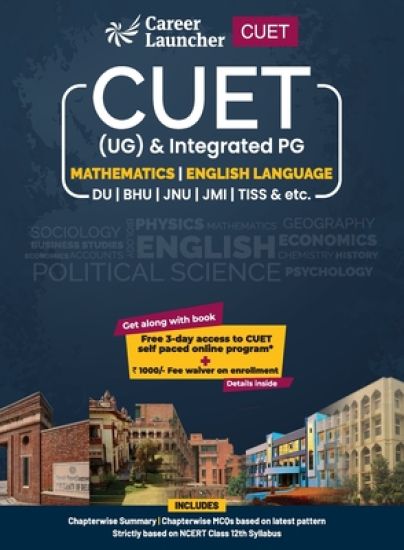
The CUET, or the Central University Common Entrance Test, is an all India level examination conducted for admission in various central universities such as JNU, BHU, JMI, Tezpur, and Visva Bharti, TISS etc. GKP's CUET Physics+ English guide has been designed by experts and is based on the prescribed exam pattern. It has been divided into sections for a better learning experience. Features: Divided into dedicated sections As per the prescribed exam pattern
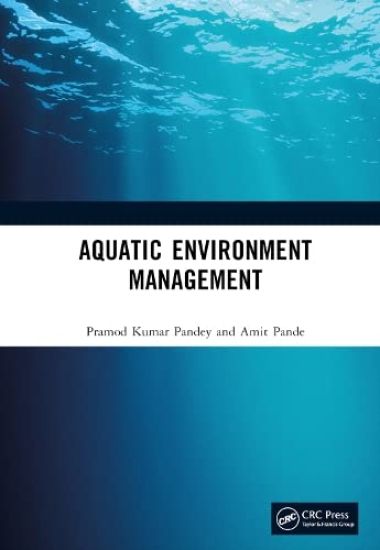
This reference book collates traditional and modern applications of remote sensing in aquatic ecosystem monitoring. It covers conventional assessment methods like sampling, surveying, and chlorophyll estimation. Advanced remote sensing technology provides timely spectral information for quantitative and qualitative assessment of water changes, volume, and vegetation. The book discusses space-borne, airborne, and drone geospatial data. The five sections broadly cover aquatic ecosystem monitoring, vegetation management, advanced modelling practices, and challenges. Key featuresCovers different types of aquatic ecosystems like wetlands, rivers, lakes, saline, and brackishReviews the latest applications of remote sensing in the monitoring and assessment of aquatic ecosystemsIncludes traditional methods like cartography, sampling, surveying, phytoplankton assessment and chlorophyll estimationDiscusses the application of artificial intelligence, machine learning, data fusion in monitoring aquatic systemsExplores the prospects of future Earth observation space missions for aquatic ecosystem monitoringThe book is meant for scientists, professionals, and policymakers working in environmental sciences, remote sensing, and geology.
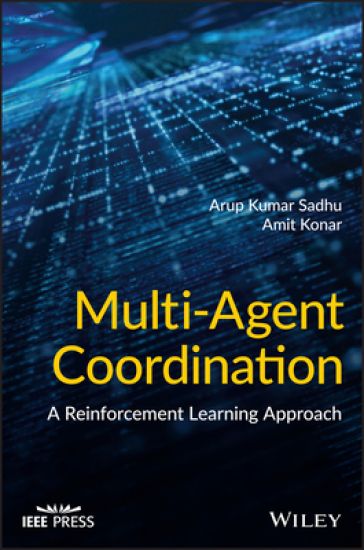
Discover the latest developments in multi-robot coordination techniques with this insightful and original resource Multi-Agent Coordination: A Reinforcement Learning Approach delivers a comprehensive, insightful, and unique treatment of the development of multi-robot coordination algorithms with minimal computational burden and reduced storage requirements when compared to traditional algorithms. The accomplished academics, engineers, and authors provide readers with both a high-level introduction to, and overview of, multi-robot coordination, and in-depth analyses of learning-based planning algorithms. You'll learn about how to accelerate the exploration of the team-goal and alternative approaches to speeding up the convergence of TMAQL by identifying the preferred joint action for the team. The authors also propose novel approaches to consensus Q-learning that address the equilibrium selection problem and a new way of evaluating the threshold value for uniting empires without imposing any significant computation overhead. Finally, the book concludes with an examination of the likely direction of future research in this rapidly developing field. Readers will discover cutting-edge techniques for multi-agent coordination, including: An introduction to multi-agent coordination by reinforcement learning and evolutionary algorithms, including topics like the Nash equilibrium and correlated equilibriumImproving convergence speed of multi-agent Q-learning for cooperative task planningConsensus Q-learning for multi-agent cooperative planningThe efficient computing of correlated equilibrium for cooperative q-learning based multi-agent planningA modified imperialist competitive algorithm for multi-agent stick-carrying applications Perfect for academics, engineers, and professionals who regularly work with multi-agent learning algorithms, Multi-Agent Coordination: A Reinforcement Learning Approach also belongs on the bookshelves of anyone with an advanced interest in machine learning and artificial intelligence as it applies to the field of cooperative or competitive robotics.
Students should aware about its concept related to basic biology and also understands its theoretical concepts of cell Biology. The main objective of this manual course related to cell biology as given below- - To understanding general laboratory rules and practices including safety in cell culture lab. - Examination of samples (e.g. plant sections/animal cell or tissue) on a microscopic level and is totally depended on optical systems (calibrated ones) - Cell culture characteristics: cell counting and analysis. - To identify its cell structure at different magnification and measure its cell length including breadth using micrometry. - To isolate DNA from various biological samples and also distinguish different blood cells. - To understand and identified its stages of mitosis and meiosis. - To understand and estimate chlorophyll content in plant samples. - To demonstrate the concept of dialysis and osmosis.