Kirjojen hintavertailu. Mukana 12 016 292 kirjaa ja 12 kauppaa.

Kirjahaku

Etsi kirjoja tekijän nimen, kirjan nimen tai ISBN:n perusteella.

1000 tulosta hakusanalla Andrew Merrifield

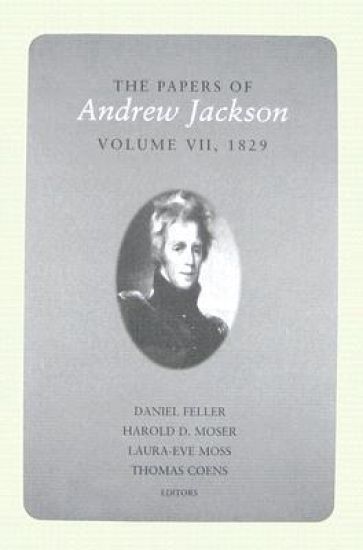
The Papers of Andrew Jackson, Volume 7, 1829

The Papers of Andrew Jackson, Volume 7, 1829

Andrew Jackson

University of Tennessee Press
2007
sidottu
With this seventh volume, The Papers of Andrew Jackson enters the heart of Jackson's career: his tumultuous two terms as president of the United States. The year 1829 began with Jackson fresh from a triumphant victory over incumbent John Quincy Adams in the 1828 campaign, yet mourning the sudden death of his beloved wife, Rachel. In January, having hired an overseer for his Hermitage plantation and arranged for Rachel's tomb, he left Tennessee for Washington. Jackson assumed the presidency with two objectives already fixed in mind: purging the federal bureaucracy of recreant officeholders and removing the southern Indian tribes westward beyond state authority. By year's end he had added two more: purchasing Texas and destroying the Bank of the United States. But meanwhile he found himself diverted, and nearly consumed, by the notorious Peggy Eaton affair--a burgeoning scandal which pitted the president, his Secretary of War John Eaton, and the latter's vivacious wife against the Washington guardians of feminine propriety. This first presidential volume reveals all these stories, and many more, in a depth never seen before. It presents full texts of more than four hundred documents, most printed for the first time. Gathered from a vast array of libraries, archives, and individual owners, they include Jackson's intimate exchanges with family and friends, private notes and musings, and formative drafts of public addresses. Administrative papers range from presidential pardons to military promotions to plans for discharging the public debt. They exhibit Jackson's daily conduct of the executive office in close and sometimes startling detail, and cast new light on such controversial mattersas Indian removal and political patronage. Included also are letters to the president from people in every corner of the country and every walk of life: Indian delegations presenting grievances, distraught mothers pleading help for wayward sons, aged veterans begging pensions, politicians offering advice and seeking jobs. Embracing a broad spectrum of actors and events, this volume offers an incomparable window not only into Jackson and his presidency, but into America itself in 1829.
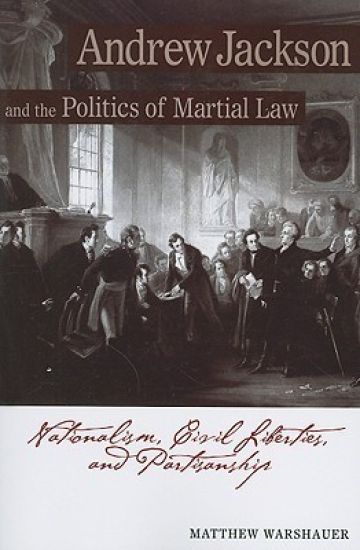
Andrew Jackson Andrew Jackson and the Politics of Martial Law

Andrew Jackson Andrew Jackson and the Politics of Martial Law

Matthew Warshauer

University of Tennessee Press
2007
nidottu
“Lucid and well-researched.” —The New YorkerIn order to win the famous battle of New Orleans, Andrew Jackson believed that it was necessary to declare martial law and suspend the writ of habeas corpus. In doing so, he achieved both a great victory and the notoriety of being the first American general to ever suspend civil liberties in America. Andrew Jackson and the Politics of Martial Law tells the history of Jackson’s use of martial law and how the controversy surrounding it followed him throughout his life. The work engages the age-old controversy over if, when, and who should be able to subvert the Constitution during times of national emergency. It also engages the continuing historical controversy over Jackson’s political prowess and the importance of the rise of party politics during the early republic. As such, the book contributes to both the scholarship on Jackson and the legal and constitutional history of the intersection between the military and civilian spheres. To fully understand the history of martial law and the subsequent evolution of a theory of emergency powers, Matthew Warshauer asserts, one must also understand the political history surrounding the discussion of civil liberties and how Jackson’s stature as a political figure and his expertise as a politician influenced such debates. Warshauer further explains that Abraham Lincoln cited Jackson’s use of the military and suspension of civil liberties as justification for similar decisions during the Civil War. During both Jackson’s and Lincoln’s use of martial law, critics declared that such an action stood in opposition to both the Constitution and the nation’s cherished republican principles of protecting liberty from dangerous power, especially that of the military. Supporters of martial law insisted that saving the nation became the preeminent cause when the republic was endangered. At the heart of such arguments lurked the partisan maneuvering of opposing political parties. Andrew Jackson and the Politics of Martial Law is a powerful examination of the history of martial law, its first use in the United States, and the consequent development of emergency powers for both military commanders and presidents.Matthew Warshauer is associate professor of history at Central Connecticut State University. He is the author of the forthcoming Andrew Jackson: First Men, America’s Presidents. His articles have appeared in Tennessee Historical Quarterly, Connecticut History, Louisiana History, and New York History.
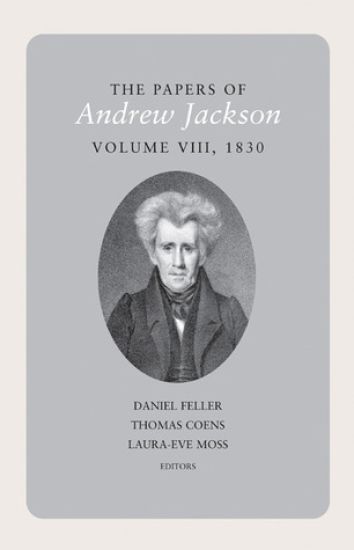
The Papers of Andrew Jackson, Volume 8, 1830

The Papers of Andrew Jackson, Volume 8, 1830

Andrew Jackson

University of Tennessee Press
2010
sidottu
This eighth volume of Andrew Jackson's papers presents more than five hundred documents, many appearing here for the first time, from a core year in Jackson's tumultuous presidency. They include Jackson's handwritten drafts of his presidential messages, private notes and memoranda, and correspondence with government officials, Army and Navy officers, friends and family, Indian leaders, foreign diplomats, and ordinary citizens throughout the country. In 1830 Jackson pursued his controversial Indian removal policy, concluding treaties to compel the Choctaws and Chickasaws west of the Mississippi and refusing protection for the Cherokees against encroachments by Georgia. Jackson nurtured his opposition to the Bank of the United States and entered into an escalating confrontation with the Senate over presidential appointments to office. In April, Jackson pronounced his ban on nullification with the famous toast to ""Our Federal Union,"" and in May he began an explosive quarrel with Vice-President John C. Calhoun over the latter's conduct as secretary of war during Jackson's Seminole campaign of 1818. Also in May, Jackson delivered his first presidential veto, stopping federal funding for the Maysville Road and declaring opposition to Henry Clay's ""American System."" In July, Jackson's refusal to use his pardoning power to save an Irish-born mail robber from the gallows provoked a near-riot in Philadelphia. By the end of the year, Jackson was preparing for his reelection campaign in 1832. Meanwhile the sex scandal surrounding Peggy Eaton, wife of the secretary of war, lurked throughout, dividing Jackson's cabinet, sundering his own family and household, and threatening to wreck the administration. Embracing all these stories and many more, this volume offers an incomparable window not only into Andrew Jackson and his presidency but into 1830s America itself.
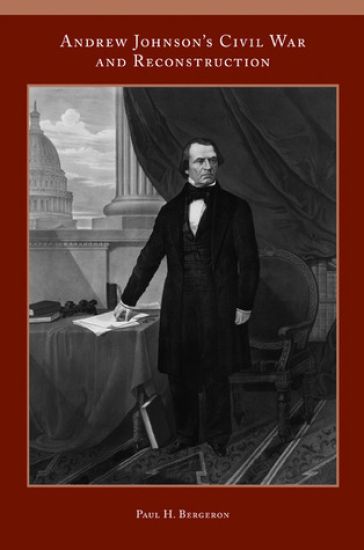
Andrew Johnson's Civil War and Reconstruction

Andrew Johnson's Civil War and Reconstruction

Paul Bergeron

University of Tennessee Press
2012
nidottu
Few figures in American political history are as reviled as Andrew Johnson, the seventeenth president of the United States. Taking office after the assassination of Abraham Lincoln, he clashed constantly with Congress during the tumultuous early years of Reconstruction. He opposed federally-mandated black suffrage and the Fourteenth Amendment and vetoed the Freedmen’s Bureau and Civil Rights bills. In this new book, Paul H. Bergeron, a respected Johnson scholar, brings a new perspective on this often vilified figure. Previous books have judged Johnson out of the context of his times or through a partisan lens. But this volume—based on Bergeron’s work as the editor of The Papers of Andrew Johnson—takes a more balanced approach to Johnson and his career. Admiring Johnson's unswerving devotion to the Union, Lincoln appointed him as military governor of Tennessee, a post, Bergeron argues, that enhanced Johnson's executive experience and his national stature. While governor, Johnson implemented the emancipation of slaves in the state and laid the foundation for a new civilian government. Bergeron also notes that Johnson developed a close connection with the president which eventually resulted in his vice-presidential candidacy. In many respects, therefore, Johnson's Civil War years served as preparation for his presidency.Bergeron moves beyond simplistic arguments based on Johnson’s racism to place his presidency within the politics of the day. Putting aside earlier analyses of the conflict between Johnson and the Republican Radicals as ideological disputes, Bergeron discusses these battles as a political power struggle. In doing so, he does not deny Johnson’s racism but provides a more nuanced and effective perspective on the issues as Johnson tried to pursue the “politics of the possible.”Bergeron interprets Johnson as a strong-willed, decisive, fearless, authoritarian leader in the tradition of Andrew Jackson. While never excusing Johnson’s inflexibility and extreme racism, Bergeron makes the case that, in proper context, Johnson can be seen at times as a surprisingly effective commander-in-chief—one whose approach to the problems of reestablishing the Union was defensible and consistent.With its fresh insight on the man and his times, Andrew Johnson’s Civil War and Reconstruction is indispensable reading for students and scholars of the U.S. presidency and the Civil War and Reconstruction periods.
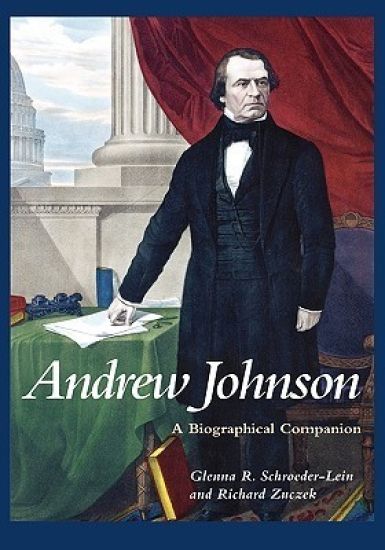
Andrew Johnson

Andrew Johnson

Glenna R. Schroeder-Lein; Richard Zuczek

ABC-CLIO
2001
sidottu
This A–Z encyclopedia provides carefully selected entries covering the people, events, and concepts relevant to Andrew Johnson's life.Andrew Johnson was—and is—an American paradox. He never attended school, yet fought for public education. He was a Southern slaveholder who opposed secession and enforced emancipation. Born into poverty, he became the 17th president of the United States—and the first U.S. president to be impeached.This new volume thoroughly examines the troubled career of our most unpopular president—not to resuscitate his reputation, but because his personal contradictions reflected those of his country: a democratic nation conceived in liberty, yet existing half slave and half free; an economy of yeoman farmers and independent artisans being swept into industrialization and a market system; a country fond of tradition, but caught up in social, economic, and political revolution.More than 350 entries cover the five decades of Andrew Johnson's successful career, from 1828–1875Selected original documents include the Articles of Impeachment, speeches, proclamations, vetoes, and letters
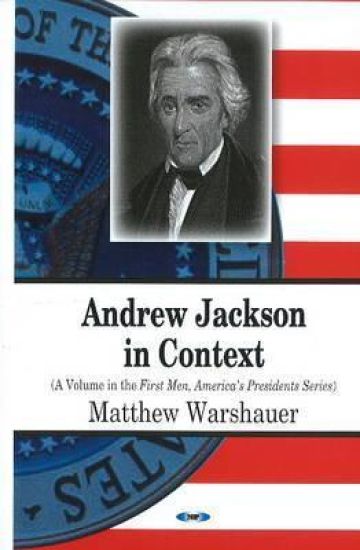
Andrew Jackson in Context

Andrew Jackson in Context

Nova Science Publishers Inc
2010
sidottu
For over a century historians have been unable to agree about Andrew Jackson. Was he as Robert Remini has insisted for more than forty years a masterful politician who shaped the modern presidency and ushered in an era of new democratic politics? Or was he, as James C. Curtis and Andrew Burstein have argued, a loose cannon who possessed no vision for the American republic? What historians do not doubt is Jackson's significant and lasting impact on American politics and the nation. To fully assess his role and legacy, one must explore the interaction between his personal and political motivations and the larger developments of the early republic and antebellum period. In Andrew Jackson in Context, Matthew Warshauer, Professor of History at Central Connecticut State University and author of Andrew Jackson and the Politics of Martial Law, offers a detailed look at differing historians' views on Jackson and places these perspectives within an accessible biography of the seventh president. Warshauer insists that any study of Jackson must place him within the context of his time and that his motivations regarding such pivotal issues as economics and the preservation of the Union cannot be divorced from the very real and turbulent politics of the Jacksonian period. The author discounts the psychological driven theories of authors like Curtis and Burstein, though recognises that Jackson was often a vain, blustering, power-driven man who when he deemed it necessary had no qualms about violating the Constitution. This is an engaging, well-written biography that is perfect for students and those who want to understand not only Jackson and his era, but what historians have written about him.
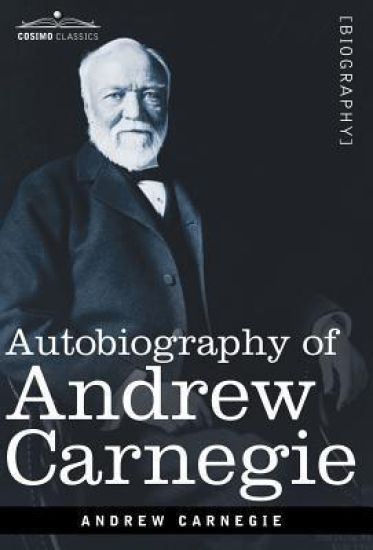
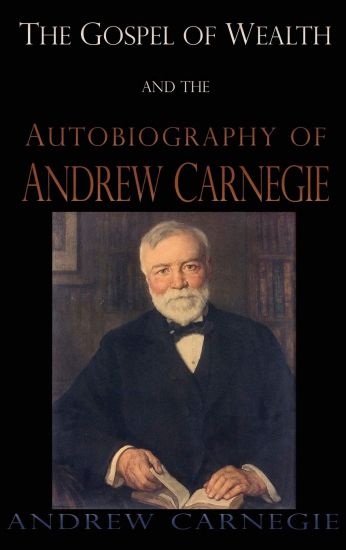
Gospel of Wealth and the Autobiography of Andrew Carnegie

Gospel of Wealth and the Autobiography of Andrew Carnegie

Andrew Carnegie

Iap - Information Age Pub. Inc.
2018
sidottu
Andrew Carnegie was a Scottish-American industrialist, business magnate, and philanthropist. He led the expansion of the American steel industry in the late 19th century. He later became a leading philanthropist in the United States and in the British Empire. Carnegie was born in Scotland, and emigrated to the United States with his parents in 1848. He first worked as a telegrapher, and by the 1860s had investments in railroads, railroad sleeping cars, bridges, and oil derricks. He later built Pittsburgh's Carnegie Steel Company, sold to J. P. Morgan in 1901 for $480 million, which became the U.S. Steel Corporation. After selling Carnegie Steel, he surpassed John D. Rockefeller as the richest American for the next couple of years. His 1889 article proclaiming "The Gospel of Wealth" called on the rich to use their wealth to improve society, and stimulated a wave of philanthropy. Carnegie devoted the remainder of his life to large-scale philanthropy.
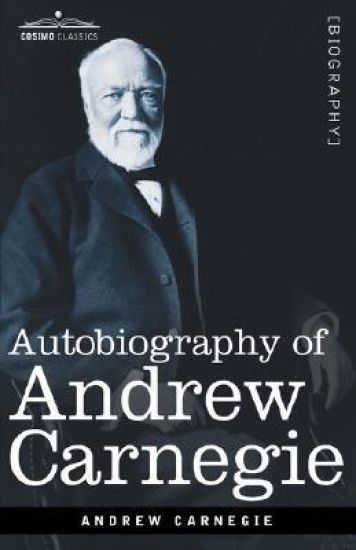
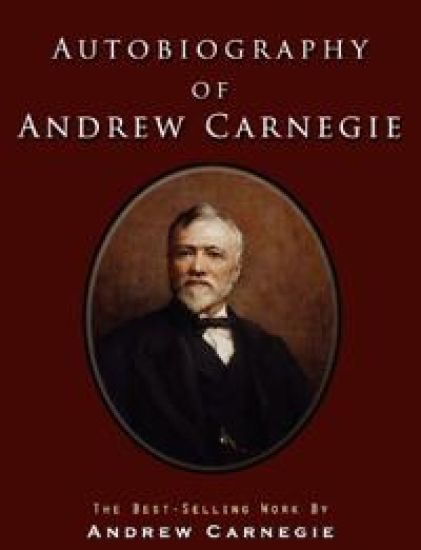
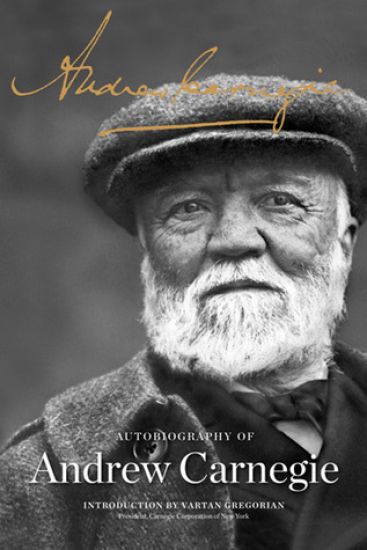
The Autobiography of Andrew Carnegie

The Autobiography of Andrew Carnegie

Andrew Carnegie

PublicAffairs,U.S.
2011
pokkari
Andrew Carnegie, the great steel-baron-turned-philanthropist, was an industrialist unlike any other. His famous dictum, that he who dies rich dies disgraced, has inspired a generation of twenty-first-century philanthropists to follow in his footsteps and put their money towards philanthropic causes. He had an unwavering belief in distributing wealth for good, and systematically and deliberately gave away the bulk of his riches throughout his lifetime. Born in 1835, he emigrated with his family to the United States from Scotland at a young age. His first job was in a cotton factory, and he later worked as an errand boy. The industrial age brought great opportunities for Mr. Carnegie. With drive and hard work, he amassed a fortune as a steel tycoon, and by adulthood the errand boy was one of the richest and most generous men in the United States. A strong dedication to giving back guided him throughout his life and career. During his own lifetime, he put his ideas into action by creating a family of organizations that continue to work toward improving the human condition, advancing international peace, strengthening democracy, and creating social progress that benefits men, women and children both in the United States and around the globe. Here, in the reissue of the classic autobiography that has inspired generations, is the rags-to-riches tale of the life and philosophies of one of the most celebrated industrialists and philanthropists in history. From his humble beginnings as a poor Scottish immigrant to his immense success in business, Andrew Carnegie outlines the principles that he lived by and that today serve as the pillars of modern philanthropy.