Extract: As the master of the Indian Spring school emerged from the pine woods into the little clearing before the schoolhouse, he stopped whistling, put his hat less jauntily on his head, threw away some wild flowers he had gathered on his way, and otherwise assumed the severe demeanor of his profession and his mature age--which was at least twenty. Not that he usually felt this an assumption; it was a firm conviction of his serious nature that he impressed others, as he did himself, with the blended austerity and ennui of deep and exhausted experience.The building which was assigned to him and his flock by the Board of Education of Tuolumne County, California, had been originally a church. It still bore a faded odor of sanctity, mingled, however, with a later and slightly alcoholic breath of political discussion, the result of its weekly occupation under the authority of the Board as a Tribune for the enunciation of party principles and devotion to the Liberties of the People. There were a few dog-eared hymn-books on the teacher's desk, and the blackboard but imperfectly hid an impassioned appeal to the citizens of Indian Spring to "Rally" for Stebbins as Supervisor. The master had been struck with the size of the black type in which this placard was printed, and with a shrewd perception of its value to the round wandering eyes of his smaller pupils, allowed it to remain as a pleasing example of orthography. Unfortunately, although subdivided and spelt by them in its separate letters with painful and perfect accuracy, it was collectively known as "Wally," and its general import productive of vague hilarity.
Although American author Bret Harte is most readily associated with stories about the West, it is his skill with characterization that distinguishes him from the hundreds of others who set fictional tales in the region. The miners, soldiers, gamblers, entrepreneurs, and lost souls who populate these pages are limned with Harte's unique combination of dry wit and tender pathos.This charming collection of Harte's short stories focuses on life in old California and includes "Openings in the Old Trail," "Colonel Starbottle for the Plaintiff," "The Landlord of the Big Flume Hotel," "A Buckeye Hollow Inheritance," "The Reincarnation of Smith," "Lanty Foster's Mistake," "An Ali Baba of the Sierras," "Miss Peggy's Proteges," and "The Goddess of Excelsior."
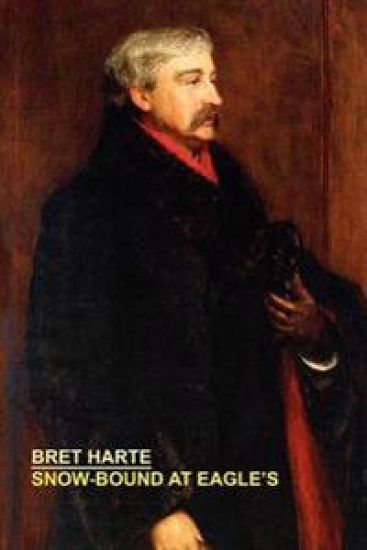
Francis Bret Harte (August 25, 1836- May 5, 1902) was an American author and poet, best remembered for his accounts of pioneering life in California. Bret Harte was born in Albany, New York, on August 25, 1836. He was named Francis Brett Hart after his great-grandfather, Francis Brett. When he was young his father, Henry, changed the spelling of the family name from Hart to Harte. Henry's father - Bret's grandfather - was Bernard Hart, an Orthodox Jewish immigrant who flourished as a merchant, becoming one of the founders of the New York Stock Exchange. Later, Francis preferred to be known by his middle name, but he spelled it with only one "t", becoming Bret Harte. An avid reader as a boy, Harte published his first work at age 11, a satirical poem titled "Autumn Musings," now lost. Rather than attracting praise, the poem resulted in his family's ridicule. As an adult, he recalled to a friend, "Such a shock was their ridicule to me that I wonder that I ever wrote another line of verse." His formal schooling ended when he was 13 in 1849. He moved to California in 1853, later working there in a number of capacities, including miner, teacher, messenger, and journalist. He spent part of his life in the northern California coastal town of Union (now Arcata), a settlement on Humboldt Bay that was established as a provisioning center for mining camps in the interior. The 1860 massacre of between 80 and 200 Wiyots at the village of Tuluwat was well documented historically and was reported in San Francisco and New York by Harte. When serving as assistant editor for the Northern Californian, Harte editorialized about the slayings while his boss, Stephen G. Whipple, was temporarily absent, leaving Harte in charge of the paper. Harte published a detailed account condemning the event, writing, "a more shocking and revolting spectacle never was exhibited to the eyes of a Christian and civilized people. Old women wrinkled and decrepit lay weltering in blood, their brains dashed out and dabbled with their long grey hair. Infants scarcely a span long, with their faces cloven with hatchets and their bodies ghastly with wounds." After he published the editorial, his life was threatened and he was forced to flee one month later. Harte quit his job and moved to San Francisco, where an anonymous letter published in a city paper is attributed to him, describing widespread community approval of the massacre. In addition, no one was ever brought to trial, despite the evidence of a planned attack and references to specific individuals, including a rancher named Larabee and other members of the unofficial militia called the Humboldt Volunteers.
The sun was going down on the Black Spur Range. The red light it had kindled there was still eating its way along the serried crest, showing through gaps in the ranks of pines, etching out the interstices of broken boughs, fading away and then flashing suddenly out again like sparks in burnt-up paper. Then the night wind swept down the whole mountain side, and began its usual struggle with the shadows upclimbing from the valley, only to lose itself in the end and be absorbed in the all-conquering darkness. Yet for some time the pines on the long slope of Heavy Tree Hill murmured and protested with swaying arms; but as the shadows stole upwards, and cabin after cabin and tunnel after tunnel were swallowed up, a complete silence followed. Only the sky remained visible-a vast concave mirror of dull steel, in which the stars did not seem to be set, but only reflected.
Where the San Leandro turnpike stretches its dusty, hot, and interminable length along the valley, at a point where the heat and dust have become intolerable, the monotonous expanse of wild oats on either side illimitable, and the distant horizon apparently remoter than ever, it suddenly slips between a stunted thicket or hedge of "scrub oaks," which until that moment had been undistinguishable above the long, misty, quivering level of the grain. The thicket rising gradually in height, but with a regular slope whose gradient had been determined by centuries of western trade winds, presently becomes a fair wood of live-oak, and a few hundred yards further at last assumes the aspect of a primeval forest. A delicious coolness fills the air; the long, shadowy aisles greet the aching eye with a soothing twilight; the murmur of unseen brooks is heard, and, by a strange irony, the enormous, widely-spaced stacks of wild oats are replaced by a carpet of tiny-leaved mosses and chickweed at the roots of trees, and the minutest clover in more open spaces. The baked and cracked adobe soil of the now vanished plains is exchanged for a heavy red mineral dust and gravel, rocks and boulders make their appearance, and at times the road is crossed by the white veins of quartz. It is still the San Leandro turnpike, -a few miles later to rise from this canada into the upper plains again, -but it is also the actual gateway and avenue to the Robles Rancho. When the departing visitors of Judge Peyton, now owner of the rancho, reach the outer plains again, after twenty minutes' drive from the house, the canada, rancho, and avenue have as completely disappeared from view as if they had been swallowed up in the plai
The story takes place in a small struggling mining town located in the foothills of the California mountains at the time of the gold rush. The camp is suffering from a long string of bad luck. With only one woman in their midst, it seems as though the miners have no future. However, the tide turns when a small boy is born. Thomas Luck is the first newborn the camp has seen in ages; things are looking up. The miners become cheerful, foliage begins to grow, and there is talk of building a hotel to attract outsiders. Unfortunately, the hope is wiped out by the sudden death of Luck in a flood.