
Kirjahaku
Etsi kirjoja tekijän nimen, kirjan nimen tai ISBN:n perusteella.
1000 tulosta hakusanalla Brian E. Butler
Brain and Behaviour: Induction as a Fundamental Mechanism of Neuro-Psychic Activity
N. E. Ischlondsky
Literary Licensing, LLC
2013
nidottu
The 60second Revolutionary Weight-Loss Body-Brain Program: The All Natural Way To Have The Body You Would Like
Action E-Book Publications; Michael M
Createspace Independent Publishing Platform
2015
nidottu

P.O.W.E.R. Struggle Book 1: Fragile Warriors
Shaun Bryan
Createspace Independent Publishing Platform
2017
nidottu

Dreaming on Both Sides of the Brain
Doris E. Cohen; Christiane Northrup
Hampton Roads Publishing Co
2017
nidottu
A dream is not just white noise or something that happens to you while you sleep. Dreams are the secret language of your unconscious.This book will teach you how to: Unlock the secrets of your personal dream languageExplore and interpret the meaning of your dreamsHarness the power of the brain to uncover a life of greater richness and meaningSo often when we awake we find that our dreams have either evaporated like mist or seem to be just on the edge of our memory. Many people cannot recall their dreams at all. Cohen has developed a 7-step process to let you tap into the rich repository of your subconscious: Recall and record.Title your dream.Read or repeat aloud.Consider what is uppermost in your life right now.Describe your dream's objects and qualities as if you were talking to a Martian.Summarize the message from the unconscious.Consider the dream's guidance for waking life.Drawing on years of clinical experience and her familiarity with Freud, myth, and sacred writings, Cohen presents a program that results in a life of abundance, texture, and self-awareness.
Neuroscience tells us that the products of the mind--thought, emotions, artistic creation--are the result of the interactions of the biological brain with our senses and the physical world: in short, that thinking and learning are the products of a biological process.This realization, that learning actually alters the brain by changing the number and strength of synapses, offers a powerful foundation for rethinking teaching practice and one's philosophy of teaching.James Zull invites teachers in higher education or any other setting to accompany him in his exploration of what scientists can tell us about the brain and to discover how this knowledge can influence the practice of teaching. He describes the brain in clear non-technical language and an engaging conversational tone, highlighting its functions and parts and how they interact, and always relating them to the real world of the classroom and his own evolution as a teacher. "The Art of Changing the Brain" is grounded in the practicalities and challenges of creating effective opportunities for deep and lasting learning, and of dealing with students as unique learners.
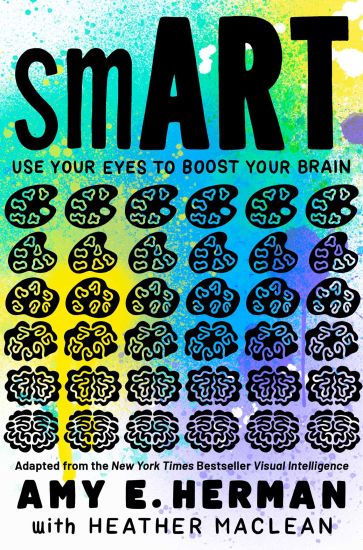
Smart: Use Your Eyes to Boost Your Brain (Adapted from the New York Times Bestseller Visual Intelligence)
Amy E. Herman
Simon Schuster Books for Young Readers
2022
sidottu
I Spy and Where's Waldo? get a revolutionary twist in this "fun, eye-opening" (Booklist) young readers edition on how to fully engage your brain to think critically and creatively. What would you say if I told you that looking at art could give you the confidence you need to speak up in class? Or that learning the history of donuts could help you think like a super spy and train like the CIA? smART teaches readers how to process information using paintings, sculptures, and photographs using methods that instantly translate to real world situations and are also fun With three simple steps (1) How to SEE, (2) How to THINK about what you see, and (3) How to TALK about what you see, readers learn how to think critically and creatively, a skill that only requires you to open your eyes and actively engage your brain.
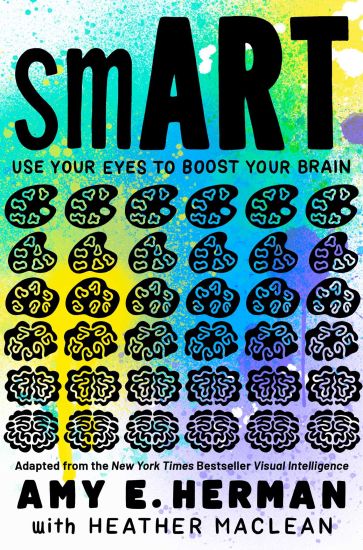
Smart: Use Your Eyes to Boost Your Brain (Adapted from the New York Times Bestseller Visual Intelligence)
Amy E. Herman
Simon Schuster Books for Young Readers
2023
nidottu
I Spy and Where's Waldo? get a revolutionary twist in this "fun, eye-opening" (Booklist) young readers edition on how to fully engage your brain to think critically and creatively. What would you say if I told you that looking at art could give you the confidence you need to speak up in class? Or that learning the history of donuts could help you think like a super spy and train like the CIA? smART teaches readers how to process information using paintings, sculptures, and photographs using methods that instantly translate to real world situations and are also fun With three simple steps (1) How to SEE, (2) How to THINK about what you see, and (3) How to TALK about what you see, readers learn how to think critically and creatively, a skill that only requires you to open your eyes and actively engage your brain.

Young Ladies Who L.E.A.D.
Um'bria Adams; Lauren Baldwin; Kaylee Mayhew
Perfect Time Shp
2020
nidottu
Young Ladies Who L.E.A.D. shares the stories of six young ladies currently residing in South Carolina, North Carolina, Maryland, and New York who have demonstrated perseverance and determination as they Learn. Excel, Achieve, and Dare to be great (LEAD) in their careers, in school, and most importantly in life. You will laugh and even cry as you read these heartfelt accounts of young ladies ensuring they stay on top of their game, letting nothing deter or hinder their success. As entrepreneurs, college students, and career professionals, these young ladies are making their mark.
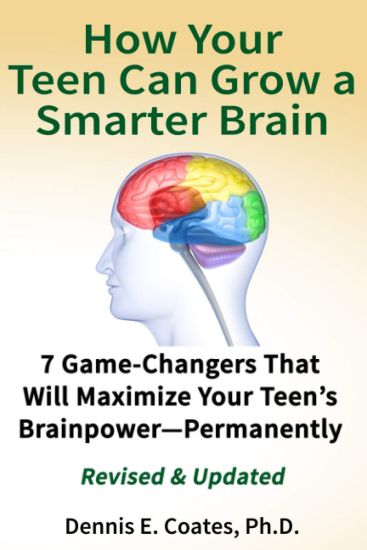
How Your Teen Can Grow a Smarter Brain: 7 Game-Changers That Will Maximize Your Teen's Brainpower-Permanently
Dennis E. Coates
First Summit Publishing
2020
nidottu
If you're the parent of a teen, you want your child to: Avoid errors in judgment and thrive during adolescencePrepare for the tough challenges that await beyond high schoolGrow the brainpower to succeed in a demanding career. As a parent, you don't have to leave this to chance. There's a lot you can do. Dr. Coates explains in easy-to-understand language how teens can consciously and deliberately build a solid foundation of critical thinking skills that will last a lifetime. You'll learn how to stimulate, encourage, support and protect your teen's brain growth during adolescence-the sensitive window of prefrontal cortex (PFC) development. You'll also learn about: The amazing power of the PFCHow your child can deliberately develop their PFCWhy this basic development has to happen during adolescenceHow to stimulate your teen to develop thinking skillsHow to help your teen protect their growing PFCSchool courses, extracurricular activities, and games that help grow a smarter brain 1. Read the book. 2. Give it to your child. 3.Talk about it together.


Improving Care for Veterans with Traumatic Brain Injury Across the Lifespan
Kathryn E Bouskill; Carrie M Farmer; Irineo Cabreros; Jonathan H Cantor; Natalie Ernecoff; Lynn Hu; Shira H Fischer; Aaron Kofner; Lisa S Meredith; Matthew L Mizel; Aneesa Motala; Tepring Piquado; Zachary Predmore; Rajeev Ramchand
RAND Corporation
2022
pokkari
Acetylthiocholinesterase Distribution in the Brain Stem of the Cat
E. Ramon-Moliner
Springer-Verlag Berlin and Heidelberg GmbH Co. K
1972
nidottu
The earliest studies on the regional distribution of acetylcholinesterase (AChE) within the central nervous system were based on the determination of the amount of CO liberated by homogenates of selected areas in the presence of an ester of 2 choline and a bicarbonate buffer. Using this biochemical approach, Burgen and Chipman (1951) were able to establish that acetylcholinesterase is not evenly distributed within the central nervous system. They found that the cerebellum, the lateral geniculate body, and the striatum contained a high concentration of AChE. The high concentration of AChE in the striatum could be correlated with a higher rate of acetylcholine synthesis. However, this was not the case for the cerebellum, where acetylcholine synthesis was very low. Other in vitro studies have been aimed at establishing the regional distribution of the other two components of the cholinergic system, cholinacetylase (ChA) and acetylcholine (ACh). An equally asymetrical distribution for these substances has been established in vitro (MacIntosh, 1941; Feldberg and Mann, 1946; Feldberg and V ogt, 1948; MacIntosh and Oborin, 1953; Quastel, 1962; Mitchell, 1963; Krnjevic and Phillis, 1963; Aprison et al. , 1964; McLennan, 1964; Cohen, 1956). The in vitro determination of acetylcholinesterase (Koelle, 1950; Burgen and Chipman, 1951; Giacobini, 1959; Bennett et al. , 1966; Fahn and Cote, 1968; Miller et al. , 1969) presents the advan- tage of permitting the use of a substrate like ACh which is a normally occurring ester of choline so that the establishment of enzyme specificity is less questionable.


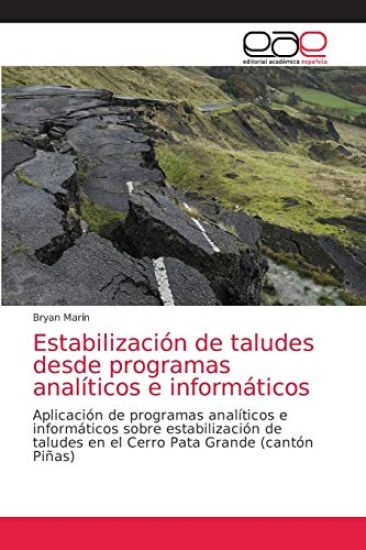
Estabilización de taludes desde programas analíticos e informáticos
Bryan Marín
Editorial Academica Espanola
2020
pokkari

Da Sottozero A Imprenditore: Tecniche e Strategie Per Diventare Imprenditore Di Te Stesso e Lanciare Un Business Perfetto Partendo Da Zero
Mihail Bria
Bruno Editore
2017
nidottu
COME E QUANDO PARTIREIl segreto per partire avendo tutti gli strumenti di cui hai bisogno.Come veder chiaro il tuo percorso imprenditoriale ancor prima di partire.La miglior forma societaria da utilizzare quando apri una nuova azienda. COME SCEGLIERE COSA FAREIl segreto per avere meno competitor da fronteggiare.Come aprire un'azienda e produrre reddito sin dal primo mese.Come capire in quale settore imprenditoriale impiegare le tue energie. COME ACQUISIRE NUOVI CLIENTIPerch dipendere da un unico cliente l'errore pi grande che puoi commettere.Il segreto per generare pi clienti e vendere a prezzi pi alti.Il canale migliore da utilizzare per generare un flusso continuo di nuovi clienti attraverso Internet. COME AUTOMATIZZARE LA TUA AZIENDACome ottimizzare i costi della tua azienda in maniera rapida ed efficace. L'importanza delle procedure nel processo di formazione dei tuoi collaboratori. Il segreto per raggiungere pi velocemente i tuoi obiettivi imprenditoriali.

Numerical Pde Analysis Of The Blood Brain Barrier: Method Of Lines In R
William E Schiesser
World Scientific Publishing Co Pte Ltd
2019
sidottu
The remarkable functionality of the brain is made possible by the metabolism (chemical reaction) of oxygen (O2) and nutrients in the brain. These metabolism components are supplied to the brain by an intricate blood circulatory system (vasculature). The blood brain barrier (BBB), which is the central topic of this book, determines the rate of transfer from the blood to the brain tissue.In particular, mathematical models are developed for mass transfer across the BBB based on partial differential equations (PDEs) applied to the blood capillaries, the endothelial membrane, and the brain tissue. The PDEs derived from mass balances and computer routines in R are presented for the numerical (computer-based) solution of the PDEs. The computed concentration profiles of the transferred components are functions of time and space within the BBB system, i.e., spatiotemporal solutions.The R routines and the associated numerical algorithms for computing the numerical solutions are discussed in detail. The discussion is introductory, without formal mathematics, e.g., theorems and proofs. The general methodology (algorithm) for numerical PDE solutions is the method of lines (MOL).The models are used to study the transfer of oxygen and nutrients, harmful substances that should not enter the brain such as chemicals and pathogens (viruses, bacteria), and therapeutic drugs. The intent of the book is to provide a quantitative approach to the study of BBB dynamics using a computer-based methodology programmed in R, a quality open-source scientific programming system that is easily downloaded from the Internet for execution on modest computers.

Receptors in the Evolution and Development of the Brain
Richard E. Fine
Academic Press Inc
2019
nidottu
Receptors in the Evolution and Development of the Brain: Matter into Mind presents the key role of receptors and their cognate ligands in wiring the mammalian brain from an evolutionary developmental biology perspective. It examines receptor function in the evolution and development of the nervous system in the large vertebrate brain, and discusses rapid eye movement sleep and apoptosis as mechanisms to destroy miswired neurons. Possible links between trophic deficits and connectional diseases including Alzheimer’s, Parkinson’s, and ALS are also discussed. This book is extremely useful to those with an interest in the molecular and cellular neurosciences, including those in cognitive and clinical branches of this subject, and anyone interested in how the incredibly complex human brain can build itself.
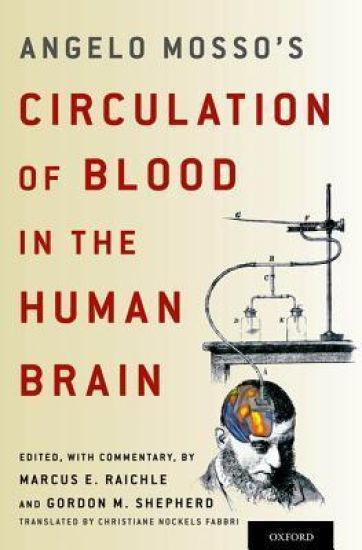
Angelo Mosso's Circulation of Blood in the Human Brain
Marcus E. Raichle; Gordon M. Shepherd
Oxford University Press Inc
2014
sidottu
Modern brain imaging is revolutionizing the study of brain function in health and disease. Few realize that its origins began with a pioneering study in the nineteenth century by an Italian scientist, Angelo Mosso, of several subjects brought to him with head injuries that exposed their brains to direct observation. He took advantage of this opportunity to observe for the first time changes in cerebral blood flow in relation to different behaviors, the same changes that are the basis for the measurements underlying modern methods. Although Mosso was widely recognized for this highly original study by his contemporaries, through a German translation in 1881, there has never been a translation through which his magnificent achievement could be recognized in English. His rightful role as the pioneer in brain imaging has thus not been recognized. This unique volume corrects that deficiency. Through it, the modern reader, whether an expert in the field or an interested scientist or member of the public, can gain a new perspective on the remarkable insights Mosso gained into how behaviors as subtle as thinking about a subject or feeling an emotion can produce the changes in pulsations of the brain that he observed. The special features of this volume begin with a brief summary of Mosso's life. Two pioneers of modern brain imaging, Marcus Raichle and Gordon M. Shepherd, then provide an extensive commentary that succinctly summarizes Mosso's work and explains its relevance to modern methods. The authors not only emphasize Mosso's role as a pioneer in brain imaging, but also through this study as a pioneer in the eventual rise of cognitive neuroscience. The English translation then follows, together with all of the plates and illustrations of the original volume. The result is a classic of neuroscience now available for wide appreciation by neuroscientists, neurologists, psychologists, psychiatrists, historians of science and medicine, and the general public.