Kirjahaku
Etsi kirjoja tekijän nimen, kirjan nimen tai ISBN:n perusteella.
1000 tulosta hakusanalla C. David Heymann
This book is the first review of the scientific literature on the Africanized honey bee. The African subspecies Apis mellifera scutellata (formerly adansonii) was introduced into South America in 1956 with the intent of cross-breeding it with other subspecies of bees already present in Brazil to obtain a honey bee better adapted to tropical conditions. Shortly after its introduction, some of the African stock became established in the feral population around Sao Paulo, Brazil, and spread rapidly through Brazil. It has since migrated through most of the neotropics, displacing and/or hybridizing with the previously imported subspecies of honey bees. Africanized bees have been stereotype d as having high rates of swarming and absconding, rapid colony growth, and fierce defensivebehavior. As they have spread through the neotropics they have interacted with the human population, disrupting apiculture and urban activities when high levels of defensive behavior are expressed.
The introduction and spread of the African honey bee and its hybrids in the New World has received substantial public and scientific attention. In this book the available scientific information concerning the identification, biology, and management of the bee is reviewed. This book is particularly timely, given the recent arrival of the African bee
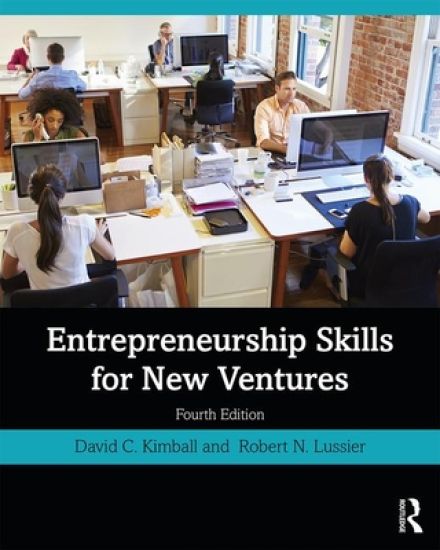
As business schools expand their entrepreneurship programs and organizations seek people with entrepreneurial skills, it has become clear that the skills and mindset of an entrepreneur are highly valued in all business contexts. This latest edition of Entrepreneurship Skills for New Ventures continues to focus on helping students develop entrepreneurial skills, whether they seek to become entrepreneurs or employees.Focusing on the entrepreneurial start-up process, the fourth edition of Entrepreneurship Skills for New Ventures takes the reader through the steps of selecting, planning, financing, and controlling the new venture. The authors cover multiple forms of new ventures, as well as ways to utilize entrepreneurial skills in other contexts, encouraging students to engage with the material and apply it to their lives in ways that make sense for them. Skill development features include: New exercise on analyzing the lean entrepreneurship option Entrepreneurial profiles of small-business owners Personal applications for students to apply questions to their new venture or a current business Global and domestic cases Elevator pitch assignments that put students in the venture capitalist position Application exercises and situations covering specific text concepts Business plan prompts to help students construct a business plan over the course of a semesterFeaturing pedagogical tools like review questions and learning outcomes, as well as online materials that expand upon skill development and offer instructor resources, the fourth edition of Entrepreneurship Skills for New Ventures is the perfect resource for instructors and students of entrepreneurship.
Concursus and Concept Use in Karl Barth’s Doctrine of Providence
David C. Chao
TAYLOR FRANCIS LTD
2025
sidottu
This book provides a fresh interpretation of Karl Barth’s doctrine of providence in Church Dogmatics III/3, emphasizing concursus—the cooperation between divine and human action. Challenging accusations of occasionalism, it highlights Barth’s christological reorientation of classical doctrine and advances a social-practical theology of concept use and norms. Through rigorous analysis, the author situates Barth within historical debates on providence, demonstrating Barth’s innovative christocentric approach that avoids occasionalism. The work uniquely incorporates social-practical theory to explain how theological norms function within Christian community practices. By addressing how Barth’s concepts of faith, obedience, and prayer mediate normative authority, this volume deepens readers’ understanding of Barth’s theology. It further provides theological and philosophical tools for recognizing and critiquing ideological distortions, offering a constructive vision of how divine providence shapes human language and practice. The book will be relevant to scholars and students of theology and philosophy of religion, particularly those focused on Karl Barth, Reformed theology, and theological method, as well as readers interested in contemporary debates on the intersection of divine action, human agency, and the formation of Christian norms.
Are Japanese people religious – and, if so, in what ways? David Lewis addresses this question from the perspective of ordinary Japanese people in the context of their life cycles, and explores why they engage in religious activities. He not only discusses how Japanese people engage in different religious practices as they encounter new events in their lives but also analyses the attitudes and motivations behind their behaviour. Activities such as fortune-telling, religious rites in the workplace, ancestral rites and visits to shrines and temples are actually engaged in by many people who view themselves as ‘non- religious’ but express their motivations in terms other than the conventional ‘religious’ ones. This book outlines the religious options available, and assesses why people choose particular religious activities at various times in their lives or in specific circumstances. The author challenges some widespread assumptions about religion in urban and industrial contexts and also shows how some of the underlying motivations behind Japanese behaviour are expressed both in religious and non-religious forms.
We humans live by stories, says David Korten, and the stories that now govern our society set us on a path to certain self - destruction. In this profound new book, Korten shares the results of his search for a story that reflects the fullness of human knowledge and understanding and provides a guide to action adequate to the needs of our time. Korten calls our current story Sacred Money and Markets. Money, it tells us, is the measure of all worth and the source of all happiness. Earth is simply a source of raw materials. Inequality and environmental destruction are unfortunate but unavoidable. Although many recognize that this story promotes bad ethics, bad science, and bad economics, it will remain our guiding story until replaced by one that aligns with our deepest understanding of the universe and our relationship to it. To guide our path to a viable human future, Korten offers a Sacred Life and Living Earth story grounded in a cosmology that affirms we are living beings born of a living Earth itself born of a living universe. Our health and well - being depend on an economy that works in partnership with the processes by which Earth's community of life maintains the conditions of its own existence - and ours. Offering a hopeful vision, Korten lays out the transformative impact adopting this story will have on every aspect of human life and society.
In today's rapidly evolving business world continual innovation is now a must. Scholar and consultant David C. Thomas says the same forces of globalization that have created today's superheated competitive environment have also provided a potential hidden advantage: the multiculturals in your midst. Thomas cites ample research and examples showing that people who have experienced more than one culture are more creative that those with more limited experience. Multiculturals have a broader worldview. Having to integrate different cultural values forces them to develop more complex ways of thinking and makes them better able to see new patterns and connections. Their heightened empathy, the result of learning to adapt to sometimes wildly different cultures, helps them build support for their ideas and work effectively on the teams that implement them. This book makes a powerful business case for recognizing and cultivating a new dimension of diversity. Thomas looks at how different people express their multicultural identities and how to establish the organizational conditions under which multiculturals can flourish, And he shows how even the most monocultural among us can develop the characteristics of a multicultural mind.
SystemC provides a robust set of extensions to C++ that enables rapid development of complex hardware/software systems. This book focuses on the practical uses of the language for modeling real systems. The wealth of examples and downloadable code methodically guide the reader through the finer points of the SystemC language. This work provides: - A step-by-step build-up of syntax - NEW features of SystemC 2.1 - Code examples for each concept, - Many resource references - Coding styles and guidelines - Over 52 downloadable code examples (over 8,000 lines) - Exercises throughout the book - How SystemC fits into the system design methodology - Why features are as they are Well known consultants in the EDA industry, both David Black and Jack Donovan have been involved in the adoption and teaching of new technologies and methodologies for a combined total of 42+ years. Recently, they jointly founded a consultancy, Eklectic Ally, focused on helping companies adopt SystemC methodologies.
Pancreatic Cytopathology
David C. Chhieng; M.W. Stanley; Edward B. Stelow
Springer-Verlag New York Inc.
2007
nidottu
Diagnosis by cytologic means is what the mathematicians would describe as elegant; the methods are often simple but richly nuanced, while the results can be profound though succinctly stated. Tiny samples atraumatically obtained are at the heart of both the elegance and the dif? culties of this subspecialty. Following initial successes of traditional exfoliative cytology, further applications were long constrained by the fact that few body surfaces present themselves for direct collection of exfo- ated cells. Thus, it was inevitable that advances in nonoperative evaluations for speci? c body sites would be accompanied by expansions in cytologic diagnosis. Hence the proliferation of sampling methods with techniques the same as their names, including brushing, washing, lavage, and aspiration. Examples come readily to mind. One of the most dramatic bursts in cytodiagnosis happened in the 1980s, when deep-lung sampling by bronchoalveolar lavage (BAL) arrived at about the same time as the AIDS pandemic. Frequent and often repeated diagnosis of CMV and pneumocystis quickly led to numerous such samples being submitted to many laboratories. These now common infectious agents and this new technique were highly suited to rapid evaluation of AIDS patients. The rapid rise of ? ne needle aspiration occurred at about the same time, at least on this side of the Atlantic. Although not really new, the explosion in its use had awaited both cli- cal acceptance and adequate training for a critical mass of pathologists. This history has been well recorded by others.
SystemC: From the Ground Up, Second Edition
David C. Black; Jack Donovan; Bill Bunton; Anna Keist
Springer-Verlag New York Inc.
2009
sidottu
SystemC provides a robust set of extensions to the C++ language that enables rapid development of complex models of hardware and software systems. The authors focus on practical use of the language for modeling real systems, showing: A step-by-step build-up of syntax Code examples for each concept Updates to reflect the SystemC standard, IEEE 1666 Why features are as they are Many resource references How SystemC fits into an ESL methodology This new edition of an industry best seller is updated to reflect the standardization of SystemC as IEEE 1666 and other improvements that reflect feedback from readers of the first edition. The wide ranging feedback also include suggestions from editors of the Japanese and Korean language translations, professors and students, and computer engineers from a broad industrial and geographical spectrum, all who have successfully used the first edition. New chapters have been added on the SystemC Verification Library and the Transaction Level Modeling, and proposed changes to the current SystemC standard. David Black and Jack Donovan, well known consultants in the EDA industry, have teamed with Bill Bunton and Anna Keist, experienced SystemC modeling engineers, to write the second edition of this highly popular classic. As a team the authors bring over 100 years of ASIC and system design experience together to make a very readable introduction to SystemC.
Understanding Physics
David C. Cassidy; Gerald Holton; F. James Rutherford
Springer-Verlag New York Inc.
2002
sidottu
Understanding Physics provides a thorough grounding in contemporary physics while placing physics into its social and historical context. Based in large part on the highly respected Project Physics Course developed by two of the authors, it also integrates the results of recent pedagogical research. The text thus: - teaches about the basic phenomena in the physical world and the concepts developed to explain them - shows that science is a rational human endeavor with a long and continuing tradition, involving many different cultures and people - develops facility in critical thinking, reasoned argumentation, evaluation of evidence, mathematical modeling, and ethical values The treatment emphasizes not only what we know but also how we know it, why we believe it, and what effects that knowledge has: - Why do we believe the Earth and planets revolve around the Sun? - Why do we believe that matter is made of atoms? - How do relativity theory and quantum mechanics alter our conception of Nature and in what ways do they leave the classical concepts unchanged? - What impact does the knowledge of finite energy resources have on our society? - How have applications of fundamental science (such as the steam engine, the laser, the electric generator, the transistor) affected our lives? - How does the evidence for non-scientific ideas, such as UFOs, ESP, and the like, differ from the evidence for accepted scientific results?
This is a personal memoir of Dean Acheson, written by his son, who, in writing the book, wished readers to see the personal side of the statesman. The memoir shows us Dean Acheson at home with his wife, Alice, his friends and children, before and after his tenure as President Truman's Secretary of State.
This book shows therapists how to tackle the dilemma of the presenting problem not being the 'real' problem and presents a variety of step-by-step models for working with the substance-abusing family.
The Personality Puzzle gets students excited about personality psychology, demonstrating that it is relevant to their lives and thus actually fun to explore. Over six editions, author David Funder has established himself as the master of the readable textbook, always conveying the motivations behind psychological inquiry while never skimping on the science.
First Published in 2004. This book addresses a number of key themes in the debate about the nature of a contemporary capitalist society. It poses the question as to whether the present changes are creating a more fragmented society. Through a comparative historical analysis of Australia, New Zealand and Britain the book examines the restructuring of the workforce, the shifts towards more flexible work practices, rising unemployment, the growth of individualism, regional and local diversity, and the creation of new social formations. The book challenges both the more economistic versions of the New International Division of Labour thesis and the ethnocentrism of much contemporary debate on regional change. It argues for an approach based in the distinct experiences of localities, regions and nation states. Detailed empirical data are provided for Australia, Britain and New Zealand covering such areas as economic and employment change, regional diversity, restructuring of the state sector, consumption and home ownership and local social resistances and responses to change. The author is an established and widely published researcher who has conducted intensive research into the three societies examined in this book. The book will interest students in Sociology, Geography, Regional Science, Urban and Regional Planning and Political Science.
The Internet, Organizational Change and Labor
David C. D. Jacobs; Joel Yudken
Routledge
2003
sidottu
As we devote increasing amounts of time time at work and at home to the Internet and computer networks, our daily lives are dramatically being reshaped. We are better informed and can work more efficiently, yet there is anxiety about the security of our jobs. Examining what is happening to work, organizations and unions in the age of the Internet, this fascinating book reveals both the opportunities and dangers for workers in the digital age.Exploring the Internet's impact on organizations and labor from complementary perspectives, Jacobs and Yudken consider how new digital technologies shape cultural change. They look at the culmination of the development of the Internet, its impact upon jobs and the current prospects for unions, and conclude that the Internet ultimately reduces transaction costs thereby aiding profit making, and also assists workers, consumers and citizens in challenging business practices.Ideal for students of management, e-business and human resource management, this informative text is a balanced analysis of the Internet aided workplace. Unlike many enthusiasts of e-commerce, it identifies dangers in the Internet-driven enterprise such as contingent employment, employee monitoring and job loss, and also explores the potential benefits for employees, proposing possible strategies for reforming the economy.
The Internet, Organizational Change and Labor
David C. D. Jacobs; Joel Yudken
Routledge
2003
nidottu
As we devote increasing amounts of time time at work and at home to the Internet and computer networks, our daily lives are dramatically being reshaped. We are better informed and can work more efficiently, yet there is anxiety about the security of our jobs. Examining what is happening to work, organizations and unions in the age of the Internet, this fascinating book reveals both the opportunities and dangers for workers in the digital age.Exploring the Internet's impact on organizations and labor from complementary perspectives, Jacobs and Yudken consider how new digital technologies shape cultural change. They look at the culmination of the development of the Internet, its impact upon jobs and the current prospects for unions, and conclude that the Internet ultimately reduces transaction costs thereby aiding profit making, and also assists workers, consumers and citizens in challenging business practices.Ideal for students of management, e-business and human resource management, this informative text is a balanced analysis of the Internet aided workplace. Unlike many enthusiasts of e-commerce, it identifies dangers in the Internet-driven enterprise such as contingent employment, employee monitoring and job loss, and also explores the potential benefits for employees, proposing possible strategies for reforming the economy.
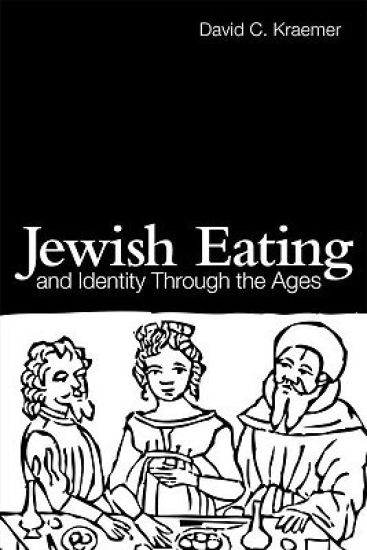
This book explores the history of Jewish eating and Jewish identity, from the Bible to the present. The lessons of this book rest squarely on the much-quoted insight: 'you are what you eat.' But this book goes beyond that simple truism to recognise that you are not only what you eat, but also how, when, where and with whom you eat. This book begins at the beginning – with the Torah – and then follows the history of Jewish eating until the modern age and even into our own day. Along the way, it travels from Jewish homes in the Holy Land and Babylonia (Iraq) to France and Spain and Italy, then to Germany and Poland and finally to the United States of America. It looks at significant developments in Jewish eating in all ages: in the ancient Near East and Persia, in the Classical age, throughout the Middle Ages and into Modernity. It pays careful attention to Jewish eating laws (halakha) in each time and place, but it does not stop there: it also looks for Jews who bend and break the law, who eat like Romans or Christians regardless of the law and who develop their own hybrid customs according to their own 'laws', whatever Jewish tradition might tell them. In this colourful history of Jewish eating, we get more than a taste of how expressive and crucial eating choices have always been.
In an age of intense economic competition and continual change, the ability to learn is a key factor in survival and prosperity. This book examines the changing interaction of the world economy, Britain’s prospects for prosperity, the connections between different kinds of work and the learning that support them. Focusing on specific areas where changed attitudes and ways of working are long overdue, the authors show the need for a better balance between formal provision in schools, colleges and within employment, and less tangible informal learning at home and in the workplace. These, in turn, open up issues of the curriculum (especially in the formative later years in schools and colleges), guidance for education and work and the qualifications structure.