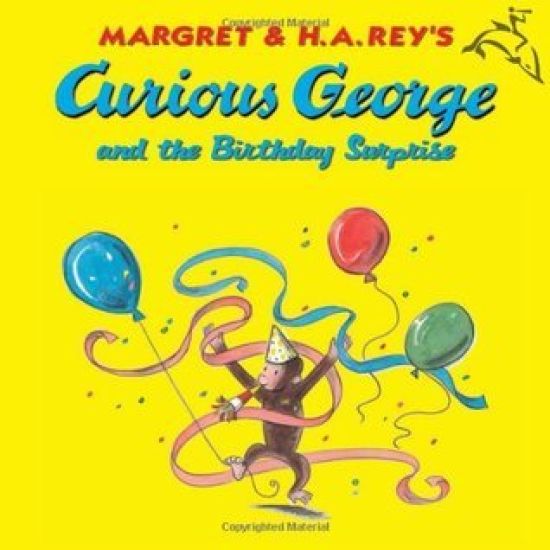
When the man with the yellow hat tells George that he is planning a surprise, George's curiosity gets the best of him when he finds a hat, noisemakers, decorations, and games. Simultaneous.
As humans working our way through this epic journey called life, many of us are unaware of how much the past is haunting us .... we are ensnared in the tendrils of trauma, anxiety and self-doubt, just existing, not understanding how we are limiting our full potential and the chance for true happiness.But you can reclaim your life. You can acknowledge and CONFRONT your inner demons to emerge from the abyss of past traumas and paralysing beliefs to rewrite your story. With every turn of the page, this book gives you the tools you need to walk from the shadows into the limelight. Boundless self-love and renewed self-esteem is now available as you step into true transformation and redefine your passion, your purpose and the very core of your existence.Join thought-provoking motivational speaker and insightful transformational coach, Kabinga Mazaba, as she bares her raw soul journey, revealing the powerful arsenal she crafted to shatter her chains and reclaim her life. "If you admit it, you can change it and if you confront you can heal." Kabinga C Mazaba
C.S. Lewis has long been recognized as a beloved author of children's literature and an apologist for Christian belief to a skeptical modern world. In this new volume, Gregory S. Cootsona shows us how Lewis can also serve as a guide to the ups and downs of the Christian journey. Like many of us, Lewis suffered from a variety of crises of faith and personal experience. Like us, he came to faith in a world that no longer respects Christian commitment or offers much room for belief in God. Like us, he felt the absence of God when those closest to him died. Like us, he wrestled with doubt, wondering if God is real, or simply the projection of his own wishes onto the screen of the universe. Like us, he knew the kinds of temptations he described with such poignancy and humor in The Screwtape Letters.By examining these and the other crises of C.S. Lewis's life, Cootsona shows us how Lewis found God in each one, and how he shared those discoveries with us in his writing. All those wishing to deepen and enrich their own spiritual journey will find much guidance and wisdom in these pages.
Sams Teach Yourself C++ in 24 Hours is a hands-on guide to the C++ programming language. Readers are provided with short, practical examples that illustrate key concepts, syntax, and techniques. Using a straightforward approach, this fast and friendly tutorial teaches you everything you need to know, from installing and using a compiler, to debugging the programs you’ve created, to what’s new in C++14. Step-by-step instructions carefully walk you through the most common C++ programming tasks Quizzes and exercises at the end of each chapter help you test yourself to make sure you’re ready to go on Learn how to... Install and use a C++ compiler for Windows, Mac OS X, or LinuxBuild object-oriented programs in C++Master core C++ concepts such as functions and classesAdd rich functionality with templates and lambda expressionsDebug your programs for flawless codeLearn exception and error-handling techniquesPut to use the new features in C++14, the latest version of the languageCreate and use templatesControl program flow with loopsStore information in arrays and stringsDeclare and use pointersUse operator overloadingExtend classes with inheritanceUse polymorphism and derived classesEmploy object-oriented analysis and design
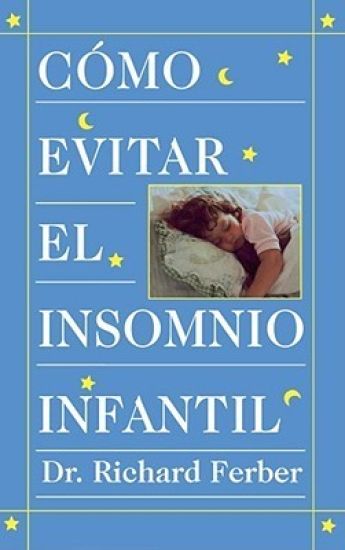
Ya la ha intentado todo (la leche caliente, los cuentos para antes de dormir, el ofrecimiento de su cama...) y aun asi su hijo sigue teniendo problemas con el sueno? El doctor Richard Ferber le ayudara a resolver su problema. Director del Sleep Laboratory and Center for Pediatric Sleep Disorders del Children's Hospital de Boston, el doctor Ferber es considerado en los Estados Unidos una eminencia en la resolucion de las dificultades de los ninos para conciliar el sueno. Sumamente practico y de muy facil comprension, "Como Evitar el Insomnio Infantil" le dice de que manera enfrentar situaciones como las siguientes, propias de ninos y ninas de uno a seis anos de edad: negativa a irse a dormir colicos y otras complicaciones medicas inquietud e insomnio terror nocturno emision de orina en la cama arrebatos agresivos y muchos otros problemas que suelen ser la causa de que su hijo y usted pasen las noches en vela.
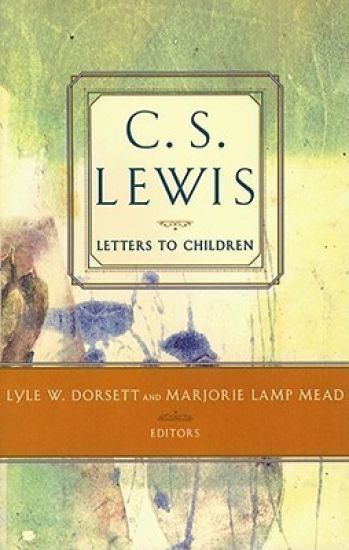
Contains the text of letters that the famed author wrote to children, as he shared his feelings about school, writing, and animals, among other topics, and demonstrated his deep understanding of young people. Reprint.
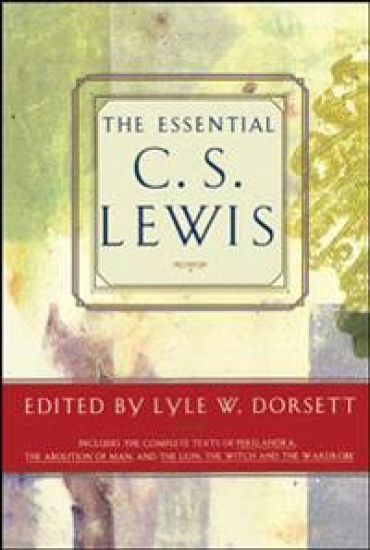
In this wide-ranging and authoritative collection of C.S. Lewis's writings, Lyle W. Dorsett brings together the many and varied facets of the beloved author's corpus. Selecting works of fiction, science fiction, autobiography, theology, poetry, and literary criticism, as well as Lewis's letters to adults and children, Dorsett shows the erudite author at his most innovative, challeneging, witty, and sympathetic.
"Kundalini yoga presented Jung with a model of something that was almost completely lacking in Western psychology--an account of the development phases of higher consciousness.... Jung's insistence on the psychogenic and symbolic significance of such states is even more timely now than then. As R. D. Laing stated... 'It was Jung who broke the ground here, but few followed him.'"--From the introduction by Sonu Shamdasani Jung's seminar on Kundalini yoga, presented to the Psychological Club in Zurich in 1932, has been widely regarded as a milestone in the psychological understanding of Eastern thought and of the symbolic transformations of inner experience. Kundalini yoga presented Jung with a model for the developmental phases of higher consciousness, and he interpreted its symbols in terms of the process of individuation. With sensitivity toward a new generation's interest in alternative religions and psychological exploration, Sonu Shamdasani has brought together the lectures and discussions from this seminar. In this volume, he re-creates for today's reader the fascination with which many intellectuals of prewar Europe regarded Eastern spirituality as they discovered more and more of its resources, from yoga to tantric texts. Reconstructing this seminar through new documentation, Shamdasani explains, in his introduction, why Jung thought that the comprehension of Eastern thought was essential if Western psychology was to develop. He goes on to orient today's audience toward an appreciation of some of the questions that stirred the minds of Jung and his seminar group: What is the relation between Eastern schools of liberation and Western psychotherapy? What connection is there between esoteric religious traditions and spontaneous individual experience? What light do the symbols of Kundalini yoga shed on conditions diagnosed as psychotic? Not only were these questions important to analysts in the 1930s but, as Shamdasani stresses, they continue to have psychological relevance for readers on the threshold of the twenty-first century. This volume also offers newly translated material from Jung's German language seminars, a seminar by the indologist Wilhelm Hauer presented in conjunction with that of Jung, illustrations of the cakras, and Sir John Woodroffe's classic translation of the tantric text, the Sat-cakra Nirupana. ?
C. P. Cavafy (1863-1933) lived in relative obscurity in Alexandria, and a collected edition of his poems was not published until after his death. Now, however, he is regarded as the most important figure in twentieth-century Greek poetry, and his poems are considered among the most powerful in modern European literature. Here is an extensively revised edition of the acclaimed translations of Edmund Keeley and Philip Sherrard, which capture Cavafy's mixture of formal and idiomatic use of language and preserve the immediacy of his frank treatment of homosexual themes, his brilliant re-creation of history, and his astute political ironies. The resetting of the entire edition has permitted the translators to review each poem and to make alterations where appropriate. George Savidis has revised the notes according to his latest edition of the Greek text. About the first edition: "The best [English version] we are likely to see for some time."--James Merrill, The New York Review of Books "[Keeley and Sherrard] have managed the miracle of capturing this elusive, inimitable, unforgettable voice. It is the most haunting voice I know in modern poetry."--Walter Kaiser, The New Republic
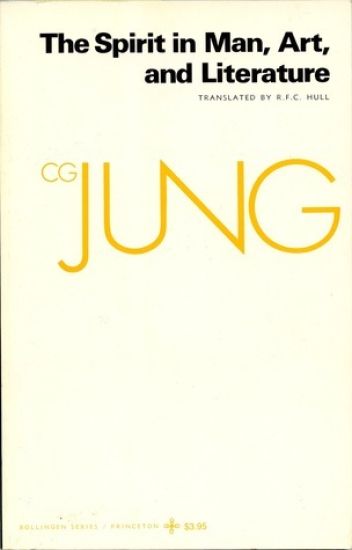
Nine essays, written between 1922 and 1941, on Paracelsus, Freud, Picasso, the sinologist Richard Wilhelm, Joyce's Ulysses, artistic creativity generally, and the source of artistic creativity in archetypal structures.
This volume has become known as perhaps the best introduction to Jung's work. In these famous essays. "The Relations between the Ego and the Unconscious" and "On the Psychology of the Unconscious," he presented the essential core of his system. Historically, they mark the end of Jung's intimate association with Freud and sum up his attempt to integrate the psychological schools of Freud and Adler into a comprehensive framework. This is the first paperback publication of this key work in its revised and augmented second edition of 1966. The earliest versions of the Two Essays, "New Paths in Psychology" (1912) and "The Structure of the Unconscious" (1916), discovered among Jung's posthumous papers, are published in an appendix, to show the development of Jung's thought in later versions. As an aid to study, the index has been comprehensively expanded.
Carl Gustav Jung, the great Swiss psychologist, who died in 1961 in his eighty-sixth year, was a profound thinker of extraordinary creativity. In the course of his medical practice he reflected deeply on human nature and human problems, and his prolific writings bear witness to his great wisdom and insight. For this completely revised edition, selections from publications of the years 1945-1961, the last fruitful years of Jung's life, have been added, and the book has been reset in a new compact format. The selections are arranged thematically under four main headings: The Nature and Activity of the Psyche, Man in His Relation to Others, The World of Values, and On Ultimate Things.Jung's reflections frequently have a penetrating relevance to today's (and tomorrow's) problems. On prejudice: "Our unwillingness to see our own faults and the projection of them is the beginning of most quarrels, and is the strongest guarantee that injustice, animosity, and persecution are not ready to die out." On sex: "We are not yet far enough advanced to distinguish between moral and immoral behavior in the realm of free sexual activity." On religion: "No one can know what the ultimate things are. We must therefore take them as we experience them. And if such experience helps to make life healthier, more beautiful, more complete, and more satisfactory to yourself and to those you love, you may safely say: 'This was the grace of God.'"
One of the most important of Jung's longer works, and probably the most famous of his books, Psychological Types appeared in German in 1921 after a "fallow period" of eight years during which Jung had published little. He called it "the fruit of nearly twenty years' work in the domain of practical psychology," and in his autobiography he wrote: "This work sprang originally from my need to define the ways in which my outlook differed from Freud's and Adler's. In attempting to answer this question, I came across the problem of types; for it is one's psychological type which from the outset determines and limits a person's judgment. My book, therefore, was an effort to deal with the relationship of the individual to the world, to people and things. It discussed the various aspects of consciousness, the various attitudes the conscious mind might take toward the world, and thus constitutes a psychology of consciousness regarded from what might be called a clinical angle." In expounding his system of personality types Jung relied not so much on formal case data as on the countless impressions and experiences derived from the treatment of nervous illnesses, from intercourse with people of all social levels, "friend and foe alike," and from an analysis of his own psychological nature. The book is rich in material drawn from literature, aesthetics, religion, and philosophy. The extended chapters that give general descriptions of the types and definitions of Jung's principal psychological concepts are key documents in analytical psychology.
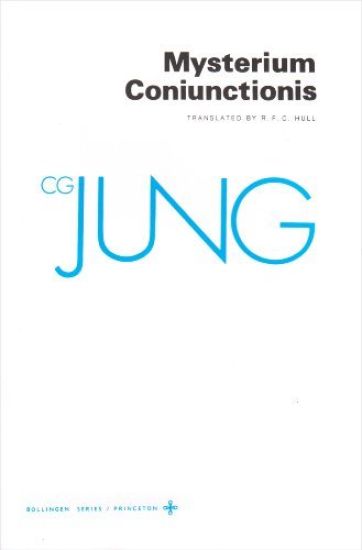
The great psychologist provides a detailed account of the problems of philosophical alchemy and its central endeavor and symbols, relating them to his own psychological discoveries
Over one hundred forty items, representative of Jung's interests and professional activities and spanning sixty years, include lectures, forewords, reviews, articles, and letters