

Kirjahaku
Etsi kirjoja tekijän nimen, kirjan nimen tai ISBN:n perusteella.
1000 tulosta hakusanalla Chelsea Chadder


Every woman who has lived on this farm has died. Emily just moved in. When Emily Hauk's mother dies, it's time for her and her husband, Josh, to finally leave San Francisco. A farm in rural Nebraska is everything they want for a fresh start: clear skies, low costs, and distance from the grief back home.They should have asked why the farm was for sale. Three years ago, a teenage girl went missing from the farm. Soon after, the girl's mother mysteriously died. The deeper Emily digs, the more stories she finds of women with a connection to her new home who've met their own dark ends.The farmhouse was meant to be Emily's fresh start, but with each passing day, her sanctuary slips further away. The barn seems to move throughout her property, as though chasing her. Her mother's favorite music drifts across the corn. She swears she saw blood in one of the farmhand's trucks. And the screams that wake her are not foxes, no matter how many times her husband says otherwise.Despite Josh's skepticism, Emily feels the darkness that has seeped into the soil of her farm. And if she wants to claim this place as her own, she'll have to find the truth before whatever watches from the cornfield takes her too.

“Will shock and delight readers at every page.” – Ava Morgyn, author of The Witches of Bone HillTrue magic is found among the bluebells and brambles in Chelsea Iversen’s beautiful second novel: a cosy historical fantasy that illuminates one Victorian woman’s inner magic.***A woman alone is a force of nature…Harriet Hunt is completely alone. Her father disappeared months ago, leaving her to wander the halls of Sunnyside house, dwelling on a past she’d rather keep buried. She doesn’t often venture beyond her front gate, instead relishing the feeling of dirt under her fingernails and soft moss beneath her feet. Consequently, she’s been deemed a little too peculiar for popular Victorian society. This solitary life suits her fine, though – because, outside, magic awaits.Harriet’s garden is special. It’s a wild place full of twisting ivy, vibrant plums, and a quiet power that buzzes like bees. Caring for this place and keeping it from running rampant through the streets of her London suburb is Harriet’s purpose.But a woman alone in the world is vulnerable. Soon, a sinister plot involving her father’s disappearance begins to take shape, with Harriet herself at its centre. Everything she holds dear – from the thorny roses she tends to her very freedom itself – is at stake. To save herself, Harriet will have to unearth her past, discover the secrets of her garden, and finally embrace the wild magic inside of her.With a touch of magical realism and a hearty dose of mystery, this lush cosy fantasy from the author of The Witches at the End of the World further establishes Chelsea Iversen as a standout new voice in women’s fiction.TropesHistorical FictionCosy FantasyLush FantasyMagical RealismMagical MysteryAlso by Chelsea Iversen:The Witches at the End of the World
Spring: Connecting with God
Chelsea Simon; Sarah Simon; David Simon
Createspace Independent Publishing Platform
2011
nidottu

Harper Madigan: Junior High Private Eye
Chelsea M. Campbell
Createspace Independent Publishing Platform
2012
nidottu
7th grade detective Harper Madigan works alone. He doesn't need the vice principal assigning him a new partner to keep him in line, especially a stuffed-shirt wannabe-journalist.And he especially doesn't need his troublemaker ex-girlfriend showing up out the blue and asking for his help. She's accused of attacking the star of the school musical, and with her less-than-sparkling track record, she's only one suspension away from getting expelled.Only Harper believes she's innocent, and now it's up to him to prove it, even if it means making an enemy of the PTA mafia, risking his agency, and facing the mistakes of his own dark past. But when his new partner insists on doing everything by the book, and his old nemesis-the one bully he can't catch-starts harassing his clients, it's going to take more than just detective work to solve the case.Praise for Chelsea M. Campbell's The Rise of Renegade X: "Damien's voice is snarky and delightful; get ready to cheer for a new type of hero."--Julie Kagawa, New York Times Best-Selling author of THE IRON FEY series."A witty tale that older teens will appreciate."--PUBLISHERS WEEKLY

The New York Times bestselling author of Heartsickmoves to S&S with an utterly gripping new series.
A thrilling page-turner, perfect for fans of Riverdale, One of Us is Lying and A Good Girl's Guide to Murder. Tell the truth. Or face the consequences. One year ago, there was a party. At the party, someone died.Five teens all played a part and up until now, no one has told the truth. But tonight, the five survivors arrive at an isolated mansion in the hills, expecting to compete in a contest with a $50,000 grand prize. But of course . . . some things are too good to be true. They realize they’ve been lured together by a revenge seeker who wants to unravel the truth about what actually happened that deadly night, one year ago. Five arrived, but not all can leave. Will the truth set them free?Or will their lies destroy them all? Praise for This Lie Will Kill You: 'The story . . . was dark and full of conflict and passion and so many twists. No one is who they seem and everything was captivating' NetGalley user 'Definitely keeps you on your toes' NetGalley user 'This book kept me hooked from the start' NetGalley user

From the author of bestselling THIS LIE WILL KILL YOU comes another unputdownable thriller about a group of friends who will do anything to protect each other. Even murder.... Perfect for fans of RIVERDALE meets ONE OF US IS LYING.
A groundbreaking exploration of the parental brain that untangles insidious myths from complicated realities, MOTHER BRAIN explodes the concept of 'maternal instinct' and tells a new story about what it means to become a parent
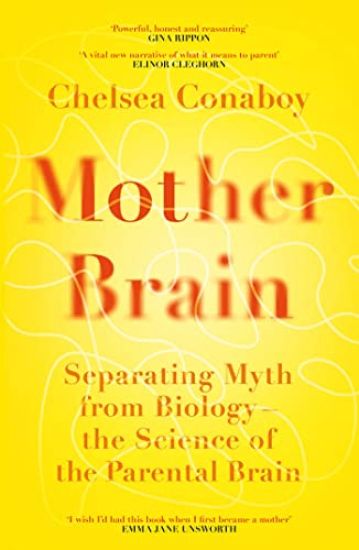
'Promises a new route through the parenting wilds' Sunday Times'Powerful, honest and reassuring' Professor Gina Rippon'A vital new narrative . . . Meticulously researched, compelling and compassionate' Elinor Cleghorn'A compelling book that upends popular notions about becoming a parent . . . reminds us why scientific research is a feminist issue' New Stateman'I wish I'd had this book when I first became a mother' Emma Jane UnsworthNew parents undergo major structural and functional brain changes, driven by hormones and the deluge of stimuli a baby provides. These neurobiological changes help all parents - birthing or otherwise - learn how to meet their child's needs. Yet this emerging science is mostly absent from the public conversation about parenthood. Untangling insidious myths from complicated realities, Chelsea Conaboy reveals that the story that exists in the science today is far more meaningful than the idea that mothers spring into being by instinct. Weaving the latest neuroscience and social psychology together with new reporting, she uncovers unexpected upsides, generations of scientific neglect and an empowering new narrative of parenthood.
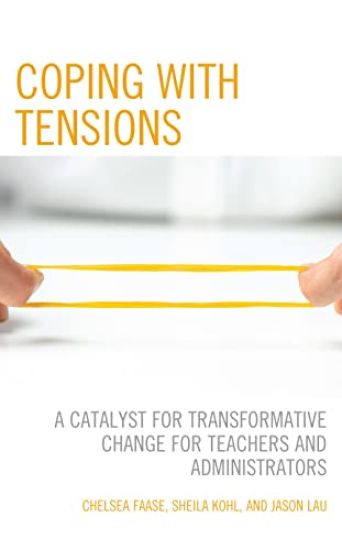
Education is a profession filled with tension. Pressures to help students achieve their potential come from all directions: political, parents, students, teachers, administrators, interpersonal, and intra-personal. The tensions experienced can result in two distinct paths. The first path may take teachers and administrators toward feelings of bewilderment, exhaustion, frustration, and ultimately burnout. The second path can result in rejuvenation. When on this path, tension can serve as a catalyst for change, improved communication, and improved student engagement and achievement. Coping With Tensions: A Catalyst for Transformative Change for Teachers and Administrators explores why some teachers, school leaders, and school organizations walk the path of bewilderment and disillusionment, while others choose the path of engagement.
Education is a profession filled with tension. Pressures to help students achieve their potential come from all directions: political, parents, students, teachers, administrators, interpersonal, and intra-personal. The tensions experienced can result in two distinct paths. The first path may take teachers and administrators toward feelings of bewilderment, exhaustion, frustration, and ultimately burnout. The second path can result in rejuvenation. When on this path, tension can serve as a catalyst for change, improved communication, and improved student engagement and achievement. Coping With Tensions: A Catalyst for Transformative Change for Teachers and Administrators explores why some teachers, school leaders, and school organizations walk the path of bewilderment and disillusionment, while others choose the path of engagement.

In the 1960s, a new generation of university-educated youth in Japan challenged forms of capitalism and the state. In Coed Revolution Chelsea Szendi Schieder recounts the crucial stories of Japanese women's participation in these protest movements led by the New Left through the early 1970s. Women were involved in contentious politics to an unprecedented degree, but they and their concerns were frequently marginalized by men in the movement and the mass media, and the movement at large is often memorialized as male and masculine. Drawing on stories of individual women, Schieder outlines how the media and other activists portrayed these women as icons of vulnerability and victims of violence, making women central to discourses about legitimate forms of postwar political expression. Schieder disentangles the gendered patterns that obscured radical women's voices to construct a feminist genealogy of the Japanese New Left, demonstrating that student activism in 1960s Japan cannot be understood without considering the experiences and representations of these women.

In the 1960s, a new generation of university-educated youth in Japan challenged forms of capitalism and the state. In Coed Revolution Chelsea Szendi Schieder recounts the crucial stories of Japanese women's participation in these protest movements led by the New Left through the early 1970s. Women were involved in contentious politics to an unprecedented degree, but they and their concerns were frequently marginalized by men in the movement and the mass media, and the movement at large is often memorialized as male and masculine. Drawing on stories of individual women, Schieder outlines how the media and other activists portrayed these women as icons of vulnerability and victims of violence, making women central to discourses about legitimate forms of postwar political expression. Schieder disentangles the gendered patterns that obscured radical women's voices to construct a feminist genealogy of the Japanese New Left, demonstrating that student activism in 1960s Japan cannot be understood without considering the experiences and representations of these women.

2021 Outstanding Academic Title, Choice Magazine Turns to the written record to re-examine the building blocks of a nation Picking up where most historians conclude, Chelsea Stieber explores the critical internal challenge to Haiti's post-independence sovereignty: a civil war between monarchy and republic. What transpired was a war of swords and of pens, waged in newspapers and periodicals, in literature, broadsheets, and fliers. In her analysis of Haitian writing that followed independence, Stieber composes a new literary history of Haiti, that challenges our interpretations of both freedom struggles and the postcolonial. By examining internal dissent during the revolution, Stieber reveals that the very concept of freedom was itself hotly contested in the public sphere, and it was this inherent tension that became the central battleground for the guerre de plume—the paper war—that vied to shape public sentiment and the very idea of Haiti. Stieber's reading of post-independence Haitian writing reveals key insights into the nature of literature, its relation to freedom and politics, and how fraught and politically loaded the concepts of "literature" and "civilization" really are. The competing ideas of liberté, writing, and civilization at work within postcolonial Haiti have consequences for the way we think about Haiti's role—as an idea and a discursive interlocutor—in the elaboration of black radicalism and black Atlantic, anticolonial, and decolonial thought. In so doing, Stieber reorders our previously homogeneous view of Haiti, teasing out warring conceptions of the new nation that continued to play out deep into the twentieth century.

2021 Outstanding Academic Title, Choice Magazine Turns to the written record to re-examine the building blocks of a nation Picking up where most historians conclude, Chelsea Stieber explores the critical internal challenge to Haiti's post-independence sovereignty: a civil war between monarchy and republic. What transpired was a war of swords and of pens, waged in newspapers and periodicals, in literature, broadsheets, and fliers. In her analysis of Haitian writing that followed independence, Stieber composes a new literary history of Haiti, that challenges our interpretations of both freedom struggles and the postcolonial. By examining internal dissent during the revolution, Stieber reveals that the very concept of freedom was itself hotly contested in the public sphere, and it was this inherent tension that became the central battleground for the guerre de plume—the paper war—that vied to shape public sentiment and the very idea of Haiti. Stieber's reading of post-independence Haitian writing reveals key insights into the nature of literature, its relation to freedom and politics, and how fraught and politically loaded the concepts of "literature" and "civilization" really are. The competing ideas of liberté, writing, and civilization at work within postcolonial Haiti have consequences for the way we think about Haiti's role—as an idea and a discursive interlocutor—in the elaboration of black radicalism and black Atlantic, anticolonial, and decolonial thought. In so doing, Stieber reorders our previously homogeneous view of Haiti, teasing out warring conceptions of the new nation that continued to play out deep into the twentieth century.
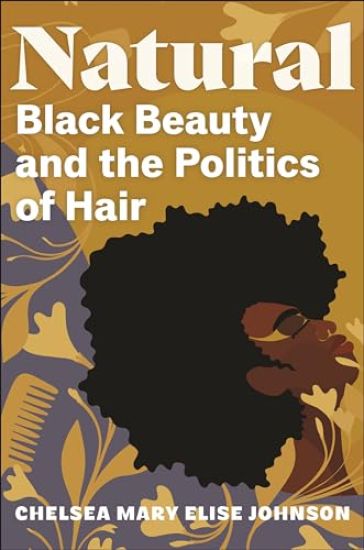
Finalist, 2025 PROSE Awards: Media and Cultural Studies How Black women celebrate their natural hair and uproot racialized beauty standards Hair is not simply a biological feature; it's a canvas for expression. Hair can be cut, colored, dyed, covered, gelled, waxed, plucked, lasered, dreadlocked, braided, and relaxed. Yet, its significance extends beyond mere aesthetics. Hair can carry profound moral, spiritual, and cultural connotations, serving as a reflection of one's beliefs, heritage, and even political stance. In Natural, Chelsea Mary Elise Johnson delves into the complex world surrounding Black women's hair, and offers a firsthand look into the kitchens, beauty shops, conventions, and blogs that make up the twenty-first century natural hair movement, the latest evolution in Black beauty politics. Johnson shares her own hair story and amplifies the voices of women across the globe who, after years of chemically relaxing their hair, return to a "natural" style. Johnson describes how many women initially transition to natural hair out of curiosity or as a wellness practice but come to view their choice as political upon confronting personal insecurities and social stigma, both within and outside of the Black community. She also investigates "natural hair entrepreneurs," who use their knowledge to create lucrative and socially transformative haircare ventures. Distinct from a politics of respectability or Afrocentricity, Johnson's argument is that today's natural hair movement advances a politics of authenticity. She offers "going natural" as a practice of self-love and acceptance; a critique of exclusionary economic arrangements and an exploitative beauty industry; and an act of anti-racist political resistance. Natural powerfully illustrates how the natural hair movement is part of a larger social change among Black women to assert their own purchasing power, standards of beauty, and bodily autonomy.