Kirjojen hintavertailu. Mukana 11 244 527 kirjaa ja 12 kauppaa.

Kirjahaku

Etsi kirjoja tekijän nimen, kirjan nimen tai ISBN:n perusteella.

747 tulosta hakusanalla Cherokee Randolph

Texas Cherokees 1820-1839
Even though the Trail of Tears was approximately seventeen years away, the Eastern Cherokee were feeling the pressure of white settlers and an American government wanting them out of their way in the east. A large following of Cherokee led by Chief Richard Fields and Chief Bowles migrated to Texas in 1819 after a short stopover in Arkansas. The Cherokee eventually established a settlement near present-day Nacogdoches, Texas. The Cherokee first petitioned the Spanish government for permanent residence and then following their war for independence the newly minted Mexican government. Similarly, they'd eventually make the same request with the independent Republic of Texas and then again with the State of Texas. Following the same agreement in good faith with each separate entity not one of them followed through with their promises. This also included the Treaty of February 23, 1836, negotiated with then Texas president Sam Houston and still the Cherokee were driven off their Texas land in 1839. The complete contents of Fields' account of the Texas Cherokee history from 1820-1839 was brought to light and transcribed for publication, complete with affidavits and illustrations. In addition to quoting sources, documenting the agreements or understandings between the Texas Cherokee and succeeding governments in question, this compilation includes a number of newspaper articles published in connection with the suit. Containing illustrations of Chief Bowles and other personalities involved in this history. In addition, you can also find the Fields' Cherokee genealogy through actual documentation connecting the Lawyer and the Chief who loved his people. There is also a full name index with all the persons mentioned both white and Cherokee which reads like a forgotten saga of a people just looking for a place to call home.
Champions of the Cherokees

Champions of the Cherokees

William G. McLoughlin

Princeton University Press
2014
pokkari
Champions of the Cherokees is the story of two extraordinary Northern Baptist missionaries, father and son, who lived with the Cherokee Indians from 1821 to 1876. Told largely in the words of these outspoken and compassionate men, this is also a narrative of the Cherokees' sufferings at the hands of the United States government and white frontier dwellers. In addition, it is an analysis of the complexity of interracial relations in the United States, for the Cherokees adopted the white man's custom of black chattel slavery. This fascinating biography reveals the unusual extent to which Evan and John B. Jones challenged prevailing federal Indian policies: unlike most other missionaries, they supported the Indians' right to retain their own identity and national autonomy. William McLoughlin vividly describes the "trail of tears" over which the Cherokees and Evan Jones traveled eight hundred miles through the dead of winter--from Georgia, Alabama, Tennessee, and North Carolina to a new home in Oklahoma. He examines the difficulties that Jones encountered when, alone among all the missionaries, he expelled Cherokee slaveholders from his mission churches. This book depicts the Joneses' experiences during the Civil War, including their chaplaincy of two Cherokee regiments who fought with the Northern side. Finally, McLoughlin tells how these "champions of the Cherokees" were adopted into the Cherokee nation and helped them fight detribalization. Originally published in 1990. The Princeton Legacy Library uses the latest print-on-demand technology to again make available previously out-of-print books from the distinguished backlist of Princeton University Press. These editions preserve the original texts of these important books while presenting them in durable paperback and hardcover editions. The goal of the Princeton Legacy Library is to vastly increase access to the rich scholarly heritage found in the thousands of books published by Princeton University Press since its founding in 1905.
Champions of the Cherokees

Champions of the Cherokees

William G. McLoughlin

Princeton University Press
2016
sidottu
Champions of the Cherokees is the story of two extraordinary Northern Baptist missionaries, father and son, who lived with the Cherokee Indians from 1821 to 1876. Told largely in the words of these outspoken and compassionate men, this is also a narrative of the Cherokees' sufferings at the hands of the United States government and white frontier dwellers. In addition, it is an analysis of the complexity of interracial relations in the United States, for the Cherokees adopted the white man's custom of black chattel slavery. This fascinating biography reveals the unusual extent to which Evan and John B. Jones challenged prevailing federal Indian policies: unlike most other missionaries, they supported the Indians' right to retain their own identity and national autonomy. William McLoughlin vividly describes the "trail of tears" over which the Cherokees and Evan Jones traveled eight hundred miles through the dead of winter--from Georgia, Alabama, Tennessee, and North Carolina to a new home in Oklahoma. He examines the difficulties that Jones encountered when, alone among all the missionaries, he expelled Cherokee slaveholders from his mission churches. This book depicts the Joneses' experiences during the Civil War, including their chaplaincy of two Cherokee regiments who fought with the Northern side. Finally, McLoughlin tells how these "champions of the Cherokees" were adopted into the Cherokee nation and helped them fight detribalization. Originally published in 1990. The Princeton Legacy Library uses the latest print-on-demand technology to again make available previously out-of-print books from the distinguished backlist of Princeton University Press. These editions preserve the original texts of these important books while presenting them in durable paperback and hardcover editions. The goal of the Princeton Legacy Library is to vastly increase access to the rich scholarly heritage found in the thousands of books published by Princeton University Press since its founding in 1905.
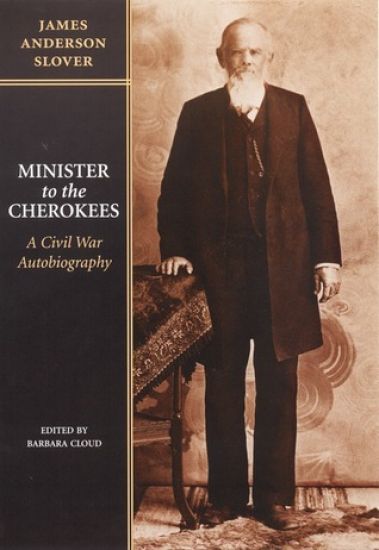
Minister to the Cherokees

Minister to the Cherokees

James Anderson Slover

University of Nebraska Press
2001
sidottu
In 1857 James Anderson Slover rode into Indian Territory as the first Southern Baptist missionary to the Cherokee Nation. As the Civil War began to divide the Cherokees along with the rest of the nation, Slover was caught up in one of the most intense dramas of his century. As a farmer, teacher, preacher and evangelist, observer of the Mexican War and the Civil War, contemporary commentator on slavery, and California pioneer, Slover played a small role in changing the face of the nation. It was in 1907, a year after he helped build shelters for people left homeless by the great San Francisco earthquake, that he began composing a record of his eventful life. The resulting book is a wonderful gift to any reader curious about the life and culture of nineteenth-century America. Slover tells of flatboating down rivers from Tennessee to Arkansas, "skedaddling" from the Union army in Indian Territory, and working his way up the West Coast to Oregon, preaching the gospel as he went and carving a new life for himself and his family time after time. His autobiography, encompassing eighty-three years of his life and spanning most of a century, gives us a vivid picture of a lost world and of how it was experienced by an ordinary man in extraordinary times.
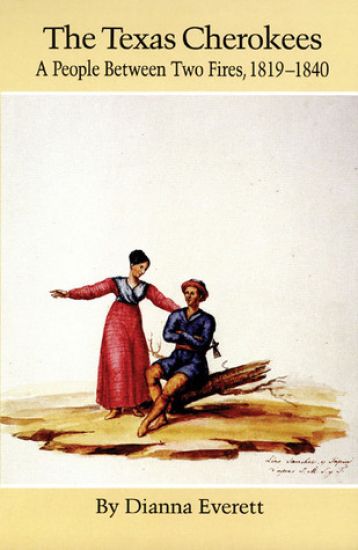
The Texas Cherokees

The Texas Cherokees

Dianna Everett

University of Oklahoma Press
1995
nidottu
In 1819 to 1820 several hundred Cherokees-led by Duwali, a chief from Tennessee-settled along the Sabine, Neches, and Angelina rivers in east Texas. Welcomed by Mexico as a buffer to U.S. settlement, Duwali's people had separated from other Western Cherokees in an effort to retain the tribe's traditional lifeways. As Dianne Everett details in The Texas Cherokees, they found themselves ""caught between two fires"" in many respects: between the Cherokee ideal of harmony and the reality of factionalism, between white settlers pushing westward and western Indians resisting incursions, and between traditional ways and the practical necessity of accommodating to whites.
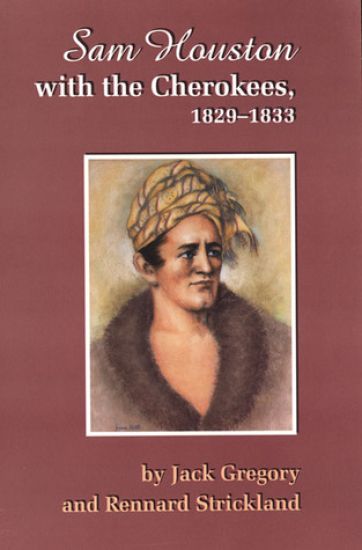
Sam Houston with the Cherokees, 1829-1833

Sam Houston with the Cherokees, 1829-1833

Rennard Strickland; Jack Gregory

University of Oklahoma Press
1996
nidottu
This is a lively effort to pierce the thick fog of Falsehood, calumny, ignorance, and legend surrounding the four years Sam Houston spent among the Cherokees in what is now northeastern Oklahoma, the broken years in Tennessee, and his advent in Texas on the eve of the War for Independence.-Virginia Quarterly Review
The Confederate Cherokees

The Confederate Cherokees

W. Craig Gaines

Louisiana State University Press
1992
nidottu
Although many Indian nations fought in the Civil War, historians have given little attention to the role Native Americans played in the conflict. Indian nations did, in fact, suffer a higher percentage of casualties than any Union or Confederate state, and the war almost destroyed the Cherokee Nation. In The Confederate Cherokees, W. Craig Gaines provides an absorbing account of the Cherokees' involvement in the early years of the Civil War, focusing in particular on the actions of one group, John Drew's Regiment of Mounted Rifles.As the war began, The Cherokees were torn by internal political dissension and a simmering thirty-year-old blood feud. Entry into the war on the Confederate side did little to resolve these intratribal tensions. One faction, loyal to Chief John Ross, formed a regiment led by John Drew, Ross's nephew by marriage. Another regiment was formed by Ross's rival, Stand Watie. The Watie regiment was largely por-Confederate, whereas many of Drew's soldiers, though fighting for the Confederate cause, were secretly members of a pro-Union, antislavery society known as the Keetoowahs. They had little sympathy for the southern whites, who had driven them from their ancestral homelands in Alabama, Georgia, North Carolina, Kentucky, and Tennessee. Drew's regiment nonetheless earned a degree of infamy during the Battle of Pea Ridge, in Arkansas, for scalping Union soldiers. Gaines writes not only about the actions of Drew's regiment but about military events in the Indian Territory in general. United action was almost impossible because of continuing factionalism within the tribes and the desertion of many Indians to the Union forces. Desertion was so high that Drew's regiment was effectively disbanded by mid-1862, and the soldiers did not complete their one-year enlistment. Drew's regiment bears the distinction of being the only Confederate regiment to lose almost its entire membership through desertion to the Union ranks. Gaines's solidly researched, ground-breaking history of this ill-fated band of Cherokees will be of interest to Civil War buffs and students of Native American history alike.
The Confederate Cherokees

The Confederate Cherokees

W. Craig Gaines

Louisiana State University Press
2017
nidottu
Although many Indian nations fought in the Civil War, general history often underrepresents the role of Native Americans in the conflict. Indian nations did, in fact, suffer a higher percentage of casualties than any Union or Confederate state, and the war almost destroyed the Cherokee Nation. In The Confederate Cherokees, W. Craig Gaines provides an absorbing account of the Cherokees' involvement in the early years of the Civil War, focusing in particular on the actions of one group, John Drew's Regiment of Mounted Rifles.By the time the Civil War began, internal political dissension tore at the solidarity of the Cherokee tribe and a simmering thirty-year-old blood feud threatened to drive an even deeper divide. Entry into the war on the Confederate side intensified these intratribal tensions and ultimately two distinct factions emerged. One faction, loyal to Chief John Ross and led by John Drew- Ross's nephew by marriage- formed a regiment. Another unit rallied around Ross's rival, Stand Watie. The Watie regiment was largely pro-Confederate, whereas many of Drew's soldiers, though fighting for the Confederate cause, secretly allied with a pro-Union, antislavery society known as the Keetoowahs. They had little sympathy for the southern whites, who had driven them from their ancestral homelands in Alabama, Georgia, North Carolina, Kentucky, and Tennessee. Drew's regiment nonetheless earned a degree of infamy during the Battle of Pea Ridge, in Arkansas, for scalping Union soldiers.Gaines unfolds the history of Drew's regiment amid a larger narrative of military events within the Indian Territory. United action, as he shows, proved almost impossible because of continuing factionalism within the tribes and the desertion of many Native Americans to the Union forces. Indeed, Drew's regiment, effectively disbanded by mid-1862, bears the distinction of being the only Confederate regiment to lose almost its entire membership through desertion to the Union ranks.
Eastern Band of Cherokees

Eastern Band of Cherokees

John R. Finger

University of Tennessee Press
1984
nidottu
This volume presents the story of the Eastern Band of Cherokees during the nineteenth century. This group – the tribal remnant in North Carolina that escaped removal in the 1830’s – found their fortitude and resilience continually tested as they struggled with a variety of problems, including the upheavals of the Civil War and Reconstruction, internal divisiveness, white encroachment on their lands, and a poorly defined relationship with the state and federal governments. Yet despite such stresses and a selective adaptation in the face of social and economic changes, the Eastern Cherokees retained a sense of tribal identity as they stood at the threshold of the twentieth century.
Footsteps of the Cherokees

Footsteps of the Cherokees

Vicki Rozema

John F Blair Publisher
2007
pokkari
The presence of the once-powerful Cherokees is still evident throughout the southeastern United States in names like Chickamauga, Hiwassee, Chattahoochee, Unicoi, Oconee, and Tuscaloosa. For those interested in learning more about the rich heritage of the Cherokees by visiting their historic sites, the second edition of Vicki Rozema’s Footsteps of the Cherokees: A Guide to the Eastern Homelands of the Cherokee Nation is an excellent guide. In the early 1800s, the Cherokee Nation reached from western North Carolina to middle Tennessee, and south to northern Alabama, Georgia, and South Carolina. Then, in 1838, thousands of Cherokees were forced to leave their farmlands, homes, and sacred sites during that infamous trek to Oklahoma, the “Trail of Tears.” Rozema traveled over 4,000 miles and spent four years and close to 2,500 hours visiting, researching, and photographing the sites of the Cherokee Nation. Footsteps of the Cherokees is a guide to these scenic, cultural, and historic locations. The book is divided into two sections. In the overview, Rozema traces the history of the Cherokees from their prehistoric ancestors to their interaction and conflict with white explorers and settlers to stories of the few who remained behind after the forced march west. This information puts the 190 sites listed in the book into historical perspective. The second section focuses on the sites themselves. The sites are divided into nineteen areas named after central locations. The starting locations include Chattanooga, Knoxville and Maryville, Atlanta, the Blue Ridge Parkway, Great Smoky Mountains National Park, Northeast Georgia, Northwest Alabama, and South Carolina. The coverage of each site includes a discussion of the area’s history, background information, detailed directions, hours of operation, entrance fees, and important phone numbers. The book includes over 200 black-and-white photographs. Take an afternoon or weekend and travel back in time to the glory days of the Cherokee Nation. Whether in your car or favorite armchair, Footsteps of the Cherokees will take you to the great tribe’s hunting grounds, battlegrounds, sacred lands, homelands, birthplaces, and burial sites. Vicki Rozema is the author of Cherokee Voices: Early Accounts of Cherokee Life in the East and Voices from the Trail of Tears and Voices from the Trail of Tears. The first edition of Footsteps of the Cherokees received an Award of Merit from the Tennessee Historical Commission in 1996. Also an acclaimed photographer, she is a history professor at the University of Tennessee.
The Eastern Cherokees: How They Live Today, Their History
""The Eastern Cherokees: How They Live Today, Their History"" by J.L. Caton Publishing is a comprehensive book that delves into the lives and history of the Eastern Cherokee tribe. The book provides a detailed account of the tribe's origins, culture, and traditions, as well as their struggles and triumphs throughout history. The author discusses the impact of colonization and forced relocation on the Eastern Cherokee people, as well as their efforts to preserve their language and cultural heritage. The book also explores the tribe's current way of life, including their modern-day customs, beliefs, and practices.Through extensive research and interviews with members of the Eastern Cherokee community, the author provides a nuanced and insightful portrayal of this unique and resilient tribe. ""The Eastern Cherokees: How They Live Today, Their History"" is a valuable resource for anyone interested in Native American history and culture, as well as those seeking a deeper understanding of the challenges facing indigenous communities today.The Cherokee Indians Of The Qualla Reservation, Cherokee, North Carolina.This scarce antiquarian book is a facsimile reprint of the old original and may contain some imperfections such as library marks and notations. Because we believe this work is culturally important, we have made it available as part of our commitment for protecting, preserving, and promoting the world's literature in affordable, high quality, modern editions, that are true to their original work.