Kirjojen hintavertailu. Mukana 12 016 292 kirjaa ja 12 kauppaa.

Kirjahaku

Etsi kirjoja tekijän nimen, kirjan nimen tai ISBN:n perusteella.

1000 tulosta hakusanalla Clive Smallman

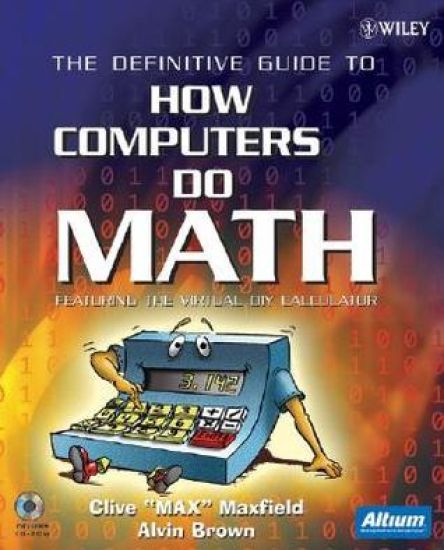
The Definitive Guide to How Computers Do Math

The Definitive Guide to How Computers Do Math

Clive Maxfield; Alvin Brown

John Wiley Sons Inc
2005
nidottu
The Basics of Computer Arithmetic Made Enjoyable and Accessible-with a Special Program Included for Hands-on Learning "The combination of this book and its associated virtual computer is fantastic! Experience over the last fifty years has shown me that there's only one way to truly understand how computers work; and that is to learn one computer and its instruction set-no matter how simple or primitive-from the ground up. Once you fully comprehend how that simple computer functions, you can easily extrapolate to more complex machines." -Fred Hudson, retired engineer/scientist "This book-along with the virtual DIY Calculator-is an incredibly useful teaching and learning tool. The interesting trivia nuggets keep you turning the pages to see what's next. Students will have so much fun reading the text and performing the labs that they won't even realize they are learning." -Michael Haghighi, Chairperson of the Business and Computer Information Systems Division, Calhoun Community College, Alabama "At last, a book that presents an innovative approach to the teaching of computer architecture. Written with authority and verve, witty, superbly illustrated, and enhanced with many laboratory exercises, this book is a must for students and teachers alike." -Dr. Albert Koelmans, Lecturer in Computer Engineering, University of Newcastle upon Tyne, UK, and the 2003 recipient of the EASIT-Eng. Gold Award for Innovative Teaching in Computer Engineering Packed with nuggets of information and tidbits of trivia, How Computers Do Math provides an incredibly fun and interesting introduction to the way in which computers perform their magic in general and math in particular. The accompanying CD-ROM contains a virtual computer/calculator called the DIY Calculator, and the book's step-by-step interactive laboratories guide you in the creation of a simple program to run on your DIY Calculator. How Computers Do Math can be enjoyed by non-technical individuals; students of computer science, electronics engineering, and mathematics; and even practicing engineers. All of the illustrations and interactive laboratories featured in the book are provided on the CD-ROM for use by high school, college, and university educators as lecture notes and handouts. For online resources and more information please visit the author's website at www.DIYCalculator.com.
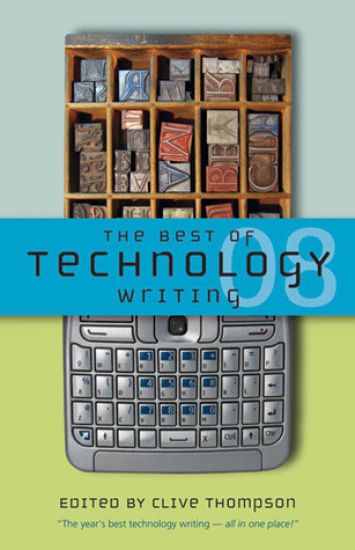
The Best of Technology Writing 2008

The Best of Technology Writing 2008

Clive Thompson

The University of Michigan Press
2008
nidottu
"No one covers technology with more insight or panache than Clive Thompson. I can't imagine anyone better qualified to curate this fascinating series."---Chris Anderson, editor in chief of Wired magazine and author of The Long Tail"Editor Clive Thompson suggests we are in a ‘golden age of technology journalism.' Reading this collection, one suspects he is right---it sparkles with beautifully written narratives not only about what technology can do for us but what it does to us as people, to our ways of thinking about ourselves, our relationships, and how we envisage our world."---Sherry Turkle, Director, MIT Initiative on Technology and Self, Massachusetts Institute of TechnologyThe Best of Technology Writing 2008 proves that technology writing is a bona fide literary genre with some of the most stylish, compelling, and just plain readable work in journalism today. The third volume in this annual series, The Best of Technology Writing 2008 covers a fascinating mix of topics---from a molecular gastronomist's recipe for the perfect gin and tonic; to "the Mechanism," an ancient Greek artifact that might be the world's first laptop computer; to social media, privacy, and what is possibly the biggest generation gap since rock 'n' roll.Featuring contributions fromTed Allen Michael Behar Caleb Crain Julian Dibbell Cory Doctorow David Glenn Thomas Goetz Charles Graeber Alex Hutchinson Walter Kirn Robin Mejia Emily Nussbaum Ben Paynter Jeffrey Rosen John Seabrook Cass R. Sunsteindigitalculturebooks is an imprint of the University of Michigan Press and the Scholarly Publishing Office of the University of Michigan Library dedicated to publishing innovative and accessible work exploring new media and their impact on society, culture, and scholarly communication. Visit the website at www.digitalculture.org.
Meditation for Beginners, Without the Woo-Woo: A Beginners Guide for the Everyday Person
"It feels good. Kinda like when you have to shut your computer down, just sometimes when it goes crazy, you just shut it down and when you turn it on, it's okay again. That's what meditation is to me." - Ellen DeGeneres, comedian, television host, actress, writer, and producer I was someone who was very skeptical of meditation. To be honest it seemed like it was a woo-woo practice. But what I have since found out is that meditation is not religious, for Buddhist or hippies. It is a crucial tool for sharpening the mind along with many other important benefits. After all, there is a reason that this wonderful tool has been around for millennia Science has been able to show again and again the multitude of benefits that meditation brings to the practitioner. And you can begin to experience these benefits for yourself, today What holds many people back are the many misconceptions about meditation. For example, the belief that meditation is an extremely difficult and reserved for the 'Zen Masters". While meditation is not easy, it certainly isn't complicated and with a bit of practice can be mastered by anyone. Bianca Beattie said the following after reading this book, "...I also loved the fact that it was easy enough to understand to the extent that I am considering meditation, I have always thought it to be too complicated." Another misperception is that meditation is just about sitting in a mindless zone. Not only is meditation active it also unleashes an incredible creativity and energy into your life. "I thought when I started meditation that I was going to get real calm and peaceful and it's going to be over. It's not that way; it's so energetic. That's where all the energy and creativity is." - David Lynch, film director, television director, visual artist, musician, actor, and author. What's is holding you back from experiencing the amazing benefits of meditation? This beginners guide for meditation is a great place for beginners to start. If you have ever thought about giving meditation a go, but you weren't sure where to start, then you have found the right resource In this book you will learn: -about some of the ultra successful people who use meditation -the 7 benefits of meditation -the mindset needed to be successful at meditating -you'll be given 7 meditation techniques -and walked through your first meditation -the 5 most common obstacles to meditation -you'll be shown some of the major types of meditation practices -answers to FAQ -and further resources to get assist you on your journey This short book is focused and to the point. It's written in an easy to read style that will engage you and give you the practical steps you need to get meditating TODAY You have an opportunity today to give yourself a gift that just keeps on giving "Meditation is a lifelong gift. It's something you can call on at any time. I think it's a great thing." Sir Paul McCartney, singer-songwriter, multi-instrumentalist, and composer. Download your copy of "Meditation For Beginners, Without the Woo-Woo" by scrolling up and clicking "Buy Now With 1-Click" button. DOWNLOAD YOUR COPY TODAY
Thinking Big

Thinking Big

Clive Gamble; John Gowlett; Robin Dunbar

Thames Hudson Ltd
2018
nidottu
When and how did the brains of our hominin ancestors become human minds? When and why did our capacity for language or art, music and dance evolve? It is the contention of this pathbreaking and provocative book that it was the need for early humans to live in ever-larger social groups, and to maintain social relations over ever-greater distances – the ability to ‘think big’ – that drove the enlargement of the human brain and the development of the human mind. This ‘social brain hypothesis’, put forward by evolutionary psychologists such as Robin Dunbar, one of the authors of this book, can be tested against archaeological and fossil evidence, as archaeologists Clive Gamble and John Gowlett show in the second part of Thinking Big. Along the way, the three authors touch on subjects as diverse and diverting as the switch from finger-tip grooming to vocal grooming or the crucial importance of making fire for the lengthening of the social day. As this remarkable book shows, it seems we still inhabit social worlds that originated deep in our evolutionary past – by the fireside, in the hunt and on the grasslands of Africa.
My Favorite Burgundies

My Favorite Burgundies

Clive Coates

University of California Press
2013
sidottu
In this book, Clive Coates, a Master of Wine who has spent four decades of his distinguished career in Burgundy, shares his vast insider's knowledge of one of the world's most exciting, complex, and intractable wine regions. Personal rather than encyclopedic, and informed by Coates' unparalleled access to regular, extensive tastings, this book imparts the author's philosophy and expertise as to how best approach, appreciate, and discuss the wines of Burgundy. Coates updates and supplements the domaine profiles featured in his two previous books, Cote D'Or and The Wines of Burgundy with new in-depth assessments of specific vineyards. Divided into three sections - Vineyard Profiles, Domaine Profiles, and Vintage Assessments - My Favorite Burgundies considers the leading vineyards and today's top estates, and features detailed maps and a wealth of tasting notes that reflect how the wine develops as it ages. Enlivened by Coates' singular, firsthand knowledge and precise descriptions, this is an indispensable guide for amateur and professional enophiles alike.
Structural Modeling and Analysis

Structural Modeling and Analysis

Clive L. Dym

Cambridge University Press
2005
pokkari
The study of structural analysis and design is a central subject in civil, aeronautical and mechanical engineering. This book presents a modern and unified introduction to structural analysis, with a strong emphasis on how structures actually behave. The unifying theme is the application of energy methods, developed without the formal mathematics of the calculus of variations. The energy approach makes it possible to articulate the logical relationship between equilibrium and compatibility; emphasise the unity of structural analysis, particularly for indeterminate structures; and identify the roles of idealization and discretization in structural modelling. Thus, energy methods also serve as a prelude to the main ideas behind modern computational approaches to structural analysis and design. As an aid to upper-level undergraduate students in mastering this material, the text includes numerous worked examples, as well as homework problems.
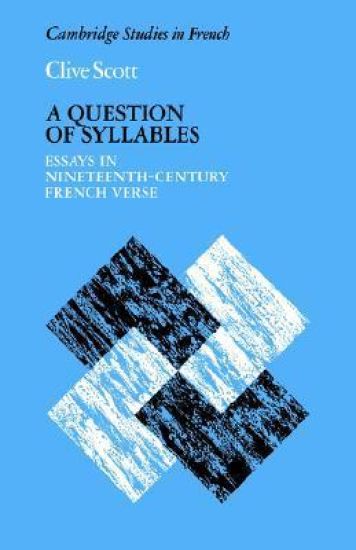
A Question of Syllables

A Question of Syllables

Clive Scott

Cambridge University Press
2005
pokkari
Dr Scott argues that only by attending to the precise locations of words in line or stanza, and to the specific value of syllables, or by understanding the often conflicting demands of rhythm and metre, can the reader of poetry acquire a real grasp of the intimate life of words in verse with all their fluctuations of meaning, mood and tone. The analyses through which the book pursues its argument address two principal concerns: the way in which syllabic position projects words and colours their complicated and challenged by the relationship of rhythm to metre.
The Eastern Association in the English Civil War

The Eastern Association in the English Civil War

Clive Holmes

Cambridge University Press
2007
pokkari
The Eastern Association has an assured place in any history of the Civil War. Within the region, early in 1643, Oliver Cromwell and his 'Iron-sides' first rose to prominence; in 1644 the seven constituent countries raised the force which, at Marston Moor, tipped the military balance decisively against the king, and was to become the major component in the New Model Army in 1645. Using a wide selection of original national and local archival materials, Dr Holmes seeks to provide an explanation of the impressive performance of the Association in the war. He emphasizes the need to combine studies which have too often been regarded as autonomous fields of enquiry - of military organization, of central politics, of the local communities - to obtain a total perspective.
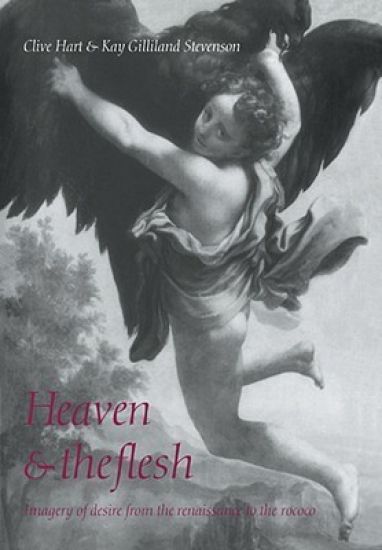
Heaven and the Flesh

Heaven and the Flesh

Clive Hart; Kay Gilliland Stevenson

Cambridge University Press
2008
pokkari
Do angels make love? Will the souls of ordinary people feel sexual pleasure in the next world? Is the aspiration to spiritual salvation helped or hindered by sexual experience? In Heaven and the Flesh Clive Hart and Kay Stevenson explore the opinions of poets and painters on such questions, from the high Renaissance to the birth of romanticism. Hart and Stevenson analyse the work not only of canonical writers and artists, such as Milton and Michelangelo, but also of lesser-known figures such as John Gore and Richard Tompson, and the sometimes anguished speculations of philosophers and theologians. As the evidence of witty pornographic poems and drawings demonstrates, the relationship between sexual desire and spiritual ascension was not always treated with full seriousness. This wide-ranging survey offers sometimes surprising insights into material both familiar and unfamiliar.
Liquid State Physics

Liquid State Physics

Clive A. Croxton

Cambridge University Press
2009
pokkari
First published in 1974, Dr Croxton's book takes the reader from a consideration of the early ways in which the kinetic theory of gases was modified and applied to the liquid state, through a classical thermodynamic approach, to the modern cluster-diagrammatic quantum and statistical mechanical techniques. He includes chapters on the development and numerical solution of the integral equations relating the atomic structure to the pair potential, on the nature of the liquid surface, on the computer simulation schemes and on transport processes and irreversibility in the liquid phase.
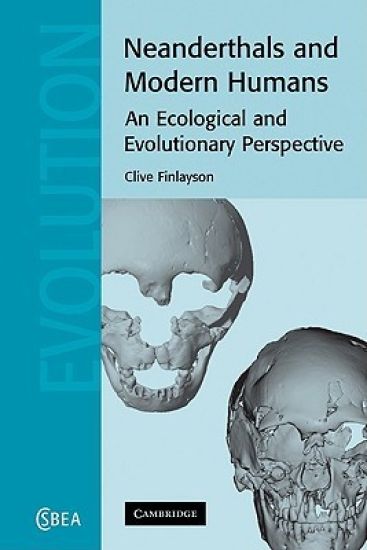
Neanderthals and Modern Humans

Neanderthals and Modern Humans

Clive Finlayson

Cambridge University Press
2009
pokkari
Neanderthals and Modern Humans develops the theme of the close relationship between climate change, ecological change and biogeographical patterns in humans during the Pleistocene. In particular, it challenges the view that Modern Human 'superiority' caused the extinction of the Neanderthals between 40 and 30 thousand years ago. Clive Finlayson shows that to understand human evolution, the spread of humankind across the world and the extinction of archaic populations, we must move away from a purely theoretical evolutionary ecology base and realise the importance of wider biogeographic patterns including the role of tropical and temperate refugia. His proposal is that Neanderthals became extinct because their world changed faster than they could cope with, and that their relationship with the arriving Modern Humans, where they met, was subtle.
Ephesus After Antiquity

Ephesus After Antiquity

Clive Foss

Cambridge University Press
2010
pokkari
Ephesus has had a fascinating and eventful history. Famous for its connections with Artemis, Heraclitus and St Paul, it is also one of the richest archaeological sites in the Mediterranean. Founded in the tenth century BC, it became, in the Hellenistic and Roman periods, the largest city and most important commercial centre in Asia Minor and continued in this role into Late Antiquity, where Professor Foss takes up its story. Professor Foss charts the fluctuations of Ephesus in all their aspects, religious, social, political and geographical, with extensive reference to many sources - historians, hagiographers, and travellers, as well as the rich archaeological evidence. The author's ability to visualise and convey what the city must have looked like at each stage, coupled with his strong narrative sense and varied choice of illustrations, will appeal to the general reader interested in Ephesus and to archaeologists, historians and those interested in church history.
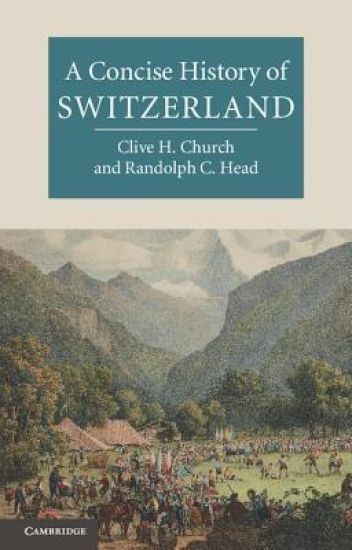
A Concise History of Switzerland

A Concise History of Switzerland

Clive H. Church

Cambridge University Press
2013
nidottu
Despite its position at the heart of Europe and its quintessentially European nature, Switzerland's history is often overlooked within the English-speaking world. This comprehensive and engaging history of Switzerland traces the historical and cultural development of this fascinating but neglected European country from the end of the Dark Ages up to the present. The authors focus on the initial Confederacy of the Middle Ages; the religious divisions which threatened it after 1500 and its surprising survival amongst Europe's monarchies; the turmoil following the French Revolution and conquest, which continued until the Federal Constitution of 1848; the testing of the Swiss nation through the late nineteenth century and then two World Wars and the Depression of the 1930s; and the unparalleled economic and social growth and political success of the post-war era. The book concludes with a discussion of the contemporary challenges, often shared with neighbours, that shape the country today.
French Verse-Art

French Verse-Art

Clive Scott

Cambridge University Press
2011
pokkari
This 1980 book is designed to help university students to master the technicalities and techniques of French verse. The author assumes that part of the difficulty encountered by readers derives from the need to approach French verse through English verse; this book undertakes, therefore, a differentiation of the two verse traditions. Dr Scott's concern is to provide the groundwork of a terminology, to discuss the origins and implications of that terminology, and to show how terminological knowledge can be translated into critical speculation about poetry. After three chapters which establish the essential features of the French line of verse and outline the difficulties the student is likely to encounter in trying to describe it and deal with it, the book moves on to consider rhyme, stanzas, verse forms and free verse.
PASS Othello Grade 12 English

PASS Othello Grade 12 English

Clive Jordaan

Cambridge University Press
2010
pokkari
PASS Othello with ease. This exam guide contains: • summaries of each act and scene • notes about the main characters • short paragraphs on important themes •quotable quotes • exam questions with answers Grade 12 Othello in a nutshell!
Conservation

Conservation

Clive Hambler; Susan M. Canney

Cambridge University Press
2013
pokkari
The importance of conservation is growing each year, with increasing concerns over the destruction of biodiversity and the rising awareness of ecosystem services generating new debates on the human-nature relationship. This compact overview integrates the process, theory and practice of conservation for a broad readership, from non-specialists to students and practitioners. Taking a global perspective, it uses examples from around the world to illustrate general themes and show how problems arise from the impact of societal trends on ecological communities. A significant practical component will be particularly valuable for environmental professionals, outlining the requirements for rigorous surveys, biodiversity valuation, the assessment of impact and its mitigation. Thoroughly revised and updated, this second edition reflects trends towards embracing multiple disciplines, considering the links between ecology and the social sciences and bringing conservation to the heart of sustainability and environmental policy.
A Concise History of Switzerland

A Concise History of Switzerland

Clive H. Church; Randolph C. Head

Cambridge University Press
2013
sidottu
Despite its position at the heart of Europe and its quintessentially European nature, Switzerland's history is often overlooked within the English-speaking world. This comprehensive and engaging history of Switzerland traces the historical and cultural development of this fascinating but neglected European country from the end of the Dark Ages up to the present. The authors focus on the initial Confederacy of the Middle Ages; the religious divisions which threatened it after 1500 and its surprising survival amongst Europe's monarchies; the turmoil following the French Revolution and conquest, which continued until the Federal Constitution of 1848; the testing of the Swiss nation through the late nineteenth century and then two World Wars and the Depression of the 1930s; and the unparalleled economic and social growth and political success of the post-war era. The book concludes with a discussion of the contemporary challenges, often shared with neighbours, that shape the country today.
French Verse-Art

French Verse-Art

Clive Scott

Cambridge University Press
1980
sidottu
This 1980 book is designed to help university students to master the technicalities and techniques of French verse. The author assumes that part of the difficulty encountered by readers derives from the need to approach French verse through English verse; this book undertakes, therefore, a differentiation of the two verse traditions. Dr Scott's concern is to provide the groundwork of a terminology, to discuss the origins and implications of that terminology, and to show how terminological knowledge can be translated into critical speculation about poetry. After three chapters which establish the essential features of the French line of verse and outline the difficulties the student is likely to encounter in trying to describe it and deal with it, the book moves on to consider rhyme, stanzas, verse forms and free verse.
A Question of Syllables

A Question of Syllables

Clive Scott

Cambridge University Press
1986
sidottu
Dr Scott argues that only by attending to the precise locations of words in line or stanza, and to the specific value of syllables, or by understanding the often conflicting demands of rhythm and metre, can the reader of poetry acquire a real grasp of the intimate life of words in verse with all their fluctuations of meaning, mood, and tone. The analyses through which the book pursues its argument address two principal concerns: the way in which syllabic position projects words and colours their complicated and challenged by the relationship of rhythm to metre.