Kirjahaku
Etsi kirjoja tekijän nimen, kirjan nimen tai ISBN:n perusteella.
815 tulosta hakusanalla Cohn A



Discusses aspects of being a pest control worker, offering information on training, daily activities, and the dangers of this occupation.

Erinnerungen eines Vaterlandslosen
Daniel Cohn-Bendit; Marion van Renterghem
Jacoby Stuart
2026
sidottu
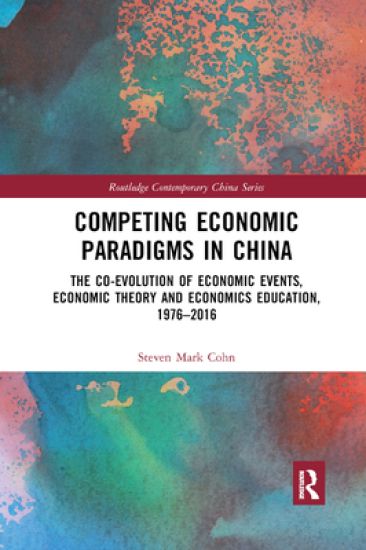
When the Chinese economic reforms began in 1978, Marxist economics infused all the institutions of economic theory in China, from academic departments and economics journals to government departments and economic think tanks. By the year 2000, neoclassical economics dominated these institutions and organized most economic discussion. This book explains how and why neoclassical economic theory replaced Marxist economic theory as the dominant economics paradigm in China. It rejects the idea that the rise of neoclassical theory was a triumph of reason over ideology, and instead, using a sociology of knowledge approach, links the rise of neoclassical economics to broad ideological currents and to the political-economic projects that key social groups inside and outside China wanted to enable. The book concludes with a discussion of the nature of economic theory and economics education in China today.
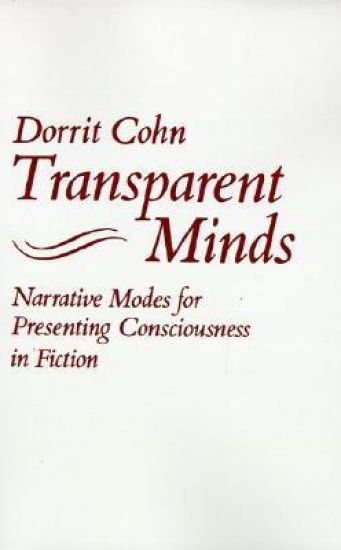
This book investigates the entire spectrum of techniques for portraying the mental lives of fictional characters in both the stream-of-consciousness novel and other fiction. Each chapter deals with one main technique, illustrated from a wide range of nineteenth- and twentieth-century fiction by writers including Stendhal, Dostoevsky, James, Mann, Kafka, Joyce, Proust, Woolf, and Sarraute.
The documents in this stimulating volume span from 1245 to 1424 but focus on the ‘contagion of rebellion' from 1355 to 1382 that followed in the wake of the plague. They comprise a diversity of sources and cover a variety of forms of popular protest in different social, political and economic settings. Their authors range across a wide political and intellectual horizon and include revolutionaries, the artistocracy, merchants and representatives from the church. They tell gripping and often gruesome stories of personal and collective violence, anguish, anger, terror, bravery, and foolishness. Of over 200 documents presented here, most have been translated into English for the first time, providing students and scholars with a new opportunity to compare social movements across Europe over two centuries, allowing a re-evaluation of pre-industrial revolts, the Black Death and its consequences for political culture and action.This book will be essential reading for those seeking to better understand popular attitudes and protest in medieval Europe.

The Boy in the Suitcase: Holocaust Family Stories of Survival is a uniquely different Holocaust book. It reads like an intriguing novel, such as the title chapter which tells the story of an infant smuggled out of Germany in a suitcase and raised in the Dominican Republic. Each chapter tells a different story of families throughout the world who have been affected by the Holocaust. This book also covers the trauma of second generation children of Holocaust survivors and the bravery of Christian families who hid Jewish children in Quaregnon, Belgium. The Boy in the Suitcase includes inspirational stories from nations such as Russia, Poland, France, Germany, Holland, Hungary, and the Dominican Republic. Intelligence, courage, and the will to survive permeate each remarkable chapter. Click here to view the book trailer!
This lively introduction to heterodox economics provides a balanced critique of the standard introductory macroeconomic curriculum. In clear and accessible prose, it explains many of the key principles that underlie a variety of alternative theoretical perspectives (including institutionalist economics, radical economics, Post Keynesian economics, feminist economics, ecological economics, Marxist economics, social economics, and socioeconomics). Because the book's structure parallels the chapters and subject matter presented in a typical introductory macroeconomics textbook, "Reintroducing Macroeconomics" provides readers with a running commentary on the standard approach, while simultaneously introducing them to a broader range of ideas about the causes and appropriate policy responses to a wide range of common economic problems. Although designed primarily as a companion volume for students in introductory economics courses, the book can also be used effectively for more targeted applications that highlight a particular economic issue or approach. It will be of particular interest to students in related disciplines (such as American Studies, anthropology, black studies, environmental studies, gender studies, history, political science, and sociology) who may be required to take introductory economics classes and who are interested in gaining an alternative perspective. By demonstrating the vitality and common ground underlying a broad spectrum of heterodox approaches, "Reintroducing Macroeconomics" brings alternative perspectives into the classroom in an accessible way that empowers students to think about the economy in new and exciting ways. The text includes end-of-chapter study questions, as well as a detailed note to instructors.
This lively introduction to heterodox economics provides a balanced critique of the standard introductory macroeconomic curriculum. In clear and accessible prose, it explains many of the key principles that underlie a variety of alternative theoretical perspectives (including institutionalist economics, radical economics, Post Keynesian economics, feminist economics, ecological economics, Marxist economics, social economics, and socioeconomics). Because the book's structure parallels the chapters and subject matter presented in a typical introductory macroeconomics textbook, "Reintroducing Macroeconomics" provides readers with a running commentary on the standard approach, while simultaneously introducing them to a broader range of ideas about the causes and appropriate policy responses to a wide range of common economic problems. Although designed primarily as a companion volume for students in introductory economics courses, the book can also be used effectively for more targeted applications that highlight a particular economic issue or approach. It will be of particular interest to students in related disciplines (such as American Studies, anthropology, black studies, environmental studies, gender studies, history, political science, and sociology) who may be required to take introductory economics classes and who are interested in gaining an alternative perspective. By demonstrating the vitality and common ground underlying a broad spectrum of heterodox approaches, "Reintroducing Macroeconomics" brings alternative perspectives into the classroom in an accessible way that empowers students to think about the economy in new and exciting ways. The text includes end-of-chapter study questions, as well as a detailed note to instructors.
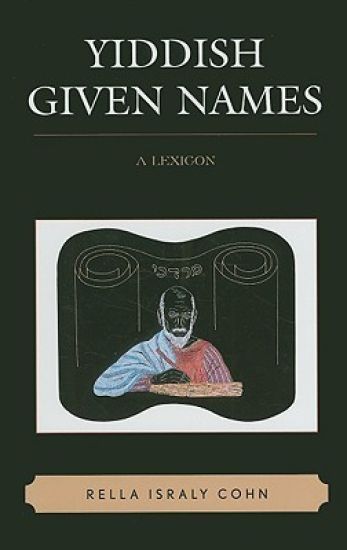
This important volume in onomastics, the study of names, presents a listing of Yiddish first names in the modern period: 1750 to the present day. Yiddish Given Names: A Lexicon resumes, collects, documents, and corrects the available body of research on Yiddish given names. It aims to establish the modern corpus and give the origins of the names therein. Rella Israly Cohn has amassed and preserved a number of names that have become extremely rare, almost to the point of disappearing, and correctly identified their sources using a number of works both commonly available and difficult to find. The book begins with preliminary material that orients the reader, explains technical terms and classifications, and describes the evolution of Yiddish names throughout their history. Following is the lexicon itself, which is comprised of over 250 names with variant forms and alphabetized according to the English transliteration. Each entry relates the Yiddish name to its source language, shows a source form, and gives the attestations of the name in its various forms in the earliest written works. Concluding with several appendixes that offer additional information and assist in reference and accessibility, this significant work will serve scholars in onomastics, linguistics, and Yiddish and will be of interest to both scholars and laypersons researching their family history or the cultural legacy of the Jewish community worldwide.
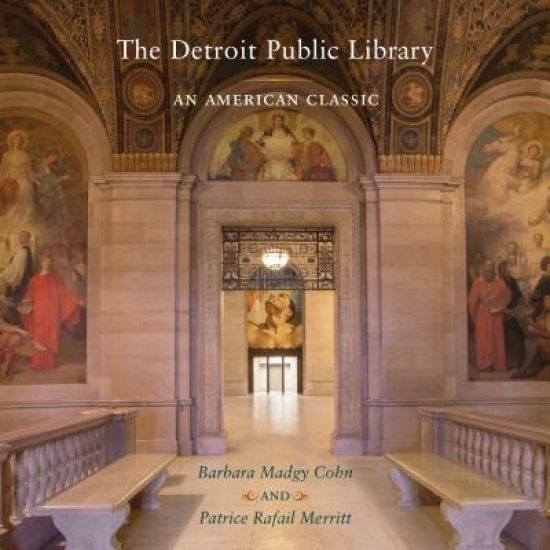
The Detroit Public Library
Barbara Madgy Cohn; Patrice Rafail Merritt
Wayne State University Press
2017
sidottu
A photographic tour of the Detroit Public Library’s rich art and architectural history.


Baal Shem Tov Faith Love Joy: Mystical Stories of the Legendary Kabbalah Master
Tzvi Meir Cohn
Bst Publishing
2010
nidottu

Baal Shem Tov Heart of Prayer: Treatise on Chassidic Supplication
Tzvi Meir Cohn
Bst Publishing
2010
nidottu