Kirjojen hintavertailu. Mukana 11 717 486 kirjaa ja 12 kauppaa.

Kirjahaku

Etsi kirjoja tekijän nimen, kirjan nimen tai ISBN:n perusteella.

1000 tulosta hakusanalla Conrad Mbewe

A Concordance to Conrad's The Rover

A Concordance to Conrad's The Rover

David Leon Higdon; Todd K. Bender

TAYLOR FRANCIS LTD
2022
nidottu
Originally published in 1985, as with the earlier volumes in the series, the reader of The Rover is here provided a Verbal Index, citing each type and its location, a Word Frequency Table, and a Field of Reference. Using the tables in this concordance, the reader should be better able to address the issue of style and determine on a more informed basis whether Conrad has deliberately eschewed the adjectival and even the figurative in favour of a lean, spare style, or whether he has simply tangled his style in rhetorical excesses and imprecisions.
A Concordance to Conrad's An Outcast of the Islands
Originally published in 1984, this volume falls in to three parts: the verbal index, the word frequency table, and the field reference. The user can look to the alphabetical listing in the word frequency table to see how many times a word occurs in the text of An Outcast of the Islands. Then turning to the verbal index they can see the page number and line at which each occurrence falls. Then turning to the field of reference they can look at the actual context of each word in the text.
A Concordance to Conrad's An Outcast of the Islands
Originally published in 1984, this volume falls in to three parts: the verbal index, the word frequency table, and the field reference. The user can look to the alphabetical listing in the word frequency table to see how many times a word occurs in the text of An Outcast of the Islands. Then turning to the verbal index they can see the page number and line at which each occurrence falls. Then turning to the field of reference they can look at the actual context of each word in the text.
A Concordance to Conrad's Nostromo

A Concordance to Conrad's Nostromo

James W. Parins; Robert J. Dilligan; Todd K. Bender

Routledge
2020
sidottu
Originally published in 1984, this volume follows others in the series. By looking up a word in the word frequency table, the user can find how often it occurs in the text. The verbal index indicates at what page and line the word occurs so that the user can turn to the field of reference to see the word in each of its contexts. This volume is part of a series which produced verbal indexes, concordances, and related data for all of Conrad’s works.
A Concordance to Conrad's Nostromo

A Concordance to Conrad's Nostromo

James W. Parins; Robert J. Dilligan; Todd K. Bender

TAYLOR FRANCIS LTD
2022
nidottu
Originally published in 1984, this volume follows others in the series. By looking up a word in the word frequency table, the user can find how often it occurs in the text. The verbal index indicates at what page and line the word occurs so that the user can turn to the field of reference to see the word in each of its contexts. This volume is part of a series which produced verbal indexes, concordances, and related data for all of Conrad’s works.
A Concordance to Conrad's Romance

A Concordance to Conrad's Romance

Todd K. Bender; James W. Parins

Routledge
2020
sidottu
Originally published in 1985, this volume follows others in the series. An alphabetical frequency table lists all the words indexed with the frequency of their appearance in the field of reference. There is also a table arranged by descending frequency. The verbal index lists the location of the context of each word in the field of reference. This volume is part of a series which produced verbal indexes, concordances, and related data for all of Conrad’s works.
A Concordance to Conrad's Romance

A Concordance to Conrad's Romance

Todd K. Bender; James W. Parins

TAYLOR FRANCIS LTD
2022
nidottu
Originally published in 1985, this volume follows others in the series. An alphabetical frequency table lists all the words indexed with the frequency of their appearance in the field of reference. There is also a table arranged by descending frequency. The verbal index lists the location of the context of each word in the field of reference. This volume is part of a series which produced verbal indexes, concordances, and related data for all of Conrad’s works.
A Concordance to Conrad's The Rescue
Originally published in 1985, this concordance lists all the words in the text indexed, along with the locations of their appearance in the Field of Reference. The Verbal Index lists the location of the context of each word in the Field of Reference. There is also a table listing alphabetically all words employed in the text and giving their frequency of occurrence. This volume is part of a series which produced verbal indexes, concordances, and related data for all of Conrad’s works.
A Concordance to Conrad's The Rescue

A Concordance to Conrad's The Rescue

Todd K. Bender

TAYLOR FRANCIS LTD
2022
nidottu
Originally published in 1985, this concordance lists all the words in the text indexed, along with the locations of their appearance in the Field of Reference. The Verbal Index lists the location of the context of each word in the Field of Reference. There is also a table listing alphabetically all words employed in the text and giving their frequency of occurrence. This volume is part of a series which produced verbal indexes, concordances, and related data for all of Conrad’s works.
Essays on Conrad

Essays on Conrad

Ian Watt; Frank Kermode

Cambridge University Press
2000
sidottu
Ian Watt (1917–1999) has long been acknowledged as one of the finest of post-War literary critics. The Rise of the Novel (1957) is still the landmark account of the way in which realist fiction developed in the eighteenth century and Watt’s work on Conrad has been enormously influential. Conrad in the Nineteenth Century (1979) was to have been followed by a volume addressing Conrad’s later work, but the material for this long-awaited second volume remains in essay form. It is these essays, as Frank Kermode points out in his foreword, which form the nucleus of Essays on Conrad. Watt’s own worldview, as well as his insight into Conrad’s work, was shaped by his experiences as a prisoner of war on the River Kwai. His personal, and painfully moving, account of these experiences forms part of his famous essay ‘The Bridge over the River Kwai as Myth’ which completes this essential collection.
Essays on Conrad

Essays on Conrad

Ian Watt; Frank Kermode

Cambridge University Press
2000
pokkari
Ian Watt (1917–1999) has long been acknowledged as one of the finest of post-War literary critics. The Rise of the Novel (1957) is still the landmark account of the way in which realist fiction developed in the eighteenth century and Watt’s work on Conrad has been enormously influential. Conrad in the Nineteenth Century (1979) was to have been followed by a volume addressing Conrad’s later work, but the material for this long-awaited second volume remains in essay form. It is these essays, as Frank Kermode points out in his foreword, which form the nucleus of Essays on Conrad. Watt’s own worldview, as well as his insight into Conrad’s work, was shaped by his experiences as a prisoner of war on the River Kwai. His personal, and painfully moving, account of these experiences forms part of his famous essay ‘The Bridge over the River Kwai as Myth’ which completes this essential collection.
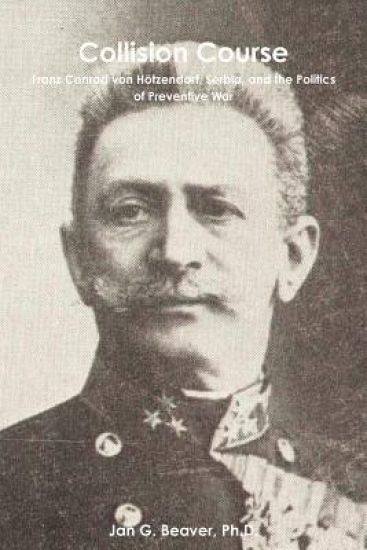
Collision Course: Franz Conrad Von Hotzendorf, Serbia, and the Politics of Preventive War
Franz Conrad von Hotzendorf, as chief of the Austro-Hungarian general staff, was the foremost proponent of preventive war as the means of solving both the foreign and domestic problems of the multinational Habsburg Monarchy in one grand action. The combination of Conrad's insistence on war and Serbia's official, and frequently reckless unofficial, nationalist policies set the stage for the outbreak of a Balkan conflict that would shake Europe to its very foundations and change the world forever.
In Search of Conrad

In Search of Conrad

Gavin Young

Faber Faber
2009
nidottu
First published in 1991, Gavin Young's hugely acclaimed In Search of Conrad was joint winner of the 1992 Thomas Cook Travel Book Award.'Part-mariner's log and part-detective story, [In Search of Conrad] brilliantly evokes the Far Eastern landscapes fixed forever in our imaginations by Conrad's novels. But above all Young makes us realize that the world Conrad described nearly a century ago is still there ... the most pleasurable and exciting book I have read this year.' J. G. Ballard, Daily Telegraph'Young's passion for Conrad and his stories blazes from every porthole.' John Carey, Sunday Times'Young has an eye for atmosphere; he is marvellous on Singapore as her past impinges on the present, myriad streets stalked by ghosts from the nineteenth century ... In Search of Conrad is both scholarly and enthralling - always vivid, and often a hoot to read ... better still it may set you to reading Conrad again.' Independent'Gavin Young has managed to write something rare in recent literature - a happy book about the Third World which also has the ring of truth.' Jonathan Raban, Independent on Sunday
A Preface to Conrad

A Preface to Conrad

Cedric Watts

Longman
2000
nidottu
Widely recommended, this guide to Conrad offers a vivid and incisive account of his life and literary career, and gives detailed attention to the contexts, themes, problems and paradoxes of his works.
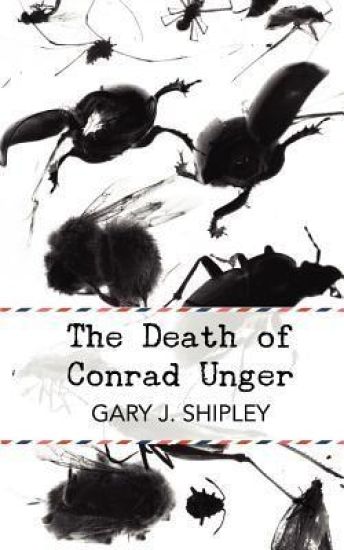
The Death of Conrad Unger

The Death of Conrad Unger

Gary J. Shipley

Punctum Books
2012
nidottu
The death by suicide of Gary J Shipley's close friend, Conrad Unger (writer, theorist and amateur entomologist), has prompted him to confront not only the cold machinery of self-erasure, but also its connections to the literary life and notions surrounding psychological bewitchment, to revaluate in both fictional and entomological terms just what it is that drives writers like Unger to take their own lives as a matter of course, as if that end had been there all along, knowing, waiting. Like G rard de Nerval, David Foster Wallace, Ann Quin and Virginia Woolf before him, Unger was not merely a writer who chose to end his life, but a writer whose work appeared forged from the knowledge of that event's temporary postponement. And while to the uninitiated these literary suicides would most likely appear completely unrelated to the suicide behaviors of insects parasitized by entomopathogenic fungi or nematomorpha, within the pages of this short study we are frequently presented with details that allow us to see the parallels between their terminal choreographies. He investigates what he believes are the essentially binary and contradictory motivations of his suicide case studies: where their self-dispatch becomes an instance of necro-autonomy (death as solution to an external thraldom, or the zombification of everyday life as something requiring the most extreme form of emancipation), while in addition being an instance of necro-equipoise (death as solution to an internal thraldom, or the anguish of no longer being able to slip back comfortably inside that very everydayness). The deadening claustrophobia of human life and achieving a stance outside of it: both barbs on the lines that can only ever detail the sickness, never cure it. Through extracts and synopses of Unger's books, marginalia and underscorings selected from his extensive library, and a brief itinerary of his movements in that last month of exile, a picture of the writer's suicidal obsession begins to form, and it forms at the expense of the man, the idea eating through his brain like a fungal parasite, disinterring the waking corpse to flesh its words.
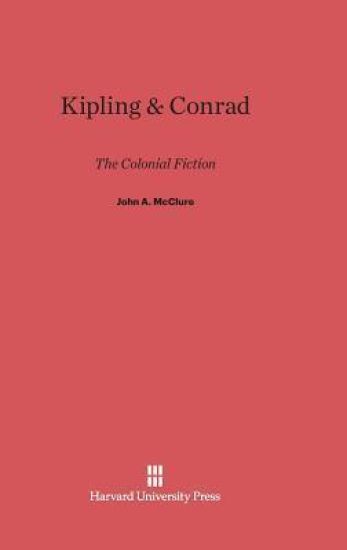
Kipling and Conrad

Kipling and Conrad

John a McClure

Harvard University Press
1981
sidottu
In this skillfully written essay on the fiction of imperialism, John McClure portrays the colonialist--his nature, aspirations, and frustrations--as perceived by Kipling and Conrad. And he relates these perceptions to the world and experiences of both writers. In the stories of the 1880s, McClure shows, Kipling focuses with bitter sympathy on "the white man's burden" in India, the strains produced by early exile, ignorance of India, and the interference of liberal bureaucrats in the business of rule. Later works, including "The Jungle Book" and "Kim," present proposals for imperial education intended to eliminate these strains. Conrad also explores the strains of colonial life, but from a perspective antithetical in many respects to Kipling's. In the Lingard novels and "Lord Jim" he challenges the imperial image of the colonialist as a wise, benign father protecting his savage dependents. The pessimistic assessment of the colonialist's motives and achievements developed in these works finds full expression, McClure suggests, in "Heart of Darkness." And in "Nostromo" Conrad explores the human dimensions of large-scale capitalist intervention in the colonial world, finding once again no cause to celebrate imperialism. John McClure's interpretation is forceful but ever attuned to the complexities of the texts discussed.