Kirjojen hintavertailu. Mukana 11 627 220 kirjaa ja 12 kauppaa.

Kirjahaku

Etsi kirjoja tekijän nimen, kirjan nimen tai ISBN:n perusteella.

1000 tulosta hakusanalla Cook

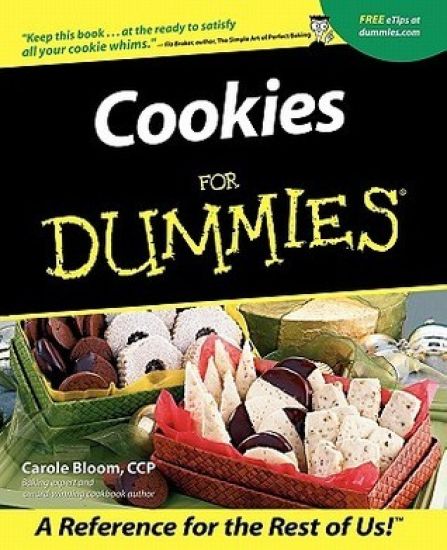
Cookies For Dummies

Cookies For Dummies

Carole Bloom

John Wiley Sons Inc
2001
nidottu
Everybody loves cookies -- eating them and making them! Featuring 100 easy-to-follow, delicious recipes such as Chocolate Chip Cookies, Raspberry-Hazelnut Thumbprints, Mocha-Walnut Coins, and Gingersnaps, this cookbook is perfect for the holidays -- or for anytime at all. It includes cookies to make with kids and cookies for the health conscious, plus scrumptious color photos.
Cooking Around the World All-in-One For Dummies

Cooking Around the World All-in-One For Dummies

Mary Sue Milliken; Susan Feniger; Helene Siegel; Cesare Casella; Jack Bishop; Tom Lacalamita; Heather Heath; Martin Yan; Dede Wilson; Joan H. Moravek; Kristin Eddy

John Wiley Sons Inc
2003
nidottu
Easy-to-follow recipes for favorite foods from around the world The majority of today's consumers are cuisine literate but not yet culinary literate. They know about a wide variety of foods and cuisines, but they don't know how to prepare these dishes at home. Cooking Around the World All-in-One For Dummies offers easy-to-follow recipes from the best of the world's cuisines, including dishes from Mexico, Italy, China, Japan, Thailand, France, India, Greece, and the Middle East. Perfect for home cooks who love world foods but don't want to invest in cookbooks for each cuisine, this fun and friendly guide will give readers the know-how they need to creatively expand their culinary repertoires. Martin Yan, a certified master chef and host of TV's Yan Can Cook, has authored twenty-four bestselling cookbooks. Cesare Casella transformed his family's restaurant in Lucca, Italy, Il Vipore, into a world-class establishment, earning a Michelin star. He is the coauthor of Diary of a Tuscan Chef. Susan Feniger and Mary Sue Milliken opened the celebrated City Café in Los Angeles in 1981 and now divide their time between their restaurants in Las Vegas, Santa Monica, and L.A.
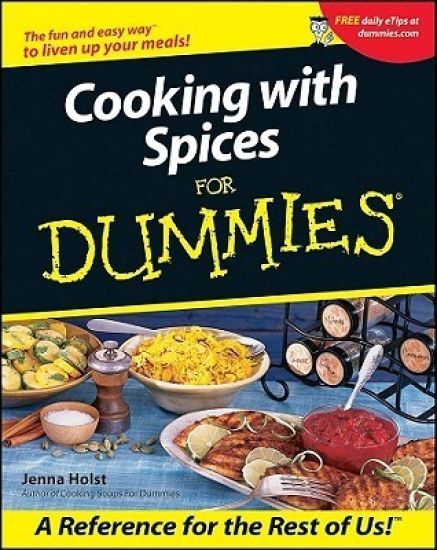
Cooking with Spices For Dummies

Cooking with Spices For Dummies

Jenna Holst

Hungry Minds Inc,U.S.
2001
nidottu
Spice up your cooking skills! If your idea of kicking up a dish is using salt and pepper, there’s a rich and fabulously varied world of spices waiting to be discovered. Mace, coriander, mustard seed, fennel, saffron, and paprika don’t have to be those scary, untouchables on the supermarket shelf. Cooking with spices can actually be fun, interesting, enjoyable and, most of all, delicious. Using spices will vastly improve your cooking and make you feel, finally, in command of your kitchen. Cooking with Spices For Dummies is for anyone who’s ever wondered how the great chefs whip up their fabulous-tasting dishes—but wasn’t sure how. And if you’re something of a veteran in the kitchen, you’ll get new, crowd-pleasing tips on how to add sparkle and zip to tried-and-true dishes, like hamburgers and spareribs or sweet potatoes and green beans. Most likely, you’ll find the answer to any question you’ve ever had about spices—plus a lot more—in this handy one-volume guide, like: What makes up a basic spice collectionAdvice on essential tools—including mills, graters, and mortar and pestlePreparing spices for cooking—including knowing which spices to toast, sauté, or grateA tour of the world of spices by region and countryMenu planning and menu samplers arranged by country Once you’ve become familiar with the basics, it’s on to the fun stuff—cooking with spices. After you’ve followed the simple tips on making the most of your ingredients, you’ll be able to comfortably test your skills on the delicious assortment of over 200 recipes, which feature: Basic rubs and spice mixes—including Cajun, Caribbean, Indian Curry powder, Jamaican, and Southern BarbecueMarinades and sauces—including South of the Border Marinade and Teriyaki sauceSalsas and salads—including Tomato Salsa, Plum Salsa, and Spiced Fruit SaladVegetables and legumes—including Mashed Spiced Butternut and Vegetarian Bean ChiliPasta, potatoes, and grains—including Pasta Puttanesca, Roasted Potatoes with Garlic and Cumin, and Curried Barley PilafChicken, meat, and seafood—including Down Home Barbecued Chicken, Indonesian Beef Sate, and Shrimp Curry Complete with such indispensables as a spice quantity guide (showing exactly how much you should use), a glossary of cooking terms, eight pages of tempting, full-color photos, and humorous cartoons, Cooking with Spices For Dummies gives you just what you need to know to cook with confidence and create delicious, exciting dishes for your family and friends.
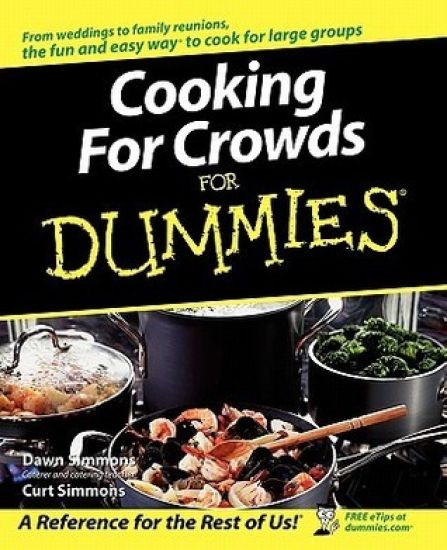
Cooking For Crowds For Dummies

Cooking For Crowds For Dummies

Dawn Simmons; Curt Simmons

Hungry Minds Inc,U.S.
2005
nidottu
Expert advice on food preparation for a large event Packed with recipes and advice for creating a stress-free kitchen, this unique guide shows ordinary home cooks how to do their own catering at big events such as family reunions, graduations, and weddings. The book guides readers through setting up the kitchen, planning the menu, estimating food quantities, following food safety requirements, and scheduling the food preparations.
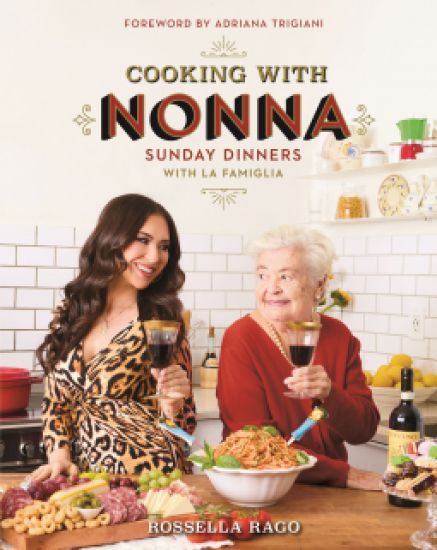
Cooking with Nonna: Sunday Dinners with La Famiglia
Get memorable, quality time with your la bella famiglia as you cook your way course-by-course through a delicious Italian American Sunday dinner with Rossella Rago and Nonna Romana, from the popular cooking show Cooking with Nonna.Sunday dinner is not only a destination but the heart, soul, and palate of family life. Sunday dinner is also the memory of times past, when generations of our families gathered once a week to exchange news and stories, share a traditional meal, and catch up. In Cooking with Nonna, the care and technique handed down generation to generation is shared in loving detail so you can host memorable and delicious Sunday dinners for your family.In Cooking with Nonna: Sunday Dinners with La Famiglia, you will find recipes for the classic dishes you loved as a child and discover new recipes perfected in Nonna's kitchen for the modern cook. Rossella and Nonna help you honor your la bella famiglia as they share 131 easy-to-follow recipes like: Chicken ParmigianaSalami and Cheese-Stuffed CalzoneLasagna RollupsPasta e Fagioli Soup with PancettaLemon Butter Garlic ShrimpBroccoli and Mozzarella StromboliCherry Tomato BruschettaChicken CacciatoreZiti al Forno with Ricotta (Baked Ziti)Cannoli Tiramisuand so much more Soon you will be making some of your favorite Italian dishes and filling your Sunday table with hungry relatives who can't get enough of your cooking. You will master recipes course-by-course from antipasto through dessert. You will create fragrant sauces and classic main courses you have come to love. If you hunger for buttery garlic knots, piquant puttanesca sauce, or penne alla vodka--this is your cookbook Your la bella famiglia will be delighted and you will have the joy of time around the dinner table shared with the people you love.
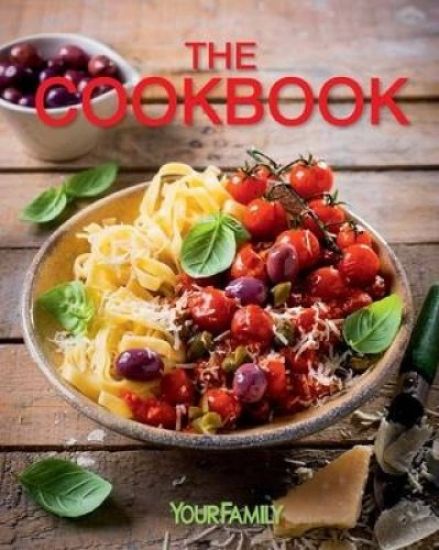
cookbook

cookbook

Your Family

Human Rousseau (pty) Ltd
2016
pokkari
Nothing beats home cooking. This collection of recipes for family meals, brought to you by Your Family, includes recipes for all tastes - from comforting soups, the best-dressed pasta, chicken masterpieces and fish favourites to one-dish wonders and meals you can whip up in less than 30 minutes. Be sure: your family will be lining up for seconds.
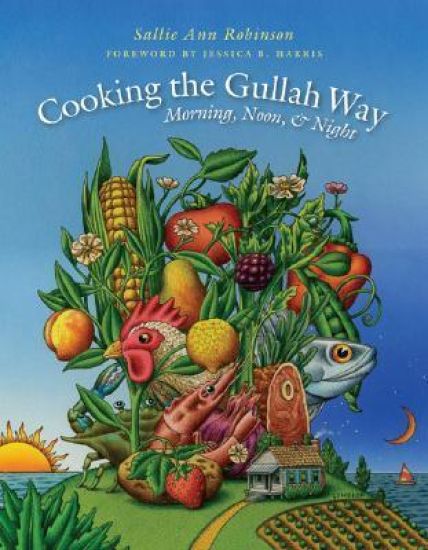
Cooking the Gullah Way, Morning, Noon, and Night

Cooking the Gullah Way, Morning, Noon, and Night

The University of North Carolina Press
2007
nidottu
Sallie Ann Robinson was born and reared on Daufuskie Island, one of the South Carolina Sea Islands well known for their Gullah culture. Although technology and development were slow in coming to Daufuskie, the island is now changing rapidly. With this book, Robinson highlights some of her favorite memories and delicious recipes from life on Daufuskie, where the islanders traditionally ate what they grew in the soil, caught in the river, and hunted in the woods. The unique food traditions of Gullah culture contain a blend of African, European, and Native American influences. Reflecting the rhythm of a day in the kitchen, from breakfast to dinner (and anywhere in between), this cookbook collects seventy-five recipes for easy-to-prepare, robustly flavored dishes. Robinson also includes twenty-five folk remedies, demonstrating how in the Gullah culture, in the not-so-distant past, food and medicine were closely linked and the sea and the land provided what islanders needed to survive. In her spirited introduction and chapter openings, Robinson describes how cooking the Gullah way has enriched her life, from her childhood on the island to her adulthood on the nearby mainland.
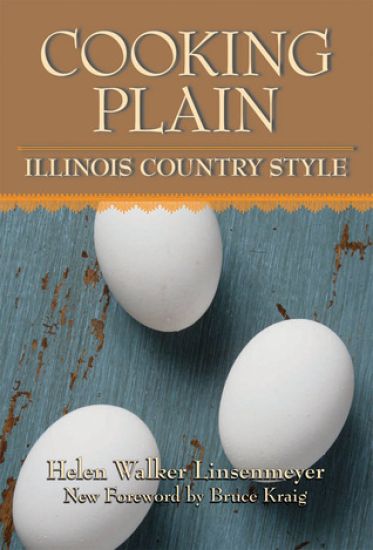
Cooking Plain, Illinois Country Style

Cooking Plain, Illinois Country Style

Helen Walker Linsenmeyer; Bruce Kraig

Southern Illinois University Press
2011
nidottu
Cooking Plain, Illinois Country Style by Helen Walker Linsenmeyer presents a collection of family recipes created prior to 1900 and perfected from generation to generation, mirroring the delicious and distinctive kind of cookery produced by the mix of people who settled the Illinois Country during this period. Some recipes reflect a certain New England or Southern influence, while others echo a European heritage. All hark back to a simpler style of living, when cooking was plain yet flavorful. The recipes specify the use of natural ingredients (including butter, lard, and suet) rather than synthetic or ready-mixed foods, which were unavailable in the 1800s. Cooking at the time was pure and unadulterated, and portions were large. Strength-giving food was essential to health and endurance; thus fare was pure, hearty, flavorful, and wholesome. The many treasures of Cooking Plain, Illinois Country Style include • basic recipes for mead, originally served to the militiamen of Jackson County; sumac lemonade, made the Indian way; root beer, as it was originally made; • soups of many kinds—from wholesome vegetable to savory sorrel leaf, enjoyed by the Kaskaskia French; • old-fashioned fried beefsteak, classic American pot roast and gravy, as well as secret marinades to tenderize the tougher but more flavorful cuts of meat; • methods for preparing and cooking rabbit, squirrel, wild turkey, venison, pheasant, rattlesnake, raccoon, buffalo, and fish; • over one hundred recipes for wheat breads, sweet breads, corn breads, and pancakes; • an array of delectable desserts and confections, including puddings, ice cream, taffy, and feathery-light cakes and pies; • sections on the uses of herbs, spices, roots, and weeds; instructions for making sausage, jerky, and smoked fish and for drying one’s own fruits and vegetables; and household hints on everything from making lye soap to cooking for the sick. And there are extra-special nuggets, too, for Mrs. Linsenmeyer laces her cookbook with interesting biographical notes on a number of the settlers and the origin of many of the foods they used. There is also a wealth of historical information on lifestyles and cooking before 1900, plus helpful tips on the use of old-fashioned cooking utensils. A working cookbook complete in its coverage of every area of food preparation, Cooking Plain, Illinois Country Style will be used and treasured as much today as its recipes were by families of an earlier century. The recipes are not gourmet, but they are certain to please today’s cooks, especially those interested in using local ingredients and getting back to a more natural way of cooking and eating.
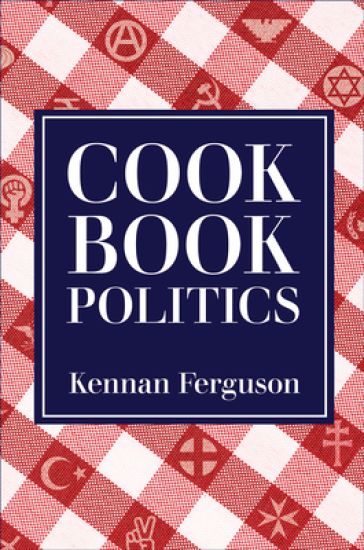
Cookbook Politics

Cookbook Politics

Kennan Ferguson

University of Pennsylvania Press
2020
sidottu
An original and eclectic view of cookbooks as political acts Cookbooks are not political in conventional ways. They neither proclaim, as do manifestos, nor do they forbid, as do laws. They do not command agreement, as do arguments, and their stipulations often lack specificity - cook "until browned." Yet, as repositories of human taste, cookbooks transmit specific blends of flavor, texture, and nutrition across space and time. Cookbooks both form and reflect who we are. In Cookbook Politics, Kennan Ferguson explores the sensual and political implications of these repositories, demonstrating how they create nations, establish ideologies, shape international relations, and structure communities. Cookbook Politics argues that cookbooks highlight aspects of our lives we rarely recognize as political-taste, production, domesticity, collectivity, and imagination-and considers the ways in which cookbooks have or do politics, from the most overt to the most subtle. Cookbooks turn regional diversity into national unity, as Pellegrino Artusi's Science in the Kitchen and the Art of Eating Well did for Italy in 1891. Politically affiliated organizations compile and sell cookbooks-for example, the early United Nations published The World's Favorite Recipes. From the First Baptist Church of Midland, Tennessee's community cookbook, to Julia Child's Mastering the Art of French Cooking, to the Italian Futurists' proto-fascist guide to food preparation, Ferguson demonstrates how cookbooks mark desires and reveal social commitments: your table becomes a representation of who you are. Authoritative, yet flexible; collective, yet individualized; cooperative, yet personal-cookbooks invite participation, editing, and transformation. Created to convey flavor and taste across generations, communities, and nations, they enact the continuities and changes of social lives. Their functioning in the name of creativity and preparation-with readers happily consuming them in similar ways-makes cookbooks an exemplary model for democratic politics.
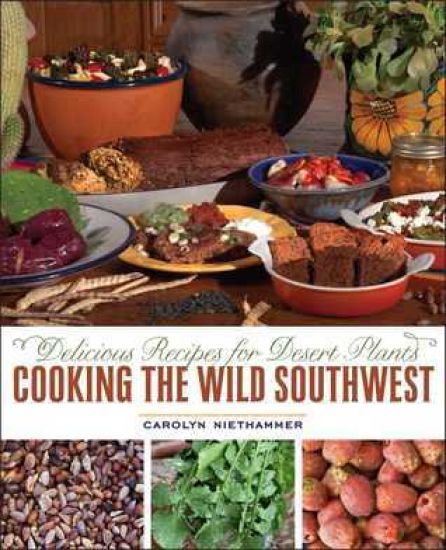
Cooking the Wild Southwest

Cooking the Wild Southwest

Carolyn Niethammer

University of Arizona Press
2011
nidottu
Over the last few decades, interest in eating locally has grown quickly. From just-picked apples in Washington to fresh peaches in Georgia, local food movements and farmer's markets have proliferated all over the country. Desert dwellers in the Southwest are taking a new look at prickly pear, mesquite, and other native plants. Many people's idea of cooking with southwestern plants begins and ends with prickly pear jelly. With this update to the classic Tumbleweed Gourmet, master cook Carolyn Niethammer opens a window on the incredible bounty of the southwestern deserts and offers recipes to help you bring these plants to your table. Included here are sections featuring each of twenty-three different desert plants. The chapters include basic information, harvesting techniques, and general characteristics. But the real treat comes in the form of some 150 recipes collected or developed by the author herself. Ranging from every-day to gourmet, from simple to complex, these recipes offer something for cooks of all skill levels. Some of the recipes also include stories about their origin and readers are encouraged to tinker with the ingredients and enjoy desert foods as part of their regular diet. Featuring Paul Mirocha's finely drawn illustrations of the various southwestern plants discussed, this volume will serve as an indispensible guide from harvest to table. Whether you're looking for more ways to prepare local foods, ideas for sustainable harvesting, or just want to expand your palette to take in some out-of-the-ordinary flavors, Cooking the Wild Southwest is sure to delight.
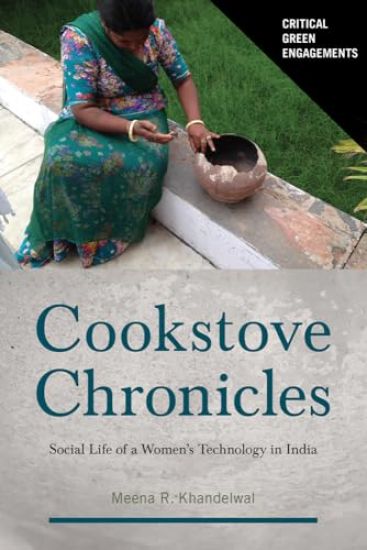
Cookstove Chronicles

Cookstove Chronicles

Meena Khandelwal

University of Arizona Press
2024
sidottu
Stove improvers have been designing and promoting “clean” or “efficient” biomass cookstoves in India since the 1940s and have been frustrated to find their carefully engineered stoves abandoned in trash heaps or repurposed as storage bins, while the traditional mud chulha retains a central place in the kitchen. Why do so many Indian women continue to use wood-burning, smoke-spewing stoves when they have other options? Based on anthropological research in Rajasthan, Cookstove Chronicles argues that the supposedly obsolete chulha persists because it offers women control over the tools needed to feed their families. Their continued use of old stoves alongside the new is not a failure to embrace new technologies but instead a strategy to maximize flexibility and autonomy. The chulha is neither the villain nor hero of this story. It produces particulate matter that harms people’s bodies, leaves soot on utensils and walls, and accelerates glacial melting and atmospheric warming. Yet it also depends on renewable biomass fuel and supports women’s autonomy as a local, do-it-yourself technology. Meena Khandelwal, a feminist anthropologist, describes her collaboration with engineers, archaeologists, and others. She employs critical social theory and reflections from fieldwork to bring together research from a range of fields, including history, geography, anthropology, energy and environmental studies, public health, and science and technology studies (STS). In so doing she not only demystifies multidisciplinary research but also highlights the messy reality of actual behavior.Cookstove Chronicles critically examines why, despite extensive development efforts, use of the chulha persists. It offers an important new framework for looking at development, technology, environmental change, and human behavior.
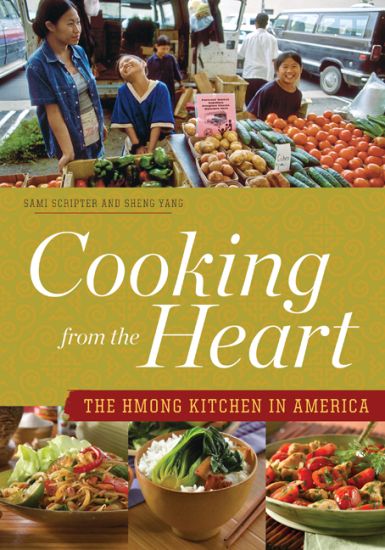
Cooking from the Heart

Cooking from the Heart

Sami Scripter; Sheng Yang

UNIVERSITY OF MINNESOTA PRESS
2023
nidottu
The first cookbook of Hmong-American cuisine, filled with unique recipes and stories Simple, earthy, fiery, and fresh, Hmong food is an exciting but still little-known South Asian cuisine. In traditional Hmong culture, dishes are created and replicated not by exact measurements but by taste and experimentation-for every Hmong recipe, there are as many variations as there are Hmong cooks-and often served to large, communal groups. Sami Scripter and Sheng Yang have gathered more than 100 recipes from Hmong-American kitchens, illustrated them with color photos of completed dishes, and provided descriptions of unusual ingredients and cooking techniques.Cooking from the Heart is the first cookbook to clearly set out the culinary traditions of the Hmong people as well as the cultural significance such traditions hold. The recipes are accompanied by anecdotes, aphorisms, and poems that demonstrate the importance of food and cooking in Hmong culture and offer a dramatic perspective on the immigrant experience. Scripter and Yang outline diet restrictions and taboos as well as how herbs and foods are traditionally used for healing purposes. The dishes featured in Cooking from the Heart range from well-known items such as egg rolls and green papaya salad to more unfamiliar dishes such as Nqaij Qaib Hau Xyaw Tshuaj (Chicken Soup for New Mothers) and Dib Iab Ntim Nqaij Hau Ua Kua (Stuffed Bitter Melon Soup). The oral tradition by which these recipes have been passed down has meant that Hmong cooking has not yet reached a wide audience in the United States. While designed for an American kitchen, Cooking from the Heart encourages readers to seek out Hmong herbs and vegetables only recently introduced in the United States. After all, the authors say, the essence of Hmong cuisine is cooking with an adventurous and creative spirit-from the heart.
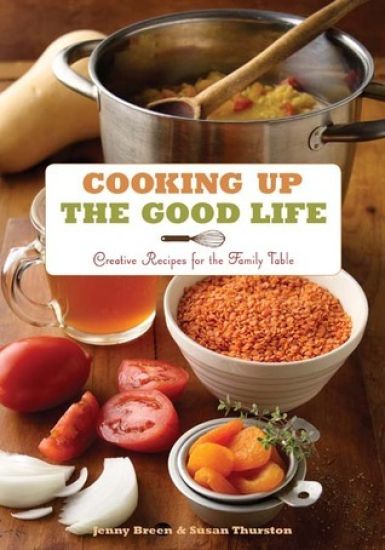
Cooking Up the Good Life

Cooking Up the Good Life

Jenny Breen; Susan Thurston

University of Minnesota Press
2011
nidottu
Roasted figs with gorgonzola. Lemon miso soup. Harvest lasagna, lentil walnut burgers, and ginger molasses cookies. Veteran Minneapolis chef Jenny Breen knows that cooking at home can be a joyful, rewarding, and healthy experience for the whole family. In Cooking Up the Good Life, Jenny Breen-along with local writer and photographer Susan Thurston-presents a scrumptious journey through the seasonal ingredients of the upper Midwest with an enticing variety of her most-loved recipes for the family table.Written with both beginner and experienced cooks in mind, each section in Cooking Up the Good Life-from starters and sauces to soups, salads, main courses, and sweets-is organized by season to help bring our daily meals into harmony with local harvests. Recipes include imaginative “Family Kitchen” segments that suggest safe, fun ways to get kids involved. An advocate for inviting children into the kitchen, Breen has found that they are more apt to eat what they are connected to, whether by growing the vegetables, feeding the chickens and collecting the eggs, or helping prepare the food.Cooking at home is also an opportunity to discover more about the ingredients we use and the people who bring them to our grocery stores, our farmers markets, and ultimately to our tables. Featuring refreshingly simple, creative, and unfussy recipes, Cooking Up the Good Life’s relaxed and encouraging style helps you cook with ease and serve with confidence wholesome dishes that highlight the natural beauty and elegance of Midwestern seasonal ingredients. Oh, yes-and they’re absolutely delicious. But don’t just take our word for it.
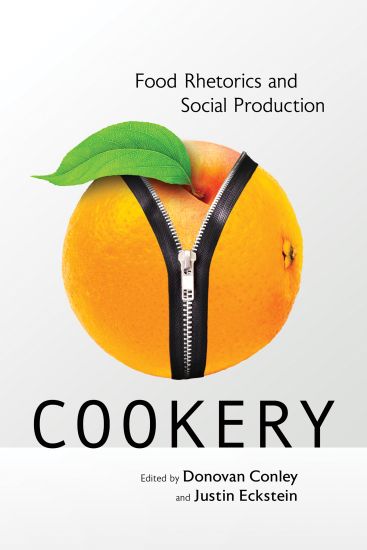
Cookery

Cookery

Greg Dickinson

The University of Alabama Press
2020
nidottu
The rhetoric of contemporary food production and consumption with a focus on social boundaries. The rhetoric of food is more than just words about food, and food is more than just edible matter. Cookery:Food Rhetorics and Social Production explores how food mediates both rhetorical influence and material life through the overlapping concepts of invention and production. The classical canon of rhetorical invention entails the process of discovering one's persuasive appeals, whereas the contemporary landscape of agricultural production touches virtually everyone on the planet. Together, rhetoric and food shape the boundaries of shared living. The essays in this volume probe the many ways that food informs contemporary social life through its mediation of bodies - human and extra-human alike - in the forms of intoxication, addiction, estrangement, identification, repulsion, and eroticism. Our bodies, in turn, shape the boundaries of food through research, technology, cultural trends, and, of course, by talking about it. Each chapter explores food's persuasive nature through a unique prism that includes intoxication, dirt, "food porn," strange foods, and political "invisibility." In each case readers gain new insights about the relations between rhetorical influence and embodied practice through food. As a whole Cookery articulates new ways of viewing food's powers of persuasion, as well as the inherent role of persuasion in agricultural production. The purpose of Cookery, then, is to demonstrate the deep rhetoricity of our modern industrial food system through critical examinations of concepts, practices, and tendencies endemic to this system. Food has become an essential topic for discussions concerned with the larger social dynamics of production, distribution, access, reception, consumption, influence, and the fraught question of choice. These questions about food and rhetoric are equally questions about the assumptions, values, and practices of contemporary public life.
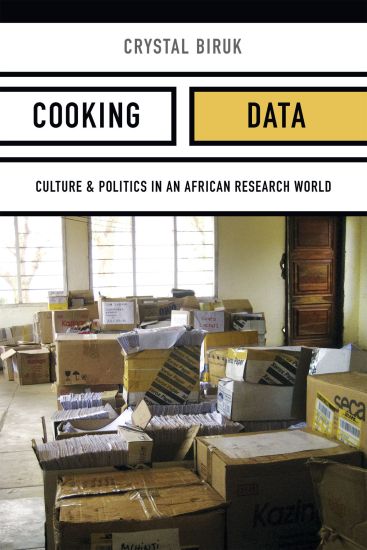
Cooking Data

Cooking Data

Cal (Crystal) Biruk

Duke University Press
2018
sidottu
In Cooking Data Cal Biruk offers an ethnographic account of research into the demographics of HIV and AIDS in Malawi to rethink the production of quantitative health data. While research practices are often understood within a clean/dirty binary, Biruk shows that data are never clean; rather, they are always “cooked” during their production and inevitably entangled with the lives of those who produce them. Examining how the relationships among fieldworkers, supervisors, respondents, and foreign demographers shape data, Biruk examines the ways in which units of information-such as survey questions and numbers written onto questionnaires by fieldworkers-acquire value as statistics that go on to shape national AIDS policy. Her approach illustrates how on-the-ground dynamics and research cultures mediate the production of global health statistics in ways that impact local economies and formulations of power and expertise.
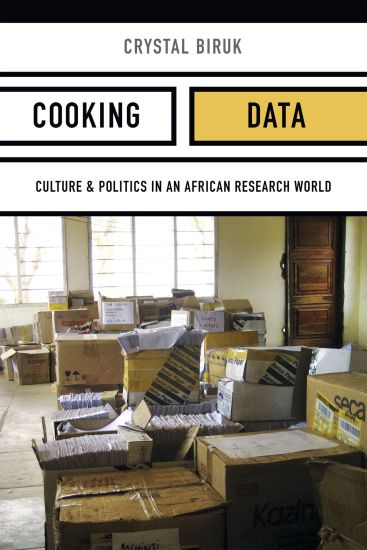
Cooking Data

Cooking Data

Cal (Crystal) Biruk

Duke University Press
2018
pokkari
In Cooking Data Cal Biruk offers an ethnographic account of research into the demographics of HIV and AIDS in Malawi to rethink the production of quantitative health data. While research practices are often understood within a clean/dirty binary, Biruk shows that data are never clean; rather, they are always “cooked” during their production and inevitably entangled with the lives of those who produce them. Examining how the relationships among fieldworkers, supervisors, respondents, and foreign demographers shape data, Biruk examines the ways in which units of information-such as survey questions and numbers written onto questionnaires by fieldworkers-acquire value as statistics that go on to shape national AIDS policy. Her approach illustrates how on-the-ground dynamics and research cultures mediate the production of global health statistics in ways that impact local economies and formulations of power and expertise.