Kirjojen hintavertailu. Mukana 12 016 292 kirjaa ja 12 kauppaa.

Kirjahaku

Etsi kirjoja tekijän nimen, kirjan nimen tai ISBN:n perusteella.

1000 tulosta hakusanalla Dale Neef

Applied Physics

Applied Physics

Dale Ewen; Neill Schurter; P. Gundersen

Pearson
2016
sidottu
Appropriate for courses in Technical Physics in Career and Technical programs, Community Colleges, and High Schools. Prepare students for success in industrial and technical careers with a wealth of real-world physics applications and a unique problem-solving format. Applied Physics, 11/e presents clear, to-the-point, topical coverage of basic physics applied to industrial and technical fields. Throughout the text, emphasis is placed on teaching students to use a consistent problem-solving methodology. A wealth of real-world applications are presented, motivating students by teaching physics concepts in context. Updated with new color photos, clarifications, and enhancements, the Eleventh Editionalso features sections on physics-related careers and new technologies to engage readers in the material.
Learning Theories

Learning Theories

Dale Schunk

Pearson
2019
nidottu
A comprehensive look at the key theoretical principles, concepts, and research findings about learning, with special attention paid to how these concepts and principles can be applied in today’s classrooms. This widely used and respected resource introduces readers to the key theoretical principles, concepts, and research findings about learning and helps them see how to apply that theory and research as educators. Learning Theories begins with a discussion of the relationship between learning theory and instruction. It then looks at the neuroscience of learning. Six chapters cover the major theories of learning — behaviorism, social cognitive theory, information processing theory, cognitive learning processes, and constructivism. The following three chapters cover key topics related to learning — motivation, self-regulated learning, and contextual influences. And the final chapter, Next Steps, helps students consolidate their views about learning. The 8th Edition has been significantly updated with a number of new features and the most current thinking and research.
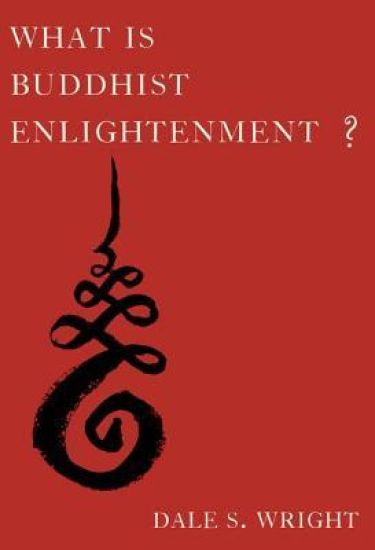
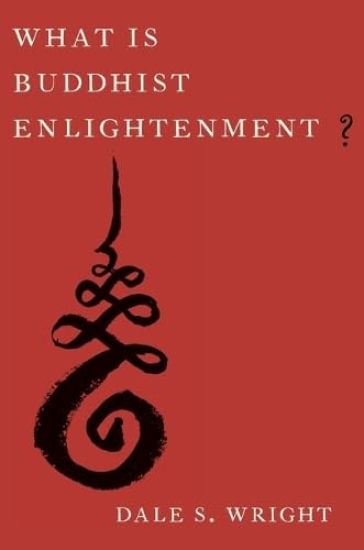
What Is Buddhist Enlightenment?

What Is Buddhist Enlightenment?

Dale S. Wright

Oxford University Press Inc
2016
sidottu
What kind of person should I strive to be? What ideals should I pursue in my life? What would it mean for all of us to wake up to the realities and possibilities for human life? These questions, or versions of them, are commonly thought of as the essential building blocks of the human condition, and often serve as running motifs throughout our lives. Dale S. Wright argues that the question at the heart of them all is one most commonly associated with Buddhism: what is enlightenment? Any serious practitioner of human life, Buddhist or not, confronts the challenge of how to reach a different, improved--or enlightened--state of being, and fundamental to that quest is grappling with what enlightenment actually means. Why then, Wright asks, is this question not only avoided, but discouraged among Buddhists? There are many reasons for this unspoken prohibition. The simplest and perhaps most important is that pondering a distant goal is a waste of energy that would be much better applied to practice: quiet the flow of obsessive thinking, put yourself in a mindful state of presence, and let enlightenment take care of itself. However, the point of Buddhist practice is that it might eventuate in some form of awakening; in some groundbreaking transformation; in enlightenment. Wright contends that understanding the nature of the enlightenment that one seeks is the most important task of all, and that it can and should be in line with practice. Once practice is underway, he says, there should be an ongoing meditation on the ideal that is being strived for. Wright here offers a wide--ranging exploration of issues that have a bearing on the contemporary meaning of enlightenment. While taking as his point of departure an examination of what enlightenment has been in past Buddhist traditions, his historical considerations are subordinate to the question that our lives press upon us--what kinds of lives should we aspire to live here, now, and into the future?
Buddhism

Buddhism

Dale S. Wright

Oxford University Press Inc
2020
nidottu
Buddhism is one of the oldest and largest of the world's religions. But it is also a tradition that has proven to have enormous contemporary relevance. Founded by Siddhartha Gautama, who came to be called the Buddha, the religion has spread from its origins in northeast India, across Asia, and eventually to the West, taking on new forms at each step of the way. Buddhism: What Everyone Needs to Know offers readers a brief, authoritative guide to one of the world's most diverse religious traditions in a reader-friendly question-and-answer format. Dale Wright covers the origins and early history of Buddhism, the diversity of types of Buddhism throughout history, and the status of contemporary Buddhism. This is a go-to book for anyone seeking a basic understanding of the origins, history, teachings, and practices of Buddhism.
Buddhism

Buddhism

Dale S. Wright

Oxford University Press Inc
2020
sidottu
Buddhism is one of the oldest and largest of the world's religions. But it is also a tradition that has proven to have enormous contemporary relevance. Founded by Siddhartha Gautama, who came to be called the Buddha, the religion has spread from its origins in northeast India, across Asia, and eventually to the West, taking on new forms at each step of the way. Buddhism: What Everyone Needs to Know offers readers a brief, authoritative guide to one of the world's most diverse religious traditions in a reader-friendly question-and-answer format. Dale Wright covers the origins and early history of Buddhism, the diversity of types of Buddhism throughout history, and the status of contemporary Buddhism. This is a go-to book for anyone seeking a basic understanding of the origins, history, teachings, and practices of Buddhism.
Reason in a Dark Time

Reason in a Dark Time

Dale Jamieson

Oxford University Press Inc
2017
nidottu
From the 1992 Rio Earth Summit to the 2009 Copenhagen Climate Conference there was a concerted international effort to stop climate change. Yet greenhouse gas emissions increased, atmospheric concentrations grew, and global warming became an observable fact of life. In this book, philosopher Dale Jamieson explains what climate change is, why we have failed to stop it, and why it still matters what we do. Centered in philosophy, the volume also treats the scientific, historical, economic, and political dimensions of climate change. Our failure to prevent or even to respond significantly to climate change, Jamieson argues, reflects the impoverishment of our systems of practical reason, the paralysis of our politics, and the limits of our cognitive and affective capacities. The climate change that is underway is remaking the world in such a way that familiar comforts, places, and ways of life will disappear in years or decades rather than centuries. Climate change also threatens our sense of meaning, since it is difficult to believe that our individual actions matter. The challenges that climate change presents go beyond the resources of common sense morality -- it can be hard to view such everyday acts as driving and flying as presenting moral problems. Yet there is much that we can do to slow climate change, to adapt to it and restore a sense of agency while living meaningful lives in a changing world.
Brains as Engines of Association

Brains as Engines of Association

Dale Purves

Oxford University Press Inc
2019
sidottu
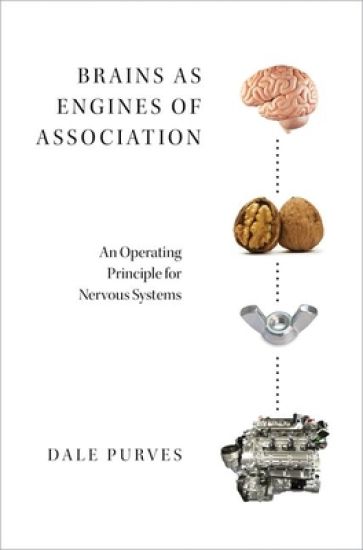
Brains as Engines of Association tackles a fundamental question in neuroscience: what is the operating principle of the human brain? While a similar question has been asked and answered for virtually every other human organ during the last few centuries, how the brain operates has remained a central challenge in biology. Based on evidence derived from vision, audition, speech and music--much of it based on the author's own work over the last twenty years--Brains as Engines of Association argues that brains operate wholly on the basis of trial and error experience, encoded in neural circuitry over evolutionary and individual time. This concept of neural function runs counter to current concepts that view the brain as a computing machine, and research programs based on the idea that the only way to answer such questions is by reconstructing the connectivity of brains in their entirety. This view also implies that the best way to understand the details of brain function is to recapitulate their history using artificial neural networks. While this viewpoint has received support in the last few years from work showing that computers can win complex games, the brain plays a much more complex game--the "game" of biological survival--which Purves concludes is based on trial-and-error experience.
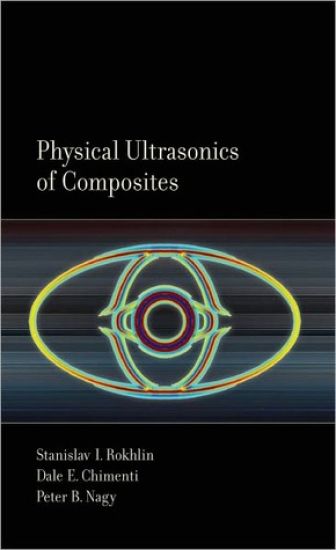
Physical Ultrasonics of Composites

Physical Ultrasonics of Composites

Dale Chimenti; Stanislav Rokhlin; Peter Nagy

Oxford University Press Inc
2011
sidottu
This book is a rigorous introduction to the characterization of composite materials by means of ultrasonic waves. Composites are treated here not simply as uniform media, but as inhomogeneous layered anisotropic media with internal structure characteristic of composite laminates. The objective here is to concentrate on exposing the singular behavior of ultrasonic waves as they interact with layered, anisotropic materials, materials which incorporate those structural elements typical of composite laminates. This book provides a synergistic description of both modeling and experimental methods in addressing wave propagation phenomena and composite property measurements. After a brief review of basic composite mechanics, a thorough treatment of ultrasonics in anisotropic media is presented, along with composite characterization methods. The interaction of ultrasonic waves at interfaces of anisotropic materials is discussed, as are guided waves in composite plates and rods. Waves in layered media are developed from the standpoint of the "Stiffness Matrix", a major advance over the conventional, potentially unstable Transfer Matrix approach. Laminated plates are treated both with the stiffness matrix and using Floquet analysis. The important influence on the received electronic signals in ultrasonic materials characterization from transducer geometry and placement are carefully exposed in a dedicated chapter. Ultrasonic wave interactions are especially susceptible to such influences because ultrasonic transducers are seldom more than a dozen or so wavelengths in diameter. The book ends with a chapter devoted to the emerging field of air-coupled ultrasonics. This new technology has come of age with the development of purpose-built transducers and electronics and is finding ever wider applications, particularly in the characterization of composite laminates.
The Leadership Triad

The Leadership Triad

Dale E. Zand

Oxford University Press Inc
1997
sidottu
People once stood in awe of electricity, writes Dale Zand, until scientists identified and harnessed its three basic variables: voltage, current, and resistance. Likewise, people marvel at the achievements of successful leaders, such as Lee Iacocca at Chrysler or Jack Welch at GE, and wonder how they do it. In this superb volume, Zand dispels the mystery surrounding leadership so that managers at all levels - from the CEO to the shop supervisor - can develop the skills needed to lead effectively. Zand highlights the three elements required for leadership in today's information-driven organizations: knowledge, trust, and power. Knowledge, Zand argues, is essential to decision making: Leaders must be able to tap information about customers, products, and processes found throughout the organization. The book brims with suggestions about how to tap this knowledge. The author demonstrates, for instance, how a leader's attitudes and behavior can release (or repress) the flow of knowledge in a corporation (he shows how at one failed home-appliance company managers suppressed information about customer complaints and reprimanded factory workers for suggesting changes, fatal mistakes); he outlines how the skillful use of questions can draw out and highlight the knowledge managers and workers possess; and he discusses how to avoid subtle obstacles (such as the complacency of success) to improve the link between knowledge and action. Trust, the second element of the triad, helps a leader achieve open, collaborative communication. Indeed, Zand shows that the degree to which people trust a leader determines how much access they will give him or her to their knowledge. The book explores the key elements in the development of trust (a leader must disclose relevant information, share influence, live up to the spirit of agreements, and not abuse power) and also illustrates some basic laws of trust - mistrust drives out trust; trust stimulates productivity; and mistrusting groups self-destruct. Zand then considers power, showing how the leader must set the agenda for the firm; select, develop, and motivate the people who will implement the agenda; and examine and adjust individual performance. Equally important, he shows that in today's knowledge-driven corporation, the effective leader rarely issues directives, but instead acts more as a consultant or a client. At Chrysler, for example, CEO Robert Eaton, senior managers, and project leaders all meet when a new car model is to be created or redesigned. After the objectives are worked out, the team is turned loose to organize itself and get the job done. Freed from constant second-guessing by top bosses, teams work harder and take greater pride in their work. By the mid-1990s, this design-consignment process at Chrysler was so effective that the companys speed to market and reduction of development costs far exceeded its U. S. competitors. Masterfully written, Triadic Leadership is a down-to-earth, powerful guide. Full of examples--many from the author's consulting experience--of companies from General Motors, Wal-Mart, and American Express to electronics, manufacturing, and health care organizations, it offers a wealth of practical information to managers at all levels, and to anyone who aspires to a leadership position.
The Changing Shape of English Nonconformity, 1825-1925

The Changing Shape of English Nonconformity, 1825-1925

Dale A. Johnson

Oxford University Press Inc
1999
sidottu
This book studies the development of a pattern of education for ministry within nineteenth-century English evangelical Nonconformity. This development played a major role in the emergence of discussions on the nature of ministry while also influencing thought on religious authority, theological reconstruction, and religious identity. Johnson argues that too many interpretations of this facet of Nonconformity's history (especially those concerning the Congregationalist, Baptist, Methodist, and Presbyterian traditions) have tended to regard such development as a decline from earlier pinnacles of religious vitality and appeal. His book instead considers this phase a serious and necessary effort on the part of Nonconformity to come to terms with modernity while also retaining a responsible understanding of what it meant to be evangelical.
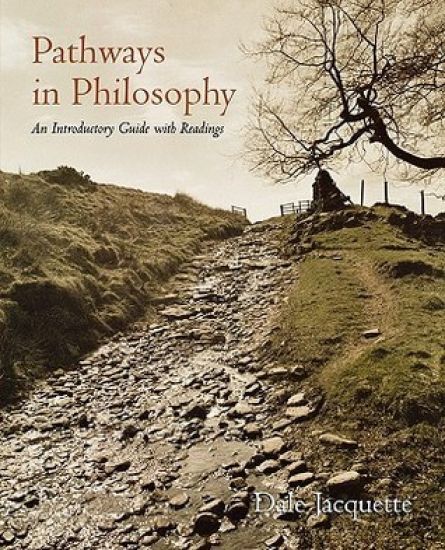
Pathways in Philosophy

Pathways in Philosophy

Dale Jacquette

Oxford University Press Inc
2003
nidottu
This introduction to philosophy combines the two approaches most commonly employed to teach philosophy to college freshmen - the problems approach and the historical approach. It includes chapters on the major problems or questions in philosophy - what we can know, what exists, the mind-body problem, the existence of God, what is moral, etc. - and it addresses these problems by focusing each chapter on a particular text by a major philosopher.
The Zen Canon

The Zen Canon

Dale S. Wright

Oxford University Press Inc
2004
sidottu
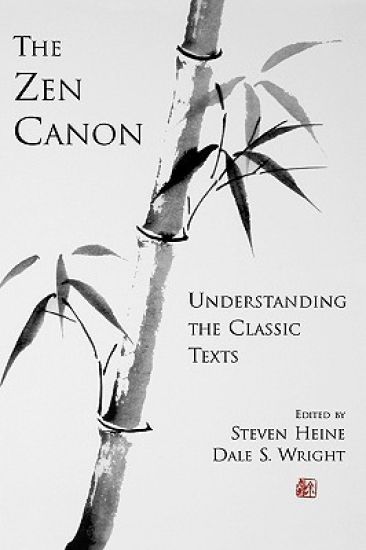
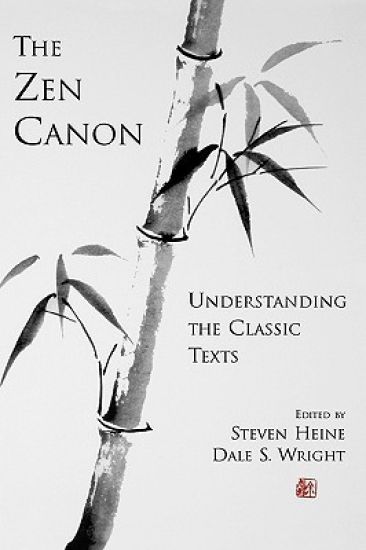
Bodhidharma, its first patriarch, reputedly said that Zen Buddhism represents "a special transmission outside the teaching/Without reliance on words and letters." This saying, along with the often perplexing use of language (and silence) by Zen masters, gave rise to the notion that Zen is a "lived religion" based strictly on practice. This collection of previously unpublished essays argues that Zen actually has a rich and varied literary heritage. Among the most significant texts are hagiographic accounts and recorded sayings of individual Zen masters, koan collections and commentaries, and rules for monastic life. This volume offers learned yet accessible studies of some of the most important classical Zen texts, including some that have received little scholarly attention (and many that are accessible only to specialists). Each essay provides historical, literary, and philosophical commentary on a particular text or genre.
The Zen Canon

The Zen Canon

Dale S. Wright

Oxford University Press Inc
2004
nidottu
Bodhidharma, its first patriarch, reputedly said that Zen Buddhism represents "a special transmission outside the teaching/Without reliance on words and letters." This saying, along with the often perplexing use of language (and silence) by Zen masters, gave rise to the notion that Zen is a "lived religion," based strictly on non-linguistic practice and lacking a substantial canon of sacred texts. Even those who recognize the importance of Zen texts commonly limit their focus to a few select texts without recognizing the wide variety of Zen literature. This collection of previously unpublished essays argues that Zen actually has a rich and varied literary heritage. Among the most significant textual genres are hagiographic accounts and recorded sayings of individual Zen masters, koan collections and commentaries, and rules for monastic life. During times of political turmoil in China and Japan, these texts were crucial to the survival and success of Zen, and they have for centuries been valued by practitioners as vital expressions of the truth of Zen. This volume offers learned yet accessible studies of some of the most important classical Zen texts, including some that have received little scholarly attention (and many of which are accessible only to specialists). Each essay provides historical, literary, and philosophical commentary on a particular text or genre. Together, they offer a critique of the "de facto canon" that has been created by the limited approach of Western scholarship, and demonstrate that literature is a diverse and essential part of Zen Buddhism.
The Six Perfections

The Six Perfections

Dale Wright

Oxford University Press Inc
2009
sidottu
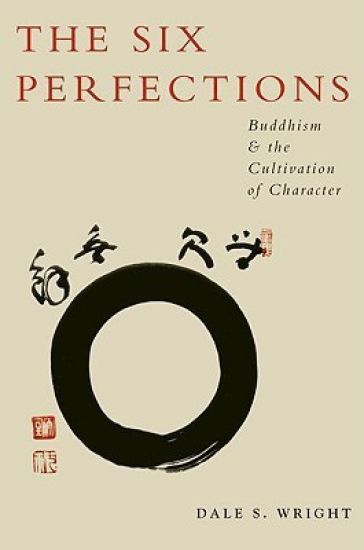
Here is a lucid, accessible, and inspiring guide to the six perfections--a set of Buddhist teachings designed to transform human character through the perfection of generosity, morality, tolerance, energy, meditation, and wisdom. Drawing on the Diamond Sutra, The Large Sutra on Perfect Wisdom, and other essential Mahayana texts, Dale Wright shows how these teachings were understood and practiced in the Buddha's time and how they can be adapted to contemporary life in a global society. What would the perfection of generosity look like today, for example? How can we learn to be giving--without ulterior motive or self-concern? Devoting a separate chapter to each of the six perfections, Wright combines sophisticated analysis with real-life applications. Buddhists have always stressed self-cultivation, the uniquely human freedom that allows us, if we choose, to shape the kind of life we will live and the kind of person we will become. For those who wish to live a more perfect life, The Six Perfections offers invaluable guidance.
Living Skillfully

Living Skillfully

Dale S. Wright

OXFORD UNIVERSITY PRESS INC
2022
sidottu
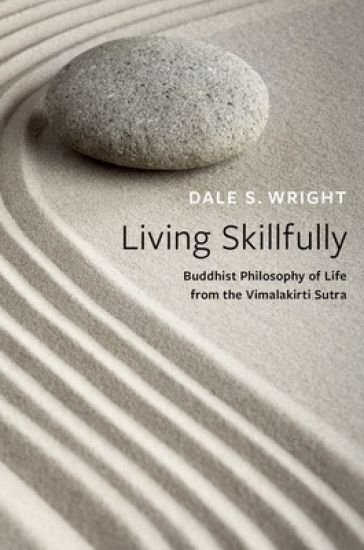
This book offers a contemporary philosophy of life drawing upon Buddhist resources from the Vimalakirti Sutra. Among the major themes in this Mahayana Buddhist scripture is the "skillful means" required to live a healthy and undeluded life. The book adopts that theme as a means of developing a practical approach to contemporary Buddhist life. Following many of the brilliant stories in the sutra, this book attempts to provide clear explanations for the primary Buddhist teachings and the relationships that bind them all together into an inspiring way of living. Among the questions addressed are: who is the Buddha, how is a worldview of change and contingency applicable to current life, what does it mean to claim that there is no permanent self, what are the primary characteristics of an admirable Buddhist life, how is freedom conceived in Buddhism, and how do all of these themes help us address issues that are pressing for us today. Although historical questions do arise in the book, its primary purpose is contemporary and practical, an effort to say clearly how this text helps us stake out a way of living for contemporary, global citizens.
What Is Buddhist Enlightenment?

What Is Buddhist Enlightenment?

Dale S. Wright

OXFORD UNIVERSITY PRESS INC
2023
nidottu
What kind of person should I strive to be? What ideals should I pursue in my life? These basic human questions and others like them are components of the overall question that guides this book: What is enlightenment? As Dale Wright argues, any serious practitioner of human life, religious or not, confronts the challenge of living an authentic life, of overcoming common human disabilities like greed, hatred, and delusion that give rise to excessive suffering. Why then, Wright asks, is this essential question often avoided, even discouraged among Buddhists? One reason frequently cited by Buddhists is that pondering a distant goal might be a waste of energy that would be better applied to practice: Quiet the flow of obsessive thinking, put yourself in a mindful state of presence, and let enlightenment take care of itself. In this book, however, Wright contends that pondering this question is meditative practice--that attentive inquiry of this kind is essential as the starting point and guide for any mindful practice of life. Meditative reflection on the meaning of enlightenment focuses us on our aim and direction in life. It guides us in shaping our practices, our ideals, and the kinds of lives we will live. Asking what enlightenment is as a basic form of meditation helps to activate our lives and get transformative practice underway. From Wright's perspective, there is no more important question to ask than this one. What is Buddhist Enlightenment? offers a wide-ranging exploration of issues that have a bearing on the contemporary meaning of enlightenment, including a concluding section with 10 theses that answer the title's question. Written by a leading scholar of Buddhism, the book balances deep learning and an accessible style, offering valuable insights for students, scholars, and practitioners alike. While he takes an examination of what enlightenment has been in past Buddhist traditions as his point of departure, Wright's historical considerations yield to the question that our lives press upon us--what kinds of lives should we aspire to live here, now, and into the future?
The Limits of Moral Authority

The Limits of Moral Authority

Dale Dorsey

Oxford University Press
2016
sidottu
Dale Dorsey considers one of the most fundamental questions in philosophical ethics: to what extent do the demands of morality have normative authority over us and our lives? Must we conform to moral requirements? Most who have addressed this question have treated the normative significance of morality as simply a fact to be explained. But Dorsey argues that this traditional assumption is misguided. According to Dorsey, not only are we not required to conform to moral demands, conforming to morality's demands will not always even be normatively permissible---moral behavior can be (quite literally) wrong. This view is significant not only for understanding the content and force of the moral point of view, but also for understanding the basic elements of how one ought to live.
Fortress Plant

Fortress Plant

Dale Walters

Oxford University Press
2017
sidottu
The survival of plants on our planet is nothing short of miraculous. They are virtually stationary packages of food, providing sustenance for a vast array of organisms, ranging from bacteria and fungi, through to insects, and even other plants. But plants are master survivors, having coped with changing environments and evolving predators over much of the history of life on earth. They have surveillance systems and defences that would put most modern armies to shame. They need to have a formidable armoury, because their enemies have sophisticated weaponry of their own. In this often hostile world, battles are fought daily, often to the death. These battles are not trivial - they matter, because life on this fragile planet of ours depends on plants. In this book Dale Walters takes readers on a journey through these battlefields, exploring how predators try to fool plants' surveillance systems and, if they manage to do so, how they gain access to the nourishment they require. Incredibly, successful attackers can manipulate plant function in order to suppress any attempt by the plant to mount defensive action, while at the same time ensuring a steady supply of food for their own survival. Walters shows how plants respond to such attacks, the defences they use, and how the attacked plant can communicate its plight to its neighbours. These skirmishes represent the latest stage in an unending evolutionary war between plants and organisms that feed on them. These battles might be on a micro scale, but they are every bit as fierce, complicated, and fascinating as the battles between animal predators and prey.
Job Matching, Wage Dispersion, and Unemployment

Job Matching, Wage Dispersion, and Unemployment

Dale T. Mortensen; Christopher A. Pissarides

Oxford University Press
2016
nidottu
Dale T. Mortensen and Christopher A. Pissarides are the recipients (with Peter Diamond) of the Nobel memorial Prize in Economics 2010. They have made path-breaking contributions to the analysis of markets with search and matching frictions, which account for much of the success of job search theory and the flows approach in becoming a leading tool for microeconomic and macroeconomic analysis of labor markets. Both scientists have gained groundbreaking insights through individual as well as joint research. Consequently, this volume not only features several papers which helped shape the equilibrium search model, including some early contributions which have initiated the research on what is known today as the search and matching model of the labor market, but it also presents a joint paper by the IZA Prize Laureates, which is a complete statement of the equilibrium search and matching model with endogenous job creation and job destruction. As part of the IZA Prize Series, the book presents a selection of their most important work which has highly enriched research on unemployment as an equilibrium phenomenon, on labor market dynamics, and on cyclical adjustment.