Kirjojen hintavertailu. Mukana 11 627 670 kirjaa ja 12 kauppaa.

Kirjahaku

Etsi kirjoja tekijän nimen, kirjan nimen tai ISBN:n perusteella.

1000 tulosta hakusanalla Deborah Cook

The Principles and Practice of Change

The Principles and Practice of Change

Deborah Price

Red Globe Press
2008
nidottu
A reader aimed at undergraduate, post-graduate and MBA students taking a module in Change Management. It brings together a collection of highly-cited articles on change and will provide core reading for any change management course from undergraduate to postgraduate and MBA
A Finer End

A Finer End

Deborah Crombie

Macmillan
2013
pokkari
Jack Montfort grew up in the shadow of Glastonbury Tor in a town revered as the mythical burial place of King Arthur, and, according to New Age followers, a source of strong druid power. Montfort has little more than a passing interest in the history of the area - until he comes across an extraordinary chronicle almost a thousand years old . . . The unsettling way this record comes into his hands brings Montfort into contact with a disparate group of townspeople, including Nick Carlisle, a student of Glastonbury's myths; Faith Wills, a pregnant teenage runaway; and Winnie Catesby, the Anglican priest who is now Jack's lover. When a member of Jack's circle is attacked and left for dead, he appeals to his cousin, Superintendent Duncan Kincaid, for help. For something terrible and bloody shattered Glastonbury Abbey's peace long ago - and now it is about to spark a violence that will reach forward into the present . . .
Kissed a Sad Goodbye

Kissed a Sad Goodbye

Deborah Crombie

Macmillan
2013
pokkari
In the past: It is September 1939 and thousands of children are being evacuated from London. Among them 12-year-olds Lewis Finch and William Hammond, both billeted on the Surrey estate of the formidable Regina Burne-Jones. Both become allies, then friends, and thus begins a story of choice and betrayal the repercussions of which will echo down the years . . . In the present: Duncan Kincaid and Gemma James are called out to investigate a death in London's East End. A young woman known as Annabelle Hammond has been strangled. Prime suspect is a busker she was seen talking to just before she disappeared. And when he turns out to be Gordon Finch, Duncan decides to investigate events which occurred more than fifty years before.
At Home in America

At Home in America

Deborah Moore

Columbia University Press
1983
pokkari
Focuses on the children of Eastern European immigrants who settled in Manhattan, looking at the modified synagogues, philanthropic organizations, and other associations organized by second-generation Jews in New York.
Pursuing Privacy in Cold War America

Pursuing Privacy in Cold War America

Deborah Nelson

Columbia University Press
2001
sidottu
Pursuing Privacy in Cold War America explores the relationship between confessional poetry and constitutional privacy doctrine, both of which emerged at the end of the 1950s. While the public declarations of the Supreme Court and the private declamations of the lyric poet may seem unrelated, both express the upheavals in American notions of privacy that marked the Cold War era. Nelson situates the poetry and legal decisions as part of a far wider anxiety about privacy that erupted across the social, cultural, and political spectrum during this period. She explores the panic over the "death of privacy" aroused by broad changes in postwar culture: the growth of suburbia, the advent of television, the popularity of psychoanalysis, the arrival of computer databases, and the spectacles of confession associated with McCarthyism. Examining this interchange between poetry and law at its most intense moments of reflection in the 1960s, '70s, and '80s, Deborah Nelson produces a rhetorical analysis of a privacy concept integral to postwar America's self-definition and to bedrock contradictions in Cold War ideology. Nelson argues that the desire to stabilize privacy in a constitutional right and the movement toward confession in postwar American poetry were not simply manifestations of the anxiety about privacy. Supreme Court justices and confessional poets such as Anne Sexton, Robert Lowell, W. D. Snodgrass, and Sylvia Plath were redefining the nature of privacy itself. Close reading of the poetry alongside the Supreme Court's shifting definitions of privacy in landmark decisions reveals a broader and deeper cultural metaphor at work.
Pursuing Privacy in Cold War America

Pursuing Privacy in Cold War America

Deborah Nelson

Columbia University Press
2001
pokkari
Pursuing Privacy in Cold War America explores the relationship between confessional poetry and constitutional privacy doctrine, both of which emerged at the end of the 1950s. While the public declarations of the Supreme Court and the private declamations of the lyric poet may seem unrelated, both express the upheavals in American notions of privacy that marked the Cold War era. Nelson situates the poetry and legal decisions as part of a far wider anxiety about privacy that erupted across the social, cultural, and political spectrum during this period. She explores the panic over the "death of privacy" aroused by broad changes in postwar culture: the growth of suburbia, the advent of television, the popularity of psychoanalysis, the arrival of computer databases, and the spectacles of confession associated with McCarthyism. Examining this interchange between poetry and law at its most intense moments of reflection in the 1960s, '70s, and '80s, Deborah Nelson produces a rhetorical analysis of a privacy concept integral to postwar America's self-definition and to bedrock contradictions in Cold War ideology. Nelson argues that the desire to stabilize privacy in a constitutional right and the movement toward confession in postwar American poetry were not simply manifestations of the anxiety about privacy. Supreme Court justices and confessional poets such as Anne Sexton, Robert Lowell, W. D. Snodgrass, and Sylvia Plath were redefining the nature of privacy itself. Close reading of the poetry alongside the Supreme Court's shifting definitions of privacy in landmark decisions reveals a broader and deeper cultural metaphor at work.
Gypsies and the British Imagination, 1807-1930

Gypsies and the British Imagination, 1807-1930

Deborah Nord

Columbia University Press
2006
sidottu
Gypsies and the British Imagination, 1807-1930, is the first book to explore fully the British obsession with Gypsies throughout the nineteenth century and into the twentieth. Deborah Epstein Nord traces various representations of Gypsies in the works of such well-known British authors John Clare, Walter Scott, William Wordsworth, George Eliot, Arthur Conan Doyle, and D. H. Lawrence. Nord also exhumes lesser-known literary, ethnographic, and historical texts, exploring the fascinating histories of nomadic writer George Borrow, the Gypsy Lore Society, Dora Yates, and other rarely examined figures and institutions. Gypsies were both idealized and reviled by Victorian and early-twentieth-century Britons. Associated with primitive desires, lawlessness, cunning, and sexual excess, Gypsies were also objects of antiquarian, literary, and anthropological interest. As Nord demonstrates, British writers and artists drew on Gypsy characters and plots to redefine and reconstruct cultural and racial difference, national and personal identity, and the individual's relationship to social and sexual orthodoxies. Gypsies were long associated with pastoral conventions and, in the nineteenth century, came to stand in for the ancient British past. Using myths of switched babies, Gypsy kidnappings, and the Gypsies' murky origins, authors projected onto Gypsies their own desires to escape convention and their anxieties about the ambiguities of identity. The literary representations that Nord examines have their roots in the interplay between the notion of Gypsies as a separate, often despised race and the psychic or aesthetic desire to dissolve the boundary between English and Gypsy worlds. By the beginning of the twentieth century, she argues, romantic identification with Gypsies had hardened into caricature-a phenomenon reflected in D. H. Lawrence's The Virgin and the Gipsy-and thoroughly obscured the reality of Gypsy life and history.
Gypsies and the British Imagination, 1807-1930

Gypsies and the British Imagination, 1807-1930

Deborah Nord

Columbia University Press
2008
pokkari
Gypsies and the British Imagination, 1807-1930, is the first book to explore fully the British obsession with Gypsies throughout the nineteenth century and into the twentieth. Deborah Epstein Nord traces various representations of Gypsies in the works of such well-known British authors John Clare, Walter Scott, William Wordsworth, George Eliot, Arthur Conan Doyle, and D. H. Lawrence. Nord also exhumes lesser-known literary, ethnographic, and historical texts, exploring the fascinating histories of nomadic writer George Borrow, the Gypsy Lore Society, Dora Yates, and other rarely examined figures and institutions. Gypsies were both idealized and reviled by Victorian and early-twentieth-century Britons. Associated with primitive desires, lawlessness, cunning, and sexual excess, Gypsies were also objects of antiquarian, literary, and anthropological interest. As Nord demonstrates, British writers and artists drew on Gypsy characters and plots to redefine and reconstruct cultural and racial difference, national and personal identity, and the individual's relationship to social and sexual orthodoxies. Gypsies were long associated with pastoral conventions and, in the nineteenth century, came to stand in for the ancient British past. Using myths of switched babies, Gypsy kidnappings, and the Gypsies' murky origins, authors projected onto Gypsies their own desires to escape convention and their anxieties about the ambiguities of identity. The literary representations that Nord examines have their roots in the interplay between the notion of Gypsies as a separate, often despised race and the psychic or aesthetic desire to dissolve the boundary between English and Gypsy worlds. By the beginning of the twentieth century, she argues, romantic identification with Gypsies had hardened into caricature-a phenomenon reflected in D. H. Lawrence's The Virgin and the Gipsy-and thoroughly obscured the reality of Gypsy life and history.

The Unloved

The Unloved

Deborah Levy

Penguin Books Ltd
2014
pokkari
A hypnotising summer novel from the twice Booker-shortlisted author of Hot Milk and Swimming Home_________________________________ A group of hedonistic West European tourists gather to celebrate Christmas in a remote French chateau. Then an Englishwoman is brutally murdered, and the sad, eerie child Tatiana declares she knows who did it. The subsequent inquiry into the death proves to be more of an investigation into the nature of love, insatiable rage and sadistic desire. The Unloved offers a bold and revealing look at some of the events that shaped European and African history, and the perils of a future founded on concealed truth. _________________________________'Brave and brilliant, measured and lyrical' Independent'Levy's prose throbs its way into the imagination' Observer 'Startling, compelling, cool' The Times 'Levy's sense of dramatic form is unerring, and her precise, dispassionate prose effortlessly summons people and landscapes' New Yorker
Swallowing Geography

Swallowing Geography

Deborah Levy

Penguin Books Ltd
2019
nidottu
A stunning early novel by the twice Booker-shortlisted author of Hot Milk and Swimming Home, Deborah Levy. Like her namesake Jack Kerouac, J.K. is always on the road, travelling Europe with her typewriter in a pillowcase. From J.K.'s irreverent, ironic perspective, Levy charts a new, dizzying, end-of-the-century world of shifting boundaries and displaced peoples._________________________________'An exciting writer, sharp and shocking as the knives her characters wield' Sunday Times 'Levy is a brilliant writer' Telegraph 'Levy's strength is her originality of thought and expression' Jeanette Winterson
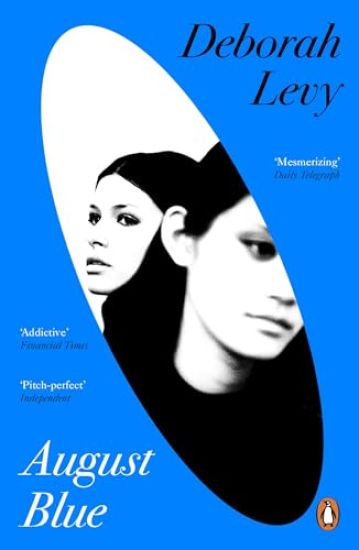
August Blue

August Blue

Deborah Levy

PENGUIN BOOKS LTD
2023
sidottu
A SUNDAY TIMES BESTSELLERBOOK OF THE YEAR 2023 ACCORDING TO FINANCIAL TIMES, GUARDIAN, INDEPENDENT, TIME MAGAZINEThe mesmerising new novel from the twice Booker-shortlisted author of Hot Milk and Swimming HomeAt the height of her career, concert pianist Elsa M. Anderson - former child prodigy, now in her thirties - walks off the stage in Vienna, mid-performance.Now she is in Athens, watching as another young woman, a stranger but uncannily familiar - almost her double - purchases a pair of mechanical dancing horses at a flea market. Elsa wants the horses too, but there are no more for sale. She drifts to the ferry port, on the run from her talent and her history.So begins a journey across Europe, shadowed by the elusive woman who bought the dancing horses.A dazzling portrait of melancholy and metamorphosis, August Blue uncovers the ways in which we seek to lose an old story, find ourselves in others and create ourselves anew.'A writer at the peak of her talents' Lisa Appignanesi'There's no one touching the brilliance of Deborah Levy's prose today' Lee Rourke'Levy's strength is her originality of thought and expression' Jeanette Winterson
Hot Milk

Hot Milk

Deborah Levy

Penguin Books Ltd.
2017
pokkari
SHORTLISTED FOR THE MAN BOOKER PRIZE 2016 SHORTLISTED FOR THE GOLDSMITHS PRIZE 2016 Plunge into this hypnotic tale of female sexuality and power - from the Man Booker shortlisted author of Swimming Home Two women arrive in a village on the Spanish coast. Rose is suffering from a strange illness andher doctors are mystified. Her daughter Sofia has brought her here to find a cure with the infamous and controversial Dr Gomez - a man of questionable methods and motives. Intoxicated by thick heat and the seductive people who move through it, both women begin to see their lives clearly for the first time in years. Through the opposing figures of mother and daughter, Deborah Levy explores the strange and monstrous nature of womanhood. Dreamlike and utterly compulsive, Hot Milk is a delirious fairy tale of feminine potency, a story both modern and timeless.
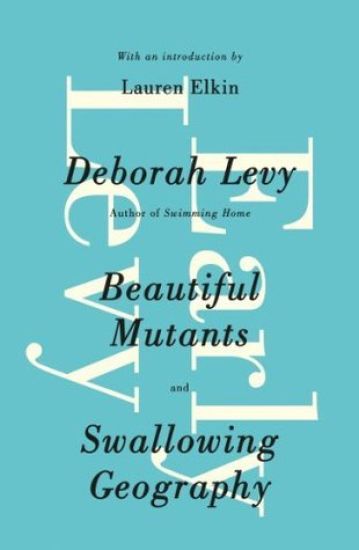
Early Levy

Early Levy

Deborah Levy

Penguin Books Ltd
2014
pokkari
Early Levy comprises two pioneering early works by Man Booker-shortlisted writer Deborah Levy.BEAUTIFUL MUTANTS Lapinski, a manipulative and magical Russian exile, summons forth a number of highly contemporary urban pilgrims. Through them, Levy explores broken dreams and self-destructive desires in a shimmering, dislocated allegory of its times.& SWALLOWING GEOGRAPHY Like her namesake Jack Kerouac, J.K. is always on the road, travelling Europe with her typewriter in a pillowcase. From J.K.'s irreverent, ironic perspective, Levy charts a new, dizzying, end-of-the-century world of shifting boundaries and displaced peoples.'She storms through the back door, refusing to be weighed down with rationalist and aesthetic baggage . . . [This] is a world on the brink of destruction but it's going down with a barnyard laugh and an explosive extravagance of imagination' Blitz'It throbs its way into the imagination like the unguided missile it decries' Observer on Beautiful MutantsDeborah Levy writes fiction, plays and poetry. Her work has been staged by the Royal Shakespeare Company, and she is the author of numerous highly praised books including Things I Don't Want to Know and The Unloved, both of which are now published by Penguin. Her novel Swimming Home was shortlisted for the 2012 Man Booker Prize, 2012 Specsavers National Book Awards (UK Author of the Year) and 2013 Jewish Quarterly Wingate Prize.
The Secret of Magic

The Secret of Magic

Deborah Johnson

Penguin Books Ltd
2015
pokkari
'[An] addictive tale of intrigue' - the Independent'A powerful portrait of the Deep South in the year before the civil rights movement' - Sunday TimesIf you liked The Help, you'll love this one!' - Entertainment WeeklyIn 1946 Regina Robichard is a rarity. A young New York civil rights lawyer, working for Thurgood Marshall, Reggie stumbles across a letter asking her boss to investigate the case of a young black soldier whose body has been found floating in the river in Mississippi. It fires her zeal.For Reggie, justice is not the only draw to this case. The letter is signed by the reclusive M. P. Calhoun, author of one of the most banned books in the country, a book Reggie loved as a child, about the friendship between three children, black and white, a magical forest - and a murder.Reggie has just three weeks in the South to investigate. But once down in Mississippi, amid the intoxicating landscape of cotton fields and lush plantations, Reggie not only finds herself further away from New York than she had ever imagined, but walking directly into M. P. Calhoun's book, a place where more than one type of justice exists.
Cost of Living

Cost of Living

Deborah Levy

Penguin
2019
pokkari
From the twice-Man Booker Prize-shortlisted author of Hot Milk and Swimming Home : Dazzling, essential, entirely unlike anything else -- a memoir on modern womanhood, rejecting oppressive social expectations and turning instead towards a thrilling, transformative freedom What does it mean to be free? What kind of women are we allowed to become? What would it feel like to live with truth, with integrity, with joy? And if we could find those things, would we be brave enough to claim them? In this astonishing memoir, Deborah Levy confronts the essential questions of modern womanhood with humour, pragmatism, and profoundly resonant wisdom. Reflecting on the period when she wrote the Man Booker Prize-shortlisted Hot Milk - when her mother was dying, her daughters were leaving home, her marriage was coming to an end - The Cost of Living is characteristically eloquent on mothers and daughters, social expectations and surreal realities, and the fraught, necessary creative process of the writer. Expanding out from these ideas, it becomes a manifesto for female experience, as the author embraces the exhilarating terror of freedom, seeking to understand what that freedom could mean and how it might feel. Praise for Deborah Levy's Hot Milk: 'Mythic, dreamlike... A literary triumph' Financial Times Books of the Year 'A beautifully rich, vividly atmospheric and psychologically complex exploration of mother-daughter interdependency. Every woman should read it' Bernardine Evaristo, author of Mr Loverman and the forthcoming Girl, Woman, Other 'A powerful novel about a daughter's struggle to define herself, Levy draws attention to the mythic in all of us [and] shows us the exquisite difficulty of realising that, in a world of myths, we have the freedom to write our own parts' Spectator
Real Estate

Real Estate

Deborah Levy

Penguin Books Ltd
2022
pokkari
From one of the great thinkers and writers of our time, comes the unmissable final instalment in Deborah Levy's critically acclaimed 'Living Autobiography'.'A beautifully crafted and thought-provoking snapshot of a life' The Evening Standard_________________________________'I began to wonder what myself and all unwritten and unseen women would possess in their property portfolios at the end of their lives. Literally, her physical property and possessions, and then everything else she valued, though it might not be valued by society. What might she claim, own, discard and bequeath? Or is she the real estate, owned by patriarchy? In this sense, Real Estate is a tricky business. We rent it and buy it, sell and inherit it - but we must also knock it down.'Following the critical acclaim of Things I Don't Want to Know and The Cost of Living, this final volume of Deborah Levy's 'Living Autobiography' is an exhilarating, thought-provoking and boldly intimate meditation on home and the spectres that haunt it._________________________________'Real Estate is a book to dive into. Come on in, the water's lovely' The Daily Telegraph'Her reflections on domesticity, freedom and romance are so beautiful, I found myself underlining multiple sentences a page. Wry, warm and uplifting, it's a book I'll return to again and again' Stylist'[Levy's living autobiography series is] a glittering triple echo of books that are as much philosophical discourse as a manifesto for living and writing' Financial Times
Man Who Saw Everything

Man Who Saw Everything

Deborah Levy

Penguin
2020
pokkari
In 1988 Saul Adler (a narcissistic, young historian) is hit by a car on the Abbey Road. He is apparently fine; he gets up and goes to see his art student girlfriend, Jennifer Moreau. They have sex then break up, but not before she has photographed Saul crossing the same Abbey Road.Saul leaves to study in communist East Berlin, two months before the Wall comes down. There he will encounter - significantly - both his assigned translator and his translator's sister, who swears she has seen a jaguar prowling the city. He will fall in love and brood upon his difficult, authoritarian father. And he will befriend a hippy, Rainer, who may or may not be a Stasi agent, but will certainly return to haunt him in middle age.Slipping slyly between time zones and leaving a spiralling trail, Deborah Levy's electrifying The Man Who Saw Everything examines what we see and what we fail to see, the grave crime of carelessness, the weight of history and our ruinous attempts to shrug it off.
Things I Don't Want to Know

Things I Don't Want to Know

Deborah Levy

Penguin Books Ltd.
2018
pokkari
Unmissable. Like chancing upon an oasis, you want to drink it slowly... Subtle, unpredictable, surprising' Guardian.Things I Don't Want to Know is the first in Deborah Levy's essential three-part 'Living Autobiography' on writing and womanhood.Taking George Orwell's famous essay, 'Why I Write', as a jumping-off point, Deborah Levy offers her own indispensable reflections of the writing life. With wit, clarity and calm brilliance, she considers how the writer must stake claim to that contested territory as a young woman and shape it to her need. Things I Don't Want to Know is a work of dazzling insight and deep psychological succour, from one of our most vital contemporary writers.'Superb sharpness and originality of imagination. An inspiring work of writing' Marina Warner.
August Blue

August Blue

Deborah Levy

PENGUIN BOOKS LTD
2024
pokkari
A SUNDAY TIMES BESTSELLERBOOK OF THE YEAR 2023 ACCORDING TO FINANCIAL TIMES, GUARDIAN, INDEPENDENT, TIME MAGAZINE'Levy's lyrical, pitch-perfect prose is an exploration of our reasons for living, the forces that drive us and the inner music that controls the rhythms of our dance through life and love' IndependentThe mesmerising new novel from the twice Booker-shortlisted author of Hot Milk and Swimming HomeAt the height of her career, concert pianist Elsa M. Anderson - former child prodigy, now in her thirties - walks off the stage in Vienna, mid-performance.Now she is in Athens, watching as another young woman, a stranger but uncannily familiar - almost her double - purchases a pair of mechanical dancing horses at a flea market. Elsa wants the horses too, but there are no more for sale. She drifts to the ferry port, on the run from her talent and her history.So begins a journey across Europe, shadowed by the elusive woman who bought the dancing horses.A dazzling portrait of melancholy and metamorphosis, August Blue uncovers the ways in which we seek to lose an old story, find ourselves in others and create ourselves anew.'Deborah Levy writes like a dream and I mean that quite literally' Stuart Kelly, The Scotsman'A virtuosic novel of identity and breakdown . . . [it] flickers constantly between comedy and darkness. You know you'll read August Blue again' M John Harrison, GuardianSunday Times bestseller, May 2023