Kirjojen hintavertailu. Mukana 12 016 292 kirjaa ja 12 kauppaa.

Kirjahaku

Etsi kirjoja tekijän nimen, kirjan nimen tai ISBN:n perusteella.

1000 tulosta hakusanalla Deborah Hopkinson

Zora Neale Hurston

Zora Neale Hurston

Deborah G. Plant

Praeger Publishers Inc
2007
sidottu
This new biography takes into account the whole woman—not just the prolific author of such great works as Their Eyes Were Watching God , Moses, Man of the Mountain, Jonah's Gourd Vine, Mules and Men, as well as essays, folklore, short stories, and poetry—but the philosopher and the spiritual soul, examining how each is reflected in her career, fiction and nonfiction publications, social and political activity, and, ultimately, her death. When we ask what animated the woman who achieved all that she did, we must necessarily probe further. Not one of the other existing biographies discusses or analyzes Hurston's spirituality in any sustained sense, even though this spirituality played a significant role in her life and works. As author Deborah G. Plant shows, Zora Neale Hurston's ability to achieve and to endure all she did came from the courage of her convictions—a belief in self that was profoundly centered and anchored in spirituality.
Leopoldo Méndez

Leopoldo Méndez

Deborah Caplow

University of Texas Press
2007
sidottu
The first major overview of the works and career of Leopoldo MÉndez-one of the most distinguished printmakers of the twentieth century and a contemporary and countryman of Diego Rivera, JosÉ Clemente Orozco, and JosÉ Guadalupe Posada-contains over 150 illustrations Winner, A Choice Magazine Outstanding Academic BookLeopoldo MÉndez (1902-1969) was one of the most distinguished printmakers of the twentieth century, as well as one of Mexico's most accomplished artists. A politically motivated artist who strongly opposed injustice, fascism, and war, MÉndez helped form and actively participated in significant political and artistic groups, including the Estridentistas in the 1920s and the Liga de Escritores y Artistas Revolucionarios (LEAR) and the Taller de GrÁfica Popular (TGP) in the 1930s. To champion Mexican art and artists, MÉndez also founded and directed the Fondo Editorial de la PlÁstica Mexicana, a highly respected art book publishing company.Leopoldo MÉndez is the first book-length work in English on this major Mexican artist. Profusely illustrated with over one hundred and fifty images, it examines the whole sweep of MÉndez's artistic career. Deborah Caplow situates MÉndez within both Mexican and international art of the twentieth century, tracing the lines of connection and influence between MÉndez and such contemporaries as David Alfaro Siqueiros, Diego Rivera, JosÉ Clemente Orozco, and printmaker JosÉ Guadalupe Posada. Caplow focuses on the period in the 1930s when MÉndez and his fellow artists in LEAR and TGP played a key role in the development of a Mexican political art movement and a modern Mexican cultural identity. She also describes how MÉndez created a body of powerful anti-Fascist images before and during World War II and subsequently collaborated with artists from Mexico and around the world on political printmaking, in addition to publishing books and creating prints for films by the eminent Mexican cinematographer, Gabriel Figueroa.
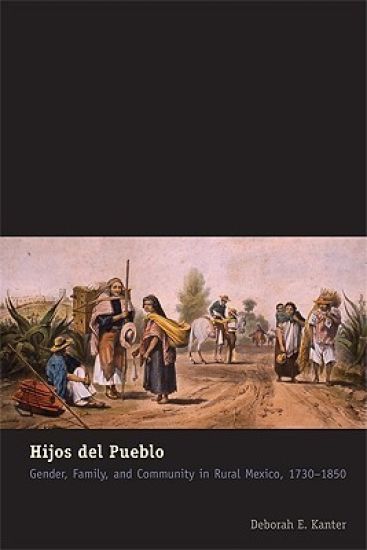
Hijos del Pueblo

Hijos del Pueblo

Deborah E. Kanter

University of Texas Press
2009
pokkari
The everyday lives of indigenous and Spanish families in the countryside, a previously under-explored segment of Mexican cultural history, are now illuminated through the vivid narratives presented in Hijos del Pueblo ("offspring of the village"). Drawing on neglected civil and criminal judicial records from the Toluca region, Deborah Kanter revives the voices of native women and men, their Spanish neighbors, muleteers, and hacienda peons to showcase their struggles in an era of crisis and uncertainty (1730-1850). Engaging and meaningful biographies of indigenous villagers, female and male, illustrate that no scholar can understand the history of Mexican communities without taking gender seriously. In legal interactions native plaintiffs and Spanish jurists confronted essential questions of identity and hegemony. At once an insightful consideration of individual experiences and sweeping paternalistic power constructs, Hijos del Pueblo contributes important new findings to the realm of gender studies and the evolution of Latin America.
Dangerous Gifts

Dangerous Gifts

Deborah Lyons

University of Texas Press
2012
nidottu
Deianeira sends her husband Herakles a poisoned robe. Eriphyle trades the life of her husband Amphiaraos for a golden necklace. Atreus's wife Aerope gives away the token of his sovereignty, a lamb with a golden fleece, to his brother Thyestes, who has seduced her. Gifts and exchanges always involve a certain risk in any culture, but in the ancient Greek imagination, women and gifts appear to be a particularly deadly combination.This book explores the role of gender in exchange as represented in ancient Greek culture, including Homeric epic and tragedy, non-literary texts, and iconographic and historical evidence of various kinds. Using extensive insights from anthropological work on marriage, kinship, and exchange, as well as ethnographic parallels from other traditional societies, Deborah Lyons probes the gendered division of labor among both gods and mortals, the role of marriage (and its failure) in transforming women from objects to agents of exchange, the equivocal nature of women as exchange-partners, and the importance of the sister-brother bond in understanding the economic and social place of women in ancient Greece. Her findings not only enlarge our understanding of social attitudes and practices in Greek antiquity but also demonstrate the applicability of ethnographic techniques and anthropological theory to the study of ancient societies.
Speech Presentation in Homeric Epic

Speech Presentation in Homeric Epic

Deborah Beck

University of Texas Press
2012
nidottu
The Iliad and the Odyssey are emotional powerhouses largely because of their extensive use of direct speech. Yet this characteristic of the Homeric epics has led scholars to underplay the poems’ use of non-direct speech, the importance of speech represented by characters, and the overall sophistication of Homeric narrative as measured by its approach to speech representation. In this pathfinding study by contrast, Deborah Beck undertakes the first systematic examination of all the speeches presented in the Homeric poems to show that Homeric speech presentation is a unified system that includes both direct quotation and non-direct modes of speech presentation.Drawing on the fields of narratology and linguistics, Beck demonstrates that the Iliad and the Odyssey represent speech in a broader and more nuanced manner than has been perceived before, enabling us to reevaluate our understanding of supposedly “modern” techniques of speech representation and to refine our idea of where Homeric poetry belongs in the history of Western literature. She also broadens ideas of narratology by connecting them more strongly with relevant areas of linguistics, as she uses both to examine the full range of speech representational strategies in the Homeric poems. Through this in-depth analysis of how speech is represented in the Homeric poems, Beck seeks to make both the process of their composition and the resulting poems themselves seem more accessible, despite pervasive uncertainties about how and when the poems were put together.
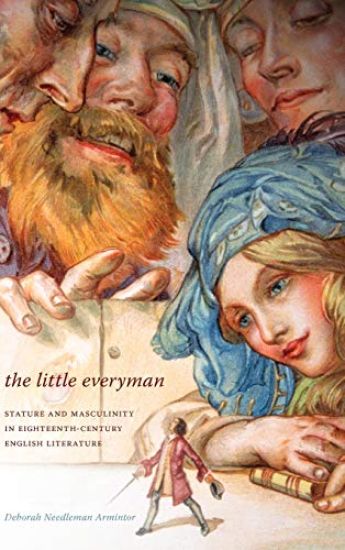
The Little Everyman

The Little Everyman

Deborah Needleman Armintor

University of Washington Press
2011
sidottu
Eighteenth-century English literature, art, science, and popular culture exhibited an unprecedented fascination with small male bodies of various kinds. Henry Fielding's Tom Thumb plays drew packed crowds, while public exhibitions advertised male dwarfs as paragons of English masculinity. Bawdy popular poems featured diminutive men paired with enormous women, and amateur scientists anthropomorphized and gendered the "minute bodies" they observed under their fashionable new pocket microscopes. Little men, both real and imagined, embodied the anxieties of a newly bourgeois English culture and were transformed to suit changing concerns about the status of English masculinity in the modern era.The Little Everyman explores this strange trend by tracing the historical trajectory of the supplanting of the premodern court dwarf by a more metaphorical and quintessentially modern "little man" who came to represent in miniature the historical shift in literary production from aristocratic patronage to the bourgeois fantasy of freelance authorship. Armintor's close readings of Pope, Fielding, Swift, and Sterne highlight little recognized aspects of classic works while demonstrating how the little man became an "everyman."
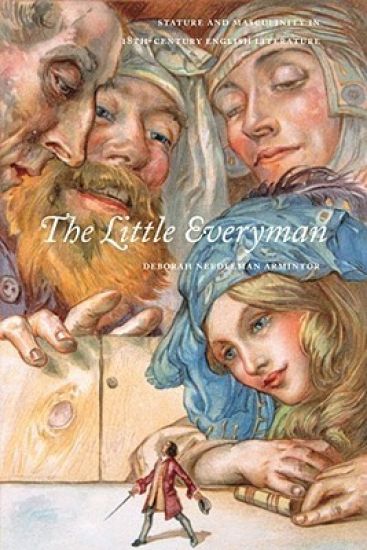
The Little Everyman

The Little Everyman

Deborah Needleman Armintor

University of Washington Press
2011
pokkari
Eighteenth-century English literature, art, science, and popular culture exhibited an unprecedented fascination with small male bodies of various kinds. Henry Fielding's Tom Thumb plays drew packed crowds, while public exhibitions advertised male dwarfs as paragons of English masculinity. Bawdy popular poems featured diminutive men paired with enormous women, and amateur scientists anthropomorphized and gendered the "minute bodies" they observed under their fashionable new pocket microscopes. Little men, both real and imagined, embodied the anxieties of a newly bourgeois English culture and were transformed to suit changing concerns about the status of English masculinity in the modern era.The Little Everyman explores this strange trend by tracing the historical trajectory of the supplanting of the premodern court dwarf by a more metaphorical and quintessentially modern "little man" who came to represent in miniature the historical shift in literary production from aristocratic patronage to the bourgeois fantasy of freelance authorship. Armintor's close readings of Pope, Fielding, Swift, and Sterne highlight little recognized aspects of classic works while demonstrating how the little man became an "everyman."
Out [o] Fashion Photography

Out [o] Fashion Photography

Deborah Willis

University of Washington Press
2013
sidottu
Out [o] Fashion Photography: Embracing Beauty investigates the transformative experience of the photograph. In this book Deborah Willis explores historical perceptions of beauty and desire through artistic and ethnographic imagery and the role individual photographers play in constructing ways of seeing. Through the themes of idealized beauty, the unfashionable body, the gendered image, and photography as memory, Willis challenges and makes problematic the "reading" of photographic images in the twenty-first century.Working from the significant photographic holdings of the University of Washington's Henry Art Gallery, and the University of Washington Libraries, Special Collections, the author examines shifting gender attitudes that emerged in work by women photographers such as Gertrude Käsebier and Diane Arbus. Willis discusses ethnographic ideologies underpinning the work of Edward Sheriff Curtis and Fred E. Miller who worked with Native American subjects, as well as the framing and reframing of images of black people in the work of Samuel Montague Fassett and Carrie Mae Weems. Additionally, the effects of fashion and desire on the imaging of beauty are examined in the work of such artists as Don Wallen, Janieta Eyre, and Jan Saudek. The book includes full-page illustrations of works by more than fifty internationally recognized photographers including Lisette Model, Imogen Cunningham, Lewis Wickes Hine, Bruce Davidson, Cecil Beaton, Nan Goldin, André Kertész, Lee Friedlander, Lorna Simpson, Cindy Sherman, and Andy Warhol.
Black Women in Sequence

Black Women in Sequence

Deborah Elizabeth Whaley

University of Washington Press
2015
sidottu
Black Women in Sequence takes readers on a search for women of African descent in comics subculture. From the 1971 appearance of the Skywald Publications character "the Butterfly" - the first Black female superheroine in a comic book - to contemporary comic books, graphic novels, film, manga, and video gaming, a growing number of Black women are becoming producers, viewers, and subjects of sequential art.As the first detailed investigation of Black women's participation in comic art, Black Women in Sequence examines the representation, production, and transnational circulation of women of African descent in the sequential art world. In this groundbreaking study, which includes interviews with artists and writers, Deborah Whaley suggests that the treatment of the Black female subject in sequential art says much about the place of people of African descent in national ideology in the United States and abroad.
Black Women in Sequence

Black Women in Sequence

Deborah Elizabeth Whaley

University of Washington Press
2015
pokkari
Black Women in Sequence takes readers on a search for women of African descent in comics subculture. From the 1971 appearance of the Skywald Publications character "the Butterfly" - the first Black female superheroine in a comic book - to contemporary comic books, graphic novels, film, manga, and video gaming, a growing number of Black women are becoming producers, viewers, and subjects of sequential art.As the first detailed investigation of Black women's participation in comic art, Black Women in Sequence examines the representation, production, and transnational circulation of women of African descent in the sequential art world. In this groundbreaking study, which includes interviews with artists and writers, Deborah Whaley suggests that the treatment of the Black female subject in sequential art says much about the place of people of African descent in national ideology in the United States and abroad.
Insults in Classical Athens

Insults in Classical Athens

Deborah Kamen

University of Wisconsin Press
2020
sidottu
Scholarly investigations of the rich field of verbal and extraverbal Athenian insults have typically been undertaken piecemeal. Deborah Kamen provides an overview of this vast terrain and synthesizes the rules, content, functions, and consequences of insulting fellow Athenians. The result is the first volume to map out the full spectrum of insults, from obscene banter at festivals, to invective in the courtroom, to slander and even hubristic assaults on another's honor.While the classical city celebrated the democratic equality of "autochthonous" citizens, it counted a large population of noncitizens as inhabitants, so that ancient Athenians developed a preoccupation with negotiating, affirming, and restricting citizenship. Kamen raises key questions about what it meant to be a citizen in democratic Athens and demonstrates how insults were deployed to police the boundaries of acceptable behavior. In doing so, she illuminates surprising differences between antiquity and today and sheds light on the ways a democratic society valuing "free speech" can nonetheless curb language considered damaging to the community as a whole.
Insults in Classical Athens

Insults in Classical Athens

Deborah Kamen

UNIVERSITY OF WISCONSIN PRESS
2022
nidottu
Scholarly investigations of the rich field of verbal and extraverbal Athenian insults have typically been undertaken piecemeal. Deborah Kamen provides an overview of this vast terrain and synthesizes the rules, content, functions, and consequences of insulting fellow Athenians. The result is the first volume to map out the full spectrum of insults, from obscene banter at festivals, to invective in the courtroom, to slander and even hubristic assaults on another's honor.While the classical city celebrated the democratic equality of "autochthonous" citizens, it counted a large population of noncitizens as inhabitants, so that ancient Athenians developed a preoccupation with negotiating, affirming, and restricting citizenship. Kamen raises key questions about what it meant to be a citizen in democratic Athens and demonstrates how insults were deployed to police the boundaries of acceptable behavior. In doing so, she illuminates surprising differences between antiquity and today and sheds light on the ways a democratic society valuing "free speech" can nonetheless curb language considered damaging to the community as a whole.
Jewish High Society in Old Regime Berlin

Jewish High Society in Old Regime Berlin

Deborah Hertz

Yale University Press
1988
sidottu
During the quarter century between 1780 and 1806, Berlin's courtly and intellectual elites gathered in the homes of a few wealthy, cultivated Jewish women to discuss the events of the day. Princes, nobles, upwardly mobile writers, actors, and beautiful Jewish women flocked to the salons of Rahel Varnhagen, Henriette Herz, and Dorothea von Courland, creating both a new cultural institution and an example of social mixing unprecedented in the German past. In this book, Deborah Hertz offers the first detailed history of these salons, using rich narrative as well as analytic social history to explain why such an institution arose and what it meant to those involved.Hertz reconstructs the cultural and social context that nurtured salon life, describing how the salons emerged out of courtly society, commercial leisure institutions, and the city's new intellectual clubs. Using a collective biography of one hundred participants in sixteen salons, Hertz shows that there were complex social and personal motives for salon participation. Noblemen, for example, needed Jewish financiers for private loans, but they also wanted access to more progressive cultural currents. For Jewish women, salon leadership offered not only an escape from a restricted home life but also social and personal power, power that was frequently consolidated in their upwardly mobile marriages to noblemen.However advantageous and stimulating these salons were for their participants, they were the product of a transitory convergence of social and cultural structures. Hertz concludes by exploring how both underground antisemitic gossip and the new patriotism unleashed by the upheavals in Prussia after 1806 destroyed Jewish salon life in Berlin.
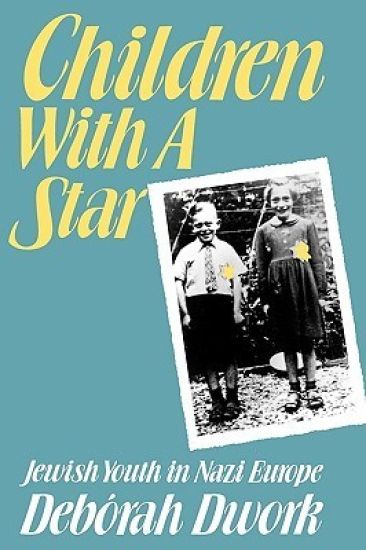
Children with a Star

Children with a Star

Debórah Dwork

Yale University Press
1993
pokkari
“The little children had little parents in the [twins’] block [in Auschwitz]. For example, I was a little mama for twins, two girls named Evichka and Hanka…My sister was the mother for Hanka and I was the mother for Evichka…Evichka told me that she got a mother and a father, but that they had gone away on transport. The twins were four years old. I said to her, ‘I will be your mother.’ She said, ‘But you are only sixteen years old; it doesn’t matter?’ I said, ‘No, it doesn’t matter because it is more important that we are together and that we are not alone. You have a mother and I have a daughter.’” —Magda Magda Somogyi Many books have been written about the experiences of Jews in Nazi Europe. None, however, has focused on the persecution of the most vulnerable members of the Jewish community—its children. This powerful and moving book by Deborah Dwork relates the history of these children for the first time. The book is based on hundreds of oral histories conducted with survivors who were children in the Holocaust, in Europe and North America, an extraordinary range of primary documentation uncovered by the author (including diaries, letters, photographs and family albums), and archival records. Drawing on these sources, Dwork reveals the feelings, daily activities, and perceptions of Jewish children who lived and died in the shadow of the Holocaust. She reconstructs and analyzes the many different experiences the children faced. In the early years of Nazi domination they lived at home, increasingly opposed by rising anti-Semitism. Later some went into hiding while others attempted to live openly on gentile papers. As time passed, increasing numbers were forced into transit camps, ghettos, and death and slave labor camps. Although nearly ninety percent of the Jewish children in Nazi Europe were murdered, we learn in this history not of their deaths but of the circumstances of their lives. Children with a Star is a major new contribution to the history of Europe during the Nazi era. It explains from a different perspective how European society functioned during the wary years, how the German noose tightened, and how the Jewish victims and their gentile neighbors responded. It expands the definition of resistance by examining the history of the people—primarily women—who helped Jewish children during the war. By focusing on children, it strips away rationalizations that the victims of Nazism somehow “allowed or “deserved” their punishment. And by examining the experience of children and thereby laying bare how society functions at its most fundamental level, it not only provides a unique understanding of the Holocaust but a new theoretical approach to the study of history.
The Architectural History of Venice

The Architectural History of Venice

Deborah Howard

Yale University Press
2004
pokkari
This book is the indispensable guide to the history of architecture in Venice, encompassing the city’s fascinating variety of buildings from ancient times to the present day. Completely updated and filled with splendid new illustrations, this edition invites all visitors to Venice, armchair travelers, and students of Renaissance art and architecture to a fuller appreciation of the buildings of this uniquely beautiful city.“The best concise introduction to Venetian architecture in English.”—Times Literary Supplement“Compact and manageable . . . an excellent introduction to the novice preparing for a first Venetian experience.”—Society of Architectural Historians“A hugely rewarding and accessible book.”—Richard Cork, Modern PaintersPublished with the assistance of the Getty Grant Program
When Dieting Becomes Dangerous

When Dieting Becomes Dangerous

Deborah M. Michel; Susan G. Willard

Yale University Press
2003
pokkari
This primer on anorexia and bulimia is aimed directly at patients and the people who care about them. Written in simple, straightforward language by two experts in the field, it describes the symptoms and warning signs of eating disorders, explains their presumed causes and complexities, and suggests effective treatments. The book includes:• guidance about what to expect and look for in the assessment and treatment process; • emphasis on the critical role of psychotherapy and family therapy in recovery;• explanation of how anorexia and bulimia differ in their origins and manifestations; • information on males with eating disorders and how they are similar to and different from female patients;• a separate chapter for health care professionals who are not specialists in the diagnosis and treatment of individuals with eating disorders;• up-to-date readings, Internet sites, and professional organizations in the United States and in Europe.
Every Farm a Factory

Every Farm a Factory

Deborah Fitzgerald

Yale University Press
2010
pokkari
During the early decades of the twentieth century, agricultural practice in America was transformed from a pre-industrial to an industrial activity. In this book Deborah Fitzgerald argues that farms became modernized in the 1920s because they adopted not only new machinery but also the financial, cultural, and ideological apparatus of industrialism.Fitzgerald examines how bankers and emerging professionals in engineering and economics pushed for systematic, businesslike farming. She discusses how factory practices served as a template for the creation across the country of industrial or corporate farms. She looks at how farming was affected by this revolution and concludes by following several agricultural enthusiasts to the Soviet Union, where the lessons of industrial farming were studied.
A Girl's Childhood

A Girl's Childhood

Deborah Weinstein

Yale University Press
2015
sidottu
A uniquely detailed study of child development theory and practice in the post–World War II era Sixty years ago, a group of prominent psychoanalysts, developmentalists, pediatricians, and educators at the Yale Child Study Center joined together with the purpose of formulating a general psychoanalytic theory of children’s early development. The group’s members composed detailed narratives about their work with the study’s children, interviewed families regularly and visited them in their homes, and over the course of a decade met monthly for discussion. The contributors to this volume consider the significance of the Child Study Center’s landmark study from various perspectives, focusing particularly on one child’s unfolding sense of herself, her gender, and her relationships.