Kirjojen hintavertailu. Mukana 12 016 292 kirjaa ja 12 kauppaa.

Kirjahaku

Etsi kirjoja tekijän nimen, kirjan nimen tai ISBN:n perusteella.

1000 tulosta hakusanalla Derek Landy

Occupational Risk Control

Occupational Risk Control

Derek Viner

Routledge
2019
nidottu
Occupational Risk Control contains a practical theory of risk based on the principles the physical sciences. The book provides details of the implications of such theory for real-world practice that will be of value to the legislator, general or specialist risk engineer, scientist, academic, student, risk/safety practitioners as well as managers of industrial or commercial undertakings.The contents are a result of over 40 years of experience in researching, teaching and consulting. The theoretical base is relevant peer-reviewed physical sciences literature. Such literature points out the necessity of understanding the principles that enable processes resulting in damage and loss to be explained and it enables the risk arising from the uncertainty of these processes to be objectively defined, described as well as estimated using real number values. Of these principles and their applications a student once remarked “this should be compulsory study for all engineering students”.A critical assessment of the pervasive but unscientific accident terminology is included to assist the reader to reflect on the value of this In a field in which there is a plethora of commercial and pseudo-academic practical tools based on accident theory, this text provides a foundation for the thinking academic and practitioner to critically evaluate the meaning, scope and value of such tools. The text has chapters on accident theory, damage process models, risk, risk estimation, risk control, risk evaluation, the classification and analysis of risks, risk numeracy, the management of risks in general and the management of technical risks in particular. There are notes on accident investigation and the role of the risk adviser. A substantial glossary of terms is included.The text is supported by a dedicated web site (www.derekviner.com) which contains discussion and examples of topics as well as a blog.
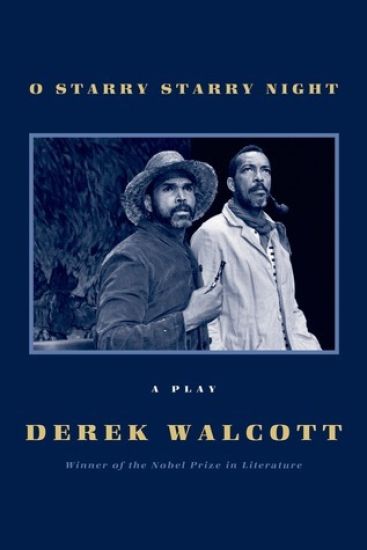
O Starry Starry Night

O Starry Starry Night

Derek Walcott

Farrar, Straus and Giroux
2014
pokkari
Two masterful artists--Gauguin and van Gogh--come alive in a vibrant drama about friendship, art, and madness Two painters--Paul Gauguin and Vincent van Gogh--are living together in the sleepy town of Arles in 1888. Soon, Gauguin, frustrated by van Gogh's refusal to acknowledge his increasingly troubled mind, will depart for Paris. In two years, van Gogh will be dead by his own hand. In the meantime, the friends discuss their craft; they frequent a local caf that van Gogh will soon immortalize; they become acquainted with a young prostitute, Lotte, who becomes Gauguin's lover; they argue; they paint. In Derek Walcott's new historical play, O Starry Starry Night, two world-renowned artists come to life as they wrestle both with grand themes--friendship, loyalty, fame--and with more mundane concerns, money primary among them. The scenes Walcott sketches summon several of van Gogh's most famous paintings: Sunflowers, The Night Caf , The Bedroom at Arles. His manipulation of language--van Gogh's eloquent monologues giving way to more abstract speeches--evokes the painter's descent into madness. Over the action hangs the threat of violence, of death, which lends the play a potent urgency; for at least one of the characters, time is quickly running out. O Starry Starry Night is powerfully wrought, and demonstrates once again the sharpness of Walcott's eye: as a painter, as a poet, as a writer, and, above all, as an observer of human follies, foibles, failings, and aspirations.
The Arkansas Testament

The Arkansas Testament

Derek Walcott

Farrar, Strauss Giroux-3pl
1988
nidottu
Derek Walcott's eighth collection of poems, "The Arkansas Testament," is divided into two parts--"Here," verse evoking the poet's native Caribbean, and "Elsewhere." It opens with six poems in quatrains whose memorable, compact lines further Walcott's continuous effort to crystallize images of the Caribbean landscape and people.For several years, Derek Walcott has lived mainly in the United States. "The Arkansas Testament," one of the book's long poems, is a powerful confrontation of changing allegiances. The poem's crisis is the taking on of an extra history, one that challenges unquestioning devotion.
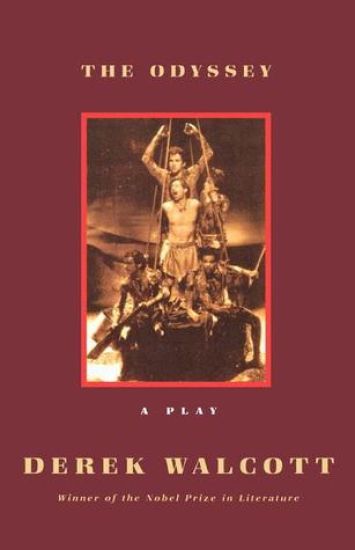
The Odyssey: A Stage Version

The Odyssey: A Stage Version

Derek Walcott; Homer; Walcott Derek

Farrar, Straus and Giroux
1993
nidottu
With its inspired counterpointing of Homeric and Caribbean themes, Derek Walcott's play The Odyssey, commissioned by Britain's Royal Shakespeare Company, springs from the same imaginative sources as his epic poem Omeros. " The Odyssey features Walcott's] voluptuous metaphor making and severe truth telling."--Time Episodes of the story of Odysseus' protracted wanderings from fallen Troy to his island home of Ithaca are pungently interspersed with a commentary by the blind singer Billy Blue. Proteus, the Old Man of the Sea, the giant Cyclops, Circe and her revelers, ghosts, and mermaids are among the cast. With its vast sweep and richly figurative language, The Odyssey confirms that Derek Walcott is as compelling a playwright as he is a poet.
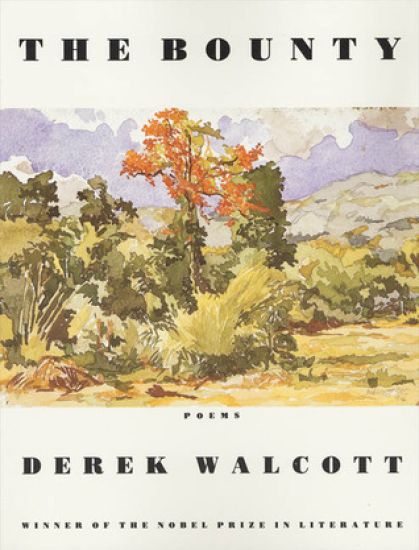
The Bounty: Poems

The Bounty: Poems

Derek Walcott

Farrar, Strauss Giroux-3pl
1998
nidottu
The Bounty was the first book of poems Derek Walcott published after winning the 1992 Nobel Prize in Literature.Opening with the title poem, a memorable elegy to the poet's mother, the book features a haunting series of poems that evoke Walcott's native ground, the island of St. Lucia. "For almost forty years his throbbing and relentless lines kept arriving in the English language like tidal waves," Walcott's great contemporary Joseph Brodsky once observed. "He gives us more than himself or 'a world'; he gives us a sense of infinity embodied in the language."
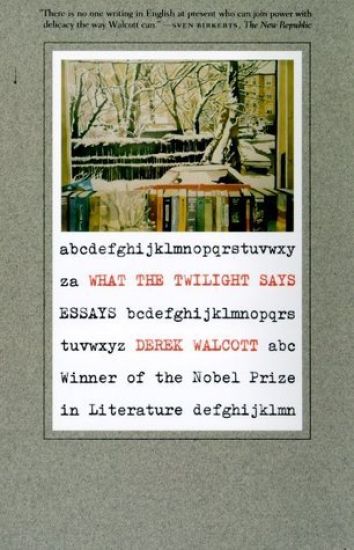
What the Twilight Says: Essays

What the Twilight Says: Essays

Derek Walcott

Farrar, Straus and Giroux
1999
nidottu
The first collection of essays by the Nobel laureate Derek Walcott, What the Twilight Says, drawn from pieces originally published in The New York Review of Books, The New Republic, and elsewhere.This collection forms a volume of remarkable elegance, concision, and brilliance. It includes Walcott's moving and insightful examinations of the paradoxes of Caribbean culture, his Nobel lecture, and his reckoning of the work and significance of such poets as Robert Lowell, Joseph Brodsky, Robert Frost, Les Murray, and Ted Hughes, and of prose writers such as V. S. Naipaul and Patrick Chamoiseau. On every subject he takes up, Walcott the essayist brings to bear the lyric power and syncretic intelligence that made him one of the major poetic voices of our time.
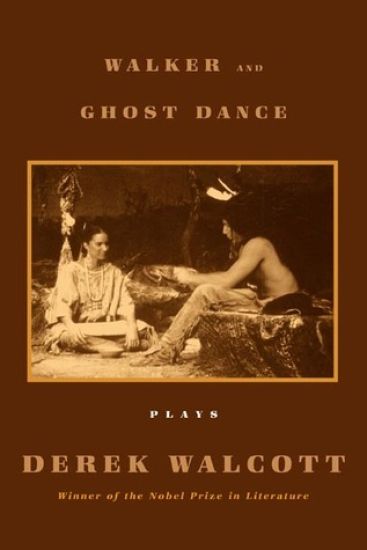
Walker

Walker

Derek. Walcott

Farrar, Straus Giroux Inc
2002
nidottu
Dazzling dramas on American themes from the Nobel laureateOn a cold winter's day on the Dakota plains, Catherine Weldon receives a caller, Kicking Bear, bringing news of Indian rebellion. In the fort nearby, a tiny community splinters apart over how to react. In "Ghost Dance," first performed in 1989, Walcott turns a story with a foregone conclusion -- Sitting Bull and his Sioux followers will die at the hands of the Army and Indian agents -- into a portrait of life at a crossroads of American history. In "Walker," an opera first performed in 1992 and revised for its revival in 2001, Walcott shifts his attention east, taking for his subject David Walker, the nineteenth-century black abolitionist. In Walcott 's hands Walker becomes a classical hero for his people: a leader who is also a poet.
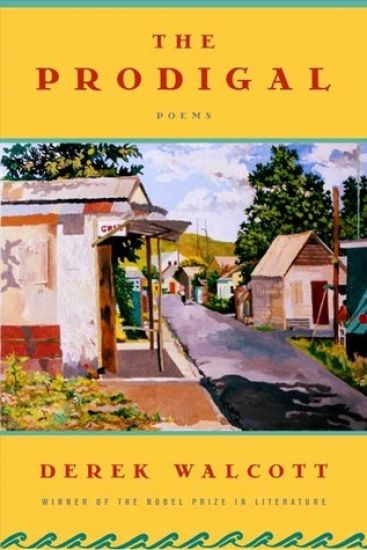
The Prodigal: A Poem

The Prodigal: A Poem

Derek Walcott

Farrar, Straus and Giroux
2006
nidottu
Nobel Laureate Derek Walcott's The Prodigal is a journey through physical and mental landscapes, from Greenwich Village to the Alps, Pescara to Milan, Germany to Cartagena. But always in "the music of memory, water," abides St. Lucia, the author's birthplace, and the living sea. In this book of poems, Derek Walcott has created a sweeping yet intimate epic of an exhausted Europe studded with church spires and mountains, train stations and statuary, where the New World is an idea, a "wavering map," and where History subsumes the natural history of his "unimportantly beautiful" island home. Here, the wanderer fears that he has been tainted by his exile, that his life has become untranslatable, and that his craft itself is rooted in betrayal of the vivid archipelago to which, like Antaeus, he must return for the very sustenance of life.
Selected Poems

Selected Poems

Derek Walcott

Farrar Straus Giroux
2007
nidottu
Drawing from every stage of his career, this volume collects selected poems from Nobel Prize winner Derek Walcott's lifetime of work.Walcott's Selected Poems brings together famous pieces from his early volumes, including "A Far Cry from Africa" and "A City's Death by Fire," with passages from the celebrated Omeros and selections from his later major works, which extend his contributions to reenergizing the contemporary long poem. Here we find all of Walcott's essential themes, from grappling with the Caribbean's colonial legacy to his conflicted love of home and of Western literary tradition; from the wisdom-making pain of time and mortality to the strange wonder of love, the natural world, and what it means to be human. We see his lifelong labor at poetic crafts, his broadening of the possibilities of rhyme and meter, stanza forms, language, and metaphor. Edited and with an introduction by the Jamaican poet and critic Edward Baugh, this volume is a perfect representation of Walcott's breadth of work, spanning almost half a century.
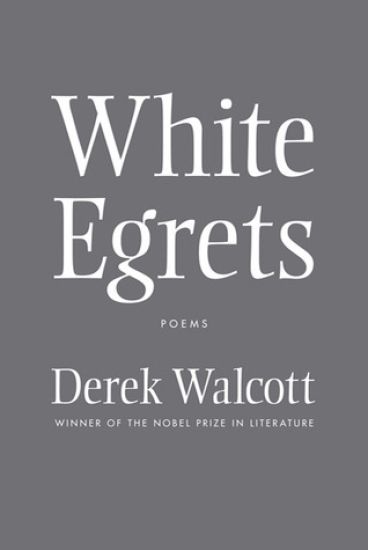
White Egrets: Poems

White Egrets: Poems

Derek Walcott

Farrar, Straus and Giroux
2011
nidottu
A DAZZLING NEW COLLECTION FROM ONE OF THE MOST IMPORTANT POETS OF THE TWENTIETH CENTURY In White Egrets, Derek Walcott treats the characteristic subjects of his career--the Caribbean's complex colonial legacy, his love of the Western literary tradition, the wisdom that comes through the passing of time, the always strange joys of new love, and the sometimes terrifying beauty of the natural world--with an intensity and drive that recall his greatest work. Through the mesmerizing repetition of theme and imagery, Walcott creates an almost surflike cadence, broadening the possibilities of rhyme and meter, poetic form and language. White Egrets is a moving new collection from one of the most important poets of the twentieth century--a celebration of the life and language of the West Indies. It is also a triumphant paean to beauty, love, art, and--perhaps most surprisingly--getting older.
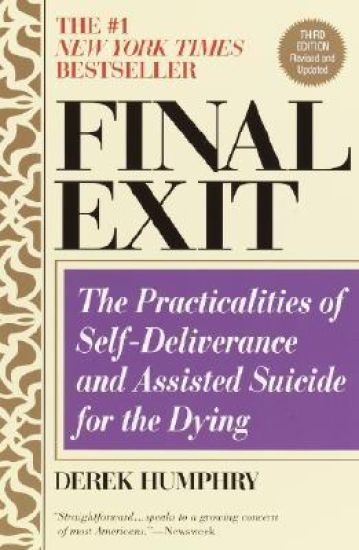
Final Exit (Third Edition): The Practicalities of Self-Deliverance and Assisted Suicide for the Dying
As the legal controversy continues--this newly revised and updated third edition of the landmark bestseller contains new, critically important information for patients, loved ones, and medical personnel. The original publication of Final Exit stunned the nation by offering people with terminal illness a choice on how--and when--to end their suffering. It helped thousands by giving clear instructions to doctors, nurses, and families on how to handle a patient's request for euthanasia. In the wake of court cases and legislative mandates, this revised and updated third edition goes far beyond the original to provide new information about the legality of euthanasia and assisted suicide, and a thoughtful examination of the personal issues involved. It has become the essential source to help loved ones and supportive doctors remain within existing laws and keep a person's dying intimate, private, and dignified. With deep compassion and sensitivity, it spells out why a living will may not be sufficient to have a person's wishes carried out--and what document is a better alternative. It updates where to get proper drugs and exactly how to carry out the quickest, most peaceful way to make a final exit. Finally, it gently talks to a person considering self-deliverance about alternatives, planning, and the means to make every death a "good death" at our time of greatest need.
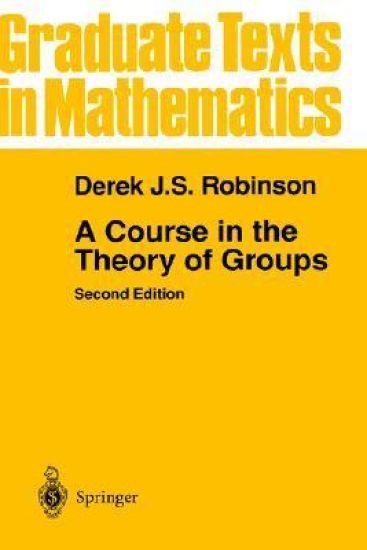
A Course in the Theory of Groups

A Course in the Theory of Groups

Derek J.S. Robinson

Springer-Verlag New York Inc.
1995
sidottu
A Course in the Theory of Groups is a comprehensive introduction to the theory of groups - finite and infinite, commutative and non-commutative. Presupposing only a basic knowledge of modern algebra, it introduces the reader to the different branches of group theory and to its principal accomplishments. While stressing the unity of group theory, the book also draws attention to connections with other areas of algebra such as ring theory and homological algebra. This new edition has been updated at various points, some proofs have been improved, and lastly about thirty additional exercises are included. There are three main additions to the book. In the chapter on group extensions an exposition of Schreier's concrete approach via factor sets is given before the introduction of covering groups. This seems to be desirable on pedagogical grounds. Then S. Thomas's elegant proof of the automorphism tower theorem is included in the section on complete groups. Finally an elementary counterexample to the Burnside problem due to N.D. Gupta has been added in the chapter on finiteness properties.
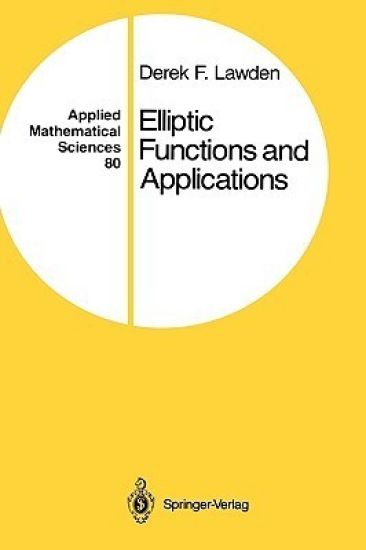
Elliptic Functions and Applications

Elliptic Functions and Applications

Derek F. Lawden

Springer-Verlag New York Inc.
1989
sidottu
The subject matter of this book formed the substance of a mathematical se am which was worked by many of the great mathematicians of the last century. The mining metaphor is here very appropriate, for the analytical tools perfected by Cauchy permitted the mathematical argument to penetra te to unprecedented depths over a restricted region of its domain and enabled mathematicians like Abel, Jacobi, and Weierstrass to uncover a treasurehouse of results whose variety, aesthetic appeal, and capacity for arousing our astonishment have not since been equaled by research in any other area. But the circumstance that this theory can be applied to solve problems arising in many departments of science and engineering graces the topic with an additional aura and provides a powerful argument for including it in university courses for students who are expected to use mathematics as a tool for technological investigations in later life. Unfortunately, since the status of university staff is almost wholly determined by their effectiveness as research workers rather than as teachers, the content of undergraduate courses tends to reflect those academic research topics which are currently popular and bears little relationship to the future needs of students who are themselves not destined to become university teachers. Thus, having been comprehensively explored in the last century and being undoubtedly difficult .
From Castlereagh to Gladstone: 1815-1885
With the defeat of Napoleon at Waterloo in 1815, Britain was again pre-eminent among the great powers, and was to remain so for the next seventy years. Her colonial empire was far more extensive than that of any other country; London was the financial capital of the world; she had the largest navy and mercantile marine, the chief share of the world's trade, the highest manufacturing production, and the most progressive agriculture. From Castlereagh to Gladstone is a fresh and stimulating appraisal of this brilliant period in Britain's history. The age was characterized by an unprecedented rate of change and by extraordinary achievements both at home and abroad. Major legislative and institutional changes such as the three Reform Bills, the establishment of trade unions, and the Education Act of 1870 were enacted. Industrialization and urbanization advanced rapidly. It was a period of remarkable statesmen: Melbourne, Canning, Peel, Lord John Russell, Palmerston, and Benjamin Disraeli. In each of the four sections of the book, Professor Beales presents a succinct narrative of events followed by discussion of particular topics, so that each aspect of the period is set within a clear narrative framework. He traces the main cultural trends and gives comprehensive coverage to all major economic, social, and political developments, providing a balanced survey of events in nineteenth-century Britain and the forces, people, and ideas that shaped them.
Duke: A Portrait of Duke Ellington

Duke: A Portrait of Duke Ellington

Derek Jewell

W. W. Norton Company
1980
nidottu
Edward Kennedy Ellington, the Duke. As a musician, there has been no other artist quite like him. His expansive talent poured out more than five thousand compositions, from all-time pop songs like "Sophisticated Lady" and "Solitude" to major suites and musicals. Derek Jewell had admired Ellington for thirty years, knew him well in the later years of his life, talked with him and watched him at work in many environments. His story starts in turn-of-the-century Washington, when jazz was growing under the fingers of poolroom maestros, moves on to the hustling night life of Prohibition, and then develops into a portrait of Ellington the international celebrity, equally at ease in smoky clubs or with kings and presidents, in dance halls or with cathedral congregations. Since 1962, Derek Jewell has been popular music critic of the London Sunday Times, and he serves as publishing director of Times Newspapers Ltd.
Labor Economics

Labor Economics

Derek Laing

WW Norton Co
2011
sidottu
Labor Economics has comprehensive coverage, and gives instructors the flexibility to tailor their text precisely to the course that they want to teach. The text stresses problem solving, with several Worked Problems in each chapter, and includes leading-edge pedagogy to help students better understand and master the material.