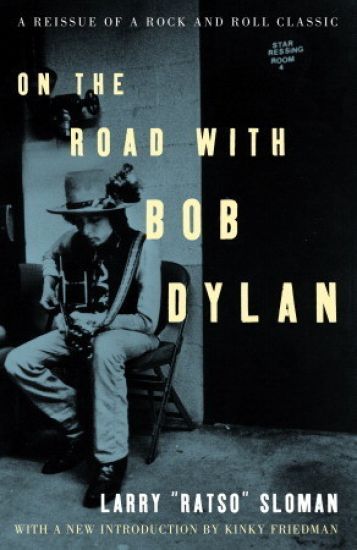
Hailed as "the War and Peace of rock and roll" by Bob Dylan himself, this is the ultimate backstage pass to Dylan's legendary 1975 tour across America--by a former Rolling Stone reporter prominently featured in Martin Scorsese's Netflix documentary Rolling Thunder Revue: A Bob Dylan Story. In 1975, as Bob Dylan emerged from eight years of seclusion, he dreamed of putting together a traveling music show that would trek across the country like a psychedelic carnival. The dream became reality, and On the Road with Bob Dylan is the behind-the-scenes look at what happened when Dylan and the Rolling Thunder Revue took to the streets of America. With the intimate detail of a diary, Larry "Ratso" Sloman's mesmerizing account both transports us to a celebrated period in rock history and provides us with a vivid snapshot of Dylan during this extraordinary time. This reissue of the 1978 classic resonates more than ever as it chronicles one of the most glittering rock circuses ever assembled, with a cast that includes Joan Baez, Robbie Robertson, Joni Mitchell, Allen Ginsberg, Ramblin' Jack Elliott, and a wild entourage of groupies, misfits, sinners, and saints who trailed along for the ride. Sloman candidly captures the all-night revelry and musical prowess--from the backstage antics to impromptu jams--that made the tour a nearly mystical experience. Complete with vintage photos and a new introduction by renowned Texas musician, mystery writer, and Revue member Kinky Friedman, this is an unparalleled treat for Dylan fans old and new. Without question, On the Road with Bob Dylan is a remarkable, revealing piece of writing and a rare up-close and personal view of Dylan on tour.
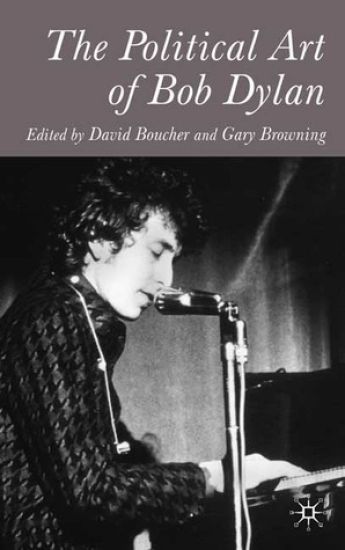
David Boucher and Gary Browning provide a multi-faceted analysis of the political art of Bob Dylan. The contributions cover Dylan's career as a whole, dealing with such themes as alienation, protest, non-conformity and the American Dream. Dylan's work is examined from a variety of perspectives including the aesthetic theory of Kant, Adorno, Lyotard and Collingwood. The assembled authors are notable specialists in political theory, literary criticism and popular culture. They do not tackle Dylan from a single standpoint but collectively question how Dylan's work relates to the theory and practice of politics.
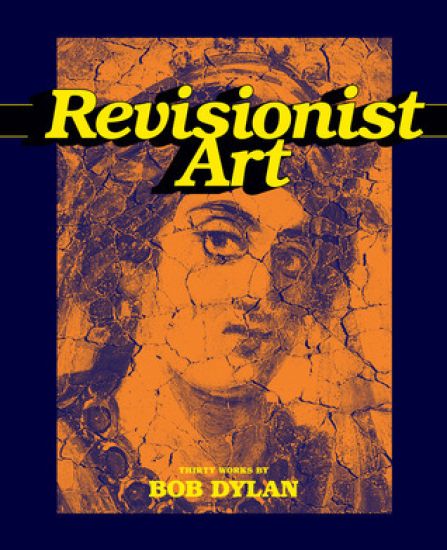
In Revisionist Art, Bob Dylan offers silkscreened covers of popular magazines from the last half century that somehow escaped history’s notice. As Luc Sante says in his introduction to this collection, they seem to emanate, “from a world just slightly removed from ours--a world a bit more honest about its corruption, its chronic horniness, its sweat, its body odor.” Art critic B. Clavery provides a history of Revisionist Art, from cave drawings, to Gutenberg, to Duchamp, Picasso, and Warhol. The book also features vivid commentaries on the work, (re)acquainting the reader with such colorful historical figures as the Depression-era politician Cameron Chambers, whose mustache became an icon in the gay underworld, and Gemma Burton, a San Francisco trial attorney who used all of her assets in the courtroom. According to these works, history is not quite what we think it is. Praise for Revisionist Art: “Revisionist Art may be the strangest move Dylan has made in a long while, but it’s also his most brilliantly uproarious foray into full-blown comedy.” —Rolling Stone, four-star review
Obscenity and Disruption in the Poetry of Dylan Krieger is the first full-length study of the radical poetry of Baton Rouge-based poet Dylan Krieger. Wickedly smart, iconoclastic, daring in their critiques of religion and contemporary culture, Krieger’s poems rank with Allen Ginsberg’s and Adrienne Rich’s as the most provocative and avant-garde of any recent generation. With its debt to third-wave feminism and the "Gurlesque," Krieger’s work nevertheless moves outward and backward across the landmines of sexual precocity and religious fundamentalism and across the entire western project of epistemology as Krieger came to understand it at the University of Notre Dame. Though this book necessarily stays close to Krieger’s specific poems, it follows her lead in stretching her cultural, sexual, and religious furies to their apotheosis in a manifesto of liberation.
*Includes pictures. *Includes Dylan's quotes about his life and career. *Includes footnotes and a bibliography for further reading. "I have dined with kings, I've been offered wings. And I've never been too impressed." - Bob Dylan In the space of just a few years, Bob Dylan, born Robert Allen Zimmerman, rose from the obscurity of a small Minnesota town to a position of royalty atop the folk music landscape of the 1960s, with a universal esteem and status on a par with Elvis Presley and The Beatles. Not content to remain for long within that niche, however, he went on to conquer rock with elements of blues, jazz, pop, country, Gospel, rockabilly and ethnic music of the British Isles, not to mention authoring several books, working in film soundtracks, acting, and holding international art exhibits of his work along the way. He even developed a fondness for old school rap, such as Public Enemy. In the 1960s, "Blowin' in the Wind" and "The Times They Are A' Changing" "became anthems of the anti-war and civil rights movements," but long after the transition from the '50s to the late '60s and '70s was accomplished, the initially baffling young folk singer who appeared out of nowhere was awarded a special Pulitzer Prize for "his profound impact on popular music, and American culture, marked by lyrical compositions of extraordinary poetic power." Over the span of his career, he has received Grammy Awards, Golden Globes, Academy Award Oscars, and he has been inducted into the Rock & Roll Hall of Fame, the Minnesota Music Hall of Fame, the Nashville Songwriters Hall of Fame, and the Songwriters Hall of Fame, not to mention the Pulitzer Prize and Presidential Medal of Freedom. Like other artists who depended on the skill of their texts, ideas or vocal interpretation, such as Jim Morrison and Janis Joplin, Dylan never possessed a conventionally beautiful voice, and as a pure vocalist, he did nothing out of the ordinary, as he once admitted, "Nothing can affect my voice, it's so bad." However, in an era of pure vocal timbres, lilting phrases and a throwback to the quasi-classical genres brought from the British Isles during the British Invasion, he overcame and broke down the universal idea of the voice being the first priority with the music and text coming second. Even for those in the audience that did not follow such a belief, the works of Bob Dylan could be heard anywhere within the industry at the height of his fame, and his charisma and mythologized image did the rest. Numerous friends and colleagues made his songs famous, and well into his career, over 3,000 artists have undertaken them on stage and recording, with over 100 covers of "Blowin' in the Wind" alone. Included among the many artists who enjoyed hits with Dylan songs are Sonny and Cher, The Hollies, and Herman's Hermits. Throughout a thriving and energetic career that has continued into his 70s, the man who served as "the voice of a generation," "the voice of protest," and "the Bard" during the years of the American youth revolution has refused to remain where fans, colleagues and record companies can easily identify and market him, and he has similarly defied becoming an artist confined to the nostalgia of one generation. Through the decades, Dylan has found himself on more than one side of the youth movement; with an intense drive to explore and produce, he has, at times, rebelled against the rebellion, and he refuses to be commanded by his present audience or industry, even if it alienated many along the way. American Legends: The Life of Bob Dylan examines the life and career of America's most famous folk artist and one of its most iconic musicians. Along with pictures of important people, places, and events, you will learn about Dylan like never before, in no time at all.
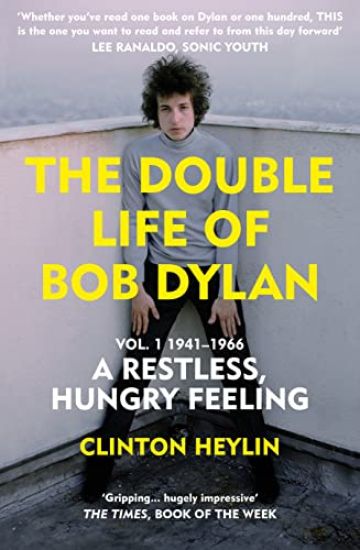
'The definitive, scrupulously researched biography of a life steeped in mystery' ObserverThe definitive biography of one contemporary culture's most iconic and mysterious figures - musical revolutionary, Nobel Prize-winner, chart-topping recording artistIn 2016 it was announced that Bob Dylan had sold his personal archive to the George Kaiser Foundation in Tulsa, Oklahoma, reportedly for $22 million. As the boxes started to arrive, the Foundation asked Clinton Heylin - author of the acclaimed Bob Dylan: Behind the Shades and 'perhaps the world's authority on all things Dylan' (Rolling Stone) - to assess the material they had been given. What he found in Tulsa - as well as what he gleaned from other papers he had recently been given access to by Sony and the Dylan office - so changed his understanding of the artist, especially of his creative process, that he became convinced that a whole new biography was needed. It turns out that much of what previous biographers - Dylan himself included - have said is wrong; often as not, a case of, Print the Legend.With fresh and revealing information on every page A Restless, Hungry Feeling tells the story of Dylan's meteoric rise to fame: his arrival in early 1961 in New York, where he is embraced by the folk scene; his elevation to spokesman of a generation whose protest songs provide the soundtrack for the burgeoning Civil Rights movement; his alleged betrayal when he 'goes electric' at Newport in 1965; his subsequent controversial world tour with a rock 'n' roll band; and the recording of his three undisputed electric masterpieces: Bringing it All Back Home, Highway 61 Revisited and Blonde on Blonde. At the peak of his fame in July 1966 he reportedly crashes his motorbike in Woodstock, upstate New York, and disappears from public view. When he re-emerges, he looks different, his voice sounds different, his songs are different. That other story will be told in Volume 2, to be published in autumn 2022.Clinton Heylin's meticulously researched, all-encompassing and consistently revelatory account of these fascinating early years is the closest we will ever get to a definitive life of an artist who has been the lodestar of popular culture for six decades.
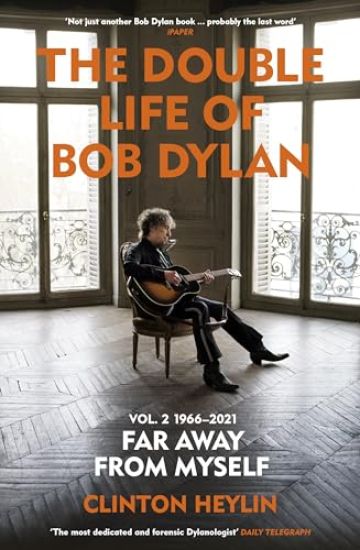
In 2016 it was announced that Bob Dylan had sold his personal archive to the George Kaiser Foundation in Tulsa, Oklahoma, reportedly for $22 million. As the boxes started to arrive, the Foundation asked Clinton Heylin - author of the acclaimed Bob Dylan: Behind the Shades and 'perhaps the world's authority on all things Dylan' (Rolling Stone) - to assess the material they had been given. What he found in Tulsa - as well as what he gleaned from other papers he had recently been given access to by Sony and the Dylan office - so changed his understanding of the artist, especially of his creative process, that he became convinced that a whole new biography was needed. It turns out that much of what previous biographers - Dylan himself included - have said is wrong; often as not, a case of, Print the Legend.This is the second instalment of the definitive biography (following A Restless Hungry Feeling) of one contemporary culture's most iconic and mysterious figures - musical revolutionary, Nobel Prize-winner, chart-topping recording artist.Clinton Heylin's meticulously researched, all-encompassing and consistently revelatory account of these fascinating early years is the closest we will ever get to a definitive life of an artist who has been the lodestar of popular culture for six decades.
Napoleon Zimmerman lived the script handed down from generation to generation: college, career, wife, children, home and white picket fence. But something went wrong. At age 36 divorce shattered Zimmerman's world. Broken, bewildered, and disillusioned, Zimmerman, purchased a small RV, and ventured to the road in search of himself. Follow one man's battle between the limited programmed voices of his mind and the unlimited voice of his heart as he struggles with balancing solitude in his search for companionship and the realization of his dreams. Along the way, in the adventure that is life (called by our hero Soul School - Playground Earth), Napoleon learns a bit, hears his dog singing words to live by, and drafts a modest proposal for life after The Big W.
A comprehensive study guide offering in-depth explanation, essay, and test prep for selected works by Dylan Thomas, popular Welsh poet in the twentieth-century. Titles in this study guide include The Map of Love, Once Below A Time, In Country Sleep, and Death and Entrances. As a poet of the modernist movement, Thomas' work included themes of religion, innocence, and the human awareness of experience. Moreover, he utilized literary devices to captivate his audience, such as alliteration, internal rhyme, sprung rhythm, and was even noted as a skilled writer of prose poetry. This Bright Notes Study Guide explores the context and history of Thomas' classic work, helping students to thoroughly explore the reasons they have stood the literary test of time. Each Bright Notes Study Guide contains: - Introductions to the Author and the Work - Character Summaries - Plot Guides - Section and Chapter Overviews - Test Essay and Study Q&As The Bright Notes Study Guide series offers an in-depth tour of more than 275 classic works of literature, exploring characters, critical commentary, historical background, plots, and themes. This set of study guides encourages readers to dig deeper in their understanding by including essay questions and answers as well as topics for further research.
If you are one of those unfortunate individuals afflicted with the disability called DADD - Dylan Appreciation Deficit Disorder - you will probably just scratch your head in bewilderment and wonder why anyone would enjoy these riddles. But "Bobcats" - hardcore Dylan fans who are familiar with the songs of Bob Dylan - will appreciate this book of over 100 riddles. The answer to every question is a line from a Dylan song or the title of a Dylan song. Dylan fans will also enjoy the bonus feature "Me 'n' Bob," the humorous and heart-warming account of the author's Dylan-related escapades.
This book brings awareness to the romantic side of Bob Dylan, and the love songs that have been overshadowed by his formidable songs of protest and social commentary. Dylan applies the same intellectual and emotional honesty to songs of the heart as to the rest of his life's work, and his songs about relationships are rendered with typical profundity. The songs in this book are organized into themes such as Hard Love, Bitter Love, Lost Love, and Spiritual Love, to name a few. Like the rest of us, Dylan has soared and crashed, and suffered the pain of ill-fated relationships. These songs reflect his experiences with love and loss over a lifetime, from youth to maturity and beyond. The author describes Dylan's lyrics from a woman's point of view, approaching his words with common sense and a bit of feminine intuition. The reader will benefit from her research into other versions of the songs, and covers by various artists. This book offers a fresh look at the legendary Bob Dylan, who describes the agonies of love with grit and eloquence, as only such a brilliant poet and musical artist can.
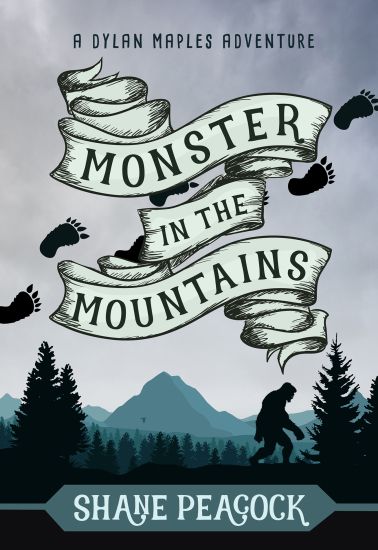
After Dylan Maples's terrifying adventure in Alberta, the holiday his "parental units" plan in British Columbia's Rocky Mountains seems like a dream. Swimming, hiking, and loafing around are welcome distractions from vivid memories of his narrow escape from "The Reptile," the frightening criminal who pursued him and his friends through the badlands. But Dylan soon discovers that he is heading into an area teeming with legends of real-life monsters, among them the sea serpent Ogopogo and the awesome sasquatch. In fact, more mysterious creatures are said to exist in BC than in any other place in the world.... Dylan tries not to take it all too seriously. But when he arrives in the resort town of Harrison Hot Springs and meets his eccentric uncle, Walter Middy, he is pulled right into the heart of the sasquatch mystery. Before you can say, "I see a monster ", Dylan, Walter, and their new friend Alice are deep in the wilderness, on the trail of the deadly beast.