Kirjojen hintavertailu. Mukana 11 699 587 kirjaa ja 12 kauppaa.

Kirjahaku

Etsi kirjoja tekijän nimen, kirjan nimen tai ISBN:n perusteella.

1000 tulosta hakusanalla Edward Carson

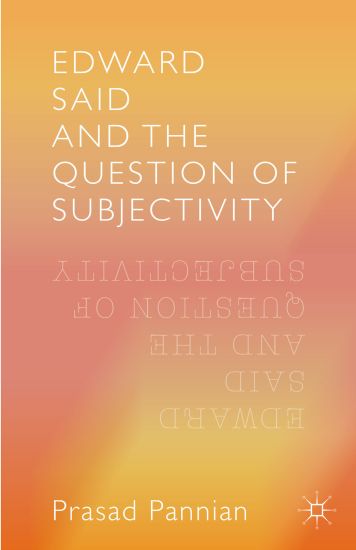
Edward Said and the Question of Subjectivity

Edward Said and the Question of Subjectivity

Pannian Prasad

Palgrave Macmillan
2016
sidottu
Edward Said and the Question of Subjectivity explores the notion of subjectivity implicated in and articulated by Said in his writings. Analyzing several of his major works, Pannian argues that there is a shift in Said's intellectual trajectory that takes place after the composition of Orientalism. In so doing, Said forthrightly attempts to retrieve a theoretical and political humanism, as Pannian identifies, despite the difficult and sanguinary aspects of its past. He elaborates upon Said's understanding that only after recognising the structures of violence and coming to discern strategies of interpellation, may the individual subject effectively resist them. Pannian also explores Said's ideas on exilic subjectivity, the role of intellectuals, acts of memory, critical secularism, affiliation and solidarity before dwelling on his interface with Marxist thinkers such as Antonio Gramsci, Theodor Adorno, and Raymond Williams. This engagement marks Said's own subject formation, and shapes his self-reflexive mode of knowledge production.
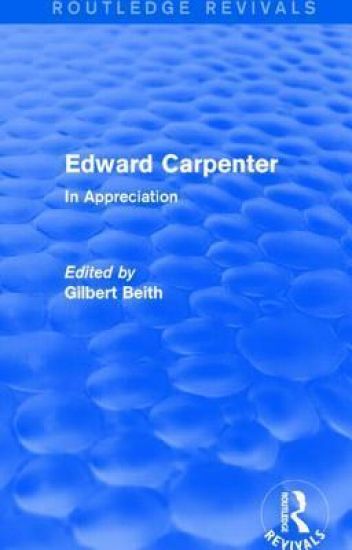
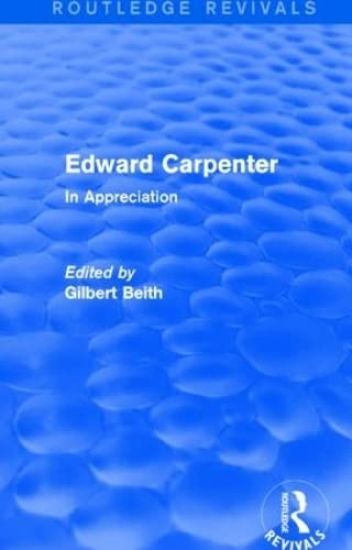
Edward Carpenter (Routledge Revivals)
Edward Carpenter: In Appreciation, first published in 1931, presents a collection of tributes to and reminiscences about the renowned socialist poet, pioneering gay rights activist, environmentalist and political thinker. Embroiled in controversy with prominent figures of all political persuasions in the late nineteenth and early twentieth centuries, Carpenter’s vision of sexual freedom, democracy and an end to commercialism was maintained with integrity over the course of his whole life. These portraits and anecdotes testify to a man of both determination and warmth, whose writings, though inspirational for many up to the 1960s, are seldom read today.
Edward Carpenter (Routledge Revivals)
Edward Carpenter: In Appreciation, first published in 1931, presents a collection of tributes to and reminiscences about the renowned socialist poet, pioneering gay rights activist, environmentalist and political thinker. Embroiled in controversy with prominent figures of all political persuasions in the late nineteenth and early twentieth centuries, Carpenter’s vision of sexual freedom, democracy and an end to commercialism was maintained with integrity over the course of his whole life. These portraits and anecdotes testify to a man of both determination and warmth, whose writings, though inspirational for many up to the 1960s, are seldom read today.
Edward Albee's Who's Afraid of Virginia Woolf?
Edward Albee’s Who’s Afraid of Virginia Woolf? shocked audiences and critics alike with its assault on decorum. At base though, the play is simply a love story: an examination of a long-wedded life, filled with the hopes, dreams, disappointments, and pain that accompany the passing of many years together. While the ethos of the play is tragicomic, it is the anachronistic, melodramatic secret object—the nonexistent "son"—that upends the audience’s sense of theatrical normalcy. The mean and vulgar bile spewed among the characters hides these elements, making it feel like something entirely "new."As Michael Y. Bennett reveals, the play is the same emperor, just wearing new clothes. In short, it is straight out of the grand tradition of living room drama: Ibsen, Chekhov, Glaspell, Hellmann, O’Neill, Wilder, Miller, Williams, and Albee.