

Kirjahaku
Etsi kirjoja tekijän nimen, kirjan nimen tai ISBN:n perusteella.
1000 tulosta hakusanalla Edward Michell

The Education Of Teachers In The South, Embracing A Letter From Edward S. Joynes To George P. Tayloe (1864)
Edward Southey Joynes
KESSINGER PUBLISHING, LLC
2009
pokkari
The Theological Works Of Edward Burton V2 (1837)
Edward Burton
KESSINGER PUBLISHING, LLC
2009
pokkari
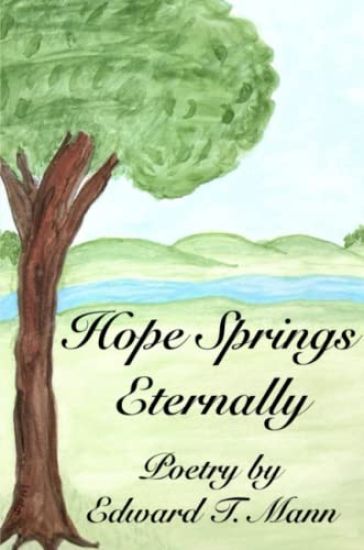
Introducing a collection of poems by the late Edward T. Mann about nature, seasons, farming, and love. They are written with a light sometimes comical other times heart wrenching and imaginative sense. The original poems were crafted on any type of material that was available when inspired. These items included: printer paper, napkins, notebooks, cards, old envelopes and church bulletins. These poems have been saved and treasured by his wife Sylvia and organized for print by his loving niece Linda Graney for all to enjoy.
Originally published in 1955, as part of the English Literature for Schools series, this book contains the complete text of Christopher Marlowe's Edward the Second. An introduction and editorial notes are also included. This book will be of value to anyone with an interest in Marlowe and English Renaissance drama.

Written by his son, the Rev. Edward Parry, this 1857 memoir describes the life and times of Rear-Admiral Sir W. Edward Parry (1790–1855), the British naval officer and Arctic explorer. The work describes how Parry became a successful pioneer of Arctic enterprise, having in 1827 attempted one of the earliest expeditions to the North Pole, setting a record which then stood for fifty years. Reflecting the religious side of Parry's character, the book demonstrates how he was a constant promoter of the welfare of his crews. From Parry's childhood years, the book traces the explorer's distinguished career in the Navy, his meticulous scientific work and his long and usually dangerous voyages and expeditions. Alongside his professional successes, including his knighthood in 1829, the book gives insights into the difficulties of his private life, including the tragic deaths of his first wife and of some of his children.
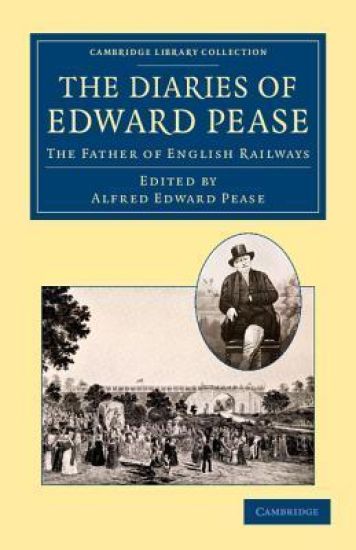
Edward Pease (1767–1858), who left behind extensive diaries for the years 1824–57, was dubbed the 'father of English railways' thanks to his backing of the Stockton and Darlington Railway, which began operating in 1825. A prominent Quaker and woollen manufacturer in Darlington, Pease famously recruited George Stephenson (1781–1848) as the line's engineer. His great-grandson Sir Alfred Pease (1857–1939) edited these diaries for private circulation only, but was persuaded to publish them in 1907. The work includes an introductory essay on Quakerism and biographical sketches of Pease and his wife Rachel. The diaries themselves reveal, as the editor mentions in his preface, a life devoted to public and private good works. The appendices include a variety of Quaker texts and other material relating to the Pease family and the founding of the railways.

The Autobiography of Edward, Lord Herbert of Cherbury
Edward Herbert
Cambridge University Press
2013
pokkari
Diplomat, philosopher and friend of John Donne and Ben Jonson, Edward Herbert (1582?–1648), first Baron Herbert of Cherbury, is best known for his philosophical treatise De veritate, examining the nature of truth. After Oxford and a period at court, he served as ambassador to France from 1619 to 1624. A reluctant Royalist, he surrendered the family seat, Montgomery Castle, to Parliament in 1644. His lively and amusing account of his adventures up to 1624 was first published by Horace Walpole in 1764 in an edition of only 200 copies. From the narrative we learn of Herbert's social triumphs in France and of his duels, affairs of the heart, views on education, and herbal remedies. Reissued here is the 1886 limited edition of 1,000 copies that was edited by the literary scholar Sidney Lee (1859–1926). Lee has completed Herbert's life story and offers an insightful introduction to the whole.

The Life, Letters and Literary Remains of Edward Bulwer, Lord Lytton
Edward Robert Bulwer Lytton
Cambridge University Press
2014
pokkari
One of the most popular writers of his age, outsold only by Dickens, Edward George Bulwer Lytton (1803–73), first Baron Lytton, is notable for coining the phrases 'the great unwashed' and 'the pen is mightier than the sword', although his work is largely forgotten today. G. K. Chesterton's appraisal was that 'you could not have the Victorian Age without him'. Lytton requested that his son Edward Robert (1831–91), first Earl of Lytton, complete his autobiography. Complemented by letters and previously unpublished material - the better to flesh out the story of a prolific literary life - it appeared in two volumes in 1883. In his preface, Edward Robert writes that his main purpose is 'to illustrate my father's works by his life, and his life by his works'. Volume 1 contains the original autobiography, along with letters and selected writings that provide insights into Lytton's first twenty-two years.

The Life, Letters and Literary Remains of Edward Bulwer, Lord Lytton
Edward Robert Bulwer Lytton
Cambridge University Press
2014
pokkari
One of the most popular writers of his age, outsold only by Dickens, Edward George Bulwer Lytton (1803–73), first Baron Lytton, is notable for coining the phrases 'the great unwashed' and 'the pen is mightier than the sword', although his work is largely forgotten today. G. K. Chesterton's appraisal was that 'you could not have the Victorian Age without him'. Lytton requested that his son Edward Robert (1831–91), first Earl of Lytton, complete his autobiography. Complemented by letters and previously unpublished material - the better to flesh out the story of a prolific literary life - it appeared in two volumes in 1883. In his preface, Edward Robert writes that his main purpose is 'to illustrate my father's works by his life, and his life by his works'. Volume 2 completes the biographical narrative, including details of Lytton's later political life, correspondence with Disraeli and others, and work left unfinished.

On the death of Edward Gibbon (1737–94), his unpublished papers were left to his friend John Baker Holroyd, first earl of Sheffield, who published them in two volumes in 1796. Gibbon had written six manuscript accounts of his own life, and, according to Sheffield, had always intended to publish his autobiography in his lifetime. The memoir as edited by Sheffield begins with Gibbon's family history, and taking in his education, travels, and career as a historian, finishes with his anxiety over the future of Europe in 1788. Sheffield then continues the story until Gibbon's death through his correspondence, providing a linking narrative, and this, together with 210 other letters to and from Gibbon, takes up Volume 1. His great work, The History of the Decline and Fall of the Roman Empire, is also reissued (in the 1896–1900 edition by J. B. Bury) in the Cambridge Library Collection.

On the death of Edward Gibbon (1737–94), his unpublished papers were left to his friend John Baker Holroyd, first earl of Sheffield, who published them in two volumes in 1796. Volume 2 contains abstracts from Gibbon's reading, with his reflections on what he read, and extracts from his journal (sometimes in French, with a parallel translation), short pieces on various aspects of Roman history, an outline of his planned history of the world from the ninth to the end of the fifteenth century, literary criticism, a history of the House of Brunswick (ancestors of the Hanoverian British royal family), and a riposte to a criticism of his own great work, The History of the Decline and Fall of the Roman Empire, which is also reissued (in the 1896–1900 edition by J. B. Bury) in the Cambridge Library Collection.
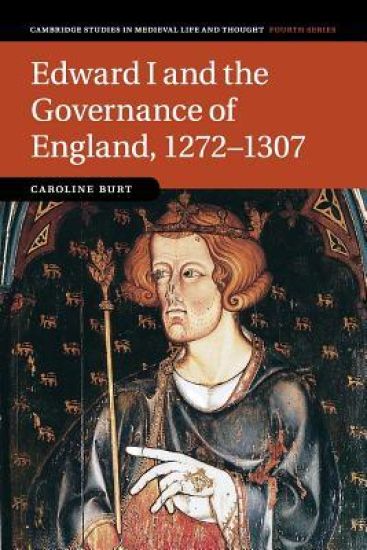
Edward I and the Governance of England, 1272–1307
Caroline Burt
Cambridge University Press
2017
pokkari
This important exploration of the reign of Edward I – one of England's most lionised, feared and successful monarchs – presents his kingship in a radical new light. Through detailed case studies of Shropshire, Warwickshire and Kent, Caroline Burt examines how Edward's governance at a national level was reflected in different localities. She employs novel methodology to measure levels of disorder and the effects of government action, and uncovers a remarkably sophisticated approach to governance. This study combines an empirical examination of government with an understanding of developing political ideas and ideological motivation, and contributes towards a greater understanding of the development of local government and politics in England in the thirteenth and fourteenth centuries. Edward emerges as a king with a coherent set of ideas about the governance of his realm, both intellectually and practically, whose achievements were even more remarkable than has previously been recognised.
Edward Chapman Of Ipswich, Massachusetts, In 1644
KESSINGER PUBLISHING, LLC
2009
nidottu