Ancient Greek Scholarship is the only introduction to this important and fast-growing field, with information on all aspects of using and reading ancient scholarship. Includes discussions of all major works, explanation of grammarians' Greek, over 200 passages with commentary, glossary of 1500 grammatical terms, and annotated bibliography with more than 1200 works.
This book focuses on market law and policy in sub-Saharan Africa, showing how markets can be harnessed by poorer and developing economies to help make the markets work for them: to help them integrate into the world economy and provide a better standard of living for their people while preserving their values of inclusive development. It explores uses of power both by dominant firms, often multinationals, and incumbent governments and cronies, to ring-fence their market positions and deprive rivals - often the indigenous people - from fair access to markets and highlights how competition authorities are pushing back and winning fair access, lowering prices of goods and services especially for the poorer population. The book also examines the next level up - regionalism - and provides the facts that show how regionalism has so far failed to meet its promise of freeing markets from cross-border restraints by large firms that operate across national borders. On the more technical side, the book takes a deep look at the competition policies of sets of nations in sub-Saharan Africa - West, South-eastern, and South. It examines the performance of the competition authorities of particular nations, including how they handle cartels, monopolies, and mergers; their standards of illegality, and their methodologies for incorporating public interest values into their analyses. Observing the good works by a number of the national competition authorities, the book is optimistic about the role of the national competition authorities in protecting the people from abuses of economic power, and, perhaps in the future, the role of regional authorities and less formal networks in promoting an African voice in defence of competition.
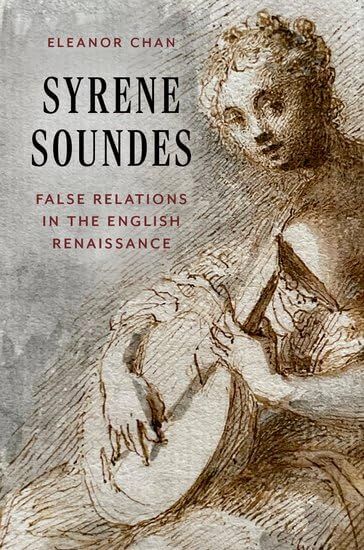
False relations remain one of the great enigmas of English Renaissance musical culture. Contemporary theoretical treatises explicitly discouraged their use, and yet these deliberate dissonances are hallmarks of English Renaissance music. Over the centuries they have accumulated a surfeit of subsequent connotations that have obscured how they once functioned, yet they have never been fully critically explored or elucidated in an English context. In Syrene Soundes, author Eleanor Chan excavates beneath strata of accumulated meanings to uncover the way that false relations delighted and confounded their original listeners and performers. The book offers a holistic investigation of the false relations phenomenon, examining the cultural, literary, visual, and material understanding of such dissonances in relation to the broader culture of incongruity, surprise and error, and metaphors of harmony that captured the imagination of the English in the sixteenth and seventeenth centuries. Chan argues that interdisciplinary angles can galvanise understanding of technical musical theoretical tropes like the false relation. She demonstrates that the false relation and its graphic ephemerality can productively be explored through the lens of English Renaissance visual culture and its idiosyncratic representational strategies. By anchoring it within the milieu of the English Reformation, burgeoning aspirations towards empire, and the increasing need for a self-fashioned collective English identity, Chan reveals that the false relation was key to the mythology of an inherited English tradition of music-making. Syrene Soundes concerns itself not just with the notes on the page, but with the way that they influenced the broader culture of the time, both as the performable music they represented, as the idea of music, and as the visual, inky marks they are made of. It provides an accessible introduction to false relations which will be of use to musicologists and non-music specialists alike. Ultimately, Chan argues for the value of integrated interdisciplinary analysis in exploring the musical culture of the English Renaissance and embraces the blurring of musical, visual, material, and literary forms of expression that fed contemporary understanding of music, harmony, and falseness.
How did an Athenian citizen address his wife? His children, his slaves, and his dog? How did they address him? This book is the first major application of linguistic theories of address to an ancient language. It is based on a corpus of 11,891 vocatives from twenty-five prose authors from Herodotus to Lucian, and on comparative data from Aristophanes, Menander, and other sources; the data are analysed using techniques and evidence from the field of sociolinguistics to shed light on some long-standing problems in Greek. A separate section discusses the theoretical problems which arise from the attempt to reconstruct conversational Greek on the basis of written texts and concludes that this enterprise is indeed possible, provided that the right sources are selected. Analysis of the Greek address system leads to a reconsideration of the meaning of individual addresses and thus of the interpretation of specific passages; it also challenges the validity of some alleged sociolinguistic 'universals'. In particular, Professor Dickey examines some of the idiosyncratic aspects of Socrates' language, offering an exceptionally interesting and novel contribution to to the problems of the `historical Socrates'. Highly original, lucid, and jargon-free, this book offers may significant insights on both the literature and language of ancient Greece,
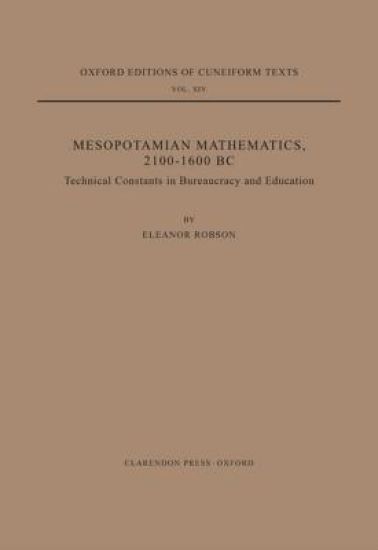
Mathematics was integral to Mesopotamian scribal culture: indeed, writing was invented towards the end of the fourth millennium BC for the express purpose of recording numerical information. By the beginning of the second millennium the earliest known body of 'pure' mathematics was one of the key elements of scribal training, and is thus pivotal to our understanding of the educational practices and intellectual history of ancient Mesopotamia. The main body of this book is a mathematical and philological discussion of the two hundred technical constants, or `coefficients', found in early second millennium mathematics. Their names and mathematical functions are established, leading to improved interpretations of several large mathematical topics. The origins of many coefficients - and much of the more practical mathematics - are traced to late third millennium accounting and quantity surveying practices. Finally, the coefficients are used to examine some aspects of mathematics education in early Mesopotamia.
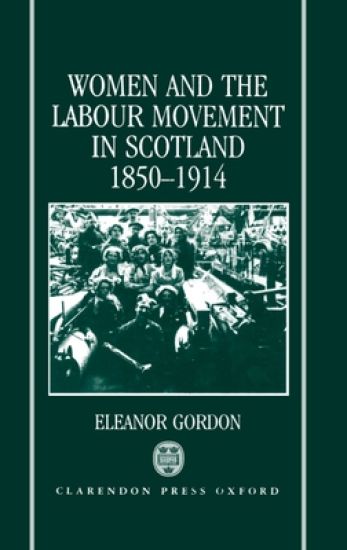
This is a study of working women in Scotland in the period 1850-1914. In a detailed scholarly analysis, based on a wide range of contemporary sources, Eleanor Gordon uncovers the patterns of their employment, their involvement in and relationship to trades unionism, and the forms of their workplace resistance and struggles. Focusing particularly on women working in Dundee's jute industry, Dr Gordon's study integrates labour history and the history of gender. It is a stimulating and thorough account, which challenges many assumptions about the organizational apathy of women workers and about the inevitable division between workplace and domestic ideologies. It makes an important contribution to current historiographical debates over the sexual division of labour, working-class consciousness, and domestic ideologies, and to the history of women in Scotland.
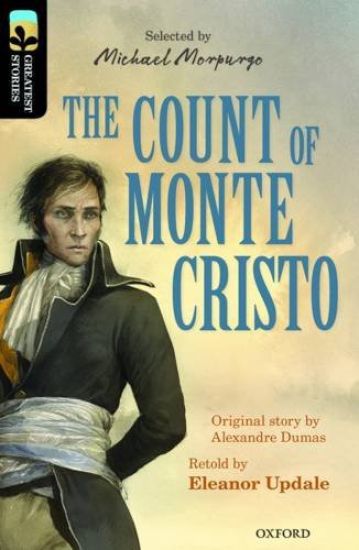
Welcome to nineteenth-century France, where a wrong word or look can get you thrown in jail. When Edmond is imprisoned for a crime he didn't commit, he thinks his life is over. But while he is there he gets word of treasure hidden in a place called Monte Cristo ... Can he escape and reverse his fortunes? In this tale full of deception, disguise and revenge, you never quite know who you can trust. Alexandre Dumas' masterpiece is recreated to inspire a new generation of readers. TreeTops Greatest Stories offers children some of the worlds best-loved tales in a collection of timeless classics. Top children's authors and talented illustrators work together to bring to life our literary heritage for a new generation, engaging and delighting children. The books are carefully levelled, making it easy to match every child to the right book. Each book contains inside cover notes to help children explore the content, supporting their reading development. Teaching notes on Oxford Owl offer cross-curricular links and activities to support guided reading, writing, speaking and listening.
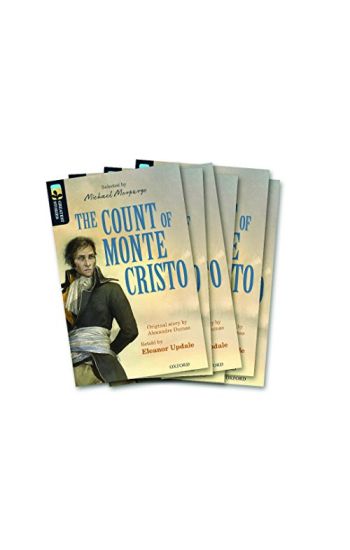
Welcome to nineteenth century France, where a wrong word or look can get you thrown in jail. When Edmond is imprisoned for a crime he didn't commit, he thinks his life is over. But whilst he is there he gets word of treasure hidden in a place called Monte Cristo ... Can he escape and reverse his fortunes? In this tale full of deception, disguise and revenge, you never quite know who you can trust. Alexandre Dumas' masterpiece is recreated to inspire a new generation of readers. TreeTops Greatest Stories offers children some of the worlds best loved tales in a collection of timeless classics. Top children's authors and talented illustrators work together to bring to life our literary heritage for a new generation, engaging and delighting children. The books are carefully levelled, making it easy to match every child to the right book. Each book contains inside cover notes to help children explore the content, supporting their reading development. Teaching notes on Oxford Owl offer cross-curricular links and activities to support guided reading, writing, speaking and listening. This pack provides 6 copies of the same title.
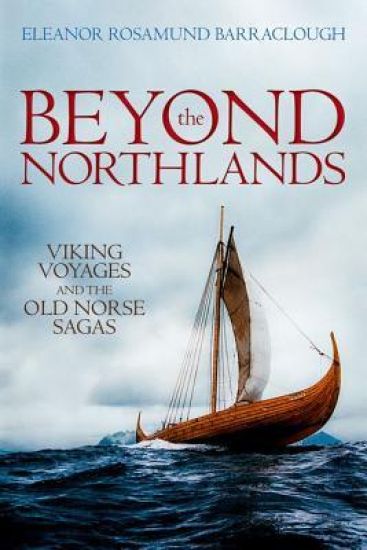
In the dying days of the eighth century, the Vikings erupted onto the international stage with brutal raids and slaughter. The medieval Norsemen may be best remembered as monk murderers and village pillagers, but this is far from the whole story. Throughout the Middle Ages, long-ships transported hairy northern voyagers far and wide, where they not only raided but also traded, explored and settled new lands, encountered unfamiliar races, and embarked on pilgrimages and crusades. The Norsemen travelled to all corners of the medieval world and beyond; north to the wastelands of arctic Scandinavia, south to the politically turbulent heartlands of medieval Christendom, west across the wild seas to Greenland and the fringes of the North American continent, and east down the Russian waterways trading silver, skins, and slaves. Beyond the Northlands explores this world through the stories that the Vikings told about themselves in their sagas. But the depiction of the Viking world in the Old Norse-Icelandic sagas goes far beyond historical facts. What emerges from these tales is a mixture of realism and fantasy, quasi-historical adventures, and exotic wonder-tales that rocket far beyond the horizon of reality. On the crackling brown pages of saga manuscripts, trolls, dragons, and outlandish tribes jostle for position with explorers, traders, and kings. To explore the sagas and the world that produced them, Eleanor Rosamund Barraclough now takes her own trip through the dramatic landscapes that they describe. Along the way, she illuminates the rich but often confusing saga accounts with a range of other evidence: archaeological finds, rune-stones, medieval world maps, encyclopaedic manuscripts, and texts from as far away as Byzantium and Baghdad. As her journey across the Old Norse world shows, by situating the sagas against the revealing background of this other evidence, we can begin at least to understand just how the world was experienced, remembered, and imagined by this unique culture from the outermost edge of Europe so many centuries ago.
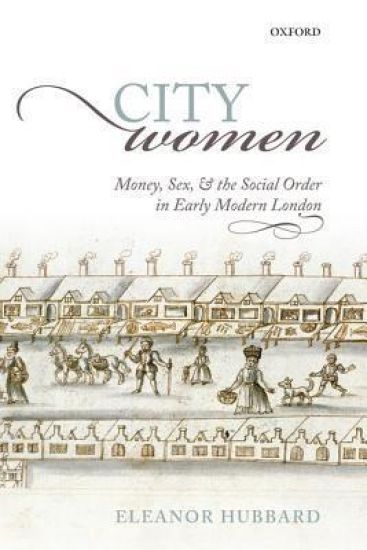
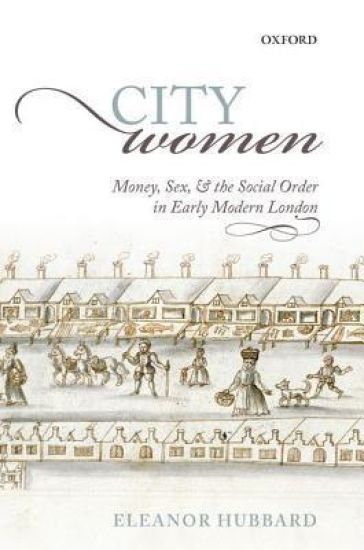
City Women is a major new study of the lives of ordinary women in sixteenth- and seventeenth-century London. Drawing on thousands of pages of Londoners' depositions for the consistory court, it focuses on the challenges that preoccupied London women as they strove for survival and preferment in the burgeoning metropolis. Balancing new demographic data with vivid case studies, Eleanor Hubbard explores the advantages and dangers that the city had to offer, from women's first arrival in London as migrant maidservants, through the vicissitudes of marriage, widowhood, and old age. In early modern London, women's opportunities were tightly restricted. Nonetheless, before 1640 the city's unique demographic circumstances provided unusual scope for marital advancement, and both maids and widows were quick to take advantage of this. Similarly, moments of opportunity emerged when the powerful sexual anxieties that associated women's speech and mobility with loose behaviour came into conflict with even more powerful anxieties about the economic stability of households and communities. As neighbours and magistrates sought to reconcile their competing priorities in cases of illegitimate pregnancy, marital disputes, working wives, remarrying widows, and more, women were able to exploit the resulting uncertainty to pursue their own ends. By paying close attention to the aspirations and preoccupations of London women themselves, their daily struggles, small triumphs, and domestic tragedies, City Women provides a valuable new perspective on the importance and complexity of women's roles in the growing capital, and on the pragmatic nature of early modern English society as a whole.
This book traces the changes in argument alignment that have taken place in Aramaic during its 3000-year documented history. Eastern Aramaic dialects first developed tense-conditioned ergative alignment in the perfect, which later developed into a past perfective. However, while some modern dialects preserve a degree of ergative alignment, it has been eroded by movement towards semantic/Split-S alignment and by the use of separate marking for the patient, and some dialects have lost ergative alignment altogether. Thus an entire cycle of alignment change can be traced, something which had previously been considered unlikely. Eleanor Coghill examines evidence from ancient Aramaic texts, recent dialectal documentation, and cross-linguistic parallels to provide an account of the pathways through which these alignment changes took place. She argues that what became the ergative construction was originally limited mostly to verbs with an experiencer role, such as 'see' and 'hear', which could encode the experiencer with a dative. While this dative-experiencer scenario shows some formal similarities with other proposed explanations for alignment change, the data analysed in this book show that it is clearly distinct. The book draws important theoretical conclusions on the development of tense-conditioned alignment cross-linguistically, and provides a valuable basis for further research.
The Sikh religion has a following of over 20 million people worldwide. However,events such as the verbal and physical attacks on Sikhs just after September 11, where Sikhs were being mistaken for Muslims, suggest that the Sikh faith still remains mysterious to many. This Very Short Introduction introduces newcomers to the meaning of the Sikh religious tradition, its teachings, practices, rituals and festivals. Eleanor Nesbitt highlights and contextualizes the key threads in the history of Sikhism, from the first Gurus to martyrdom, militarization, and the increasingly significant diaspora. Examining gender, caste, and the changes that are currently underway in the faith, Nesbitt considers contemporary Sikh identities and their role in our world. ABOUT THE SERIES: The Very Short Introductions series from Oxford University Press contains hundreds of titles in almost every subject area. These pocket-sized books are the perfect way to get ahead in a new subject quickly. Our expert authors combine facts, analysis, perspective, new ideas, and enthusiasm to make interesting and challenging topics highly readable.
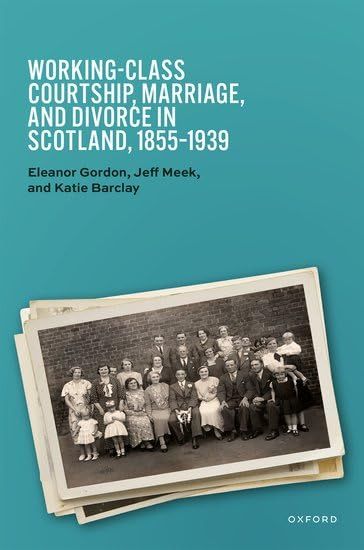
This is the first book-length study of the history of working-class courtship and marriage in Scotland, from the establishment of civil registration to the introduction in 1939 of legislation which abolished irregular marriage and introduced civil marriage. Adopting a 'life course' approach, the book explores the social, economic, and cultural contexts of romantic partnerships, from courtship through to marital or family dissolution. Drawing from a wide range of sources that capture official accounts and discourses on the one hand, and the testimony and experience of working-class people on the other, the book offers a uniquely broad and textured view of courtship and marriage in this period. In so doing, it advances recent historiographical debates surrounding marriage in the Anglophone world, particularly the mutability of 'love', and whether the late nineteenth and early twentieth centuries constituted a social and cultural 'turning point' for the working classes in terms of choice of marriage partner, the nature of the marital relationship, and the parent-child relationship. The book also engages with debates about extra-marital sexual activity in the nineteenth and early twentieth centuries, whether the family was more or less 'stable' than the contemporary family, and the different ways that marriages broke down before the advent of divorce reform. This has important implications for wider European and North American historiography, and raises timely questions about the primacy of the 'traditional family' in policy and public discourse.
City Women is a major new study of the lives of ordinary women in early modern London. Drawing on thousands of pages of Londoners' depositions for the consistory court, it focuses on the challenges that preoccupied London women as they strove for survival and preferment in the burgeoning metropolis. Balancing new demographic data with vivid case studies, Eleanor Hubbard explores the advantages and dangers that the city had to offer, from women's first arrival to London as migrant maidservants, through the vicissitudes of marriage, widowhood, and old age. In early modern London, women's opportunities were tightly restricted. Nonetheless, before 1640, the city's unique demographic circumstances provided unusual scope for marital advancement, and both maids and widows were quick to take advantage of this. Similarly, moments of opportunity emerged when the powerful sexual anxieties that associated women's speech and mobility with loose behaviour came into conflict with even more powerful anxieties about the economic stability of households and communities. As neighbours and magistrates sought to reconcile their competing priorities in cases of illegitimate pregnancy, marital disputes, working wives, remarrying widows, and more, women were able to exploit the resulting uncertainty to pursue their own ends. By paying close attention to the aspirations and preoccupations of London women themselves, their daily struggles, small triumphs, and domestic tragedies, City Women provides a valuable new perspective on the importance of early modern women's efforts in the growing capital, and on the nature of early modern English society as a whole.
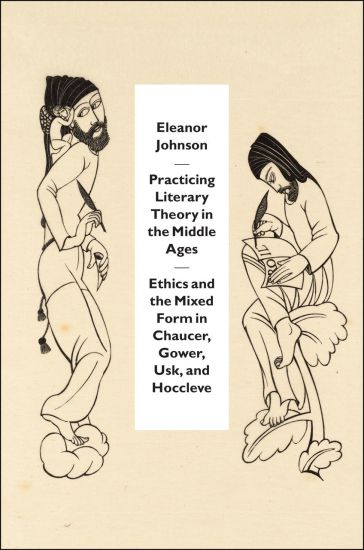
Literary scholars often avoid the category of the aesthetic in discussions of ethics, believing that purely aesthetic judgments can vitiate analyses of a literary work's sociopolitical heft and meaning. In "Practicing Literary Theory in the Middle Ages", Eleanor Johnson reveals that aesthetics - the formal aspects of literary language that make it senseperceptible - are indeed inextricable from ethics in the writing of medieval literature. Johnson brings a keen formalist eye to bear on the prosimetric form: the mixing of prose with lyrical poetry. This form descends from the writings of the sixth-century Christian philosopher Boethius - specifically his famous prison text, "Consolation of Philosophy" - to the late-medieval English tradition. Johnson argues that Boethius' text had a broad influence not simply on the thematic and philosophical content of subsequent literary writing, but also on the specific aesthetic construction of several vernacular traditions. She demonstrates the underlying prosimetric structures in a variety of Middle English texts - including Chaucer's "Troilus and Criseyde and portions of the Canterbury Tales", Thomas Usk's "Testament of Love", John Gower's "Confessio Amantis", and Thomas Hoccleve's autobiographical poetry - and asks how particular formal choices work, how they resonate with medieval literary-theoretical ideas, and how particular poems and prose works mediate the tricky business of modeling ethical transformation for a readership.
Filled with drama and action, here is the story of the ninth-century life and times of Alfred—warrior, conqueror, lawmaker, scholar, and the only king whom England has ever called "The Great." Based on up-to-date information on ninth-century history, geography, philosophy, literature, and social life, it vividly presents exciting views of Alfred in every stage of his long career and leaves the reader with a sharply-etched picture of the world of the Middle Ages.
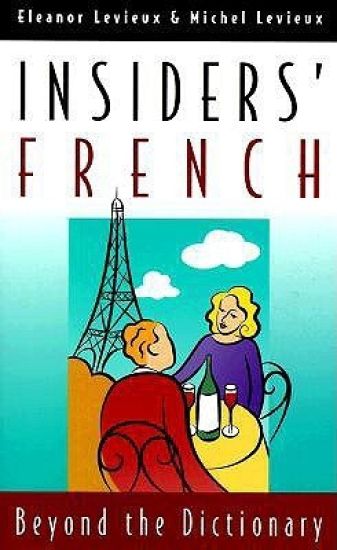
A guide to the language of the "new France". This "new France" is a country poised to experience the European single currency but uncertain about being part of Europe. It is hooked on fast food but ambivalent about the country where it originated. France at the end of the 20th century has record unemployment and an increasingly controversial immigrant population. Clearly, given the rapidly changing conditions and lifestyles, conventional French dictionaries alone cannot completely inform readers and visitors. This text offers a solution to the incomprehension, a handbook in which the reader will find the language of the European Union, the space programme, abortion and women's rights, high-tech industries, and health care, among other topics. Entries proceed by association of ideas and related terms, with cross-referencing, while still being alphabetized for easy reference like a standard dictionary. Cartoons from major French journals are included.
Literary scholars often avoid the category of the aesthetic in discussions of ethics, believing that purely aesthetic judgments can vitiate analyses of a literary work's sociopolitical heft and meaning. In Practicing Literary Theory in the Middle Ages, Eleanor Johnson reveals that aesthetics the formal aspects of literary language that make it sense-perceptible are indeed inextricable from ethics in the writing of medieval literature. Johnson brings a keen formalist eye to bear on the prosimetric form: the mixing of prose with lyrical poetry. This form descends from the writings of the sixth-century Christian philosopher Boethius specifically his famous prison text, Consolation of Philosophy to the late medieval English tradition. Johnson argues that Boethius's text had a broad influence not simply on the thematic and philosophical content of subsequent literary writing, but also on the specific aesthetic construction of several vernacular traditions. She demonstrates the underlying prosimetric structures in a variety of Middle English texts including Chaucer's Troilus and Criseyde and portions of the Canterbury Tales, Thomas Usk's Testament of Love, John Gower's Confessio amantis, and Thomas Hoccleve's autobiographical poetry and asks how particular formal choices work, how they resonate with medieval literary-theoretical ideas, and how particular poems and prose works mediate the tricky business of modeling ethical transformation for a readership.
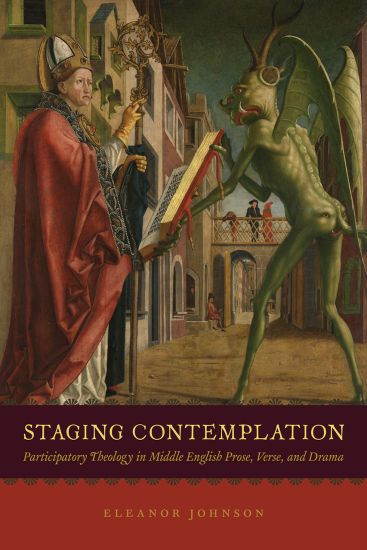
What does it mean to contemplate? In the Middle Ages, more than merely thinking with intensity, it was a religious practice entailing utter receptiveness to the divine presence. Contemplation is widely considered by scholars today to have been the highest form of devotional prayer, a rarified means of experiencing God practiced only by the most devout of monks, nuns, and mystics. Yet, in this groundbreaking new book, Eleanor Johnson argues instead for the pervasiveness and accessibility of contemplative works to medieval audiences. By drawing together ostensibly diverse literary genres—devotional prose, allegorical poetry, cycle dramas, and morality plays—Staging Contemplation paints late Middle English contemplative writing as a broad genre that operated collectively and experientially as much as through radical individual disengagement from the world. Johnson further argues that the contemplative genre played a crucial role in the exploration of the English vernacular as a literary and theological language in the fifteenth century, tracing how these works engaged modes of disfluency—from strained syntax and aberrant grammar, to puns, slang, code-switching, and laughter—to explore the limits, norms, and potential of English as a devotional language. Full of virtuoso close readings, this book demonstrates a sustained interest in how poetic language can foster a participatory experience of likeness to God among lay and devotional audiences alike.
What does it mean to contemplate? In the Middle Ages, more than merely thinking with intensity, it was a religious practice entailing utter receptiveness to the divine presence. Contemplation is widely considered by scholars today to have been the highest form of devotional prayer, a rarified means of experiencing God practiced only by the most devout of monks, nuns, and mystics. Yet, in this groundbreaking new book, Eleanor Johnson argues instead for the pervasiveness and accessibility of contemplative works to medieval audiences. By drawing together ostensibly diverse literary genres—devotional prose, allegorical poetry, cycle dramas, and morality plays—Staging Contemplation paints late Middle English contemplative writing as a broad genre that operated collectively and experientially as much as through radical individual disengagement from the world. Johnson further argues that the contemplative genre played a crucial role in the exploration of the English vernacular as a literary and theological language in the fifteenth century, tracing how these works engaged modes of disfluency—from strained syntax and aberrant grammar, to puns, slang, code-switching, and laughter—to explore the limits, norms, and potential of English as a devotional language. Full of virtuoso close readings, this book demonstrates a sustained interest in how poetic language can foster a participatory experience of likeness to God among lay and devotional audiences alike.