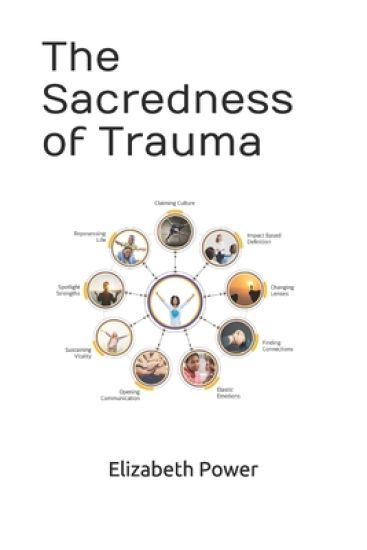
As faith leaders become Trauma-Informed, they want to bring the people in the pews along. Ministries and programs benefit from learning what the faith leader knows, too, getting better at living with their own history as they help others.The Sacredness of Trauma helps congregants identify the central role of traumatic experiences in their faith history. It also helps them consider responses to those experiences, responses that increase compassion, make room for healing and growth. The first of several small study guides for people in faith communities developed by The Trauma Informed Academy, this purse-sized booklet is available in English, and Spanish. On site delivery available.
We have entered an ephod fundamentally at variance with anything we have experienced before, in the third world. The plight of orphans from poor and deprived backgrounds in the face of HIV/AIDS related deaths have impacted health of many children. In the face of postmodernism where traditional family network support is diminishing, an effective alternative option is required. A practical and comprehensive presentation of the qualitative research on orphan children highlights health issues from a model sample and provides practical advice on key health issues affecting orphan children in Kenya and other third world countries. This book is a must-read piece, as it presents the results of a search forthe answers to some key issues: 1. The prevalence and associated causes of orphanhood. 2. Basic health needs of orphans. 3. Support required by orphan children. The solution to health issues of the orphans is beyond individual families and any community. It requires a multi-disciplinary team inthe Nations, including Government departments, non-governmental organizations, Faith based organizations and communities. Although the findings of this research encompass only a small part of a Nation in Africa, it can be replicated in the third world. It is surprisingly relevant and remarkably practical.
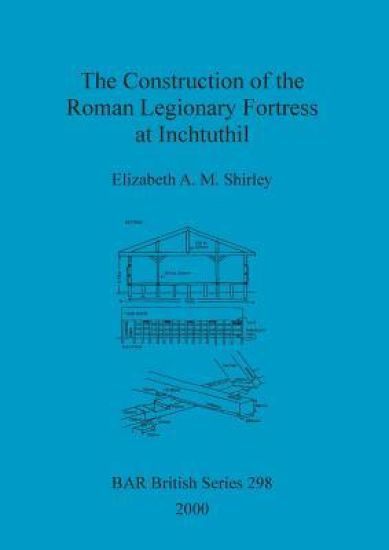
This volume presents a detailed examination of the resource implications of building a large fortress, focusing on evidence from the unique site of Inchtuthil, Scotland, which was constructed and demolished within a period of only three years (AD 83-86). Elizabeth Shirley creates a methodology for determining the quantities of material and labour input required and the factors which affected construction. She then assesses additional structural aspects: roof-framing, roof coverings, walkways, flooring, lighting and ventilation and internal finishes. The majority of the study calculates quantities of materials, working methods and rates and labour requirements for work on and off the construction site. This includes large amounts of detailed information about a wide variety of structures within a Roman fort. The results are contrasted with other sites, including Strageath and Fendoch. Shirley argues that a study of the practicalities of constructing such a large-scale military building provides valuable information about the military advance into Scotland, the everyday life of Roman legionaries and their organisational and practical skills.
"There is emerging on the face of the Earth a New Human, an Infinite Human, and that Human is YOU " Thirty years ago I wrote these words not fully understanding how deeply they relate to current world events and the consciousness wars our planet is NOW experiencing. This book offers FULL DISCLOSURE of the truth behind the lies, that have been hidden in plain sight while taking you on an amazing spiritual journey around our planet and into the higher dimensions of Esoteric Knowledge, Supernatural Phenomenon, and Cosmic Disclosure. This is not just my story, but the story of my TWIN SOUL, a physician, and how we tried to change the course of modern medicine. This is a Love Story, a Hero's Journey, an Alchemist's Memoir of Twin Souls who managed to navigate through the World of Illusion, heal their past wounds and create an Eternal Love that survived even death But above all, STAR SEEDS this is your story of the TRUE Liberation that only comes from Awakening from the Dream Spell and ORGANIC ASCENSION, to become the Master Builders of the Infinite New 5D EARTH Because YOU ARE INFINITE ALL THAT IS, EVER HAS BEEN AND EVER SHALL BE
Denna sagosamling innehåller sex underbara berättelser med charmiga figurer och vackra illustrationer. Varje saga är precis lagom lång att läsa vid läggdags, så gör er redo för en mysig sagostund som får ditt barn att sova gott.
This title offers a fresh approach to understanding Kenneth Burke's landmark cultural theory as a rhetorical response to war.In ""Burke, War, Words"", M. Elizabeth Weiser reinserts Kenneth Burke's theory of dramatism into the social milieu from which it originated, fostering a new understanding of how this concept of motivation was itself motivated by war and criticism. Weiser's model of a new approach to historiography contextualizes.Dramatism was a direct response to the global crisis wrought by World War II and to Burke's thenongoing debates with New Critics, sociolinguists, political activists, and government propagandists over the role of language and communication to affect the world. Central to Burke's germinal volume ""A Grammar of Motives"", dramatism was a call to action advocating informed social dialogue at a time when an allied victory seemed dependent instead on rallying behind a single strong voice in a unity not unlike that mandated by fascism itself. Weiser contends that Burke conceived dramatism as an alternative to New Criticism and as a blueprint for a dialectical resolution that was an antifascist rhetorical response to war.Weiser draws from published and unpublished communications between Burke and the diverse and divergent literati of his era as well as from Burke's scholarly, political, and even poetic writings of the time. From this context she is able to map the complex arc of formulating ""A Grammar of Motives"" in Burke's larger wartime discourse. For Weiser establishing the origins of dramatism offers a model for enhancing our understanding of other rhetorical theories as well as a specific renewal of purpose for dramatism as an action-oriented tool to engage intellectuals in our conflicted age as Burke had envisioned in his.