Kirjojen hintavertailu. Mukana 11 717 486 kirjaa ja 12 kauppaa.

Kirjahaku

Etsi kirjoja tekijän nimen, kirjan nimen tai ISBN:n perusteella.

1000 tulosta hakusanalla FRANCIS WIN PALFREY

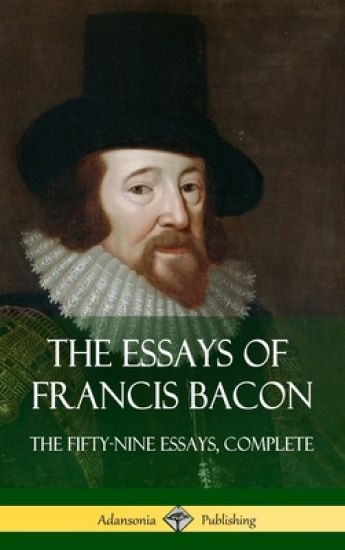
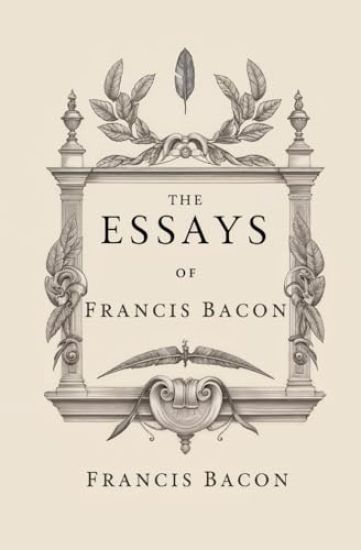
The Essays of Francis Bacon

The Essays of Francis Bacon

Francis Bacon

Lulu.com
2018
sidottu
This complete collection of Francis Bacon's essays is superbly presented and meticulously faithful to the original publication. An intellectual possessed of a staggering breadth of knowledge and learning, Francis Bacon wrote many essays on a range of topics. Subjects such as married life, child rearing, the sins of envy and vainglory, and the virtues of friendship, love and good counsel are all thoughtfully expounded upon and detailed in these essays. Cautionary writings on the subjects of anger and revenge are also present; Bacon notably makes an impassioned plea for true justice, noting that the quality of mercy is a far higher virtue than the 'wild justice' born of angry revenge. Reflecting the early colonial times in which Francis Bacon lived, we also witness essays upon the subjects of travel, Empire, ambition and commerce. Well-traveled and curious about distant lands, it is also with experience that Bacon imbues color and depth to his essays.
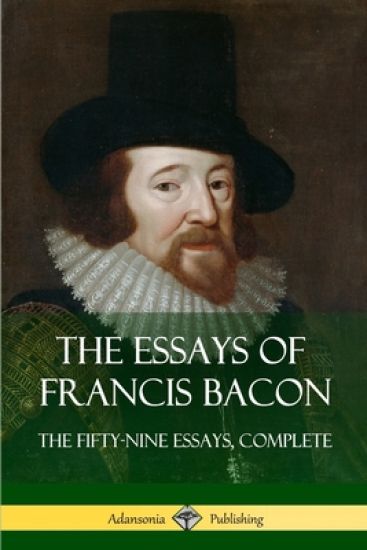
The Essays of Francis Bacon

The Essays of Francis Bacon

Francis Bacon

Lulu.com
2018
pokkari
This complete collection of Francis Bacon's essays is superbly presented and meticulously faithful to the original publication. An intellectual possessed of a staggering breadth of knowledge and learning, Francis Bacon wrote many essays on a range of topics. Subjects as diverse as married life, child rearing, the sins of envy and vainglory, and the virtues of friendship, love and good counsel are all thoughtfully expounded upon and detailed in these essays. Cautionary writings on the subjects of anger and revenge are also present. Bacon notably makes an impassioned plea for true justice, noting that the quality of mercy is a far higher virtue than the 'wild justice' born of angry revenge. Reflecting the early colonial times in which Francis Bacon lived, we also witness essays upon the subjects of travel, Empire, ambition and commerce. Well-traveled and curious about distant lands, it is also with experience that Bacon imbues color and depth to his essays.
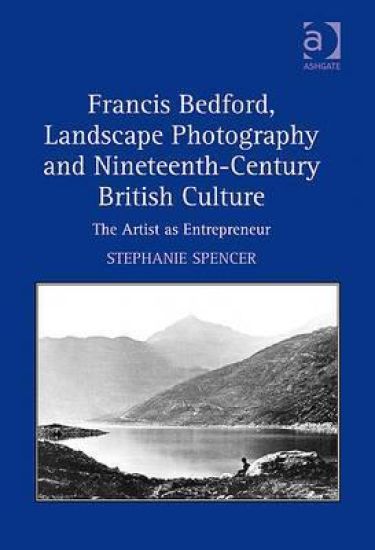
Francis Bedford, Landscape Photography and Nineteenth-Century British Culture
Focusing on one broadly representative figure, Francis Bedford, this study emphasizes how photographs operated to form and transmit cultural ideas and values. The first writing on Bedford since the 1970s, the book examines the work of a man who was one of Victorian England's premier landscape photographers, and also a successful photographic entrepreneur. His fusion of art and commerce illuminates classifications of each field, exemplifies the tensions between them, and demonstrates a reconciliation of two often conflicting sets of issues. This study fills an informational gap, and analyzes the definitions, expectations, and positioning of photography in its seminal decades. The multiple interpretative possibilities arising from Bedford's photographs in particular elucidate the range of discussions and complexity of ideas about culture and nature, the individual and the nation, home and abroad, and the past and the present engaging the mid-Victorian public. Major themes of the book include the intersection of nature and culture, the related practice of nineteenth-century tourism, attitudes toward historical identity, and the formation of a national identity in England and Wales, c. 1856-94.
Francis Poulenc: Articles and Interviews

Francis Poulenc: Articles and Interviews

Nicolas Southon; Roger Nichols

Ashgate Publishing Limited
2014
sidottu
’He plays the piano well,’ wrote the society hostess Mme de Saint-Marceaux in her diary on 18 March 1927. ’His compositions are not devoid of talent but he’s not a genius, and I’m afraid he thinks he is.’ Intelligent though the lady was, she got this one spectacularly wrong. Poulenc has in fact outpaced his colleagues in Les Six by many a mile, as singers and instrumentalists all over the world will attest, and while he would never have accepted the title of ’genius’, preferring ’artisan’, a genius is increasingly what he appears to have been. Part of the answer lay in always being his own man, and this independence of spirit shows through in his writings and interviews just as brightly as in his music, whether it’s boasting that he’d be happy never to hear The Mastersingers ever again, pointing out that what critics condemn as the ’formlessness’ of French music is one of its delights, voicing his outrage at attempts to ’finish’ the Unfinished Symphony, writing ’in praise of banality’ - or remembering the affair of Debussy’s hat. And in every case, his intelligence, humour and generosity of spirit help explain why he was so widely and deeply loved. This volume comprises selected articles from Francis Poulenc: J’écris ce qui me chante (Fayard, 2011) edited by Nicholas Southon. Many of these articles and interviews have not been available in English before and Roger Nichols's translation, capturing the very essence of Poulenc’s lively writing style, makes more widely accessible this significant contribution to Poulenc scholarship.
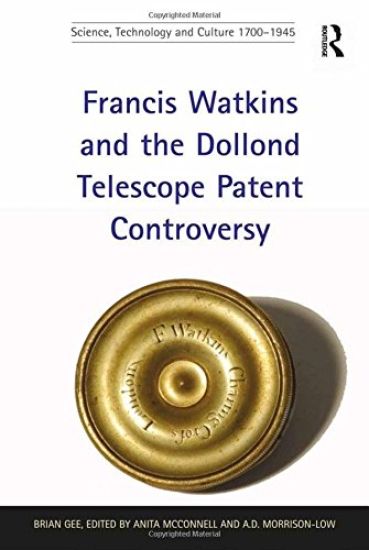
Francis Watkins and the Dollond Telescope Patent Controversy

Francis Watkins and the Dollond Telescope Patent Controversy

Brian Gee; edited by Anita McConnell

Ashgate Publishing Limited
2014
sidottu
Francis Watkins was an eminent figure in his field of mathematical and optical instrument making in mid-eighteenth century London. Working from original documents, Brian Gee has uncovered the life and times of an optical instrument maker, who - at first glance - was not among the most prominent in his field. In fact, because Francis Watkins came from a landed background, the diversification of his assets enabled him to weather particular business storms - discussed in this book - where colleagues without such an economic cushion, were pushed into bankruptcy or forced to emigrate. He played an important role in one of the most significant legal cases to touch this profession, namely the patenting of the achromatic lens in telescopes. The book explains Watkins's origins, and how and why he was drawn into partnership with the famous Dollond firm, who at that point were Huguenot incomers. The patent for the achromatic telescope has never been satisfactorily explained in the literature, and the author has gone back to the original legal documents, never before consulted. He teases out the problems, lays out the evidence, and comes to some interesting new conclusions, showing the Dollonds as hard-headed and ruthless businessmen, ultimately extremely successful. The latter part of the book accounts for the successors of Francis Watkins, and their decline after over a century of successful business in central London.