

Kirjahaku
Etsi kirjoja tekijän nimen, kirjan nimen tai ISBN:n perusteella.
1000 tulosta hakusanalla FREEDOM DIVIDEND

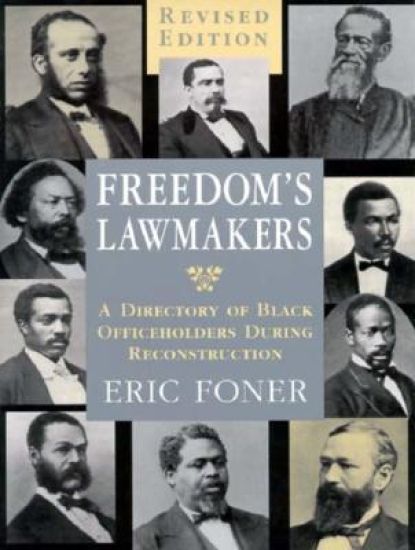
With Freedom's Lawmakers, Eric Foner has assembled the first comprehensive directory of the over 1,500 African Americans who held political office in the South during the Reconstruction era. He has compiled an impressive amount of information about the antebellum status, occupations, property ownership, and military service of these officials - who range from U.S. congressmen to local justices of the peace and constables. This revised paperback edition also contains new material on forty-five officials who were not included in the first edition. In his Introduction, Foner ably analyses and interprets the roles of the black American officeholders. Concise biographies, in alphabetical order, trace the life histories of individuals - many previously unknown - who played important parts in the politics of the period. This useful and informative volume also includes an index by state, by occupation, by office during Reconstruction, by birth status, and by topic.
Jeffrey R. Kerr-Ritchie's Freedom's Seekers offers a bold and innovative intervention into the study of emancipation as a transnational phe-nomenon and serves as an important contribution to our understanding of the remaking of the nineteenth-century Atlantic Americas.Drawing on decades of research into slave and emancipation societies, Kerr-Ritchie is attentive to those who sought but were not granted freedom, and those who resisted enslavement individually as well as collectively on behalf of their communities. He explores the many roles that fugitive slaves, slave soldiers, and slave rebels played in their own societies. He likewise explicates the lives of individual freedmen, freedwomen, and freed children to show how the first free-born generation helped to shape the terms and conditions of the post-slavery world.Freedom's Seekers is a signal contribution to African Diaspora studies, especially in its rigorous respect for the agency of those who sought and then fought for their freedom, and its consistent attention to the transnational dimensions of emancipation.
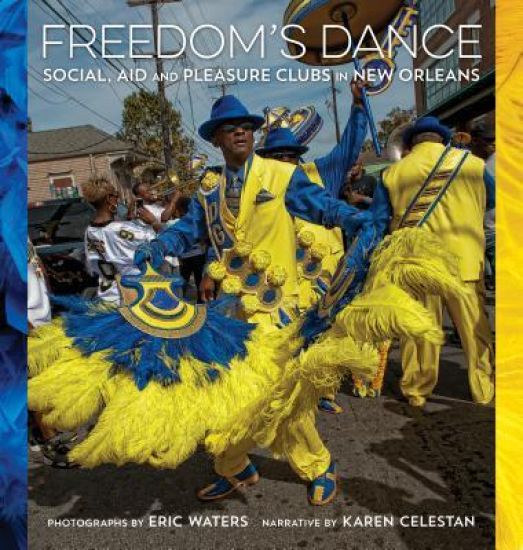
In this pivotal book, the captivating and kinetic images of noted photographer Eric Waters are paired with a collection of insightful essays by preeminent authors and cultural leaders to offer the first complete look at the Social, Aid and Pleasure Club (SAPC) parade culture in New Or-leans. Ranging from ideological approaches to the contributions of musicians, development of specific rituals by various clubs, and parade accessories such as elaborately decorated fans and sashes, Freedom's Dance provides an unparalleled photographic and textual overview of the SAPC Second Line, tracking its origins in African traditions and subsequent development in black New Orleans culture.Karen Celestan's vibrant narrative is supplemented with interviews of longtime culture-bearers such as Oliver ""Squirk"" Hunter, Lois Andrews (mother of Troy ""Trombone Shorty"" Andrews and James Andrews), Fred Johnson, Gregory Davis, and Lionel Batiste, while interdisciplinary essays by leading scholars detail the rituals, historic perspective, and purpose of the Second Line. Freedom's Dance defines this unique pub-lic-private phenomenon and captures every aspect of the Second Line, from SAPC members' rollicking introductions at their annual parade to a funeral procession on its way to the crypt.Visually dazzling and critically important, Freedom's Dance serves as both a celebration and a deep exploration of this understudied but immediately recognizable aspect of the African American tradition in the Big Easy.
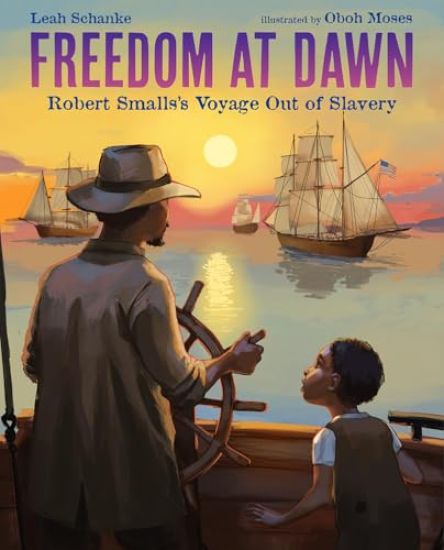
Freedom at Dawn: Robert Smalls's Voyage Out of Slavery
Leah Schanke
Albert Whitman Company
2025
sidottu
The true story of one man's brave plan to free his family from slavery Lizzy Smalls is proud of her papa, Robert, for being the best boat pilot in Charleston Harbor. But the Smalls family is enslaved, and after the outbreak of the Civil War, Robert is forced to put his skills to work for the Confederates. He knows that reaching Union territory means freedom for his family; to get there, he devises a daring plan to steal a boat and sail out of the harbor under cover of night. This thrilling true story shows how one man's courage, careful planning, and calm under pressure helped him navigate the way to a new life.
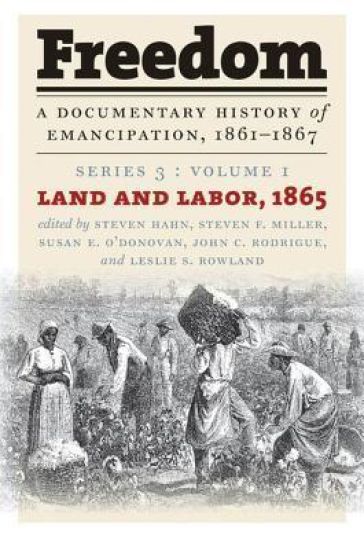
Freedom: A Documentary History of Emancipation, 1861-1867
The University of North Carolina Press
2008
sidottu
Land and Labor, 1865 examines the transition from slavery to free labor during the tumultuous first months after the Civil War. Letters and testimony by the participants - former slaves, former slaveholders, Freedmen's Bureau agents, and others - reveal the connection between developments in workplaces across the South and an intensifying political contest over the meaning of freedom and the terms of national reunification. Essays by the editors place the documents in interpretive context and illuminate the major themes.In the tense and often violent aftermath of emancipation, former slaves seeking to ground their liberty in economic independence came into conflict with former owners determined to keep them dependent and subordinate. Overseeing that conflict were northern officials with their own notions of freedom, labor, and social order. This volume of Freedom depicts the dramatic events that ensued - the eradication of bondage and the contest over restoring land to ex-Confederates; the introduction of labor contracts and the day-to-day struggles that engulfed the region's plantations, farms, and other workplaces; the achievements of those freedpeople who attained a measure of independence; and rumors of a year-end insurrection in which ex-slaves would seize the land they had been denied and exact revenge for past oppression.
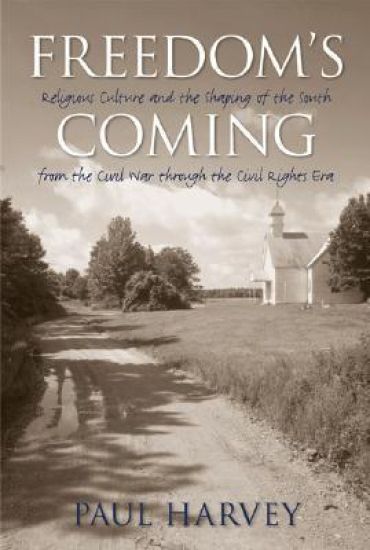
Freedom's Coming
The University of North Carolina Press
2007
nidottu
In a sweeping analysis of religion in the post - Civil War and twentieth-century South, ""Freedom's Coming"" puts race and culture at the center, describing southern Protestant cultures as both priestly and prophetic: as southern formal theology sanctified dominant political and social hierarchies, evangelical belief and practice subtly undermined them. Harvey explains how black and white religious folk within and outside of mainstream religious groups formed a southern ""evangelical counterculture"" of Christian interracialism that challenged the theologically grounded racism pervasive among white southerners and ultimately helped to end Jim Crow in the South.
This book contains both a warning and a challenge--a warning that the age-old inertia of the common man"" has permitted inefficiency and abuses in our industries, schools, and government; and a challenge to men in all fields to exert their wills and devote their talents and energies to bringing about a renaissance.Originally published in 1949.A UNC Press Enduring Edition -- UNC Press Enduring Editions use the latest in digital technology to make available again books from our distinguished backlist that were previously out of print. These editions are published unaltered from the original, and are presented in affordable paperback formats, bringing readers both historical and cultural value.
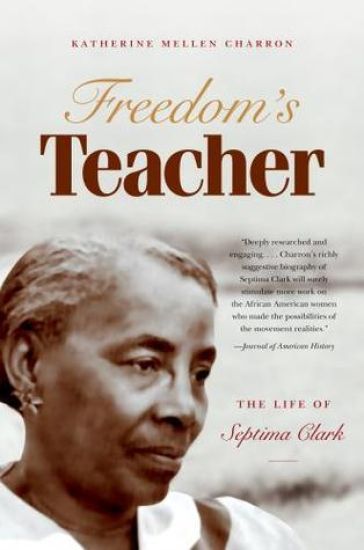
In the mid-1950s, Septima Poinsette Clark (1898-1987), a former public school teacher, developed a citizenship training program that enabled thousands of African Americans to register to vote and then to link the power of the ballot to concrete strategies for individual and communal empowerment. In this vibrantly written biography, Katherine Charron demonstrates Clark's crucial role--and the role of many black women teachers--in making education a cornerstone of the twentieth-century freedom struggle. Using Clark's life as a lens, Charron sheds valuable new light on southern black women's activism in national, state, and judicial politics, from the Progressive Era to the civil rights movement and beyond. |In this vibrantly written biography, Katherine Charron demonstrates Clark's crucial role--and the role of many black women teachers--in making education a cornerstone of the twentieth-century freedom struggle. Using Clark's life as a lens, Charron sheds valuable new light on southern black women's activism in national, state, and judicial politics, from the Progressive Era to the civil rights movement and beyond.
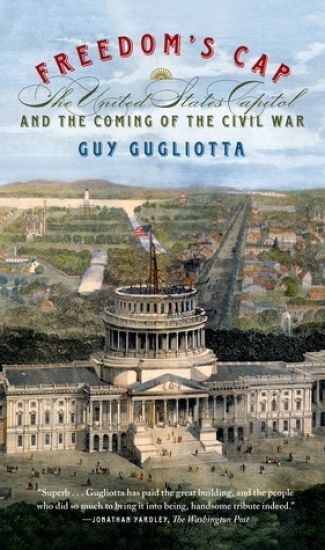
The history of the modern U.S. Capitol, the iconic seat of American government, is also the history of America's most tumultuous years. As the majestic new building rose above Washington's skyline, battles over slavery and secession ripped the country apart. Ground was broken just months after Congress adopted the Compromise of 1850. Workers began to bolt the Capitol's nine-million-pound cast-iron dome into place in 1856. The Statue of Freedom was placed atop it in 1863, five months after the Battle of Gettysburg. Little known is the greater irony: America owes the building's scale and magnificence to Jefferson Davis, who remained the Capitol's staunchest advocate up until the week he left Washington to become president of the Confederacy. Davis' protege and the engineer in charge was army captain Montgomery Meigs, who as Lincoln's quartermaster general of the Union Army would never forgive Davis' betrayal of the nation. The Capitol's brilliant architect, and Meigs' longtime rival, was Thomas U. Walter, a Southern sympathizer who would turn fiercely against the South and all who had betrayed the Union.
This work offers a theological and pastoral discussion of key Pauline texts and topics, arranged in a format for an 8-day retreat along the lines of the Spiritual Exercises of St Ignatius Loyola. While the format is that of two talks a day for eight days of retreat, the collection is designed to serve as an introduction to Paul’s theology and spirituality more generally, with a particular focus upon those aspects that appear to be matched and stressed in Ignatian spirituality, as currently understood and practiced. Notable emphases include: Paul’s sense of the death, resurrection, and exaltation of Jesus as the outreach of divine self-sacrificial love to the world; the sense of Christ as New Adam, inaugurating in a graced “new creation” the original divine plan for human beings and the other-than-human world; the rich Pauline sense of as “life in the body,” including the Eucharistic body, in all its aspects both individual and communal; the transition from the limitations (spiritual and pastoral) of “life under the law” to freedom and responsibility “in the Spirit”; the hope for the future of humanity and the world represented by the resurrection of Jesus and the triumph of grace and self-sacrificial love. While designed in first instance for individual instruction and reflection, the talks would also serve for communal reading and discussion. Each is concluded by a series of questions designed, in either context, to promote this end. †
Freedom and Possibility considers the ongoing adventure of God acting through the randomness and chance of the evolutionary process, whereby matter became life and life became self-conscious spirit with freedom. God's creation of freedom has been pivotal in the theology of the younger Joseph Ratzinger, as well as of Karl Rahner, Edward Schillebeeckx, and others. Making room for human freedom involves thinking about God's patience, defenselessness, and vulnerability, particularly as made clear in the humanity of Jesus. By creating humans with their finite and free will, God has voluntarily renounced power and control. And, as Walter Kasper has emphasized, if the Church is to be a credible advocate for human rights and freedom in the world, it must assess its own record, and plan to integrate freedom into its internal structures. Bernard P. Prusak, professor emeritus of systematic/constructive theology at Villanova University in Pennsylvania, is also the former chair of the theology and religious studies department there. He is the author of The Church Unfinished: Ecclesiology through the Centuries (Paulist Press), as well as numerous articles. He has lectured extensively on both the historical and theological perspectives of the Second Vatican Council and its continued influence and challenges, with hope for new possibilities. †
Freedom of Speech in the United States
Southern Illinois Univ Pr
1985
sidottu

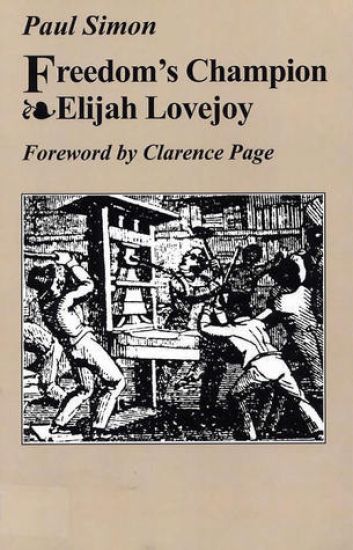
Freedom's Champion--Elijah Lovejoy
Southern Illinois University Press
1994
nidottu
In this revised edition of his earlier biography, Paul Simon provides an inspiring account of the life and work of Elijah Lovejoy, an avid abolitionist in the 1830s and the first martyr to freedom of the press in the United States.Lovejoy was a native New Englander, the son of a Congregational minister. He came to the Midwest in 1827 in pursuit of a teaching career and succeeded in running his own school for two years in St. Louis. Teaching failed to challenge Lovejoy, however, so he bought a half interest in the St. Louis Times and became its editor. In 1832, after experiencing a religious conversion, he returned east to study for the ministry at Princeton Theological Seminary. After his graduation, Lovejoy was called back to St. Louis by a group of Christian businessmen to serve as the editor of a new religious newspaper, the Observer, promoting religion, morality, and education. It was through this forum that Lovejoy took an ever stronger stance against slavery.In the slave state of Missouri, such a view was not onlyunpopular, but in the eyes of many, criminal. As a result, Lovejoy and his family suffered repeated persecution and acts of violence from angry mobs. In July 1836, in hopes of finding a more tolerant community in a free state, he moved both his printing press and his family across the Mississippi River to Alton, Illinois.The move to Alton was a fateful one. Lovejoy's press was dismantled and thrown into the river by a mob on the night of its arrival. Lovejoy ordered a new printing press, and it, too, was destroyed eleven months later. A determined and dedicated man, Lovejoy ordered a third press, and city officials took special precautions to ensure its safety after delivery. Nevertheless, an organized and angry mob rolled this third press, still in its crate, into the river exactly one month after Lovejoy's second press had been destroyed. A fourth press, housed in a large stone warehouse and guarded by Lovejoy and his supporters, met the same fate but only after a drunken mob had killed Lovejoy himself. He was buried two days later, 9 November 1837, on his thirty-fifth birthday. No one was ever convicted of his murder.Rather than suppressing the abolitionist movement, Lovejoy's death caused an eruption of antislavery activity throughout the nation. At a protest meeting in Ohio, John Brown dedicated his life to fighting slavery, and Wendell Phillips emerged from a Lovejoy protest meeting in Boston to become a leader in the antislavery fight.Simon defines Lovejoy's fight as a struggle for human dignity and the oppressed. He distinguishes Lovejoy as a courageous and admirable individual and his story as an important and enduring one for both the cause of freedom for the slaves and the cause of freedom of the press.
Freedom of the Air and the Public Interest
Benjamin Louise M.
Southern Illinois University Press
2001
sidottu
A unique and definitive study of freedom of expression rights in electronic media from the 1920s through the mid-1930s, Louise M. Benjamin's Freedom of the Air and the Public Interest: First Amendment Rights in Broadcasting to 1935 examines the evolution of free speech rights in early radio. Drawing on primary resources from sixteen archives plus contemporary secondary sources, Benjamin analyzes interactions among the players involved and argues that First Amendment rights in radio evolved in the 1920s and 1930s through the interaction of many entities having social, political, or economic interests in radio. She shows how free speech and First Amendment rights were defined and perceived up to 1935. Focusing on the evolution of various electronic media rights, Benjamin looks at censorship, speakers' rights of access to the medium, broadcasters' rights to use radio as they desired, and listeners' rights to receive information via the air waves. With many interested parties involved, conflict was inevitable, resulting in the establishment of industry policies and government legislation - particularly the Radio Act of 1927. Further debate led to the Communications Act of 1934, which has provided the regulatory framework for broadcasting for over sixty years. Controversies caused by new technology today continue to rage over virtually the same rights and issues that Benjamin deals with.