This book offers new topics and new perspectives on the economic history of Argentina before the 1930 Depression. It focuses on the evolution of early industrialization in a country primarily associated with cattle-ranching and agriculture, and single-mindedly characterized as a case of a successful export economy. Taking an original approach, the book cross-examines traditional economic issues such as production and finances, and new cultural patterns, such as consumption, the role of women, paternalism, and ideology. The first years of Argentina's industrialization, from the 1870s to the 1920s, coincided with a time of great innovation, a brisk turn from tradition, and quick modernization. This book shows that industry not only helped Argentina's economy along, but spearheaded its modernization. It challenges the long-lasting "canonical version" that industry was a victim of a capital market and a state extremely hostile to manufacturing. Access to financing for industrial endeavors was much easier than previously thought, while the state supported industry through tariffs.
This text features a study of the history of ""globality"", the emergence of a complex organization of politics, economics, and culture at a planetary level. Using historical research and science studies, it tells the story of the role of technoscientific discourses in the emergence of globality.
The Book of Disquiet is the Portuguese modernist master Fernando Pessoa's greatest literary achievement. An "autobiography" or "diary" containing exquisite melancholy observations, aphorisms, and ruminations, this classic work grapples with all the eternal questions. Now, for the first time the texts are presented chronologically, in a complete English edition by master translator Margaret Jull Costa. Most of the texts in The Book of Disquiet are written under the semi-heteronym Bernardo Soares, an assistant bookkeeper. This existential masterpiece was first published in Portuguese in 1982, forty-seven years after Pessoa's death. A monumental literary event, this exciting, new, complete edition spans Fernando Pessoa's entire writing life.
Here, in Margaret Jull Costa and Patricio Ferrari’s splendid new translations, are the complete poems of Alberto Caeiro, the imaginary “heteronym” coterie created by Fernando Pessoa, the Portuguese modernist master. Pessoa conceived Caeiro around 1914 and may have named him loosely after his friend, the poet Mário de Sa-Cárrneiro. What followed was a collection of some of Fernando Pessoa’s greatest poems, grouped under the titles The Keeper of Sheep, The Shepherd in Love, and Uncollected Poems. This imaginary author was a shepherd who spent most of his life in the countryside, had almost no education, and was ignorant of most literature; yet he (Pessoa) wrote some of the most beautiful and profound poems in Portuguese literature. This edition of The Complete Works of Alberto Caeiro is based on the magnificent Portuguese Tinta-da-China edition, published in Lisbon in 2016, and contains an illuminating introduction by the Portuguese editors Jerónimo Pizarro and Patricio Ferrari, some facsimiles of the original Portuguese texts, and prose excerpts about Caeiro and his work written by Fernando Pessoa well as his other heteronyms Álvaro de Campos and Ricardo Reis, and other fictitious authors such as Antonio Mora and I. I. Crosse.
Álvaro de Campos is one of the most influential heteronyms created by Portugal’s great modernist writer Fernando Pessoa. According to Pessoa, Campos was born in Tavira (Algarve) in 1890 and studied mechanical engineering in Glasgow, although he never managed to complete his degree. In his own day, Campos was celebrated—and slandered—for his vociferous poetry imbued with a Whitman-inspired free verse, his praise of the rise of technology and his polemical views that appeared in manifestos, interviews and essays. Here in Margaret Jull Costa and Patricio Ferrari’s translations are the complete poems of Campos. This edition is based on the Portuguese Tinta-da-china edition and includes an illuminating introduction about Campos by the Portuguese editors Jerónimo Pizarro and Antonio Cardiello, facsimiles of original manuscripts and a generous selection of Campos’s prose texts.
Here is the fourth in a series of volumes by Fernando Pessoa's celebrated "heteronyms," a coterie of writers that Pessoa created and conceived as distinct personalities, each with a unique literary style. Ricardo Reis was imagined as a melancholic doctor "with a darkish complexion," a self-taught Hellenist who exiled himself in Brazil because he was a monarchist. In a 1914 letter to Pessoa, the writer M rio S -Carneiro described Reis's odes as "admirable," "a marvel of impersonality," praising the way he "achieved a Horatian, classical novelty.'" Based on the definitive Tinta-da-China edition, published in Lisbon in 2016, this bilingual collection includes an illuminating introduction by Pessoa scholar Jer nimo Pizarro, facsimiles of original manuscripts, and prose excerpts written by Ricardo Reis on art, on life, and on the writings of Pessoa's other heteronyms. Magnificently translated by Margaret Jull Costa and Patricio Ferrari, The Complete Works of Ricardo Reis is a must-have collection by one of Pessoa's most refined heteronyms.
LONGLISTED FOR THE 2024 NATIONAL BOOK AWARD FOR TRANSLATED LITERATURE Winner of the R mulo Gallego Prize, The Abyss is a caustic masterwork of incredible power and force, an unforgettable autobiographical work of queer fiction. The novel tells about the demise of a crumbling house in Medell n, Colombia. Fernando, a writer, visits his brother Dar o, who is dying of AIDS. Recounting their wild philandering and trying to come to terms with his beloved brother's inevitable death, Fernando rants against the political forces that cause so much suffering. Vallejo is the heir to C line, Thomas Paine, and Machado de Assis. He hurls vitriolic, savagely funny insults at his country ("I wipe my ass with the new Constitution of Colombia") and at his mother ("the Crazy Bitch") who has given birth to him and his many siblings. Within this firestorm of pain, Fernando manages to get across much beauty and truth: that all love is painful and washed in pure sorrow. He loves his sick brother and the family's Santa Anita farm (the lost paradise of his childhood where azaleas bloomed); and he even loves his country, now torn to shreds. Always, in this savage masterpiece about loss--as if in the eye of Vallejo's hurricane of talent--we are in the curiously comforting workings of memory and of the writing process itself, as, recollecting time, it offers immortality.
In a provocative attempt to outline a history of communication during the Spanish Golden Age, Communication, Knowledge, and Memory in Early Modern Spain examines how speech, visual images, and written texts all interact as manifestations of the human desire to know and remember. Seeking to address the reductive opposition both between written and oral texts and between script and print in the Early Modern period, Fernando Bouza, one of Spain's most influential cultural historians, makes an elegant case for the equality and complementary natures of the various modes of communication. While the advent of printing is commonly thought to have resulted in the demise of the manuscript, Bouza upholds that the progress of textual culture in all its forms did not undermine the importance of other mediums of knowledge. The history of the book and of reading is often considered separately from the history of the uses of writing and speech, but according to Bouza, the boundaries between the spheres are artificial constructions that fail to honor the realities of the transfer of knowledge and information. While recognizing that reading and writing belong to two distinct models of acculturation, Bouza refuses to accept the myth that has identified rationality and modernity with written culture only, while the languages of images and the practices of orality are relegated to the past. Considering the uses of text, image, and speech in social settings ranging from the most humble to the most aristocratic, he argues that orality is as strongly present in the world of the court as in popular milieux, that the image was put to uses both naive and learned, and that writing-far from a privilege of the powerful-touched the lives of even the illiterate. This original and brilliant book is bound to transform current understandings of the intellectual practices of the Golden Age.
Born in Granada, Spain, in 1980, Fernando Valverde is widely considered one of the top young poets writing in Spanish today. Valverde is a leading figure in a movement of contemporary poets known as the Poetry of Uncertainty, and he has received some of the most significant awards for poetry in Spanish. This bilingual edition of his book The Insistence of Harm introduces English-language readers to some of his latest, most exciting work.The Insistence of Harm is a series of poignant lyric poems that takes readers from India to the Balkans to Spain and to Latin America, exploring the nature of "harm" in its various guises—war, disease, heartbreak, suicide. The poems grapple with both the reality of loss and the distance that language imposes on it. The English translations by Allen Josephs and Laura Juliet Wood effectively capture both tone and content while attending to subtle nuances of the original Spanish, bringing a new and important voice to students of Spanish and poetry readers alike.
Why should sovereign states obey international law? In this groundbreaking study Fernando Tesón argues that an overlapping respect for human rights has created a moral common ground among the countries of the world. It is this common set of values rather than self-interest that ultimately provides legitimacy to international law. Using the tools of moral philosophy Tesón analyzes the concepts of sovereignty, intervention, and national interest; the contributions of social contact theory, game theory, and feminist theory; and the puzzles of self-determination and group rights.
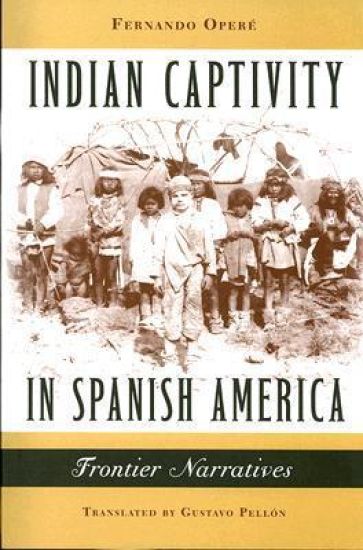
Even before the arrival of Europeans to the Americas, the practice of taking captives was widespread among Native Americans. Indians took captives for many reasons: to replace by adoption tribal members who had been lost in battle, to use as barter for needed material goods, to use as slaves, or to use for reproductive purposes. From the legendary story of John Smith's captivity in the Virginia Colony to the wildly successful narratives of New England colonists taken captive by local Indians, the genre of the captivity narrative is well known among historians and students of early American literature. Not so for Hispanic America. Fernando Opere redresses this oversight, offering the first comprehensive historical and literary account of Indian captivity in Spanish-controlled territory from the sixteenth to the twentieth century. Originally published in Spanish in 2001 as ""Historias de la frontera: El cautiverio en la America hispanica"", this newly translated work reveals key insights into Native American culture in the New World's most remote regions. From the ""happy captivity"" of the Spanish military captain Francisco Nuez de Pineda y Bascunn, who in 1628 spent six congenial months with the Araucanian Indians on the Chilean frontier, to the harrowing nineteenth-century adventures of foreigners taken captive in the Argentine Pampas and Patagonia; from the declaraciones of the many captives rescued in the Rio de la Plata region of Argentina in the seventeenth and eighteenth centuries, to the riveting story of Helena Valero, who spent twenty-four years among the Yanomam - in Venezuela during the mid-twentieth century, Opere's vibrant history spans the entire gamut of Spain's far-flung frontiers. Eventually focusing on the role of captivity in Latin American literature, Opere convincingly shows how the captivity genre evolved over time, first to promote territorial expansion and deny intercultural connections during the colonial era, and later to romanticize the frontier in the service of nationalism after independence. This important book is thus multidisciplinary in its concept, providing ethnographic, historical, and literary insights into the lives and customs of Native Americans and their captives in the New World.
Even before the arrival of Europeans to the Americas, the practice of taking captives was widespread among Native Americans. Indians took captives for many reasons: to replace by adoption tribal members who had been lost in battle, to use as barter for needed material goods, to use as slaves, or to use for reproductive purposes. From the legendary story of John Smith's captivity in the Virginia Colony to the wildly successful narratives of New England colonists taken captive by local Indians, the genre of the captivity narrative is well known among historians and students of early American literature. Not so for Hispanic America. Fernando Opere redresses this oversight, offering the first comprehensive historical and literary account of Indian captivity in Spanish-controlled territory from the sixteenth to the twentieth century. Originally published in Spanish in 2001 as ""Historias de la frontera: El cautiverio en la America hispanica"", this newly translated work reveals key insights into Native American culture in the New World's most remote regions. From the ""happy captivity"" of the Spanish military captain Francisco Nuez de Pineda y Bascunn, who in 1628 spent six congenial months with the Araucanian Indians on the Chilean frontier, to the harrowing nineteenth-century adventures of foreigners taken captive in the Argentine Pampas and Patagonia; from the declaraciones of the many captives rescued in the Rio de la Plata region of Argentina in the seventeenth and eighteenth centuries, to the riveting story of Helena Valero, who spent twenty-four years among the Yanomam - in Venezuela during the mid-twentieth century, Opere's vibrant history spans the entire gamut of Spain's far-flung frontiers. Eventually focusing on the role of captivity in Latin American literature, Opere convincingly shows how the captivity genre evolved over time, first to promote territorial expansion and deny intercultural connections during the colonial era, and later to romanticize the frontier in the service of nationalism after independence. This important book is thus multidisciplinary in its concept, providing ethnographic, historical, and literary insights into the lives and customs of Native Americans and their captives in the New World.
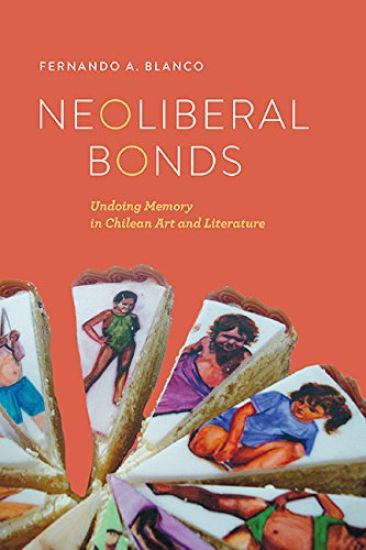
Fernando A. Blanco s Neoliberal Bonds: Undoing Memory in Chilean Art and Literature analyzes the sociocultural processes that have reshaped subjectivities in post-Pinochet Chile. By creatively exploring the intersections among memory, gender, post-trauma, sociology, psychoanalysis, and neoliberalism, Neoliberal Bonds draws on Lacan s notion of perversion to critique the subjective fantasies that people create to compensate for the loss of the social bond in the wake of a dictatorship founded on individualism, competition, and privatization. Neoliberal Bonds vehemently criticizes how Chile s transition governments, through a series of political and legal maneuvers, created the state s official memory narratives. Blanco argues that the state, the media, academia, and the neoliberal market colluded to colonize and mediatize the memory scene. In contrast to these official narratives, Neoliberal Bonds analyzes alternative memory accounts within the visual arts and literature that push back against the state, its institutions, and its economic allies. These alternative memory narratives highlight the ontological fracture of the new neoliberal subjects; they also bring into sharp relief the urgent need for democratization that still poses a challenge to Chile a quarter century after its transition to democracy began."
New Frontiers in the Internationalization of Businesses: Empirical Evidence from Indigenous Businesses in Canada highlights the impact of international expansion as a potential pathway to address the challenges of poverty and vulnerability, and provide relevant new knowledge on the factors that support successful international expansion of Indigenous businesses. This book examines how entrepreneur’s identity and cultural values, network ties, motivations, and resources and capabilities facilitate or hinder the internationalization of Indigenous businesses. This book also investigates the economic and non-economic outcomes of internationalization. Most interestingly, this book answers the question of what is so new about the internationalization of Indigenous businesses by comparing this context to mainstream (non-Indigenous) businesses. The book also delves in the phenomena related to home-based businesses, service industries, and specific ethnic groups. This book has implications for vulnerable populations, especially those more than 370 million indigenous people spread across 70 countries worldwide.Studying those Indigenous businesses that decide to pursue international opportunities and how they become successful in international markets is a timely and novel area of research. Understanding this context contributes to current debates in international business.
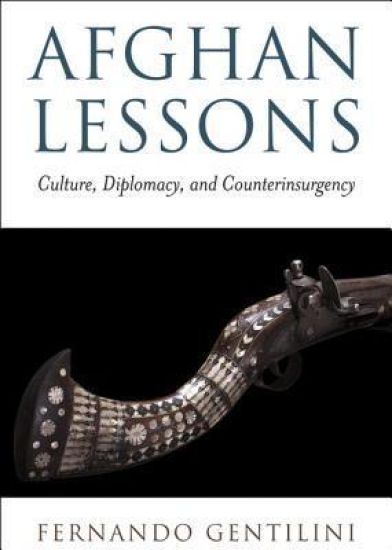
"Fernando Gentilini served nearly two years as the civilian representative of NATO in Afghanistan, running a counterinsurgency campaign in the wartorn nation. Afghan Lessons is the fascinating story of his mission, a firsthand view of Afghanistan through a kaleidoscope. He explores Afghan history, literature, tradition, and culture to understand some of the most basic questions of Western involvement: What is the purpose? What does an international presence mean, and how can it help?Highlights from Afghan Lessons""This is a book about different worlds, different realities. The reality of everyday life in an unreal world. People that need to be looked after, jobs that need to be done, a country that needs to be restored, all from within the necessary confines of an armed camp. And this in the middle of another reality, which we do not understand, full of things forgotten under decades of war. The keys to this reality lie in the past, perhaps lost."" —from the Foreword by Robert Cooper""To tempt me to explore their country, the Afghans kept repeating that there were three different Afghanistans: 'The first is the one you Westerners imagine; another coincides with the city of Kabul; the third is the country of remote provinces, far away from the cities, and of the three, this is the only real Afghanistan.'""""'There can be no development without security and no security without development.' ... Everyone said it over and over again, both the civilians and the military, but depending on whether it was said by the former or the latter, the emphasis was placed on the first or second part of the slogan. In all honesty this seemingly obvious concept concealed two contrasting ways of seeing things."""
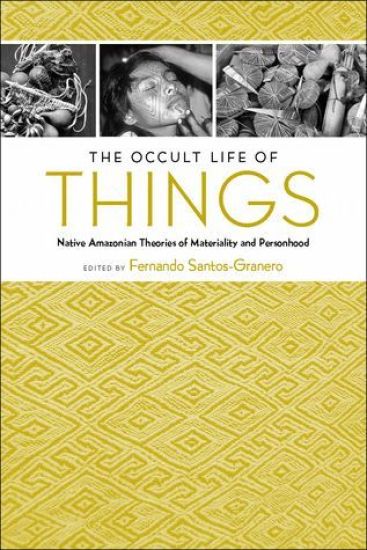
Native peoples of the Amazon view objects, especially human artifacts, as the first cosmic creations and the building blocks from which the natural world has been shaped. In these constructional cosmologies, spears became the stings of wasps, hammocks became spiderwebs, stools became the buttocks of human beings.A view so antithetical to Western thought offers a refreshing perspective on the place and role of objects in human social life—one that has remained under-studied in Amazonian anthropology. In this book, ten scholars re-introduce objects to contemporary studies of animism in order to explore how various peoples envision the lives of material objects: the occult, or extraordinary, lives of “things,” whose personas are normally not visible to lay people.Combining linguistic, ethnological, and historical perspectives, the contributors draw on a wealth of information gathered from ten Amerindian peoples belonging to seven different linguistic families to identify the basic tenets of what might be called a native Amazonian theory of materiality and personhood. They consider which objects have subjective dimensions and how they are manifested, focusing on three domains regarding Amazonian conceptions of things: the subjective life of objects, considering which things have a subjective dimension; the social life of things, seeing the diverse ways in which human beings and things relate as subjectivities; and the historical life of things, recognizing the fact that some things have value as ritual objects or heirlooms.These chapters demonstrate how native Amazonian peoples view animals, plants, and things as “subjectivities” possessing agency, intentionality, and consciousness, as well as a composite anatomy. They also show how materiality is intimately linked to notions of personhood, with artifacts classified as natural or divine creations and living beings viewed as cultural or constructed. The Occult Life of Things offers original insights into these elaborate native ontologies as it breaks new ground in Amazonian studies.
Forges a new understanding of how these two Lusophone nations are connectedThe closely entwined histories of Portugal and Brazil remain key references for understanding developments-past and present-in either country. Accordingly, Fernando Arenas considers Portugal and Brazil in relation to one another in this exploration of changing definitions of nationhood, subjectivity, and utopias in both cultures. Examining the two nations’s shared language and histories as well as their cultural, social, and political points of divergence, Arenas pursues these definitive changes through the realms of literature, intellectual thought, popular culture, and political discourse. Both Brazil and Portugal are subject to the economic, political, and cultural forces of postmodern globalization. Arenas analyzes responses to these trends in contemporary writers including JosÉ Saramago, Caio Fernando Abreu, Maria Isabel Barreno, VergÍlio Ferreira, Clarice Lispector, and Maria Gabriela Llansol. Ultimately, Utopias of Otherness shows how these writers have redefined the concept of nationhood, not only through their investment in utopian or emancipatory causes such as Marxist revolution, women’s liberation, or sexual revolution, but also by shifting their attention to alternative modes of conceiving the ethical and political realms.