Kirjojen hintavertailu. Mukana 11 238 394 kirjaa ja 12 kauppaa.

Kirjahaku

Etsi kirjoja tekijän nimen, kirjan nimen tai ISBN:n perusteella.

1000 tulosta hakusanalla GRAY LEON

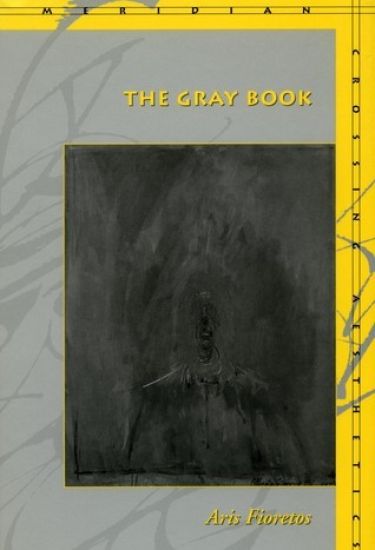
The Gray Book

The Gray Book

Aris Fioretos

Stanford University Press
1999
sidottu
Generally considered the least lively and most bleak of casts, gray is the taint of vagueness and uncertainty. Marking the threshold region where luminous life seems suspended but death has not yet darkened the horizon, it belongs to an evasive and evanescent world, carrying the tint of smoke, fog, ashes, and dust. As the ambiguous space of thought and remembrance where things blend and blur, gray measures the difference between distance and proximity, shading into tinges of hesitation, hues of taciturnity, tones of time past and lost. Thus it may also be the spectral medium of literature itself—that grainy gas of language. Written with a lead pencil akin to those found in Nabokov, Rilke, Svevo, Poe, and Dickinson, The Gray Book chronicles the vicissitudes of such equivocal articulation—registering the graphite traces it leaves behind but also recording the dwindling span of its life. The book situates itself in a region beyond criticism but this side of literature, characterized by forgetting and finitude, and investigating important yet seemingly inaccessible "gray areas" in texts as old as those of Homer, and as recent as those of Beckett. Loosely arranging these literary finds according to a revision of the four elements, The Gray Book distances itself from tradition and treats not water but tears, not fire but vapor, not earth but grain, not air but clouds. The narrative thus construed, proceeding in the meandering movements of volatile thought rather than in the prudent steps of a treatise, appears gradually affected by its subject. Themes and facts previously confined to the realm of quoted texts leak into the narrative itself. The border between fiction and fact slowly dissolves as the book approaches the curious void that the author locates at the heart of "gray literature." Shaped by an omnipresent though increasingly unreliable narrator, The Gray Book may thus ultimately yield a poetics cast in the form of a ghost story.
The Gray Book

The Gray Book

Fioretos Aris

Stanford University Press
1999
pokkari
Generally considered the least lively and most bleak of casts, gray is the taint of vagueness and uncertainty. Marking the threshold region where luminous life seems suspended but death has not yet darkened the horizon, it belongs to an evasive and evanescent world, carrying the tint of smoke, fog, ashes, and dust. As the ambiguous space of thought and remembrance where things blend and blur, gray measures the difference between distance and proximity, shading into tinges of hesitation, hues of taciturnity, tones of time past and lost. Thus it may also be the spectral medium of literature itself—that grainy gas of language. Written with a lead pencil akin to those found in Nabokov, Rilke, Svevo, Poe, and Dickinson, The Gray Book chronicles the vicissitudes of such equivocal articulation—registering the graphite traces it leaves behind but also recording the dwindling span of its life. The book situates itself in a region beyond criticism but this side of literature, characterized by forgetting and finitude, and investigating important yet seemingly inaccessible "gray areas" in texts as old as those of Homer, and as recent as those of Beckett. Loosely arranging these literary finds according to a revision of the four elements, The Gray Book distances itself from tradition and treats not water but tears, not fire but vapor, not earth but grain, not air but clouds. The narrative thus construed, proceeding in the meandering movements of volatile thought rather than in the prudent steps of a treatise, appears gradually affected by its subject. Themes and facts previously confined to the realm of quoted texts leak into the narrative itself. The border between fiction and fact slowly dissolves as the book approaches the curious void that the author locates at the heart of "gray literature." Shaped by an omnipresent though increasingly unreliable narrator, The Gray Book may thus ultimately yield a poetics cast in the form of a ghost story.
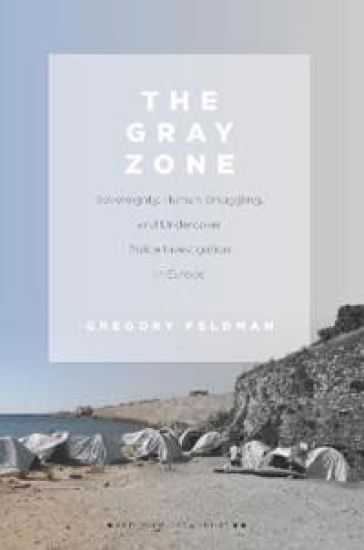
The Gray Zone

The Gray Zone

Gregory Feldman

Stanford University Press
2019
sidottu
Based on rare, in-depth fieldwork among an undercover police investigative team working in a southern EU maritime state, Gregory Feldman examines how "taking action" against human smuggling rings requires the team to enter the "gray zone", a space where legal and policy prescriptions do not hold. Feldman asks how this seven-member team makes ethical judgments when they secretly investigate smugglers, traffickers, migrants, lawyers, shopkeepers, and many others. He asks readers to consider that gray zones create opportunities both to degrade subjects of investigations and to take unnecessary risks for them. Moving in either direction largely depends upon bureaucratic conditions and team members' willingness to see situations from a variety of perspectives. Feldman explores their personal experiences and daily work in order to crack open wider issues about sovereignty, action, ethics, and, ultimately, being human. Situated at the intersection of the EU migration apparatus and the global, clandestine networks it identifies as security threats, this book allows Feldman to outline an ethnographically-based theory of sovereign action.
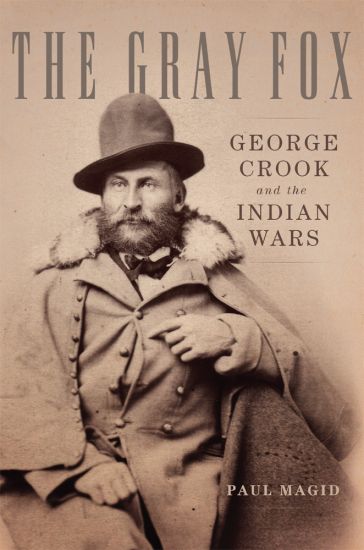
The Gray Fox

The Gray Fox

Paul Magid

University of Oklahoma Press
2015
sidottu
George Crook was one of the most prominent military figures of the late-nineteenth-century Indian Wars. Yet today his name is largely unrecognized despite the important role he played in such pivotal events in western history as the Custer fight at the Little Big Horn, the death of Crazy Horse, and the Geronimo campaigns. As Paul Magid portrays Crook in this highly readable second volume of a projected three-volume biography, the general was an innovative and eccentric soldier, with a complex and often contradictory personality, whose activities often generated intense controversy. Though known for his uncompromising ferocity in battle, he nevertheless respected his enemies and grew to know and feel compassion for them. Describing campaigns against the Paiutes, Apaches, Sioux, and Cheyennes, Magid's vivid narrative explores Crook's abilities as an Indian fighter. The Apaches, among the fiercest peoples in the West, called Crook the Gray Fox after an animal viewed in their culture as a herald of impending death. Generals Grant and Sherman both regarded him as indispensable to their efforts to subjugate the western tribes. Though noted for his aggressiveness in combat, Crook was a reticent officer who rarely raised his voice, habitually dressed in shabby civilian attire, and often rode a mule in the field. He was also self-confident to the point of arrogance, harbored fierce grudges, and because he marched to his own beat, got along poorly with his superiors. He had many enduring friendships both in- and outside the army, though he divulged little of his inner self to others and some of his closest comrades knew he could be cold and insensitive. As Magid relates these crucial episodes of Crook's life, a dominant contradiction emerges: while he was an unforgiving warrior in the field, he not infrequently risked his career to do battle with his military superiors and with politicians in Washington to obtain fair treatment for the very people against whom he fought. Upon hearing of the general's death in 1890, Chief Red Cloud spoke for his Sioux people: ""He, at least, never lied to us. His words gave the people hope.
The Gray Fox

The Gray Fox

Paul Magid

University of Oklahoma Press
2018
nidottu
George Crook was one of the most prominent military figures of the late-nineteenth-century Indian Wars. Yet today his name is largely unrecognized despite the important role he played in such pivotal events in western history as the Custer fight at the Little Big Horn, the death of Crazy Horse, and the Geronimo campaigns. As Paul Magid portrays Crook in this highly readable second volume of a projected three-volume biography, the general was an innovative and eccentric soldier, with a complex and often contradictory personality, whose activities often generated intense controversy. Though known for his uncompromising ferocity in battle, he nevertheless respected his enemies and grew to know and feel compassion for them. Describing campaigns against the Paiutes, Apaches, Sioux, and Cheyennes, Magid's vivid narrative explores Crook's abilities as an Indian fighter. The Apaches, among the fiercest peoples in the West, called Crook the Gray Fox after an animal viewed in their culture as a herald of impending death. Generals Grant and Sherman both regarded him as indispensable to their efforts to subjugate the western tribes. Though noted for his aggressiveness in combat, Crook was a reticent officer who rarely raised his voice, habitually dressed in shabby civilian attire, and often rode a mule in the field. He was also self-confident to the point of arrogance, harbored fierce grudges, and because he marched to his own beat, got along poorly with his superiors. He had many enduring friendships both in- and outside the army, though he divulged little of his inner self to others and some of his closest comrades knew he could be cold and insensitive. As Magid relates these crucial episodes of Crook's life, a dominant contradiction emerges: while he was an unforgiving warrior in the field, he not infrequently risked his career to do battle with his military superiors and with politicians in Washington to obtain fair treatment for the very people against whom he fought. Upon hearing of the general's death in 1890, Chief Red Cloud spoke for his Sioux people: ""He, at least, never lied to us. His words gave the people hope.
The Gray and the Black

The Gray and the Black

Robert F. Durden

Louisiana State University Press
2000
nidottu
That the Confederacy in its waning days frantically turned to the idea of arming slaves has long been known by all close students of the Civil War. Yet the more explosive, if unexamined, issue before the southern people and leaders in this last great crisis was whether or not the South itself should initiate a program of emancipation as part of a plan to recruit black soldiers. Jefferson Davis and other leaders, including Robert E. Lee, attempted to force the South to face the desperate alternative of sacrificing one of its war aims- the preservation of slavery- in order to achieve the other- an independent southern nation.In The Gray and the Black, Robert F. Durden reconstructs this intensely passionate debate that cuts to the heart of what the war was about for the South. Throughout his narrative, Durden lets the participants speak for themselves- in journal extracts, newspaper articles, letters, and speeches. These documents and Durden's perceptive commentary demonstrate with sad finality that, when faced with this ultimate choice, southerners, with certain fascinating exceptions, could not bring themselves to abandon the ""peculiar institution.
Long Gray Lines

Long Gray Lines

The University of North Carolina Press
2004
nidottu
Challenging assumptions about a distinctive ""southern military tradition,"" Rod Andrew demonstrates that southern military schools were less concerned with preparing young men for actual combat than with instilling in their students broader values of honor, patriotism, civic duty, and virtue. Southerners had a remarkable tendency to reconcile militarism with republicanism, Andrew says, and following the Civil War, the Lost Cause legend further strengthened the link in southerners' minds between military and civic virtue.
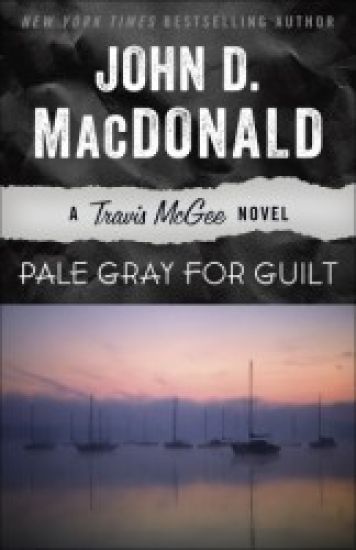
Pale Gray for Guilt

Pale Gray for Guilt

John D. MacDonald

Random House Trade
2013
nidottu
From a beloved master of crime fiction, Pale Gray for Guilt is one of many classic novels featuring Travis McGee, the hard-boiled detective who lives on a houseboat. Travis McGee's old football buddy Tush Bannon is resisting pressure to sell off his floundering motel and marina to a group of influential movers and shakers. Then he's found dead. For a big man, Tush was a pussycat: devoted to his wife and three kids and always optimistic about his business--even when things were at their worst. So even though his death is ruled a suicide, McGee suspects murder . . . and a vile conspiracy. "As a young writer, all I ever wanted was to touch readers as powerfully as John D. MacDonald touched me."--Dean Koontz Tush Bannon was in the wrong spot at the wrong time. His measly plot of land just so happened to sit right in the middle of a rich parcel of five hundred riverfront acres that big-money real estate interests decided they simply must have. It didn't matter that Tush was a nice guy with a family, or that he never knew he was dealing with a criminal element. They squashed him like a bug and walked away, counting their change. But one thing they never counted on: the gentle giant had a not-so-gentle friend in Travis McGee. And now he's going to make them pay. Features a new Introduction by Lee Child
Gerald Gray's Wife and Lily: a Novel

Gerald Gray's Wife and Lily: a Novel

Susan Petigru King

Duke University Press
1993
sidottu
Susan Petigru King wrote and published virtually all of her novels and short stories just before and during the American civil war, although her fiction deals neither with slavery nor sectional politics. Set in her native Charleston and its surrounding plantations, King's novels explore the social life and sexual politics of South Carolina's privileged antebellum elite. In the tradition of nineteenth-century domestic novels, King's writings chronicle courtships and marriages, love and jealousy. The republication of these long-neglected novels will introduce contemporary readers to the imaginative power of an important southern American woman writer.Lily, King's best known novel, was originally published by Harper and Brothers in 1855. In this work, King skewers the rituals of courtship that propel its wealthy young heroine toward marriage and a melodramatic death. Gerald Gray's Wife, King's last novel, plays out the ironies of a plain woman who survives-but barely-the revelations that destroy her seemingly perfect marriage and acquired beauty. In both novels, women's jealousies and men's deceptions are the forces that propel King's often satirical pen. Largely lacking the moral instruction so common among nineteenth-century domestic novelists, King's novels are differentiated by their critical perspective on women's position, their exploration of themes of failure and frustration, and their focus on the drawing room and ballroom rather than the kitchen and nursery.
Gerald Gray's Wife and Lily: a Novel

Gerald Gray's Wife and Lily: a Novel

Susan Petigru King

Duke University Press
1993
pokkari
Susan Petigru King wrote and published virtually all of her novels and short stories just before and during the American civil war, although her fiction deals neither with slavery nor sectional politics. Set in her native Charleston and its surrounding plantations, King's novels explore the social life and sexual politics of South Carolina's privileged antebellum elite. In the tradition of nineteenth-century domestic novels, King's writings chronicle courtships and marriages, love and jealousy. The republication of these long-neglected novels will introduce contemporary readers to the imaginative power of an important southern American woman writer.Lily, King's best known novel, was originally published by Harper and Brothers in 1855. In this work, King skewers the rituals of courtship that propel its wealthy young heroine toward marriage and a melodramatic death. Gerald Gray's Wife, King's last novel, plays out the ironies of a plain woman who survives-but barely-the revelations that destroy her seemingly perfect marriage and acquired beauty. In both novels, women's jealousies and men's deceptions are the forces that propel King's often satirical pen. Largely lacking the moral instruction so common among nineteenth-century domestic novelists, King's novels are differentiated by their critical perspective on women's position, their exploration of themes of failure and frustration, and their focus on the drawing room and ballroom rather than the kitchen and nursery.
The Gray Zones of Medicine

The Gray Zones of Medicine

University of Pittsburgh Press
2021
sidottu
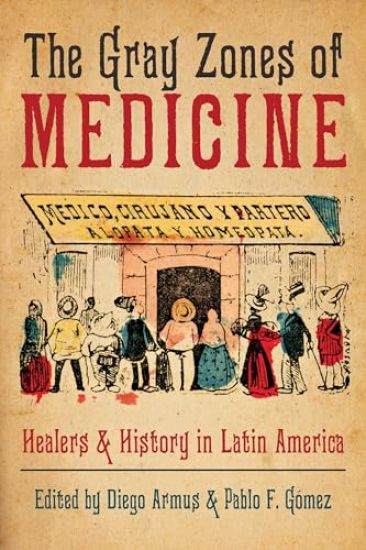
Health practitioners working in gray zones, or between official and unofficial medicines, played a fundamental role in the shaping of Latin America from the colonial period onward. The Gray Zones of Medicine offers a human, relatable, complex examination of the history of health and healing in Latin America across five centuries. Contributors uncover how biographical narratives of individual actors—outside those of hegemonic biomedical knowledge, careers of successful doctors, public health initiatives, and research and medical institutions—can provide a unique window into larger social, cultural, political, and economic historical changes and continuities in the region. They reveal the power of such stories to illuminate intricacies and resilient features of the history of health and disease, and they demonstrate the importance of escaping analytical constraints posed by binary frameworks of legality/illegality, learned/popular, and orthodoxy/heterodoxy when writing about the past. Through an accessible and story-like format, this book unlocks the potential of historical narratives of healings to understand and give nuance to processes too frequently articulated through intellectual medical histories or the lenses of empires, nation-states, and their institutions.
The Gray Zones of Medicine

The Gray Zones of Medicine

UNIVERSITY OF PITTSBURGH PRESS
2025
nidottu
Health practitioners working in gray zones, or between official and unofficial medicines, played a fundamental role in shaping Latin America from the colonial period onward. The Gray Zones of Medicine offers a human, relatable, complex examination of the history of health and healing in Latin America across five centuries. Contributors uncover how biographical narratives of individual actors—outside those of hegemonic biomedical knowledge, careers of successful doctors, public health initiatives, and research and medical institutions—can provide a unique window into larger social, cultural, political, and economic historical changes and continuities in the region. They reveal the power of such stories to illuminate intricacies and resilient features of the history of health and disease, and they demonstrate the importance of escaping analytical constraints posed by binary frameworks of legality/illegality, learned/popular, and orthodoxy/heterodoxy when writing about the past. Through an accessible and story-like format, this book unlocks the potential of historical narratives of healings to understand and give nuance to processes too frequently articulated through intellectual medical histories or the lenses of empires, nation-states, and their institutions.
Alasdair Gray

Alasdair Gray

Stephen Bernstein; Walter S.H. Lim

Bucknell University Press,U.S.
1999
sidottu
Alasdair Gray is the first American study of this important Scottish novelist's work, and the first comprehensive study of his novels to appear anywhere. It encompasses the full range of Gray's career, from Lanark to Mavis Belfrage.
Every Short Story by Alasdair Gray 1951-2012

Every Short Story by Alasdair Gray 1951-2012

Alasdair Gray

Canongate Books Ltd
2015
pokkari
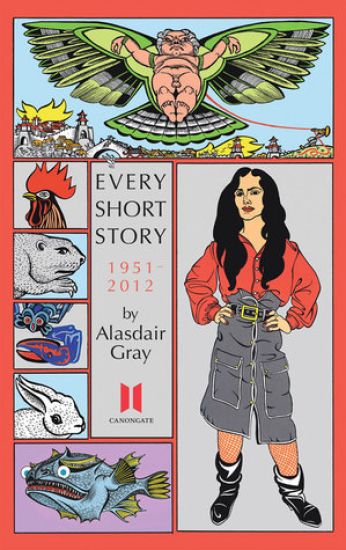
The first sixteen tales in this collection were published by Canongate in 1983 with the title Unlikely Stories, Mostly. This collection also has fifty-seven tales from later books, plus sixteen new ones written for the hardback publication of this collection. This last section, Tales Droll and Plausible, shows that Gray's recent twenty-first-century fiction is as uncomfortably funny and up to date as his earliest.
Navy Gray

Navy Gray

Maxine Turner

Mercer University Press
2003
nidottu
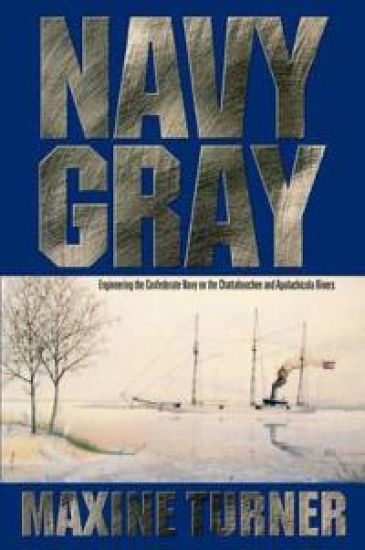
The story of the Confederate Navy been told less often than the spectacular history of the armies, but many of the familiar elements are there: the exuberant hopes of the Confederacy, the risk in spite of very long odds against success, the basic deficits in resources becoming desperate needs, and the dogged, exhausted persistence in the face of certain defeat. The story is epic in its importance to a nation and a people. New strategies and developing technology, however, introduce new elements into this story of the Civil War. The officers and men of the Confederate Navy were defeated at every turn by a national policy and a local tangle of political, economic, and social issues. Southern officers resigned their Union Navy commissions to fight for principle -- and soon found themselves enmeshed in construction schedules and bureaucratic delays. All too often, naval officers on both sides found themselves engaged in what is now termed "modern warfare". In this story of the Civil War, the phrase "arms and the man" begins to take on the contemporary ring of man and machine and man within and against the system.
Spalding Gray's America

Spalding Gray's America

William Demastes

Limelight Editions
2008
pokkari
Spalding Gray's (1941-2004) career in the theatre spanned one of the most dynamic periods of American history and culture. From the 1960s and into the 21st century, Gray took the stage and mesmerized his audiences with twisted and often hilarious tales about life in America and abroad."Spalding Gray's America" traces Gray's life from his work with the Performance and Wooster Groups to his career as a storyteller famously presenting captivating monologues in his signature plaid shirt while sitting behind a desk on an otherwise bare stage. His monologues include "Sex and Death to the Age 14", "Swimming to Cambodia", "Gray's Anatomy", "Monster in a Box", "It's a Slippery Slope", and "Morning, Noon and Night".Gray's stories provide a quirky, full-color portrait of America in the last half of what has been famously labeled 'the American century'. They are poignant, touching, and often troubling, but they're also vividly insightful and invariably funny.
The Gray Lover

The Gray Lover

Carl Friedman

Persea Books
2003
nidottu
A critically acclaimed collection by a renowned second-generation Holocaust writer. Each of these stories, while stylistically distinct, is characterized by Friedman's signature mixture of lightness and gravity. With the Holocaust never far from the surface, the author continues her fascinating creative exploration of Jewish identity in this "extraordinary collection of stories" (Multi-Cultural Review).