Kirjojen hintavertailu. Mukana 11 627 220 kirjaa ja 12 kauppaa.

Kirjahaku

Etsi kirjoja tekijän nimen, kirjan nimen tai ISBN:n perusteella.

1000 tulosta hakusanalla Gabriel Compayre

George Gabriel Stokes

George Gabriel Stokes

Oxford University Press
2019
sidottu
George Gabriel Stokes was one of the most important mathematical physicists of the 19th century. During his lifetime he made a wide range of contributions, notably in continuum mechanics, optics and mathematical analysis. His name is known to generations of scientists and engineers through the various physical laws and mathematical formulae named after him, such as the Navier-Stokes equations in fluid dynamics. Born in Ireland into a family of academics, clergymen and physicians, he became the longest serving Lucasian Professor of Mathematics at Cambridge. Impressive as his own scientific achievements were, he made an equally important contribution as a sounding board for his contemporaries, providing good judgement and mathematical rigour in his wide correspondence and during his 31 years as Secretary of the Royal Society where he played a major role in the direction of British science. Outside his own area he was a distinguished public servant and MP for Cambridge University. He was keenly interested in the relation between science and religion and wrote at length on their interaction. Stokes was a remarkable scientist who lived in an equally remarkable age of discovery and innovation. This edited collection of essays brings together experts in mathematics, physics and the history of science to cover the many facets of Stokes's life in a scholarly but accessible way to mark the bicentenary of his birth.
Dante Gabriel Rossetti and the Late Victorian Sonnet Sequence
In 1870, Dante Gabriel Rossetti published the first version of his sonnet sequence The House of Life. The next thirty years saw the greatest flourishing of the sonnet sequence since the 1590s. John Holmes's carefully researched and eloquent study illuminates how leading sonneteers, including the Rossettis, John Addington Symonds, Wilfrid Blunt and Augusta Webster, and their early twentieth-century successors Rosa Newmarch and Rupert Brooke, addressed the urgent questions of selfhood, religious belief and doubt, and sexual and national identity which troubled late Victorian England. Drawing on the heritage of the sonnet sequence, the poetic self-portraits they created are unsurpassed in their subtlety, complexity, courage, and honesty.
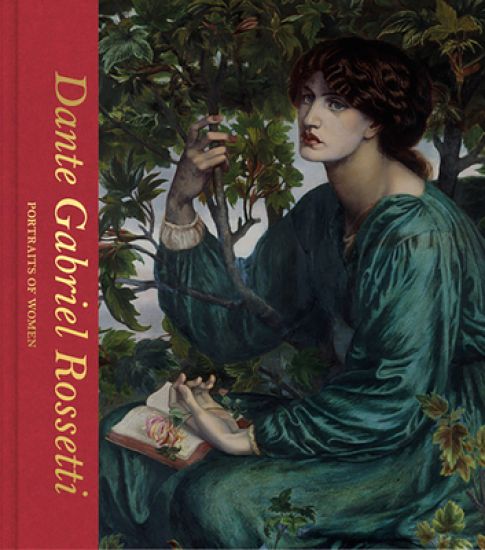
Dante Gabriel Rossetti: Portraits of Women (Victoria and Albert Museum)
Dante Gabriel Rossetti (1828–1882), best known and admired for his striking and seductive portraits of women, was one of the founding members of the Pre-Raphaelite Brotherhood, a group of artists whose work is inspired by the art of the early Italian Renaissance. Rossetti’s powerful and unconventional portraits, with their sumptuous, jewel-like colours, are explored in this beautiful gift book. Examples have been drawn from the full range of Rossetti’s work – including paintings, drawings, print illustrations, decorative designs and staged photographs – and chart the artist’s lively engagement with mythology, history, literature, biblical subjects and modern life. Rossetti defined his experiences through his passion for his subjects and this book traces his deliberate intertwining of art and life. His models such as Jane Morris, Elizabeth Siddal and his sister Christina, were his inspiration and, in his rejection of conventional beauty, he redefined difference as desirable. Through his view of women – in which admiration veered towards fixation, praise towards possession – Rossetti confronted the staid 19th-century public with a new and powerful image of women, and the allure of that power is still felt today.With 126 illustrations in colour
The Gabriel of Madness

The Gabriel of Madness

Anand Vivek Taneja

University of California Press
2026
sidottu
A free ebook version of this title is available through Luminos, University of California Press’s Open Access publishing program. Visit www.luminosoa.org to learn more. Since a right-wing Hindu nationalist government came to power in 2014, Indian Muslims have faced rampant Islamophobia, lynchings and mob violence, discriminatory legislation, and economic ostracism. How have Indian Muslims—the largest religious minority in the world’s largest democracy—responded to the failures and demise of state secularism? Using the lens of Urdu poetry, this beautiful ethnography explores how Indian Muslims have drawn upon Islamic traditions to actualize free-thinking selves and imagine a pluralistic society unbeholden to coercive state power. Through poetic symposiums, interviews, social media, and deep conversations with diverse Muslim interlocutors, from religious leaders to politicians, civil society activists to poets, Anand Vivek Taneja paints a portrait of the vitality of Indian Muslim artistic, ethical, and spiritual life at a moment of existential crisis.
The Gabriel of Madness

The Gabriel of Madness

Anand Vivek Taneja

University of California Press
2026
pokkari
A free ebook version of this title is available through Luminos, University of California Press’s Open Access publishing program. Visit www.luminosoa.org to learn more. Since a right-wing Hindu nationalist government came to power in 2014, Indian Muslims have faced rampant Islamophobia, lynchings and mob violence, discriminatory legislation, and economic ostracism. How have Indian Muslims—the largest religious minority in the world’s largest democracy—responded to the failures and demise of state secularism? Using the lens of Urdu poetry, this beautiful ethnography explores how Indian Muslims have drawn upon Islamic traditions to actualize free-thinking selves and imagine a pluralistic society unbeholden to coercive state power. Through poetic symposiums, interviews, social media, and deep conversations with diverse Muslim interlocutors, from religious leaders to politicians, civil society activists to poets, Anand Vivek Taneja paints a portrait of the vitality of Indian Muslim artistic, ethical, and spiritual life at a moment of existential crisis.
John Gabriel Borkman

John Gabriel Borkman

Henrik Ibsen

Methuen Drama
2007
nidottu
Disgraced and destitute following a fraud scandal and imprisonment, John Gabriel Borkman paces alone in an upstairs room. Downstairs, his family is trapped in the claustrophobic atmosphere of a household bound for explosion. A scorching indictment of 19th century capitalism, Ibsen's penultimate play paints a devastating picture of selfish ambition. The play has its premiere in this new version by David Eldridge on 15 February 2007 at the Donmar Warehouse, London.
Dante Gabriel Rossetti and the Late Victorian Sonnet Sequence
In 1870, Dante Gabriel Rossetti published the first version of his sonnet sequence The House of Life. The next thirty years saw the greatest flourishing of the sonnet sequence since the 1590s. John Holmes's carefully researched and eloquent study illuminates how leading sonneteers, including the Rossettis, John Addington Symonds, Wilfrid Blunt and Augusta Webster, and their early twentieth-century successors Rosa Newmarch and Rupert Brooke, addressed the urgent questions of selfhood, religious belief and doubt, and sexual and national identity which troubled late Victorian England. Drawing on the heritage of the sonnet sequence, the poetic self-portraits they created are unsurpassed in their subtlety, complexity, courage, and honesty.
Peter Gabriel, From Genesis to Growing Up

Peter Gabriel, From Genesis to Growing Up

Sarah Hill

Ashgate Publishing Limited
2010
sidottu
Ever since Peter Gabriel fronted progressive rock band Genesis, from the late 1960s until the mid 1970s, journalists and academics alike have noted the importance of Gabriel's contribution to popular music. His influence became especially significant when he embarked on a solo career in the late 1970s. Gabriel secured his place in the annals of popular music history through his poignant recordings, innovative music videos, groundbreaking live performances, the establishment of WOMAD (the World of Music and Dance) and the Real World record label (as a forum for musicians from around the world to be heard, recorded and promoted) and for his political agenda (including links to a variety of political initiatives including the Artists Against Apartheid Project, Amnesty International and the Human Rights Now tour). In addition, Gabriel is known as a sensitive, articulate and critical performer whose music reflects an innate curiosity and deep intellectual commitment. This collection documents and critically explores the most central themes found in Gabriel's work. These are divided into three important conceptual areas arising from Gabriel's activity as a songwriter and recording artist, performer and activist: 'Identity and Representation', 'Politics and Power' and 'Production and Performance'.