Kirjojen hintavertailu. Mukana 11 699 587 kirjaa ja 12 kauppaa.

Kirjahaku

Etsi kirjoja tekijän nimen, kirjan nimen tai ISBN:n perusteella.

1000 tulosta hakusanalla Geoffrey H. Block

Scale: The Universal Laws of Life, Growth, and Death in Organisms, Cities, and Companies
"This is science writing as wonder and as inspiration." --The Wall Street Journal Wall Street JournalFrom one of the most influential scientists of our time, a dazzling exploration of the hidden laws that govern the life cycle of everything from plants and animals to the cities we live in. Visionary physicist Geoffrey West is a pioneer in the field of complexity science, the science of emergent systems and networks. The term "complexity" can be misleading, however, because what makes West's discoveries so beautiful is that he has found an underlying simplicity that unites the seemingly complex and diverse phenomena of living systems, including our bodies, our cities and our businesses. Fascinated by aging and mortality, West applied the rigor of a physicist to the biological question of why we live as long as we do and no longer. The result was astonishing, and changed science: West found that despite the riotous diversity in mammals, they are all, to a large degree, scaled versions of each other. If you know the size of a mammal, you can use scaling laws to learn everything from how much food it eats per day, what its heart-rate is, how long it will take to mature, its lifespan, and so on. Furthermore, the efficiency of the mammal's circulatory systems scales up precisely based on weight: if you compare a mouse, a human and an elephant on a logarithmic graph, you find with every doubling of average weight, a species gets 25% more efficient--and lives 25% longer. Fundamentally, he has proven, the issue has to do with the fractal geometry of the networks that supply energy and remove waste from the organism's body. West's work has been game-changing for biologists, but then he made the even bolder move of exploring his work's applicability. Cities, too, are constellations of networks and laws of scalability relate with eerie precision to them. Recently, West has applied his revolutionary work to the business world. This investigation has led to powerful insights into why some companies thrive while others fail. The implications of these discoveries are far-reaching, and are just beginning to be explored. Scale is a thrilling scientific adventure story about the elemental natural laws that bind us together in simple but profound ways. Through the brilliant mind of Geoffrey West, we can envision how cities, companies and biological life alike are dancing to the same simple, powerful tune.
Spent: Sex, Evolution, and Consumer Behavior
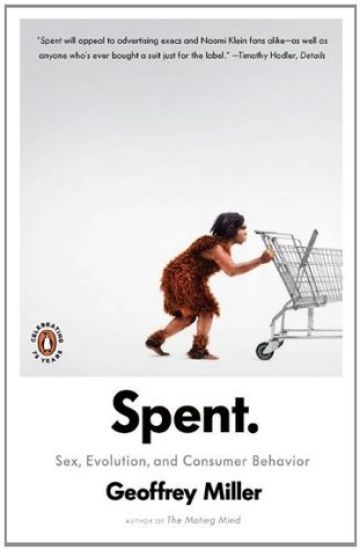
A leading evolutionary psychologist probes the unconscious instincts behind American consumer culture Illuminating the hidden reasons for why we buy what we do, Spent applies evolutionary psychology to the sensual wonderland of marketing and perceived status that is American consumer culture. Geoffrey Miller starts with the theory that we purchase things to advertise ourselves to others, and then examines other factors that dictate what we spend money on. With humor and insight, Miller analyzes an array of product choices and deciphers what our decisions say about ourselves, giving us access to a new way of understanding-and improving-our behaviors to become happier consumers.
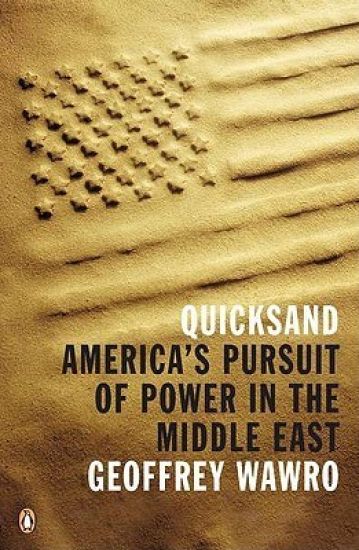
Quicksand: America's Pursuit of Power in the Middle East
An unprecedented history of American involvement in the Middle East. In this definitive and revelatory work, noted historian Geoffrey Wawro approaches America's role in the Middle East in a fundamentally new way-by encompassing the last century of the entire region rather than focusing narrowly on a particular country or era. With verve and authority, he offers piercing analysis of the region's iconic events over the past one hundred years-from the birth of Israel to the rise of Al Qaeda. Throughout, he draws telling parallels between America's past mistakes and its current dilemmas, proving that we're in today's muddle not just because of our old errors but because we keep repeating those errors.
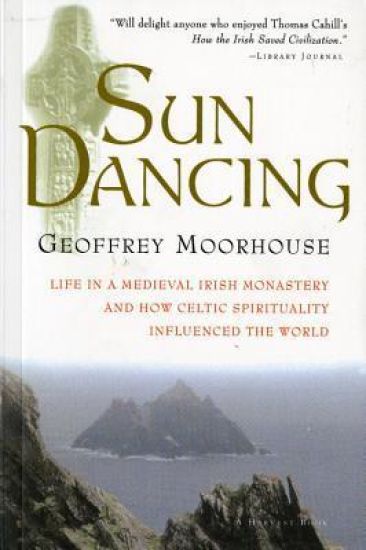
Sun Dancing: Life in a Medieval Irish Monastery and How Celtic Spirituality Influenced the World
Visible on a clear day off the west coast of Ireland, the Skellig Islands, a cluster of cruel rocks, rise spectacularly from the Atlantic Ocean. A sanctuary to birds and seals today, for over six hundred years during the middle ages it was a center for a particularly intense form of monastic life, one that acclaimed writer Geoffrey Moorhouse explores with utmost fascination, scholarship, and imagination in Sun Dancing. A must read for anyone seeking a deeper understanding of Celtic spirituality, Moorhouse's lively narrative is a superbly imagined account of the monks' isolated life-the spiritual struggles and triumphs and unbelievable physical hardships. To complement and enrich the book, Moorhouse establishes the historical context of Irish monasticism and describes the monks' influence and undeniable role in preserving western civilization, as well as unexpected connections between medieval Ireland and India, Egypt, and Byzantium, and the surviving impact of pagan mythology. An entertaining and enlightening work, Sun Dancing makes medieval Ireland come alive.
What Is Good Writing?

What Is Good Writing?

Geoffrey Huck

Oxford University Press Inc
2015
sidottu
There was a time when good writing would be defined simply by adverting to a few literary classics. That kind of strategy is less helpful these days, when so many different styles and voices clamor for attention. What Is Good Writing? sets the terms for a contemporary debate on writing achievement by drawing on empirical research in linguistics and the other cognitive sciences that shed light on the development of fluency in language generally. The utility of defining good writing as fluent writing in this sense -- on a par with the typical fluency in speech attained by normal adults - is demonstrated by the progress it permits in evaluating the success of current writing programs in school and university, which for the most part have proved unable to deliver writing assessments that are both valid and reliable. What Is Good Writing? indicates an alternative approach that rests on a more scientific footing and shows why reading is key and why standard composition programs are so often seen to fail.
The War on Terror and the Laws of War

The War on Terror and the Laws of War

Geoffrey S. Corn; Jr. Schoettler; Dru Brenner-Beck; Victor M. Hansen; Dick Jackson; Eric Talbot Jensen; Michael W. Lewis; Jr. Dunlap

Oxford University Press Inc
2015
nidottu
Many years after the United States initiated a military response to the terrorist attacks of September 11th, 2001, the nation continues to prosecute what it considers an armed conflict against transnational terrorist groups. Understanding how the law of armed conflict applies to and regulates military operations executed within the scope of this armed conflict against transnational non-state terrorist groups is as important today as it was in September 2001. In The War on Terror and the Laws of War seven legal scholars, each with experience as military officers, focus on how to strike an effective balance between the necessity of using armed violence to subdue a threat to the nation with the humanitarian interest of mitigating the suffering inevitably associated with that use. Each chapter addresses a specific operational issue, including the national right of self-defense, military targeting and the use of drones, detention, interrogation, trial by military commission of captured terrorist operatives, and the impact of battlefield perspectives on counter-terror military operations, while illustrating how the law of armed conflict influences resolution of that issue. This Second Edition carries on the critical mission of continuing the ongoing dialogue about the law from an unabashedly military perspective, bringing practical wisdom to the contentious topic of applying international law to the battlefield.
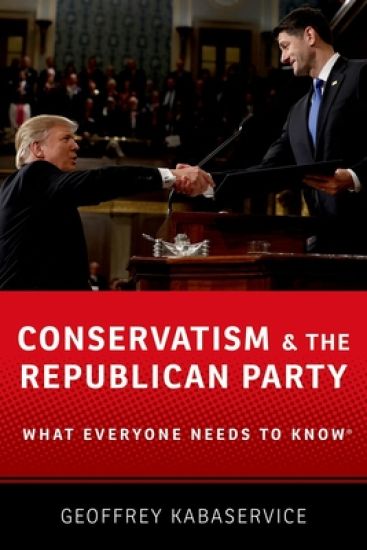
Conservatism and the Republican Party

Conservatism and the Republican Party

Geoffrey Kabaservice

Oxford University Press Inc
2024
nidottu
It was the best of times, it was the worst of times. The 2016 elections gave the Republican Party control of both houses Congress and the presidency--a level of dominance the party had experienced for only six years out of the previous eight decades. Combined with the GOP's victories in state legislatures and governorships since 2010, Republicans held a greater opportunity to reshape the nation than at any time since the 1920s. And yet, Republican strategists were painfully aware that the party had lost the popular vote in six of the previous seven presidential elections. The presidency had fallen to Donald Trump, a populist outsider who had mounted what was, in effect, a hostile takeover of the Republican establishment. The party's internal divisions had become so volatile that they had come close to blowing up the Republican National Convention in Cleveland that summer. The Republican-controlled Congress had experienced infighting so severe that the Speaker of the House, John Boehner, had been overthrown and his successor, Paul Ryan, had been plagued by an inability to pass consequential legislation. An unprecedented number of GOP officeholders, activists, and voters harbored dark suspicions that they had been betrayed by their own party leaders. And few had answers to the basic question: What does the Republican Party still stand for, anyway? Geoffrey Kabaservice's Conservatism and the Republican Party: What Everyone Needs to Know will provide a narrative and analysis of the Republican Party's shambolic trajectory into triumph and chaos. It will revisit the theme of my previous book concerning the GOP's purge of moderates over the previous half-century and its transformation into an ideological party unlike any other in American history. But it will also track the emerging divisions within the conservative movement, tendencies toward extremism, growing hostility toward governing, and breakdown of the American political system - most vividly demonstrated by the Trump phenomenon.
Atlantic Wars

Atlantic Wars

Geoffrey Plank

Oxford University Press Inc
2020
sidottu
In a sweeping account, Atlantic Wars explores how warfare shaped the experiences of the peoples living in the watershed of the Atlantic Ocean between the late Middle Ages and the Age of Revolution. At the beginning of that period, combat within Europe secured for the early colonial powers the resources and political stability they needed to venture across the sea. By the early nineteenth century, descendants of the Europeans had achieved military supremacy on land but revolutionaries had challenged the norms of Atlantic warfare. Nearly everywhere they went, imperial soldiers, missionaries, colonial settlers, and traveling merchants sought local allies, and consequently they often incorporated themselves into African and indigenous North and South American diplomatic, military, and commercial networks. The newcomers and the peoples they encountered struggled to understand each other, find common interests, and exploit the opportunities that arose with the expansion of transatlantic commerce. Conflicts arose as a consequence of ongoing cultural misunderstandings and differing conceptions of justice and the appropriate use of force. In many theaters of combat profits could be made by exploiting political instability. Indigenous and colonial communities felt vulnerable in these circumstances, and many believed that they had to engage in aggressive military action--or, at a minimum, issue dramatic threats--in order to survive. Examining the contours of European dominance, this work emphasizes its contingent nature and geographical limitations, the persistence of conflict and its inescapable impact on non-combatants' lives. Addressing warfare at sea, warfare on land, and transatlantic warfare, Atlantic Wars covers the Atlantic world from the Vikings in the north, through the North American coastline and Caribbean, to South America and Africa. By incorporating the British, French, Spanish, Dutch, Portuguese, Africans, and indigenous Americans into one synthetic work, Geoffrey Plank underscores how the formative experience of combat brought together widely separated people in a common history.
In-law Relationships

In-law Relationships

Geoffrey L. Greif; Michael E. Woolley

Oxford University Press Inc
2020
sidottu
Marriage is a major step in a relationship, and each member of that newly joined pair brings with them their own existing family and the corresponding complexity and richness of in-law relationships. These are multi-generational, multi-layered, and, like a kaleidoscope, a shifting amalgam of emotional colors. Exceptionally important, in-law relationships can be joyous and comforting. They can also be complicated, contentious, and disappointing. These ties serve as a model for how to stay connected across generations for the well-being of grandparents, parents, and grandchildren, and as a bellwether for what to avoid. Drawing on interviews and survey data with more than 1,500 mothers-in-law, fathers-in-law, daughters-in-law, and sons-in-law, the book describes how these complicated and highly significant relationships develop over time. Geoffrey L. Greif and Michael E. Woolley focus on the relationships between mothers-in-law and daughters-in-law as well as fathers-in-law with sons-in-law. They describe the struggles as well as the triumphs that people encounter with these relationships from the perspectives of both generations and suggest ways to improve the relationships. To improve in-law relationships, Greif and Woolley present action-oriented family therapy theories based on the insight, communication, boundary building, and narratives that family members wish to create. They also explore how these relationships change with the normal transitions of marrying into the family, having children/grandchildren, and aging. In-law Relationships describes highly successful and nurturing connections as well as those that are troubled and distant. The resulting book offers a variety of clinical lenses to help readers of all backgrounds focus on and, if needed, repair in-law relationships.
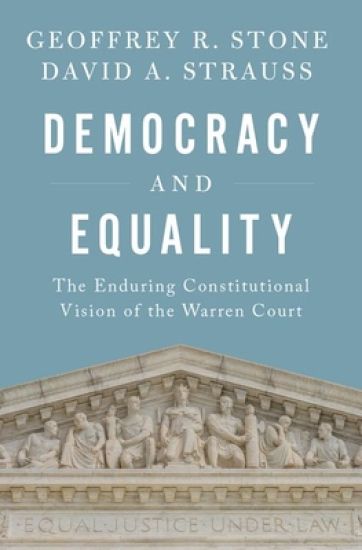
Democracy and Equality

Democracy and Equality

Geoffrey R. Stone; David A. Strauss

Oxford University Press Inc
2020
sidottu
From 1953 to 1969, the Supreme Court under Chief Justice Earl Warren brought about many of the proudest achievements of American constitutional law. The Warren declared racial segregation and laws forbidding interracial marriage to be unconstitutional; it expanded the right of citizens to criticize public officials; it held school prayer unconstitutional; and it ruled that people accused of a crime must be given a lawyer even if they can't afford one. Yet, despite those and other achievements, conservative critics have fiercely accused the justices of the Warren Court of abusing their authority by supposedly imposing their own opinions on the nation. As the eminent legal scholars Geoffrey R. Stone and David A. Strauss demonstrate in Democracy and Equality, the Warren Court's approach to the Constitution was consistent with the most basic values of our Constitution and with the most fundamental responsibilities of our judiciary. Stone and Strauss describer the Warren Court's extraordinary achievements by reviewing its jurisprudence across a range of issues addressing our nation's commitment to the values of democracy and equality. In each chapter, they tell the story of a critical decision, exploring the historical and legal context of each case, the Court's reasoning, and how the justices of the Warren Court fulfilled the Court's most important responsibilities. This powerfully argued evaluation of the Warren Court's legacy, in commemoration of the 50th anniversary of the end of the Warren Court, both celebrates and defends the Warren Court's achievements against almost sixty-five years of unrelenting and unwarranted attacks by conservatives. It demonstrates not only why the Warren Court's approach to constitutional interpretation was correct and admirable, but also why the approach of the Warren Court was far superior to that of the increasingly conservative justices who have dominated the Supreme Court over the past half-century.
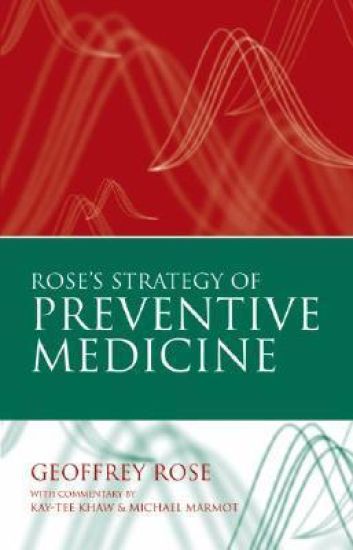
Rose's Strategy of Preventive Medicine

Rose's Strategy of Preventive Medicine

Geoffrey Rose

Oxford University Press
2008
nidottu
The Strategy of Preventive Medicine, by Geoffrey Rose, first published in 1993 remains a key text for anyone involved in preventive medicine. Rose's insights into the inextricable relationship between ill health, or deviance, in individuals and populations they come from, have transformed our whole approach to strategies for improving health. His personal and unique book, based on many years research, sets out the case that the essential determinants of the health of society are to be found in its mass characteristics. The deviant minority can only be understood when seen in its societal context, and effective prevention requires changes which involve the population as a whole. He explores the options for prevention, considering them from various viewpoints - theoretical and scientific, sociological and poitical, practical and ethical. The applications of his ideas are illustrated by a variety of examples ranging from heart disease to alcoholism to road accidents. His pioneering work focused on a population wide approach to the prevention of common medical and behavioural disorders has become the classic text on the subject. This reissue brings the original text to a new generation involved in preventive medicine. Kay-Tee Khaw and Michael Marmot retain the original text intact, but have added their own perspective on the work. They examine what relevance Rose's ideas might have in the era of the human genome project and other major scientific advances, they consider examples of how the theory might be applied and generalised in medicine and beyond, and discuss what implications it holds for the future. There is also an explanation of the population perspective, clarifying the often confused thinking and arguments about determinants of individual cases and determinants of population incidence. Rose's Strategy of Preventive Medicine will ensure that this seminal work continues to be read by future generations.
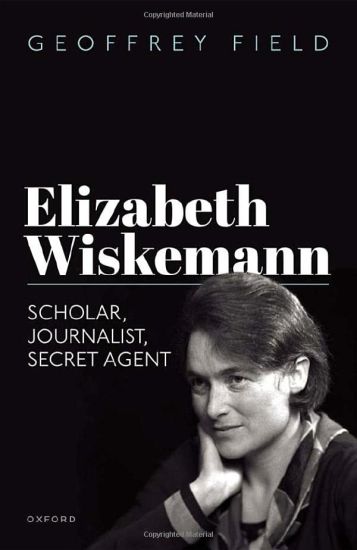
Elizabeth Wiskemann

Elizabeth Wiskemann

Geoffrey Field

Oxford University Press
2023
sidottu
This biography examines the life and career of scholar-journalist Elizabeth Wiskemann (1899-1971) from her youth and student years at Cambridge to her death by suicide. Disappointed in her hopes for an academic career, she reinvented herself as a journalist in Berlin, covering the overthrow of the Weimar Republic and the rise of Nazism for The New Statesman, Nation, and numerous other newspapers and periodicals. Expelled from Germany, she settled in Prague and funded by Chatham House wrote the most important account of the Czech-German conflict and the Sudeten crisis, still a classic, followed by a detailed analysis of Nazi political and economic destabilization of the countries of eastern Europe. Her journalistic skills served her well in the war years when she worked as a secret agent in Switzerland, gathering intelligence, running agents into Axis-controlled Europe, and working closely with Allen Dulles, the O.S.S. chief in Bern. Postwar, Wiskemann returned to freelance journalism, focusing especially on Italy and Germany, while also writing several books, including the first scholarly study of the Hitler-Mussolini relationship and the first major account of the expulsion of 12 million ethnic Germans from Eastern Europe. Although a prolific writer and highly regarded as a commentator on international affairs, she remained on the fringes of academia until 1958 when she was appointed Professor of International Relations at Edinburgh (the first woman to receive a Chair there in any discipline); she later became one of the first faculty recruited by the new Sussex University. In her later years she published several works of contemporary history, including Europe of the Dictators, 1919-45, widely used in schools and universities. Blinded in one eye by a botched surgery and increasingly anxious as her other eye deteriorated, she became terrified of going completely blind and ended her life. Aside from its intrinsic interest, Wiskemann's biography is illustrative of a whole cohort of women - graduates in the 1920s and 30s - who found ways to pursue their interests in international affairs and contemporary history. In this sense the book foregrounds the gendered experience of these pioneers whose professional lives often intersected through journalism, Chatham House, and service in the propaganda and intelligence agencies of the wartime state.
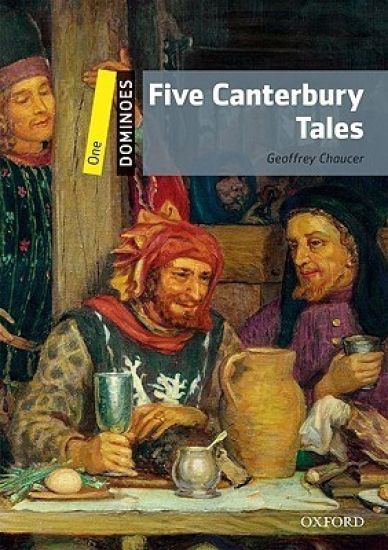
Dominoes: One: Five Canterbury Tales

Dominoes: One: Five Canterbury Tales

Geoffrey Chaucer

Oxford University Press
2009
nidottu
Dominoes is a full-colour, interactive readers series that offers students a fun reading experience while building their language skills. With integrated activities and on-page glossaries the new edition of the series makes reading motivating for learners. Each reader is carefully graded to ensure each student reads from the right level from the very beginning.
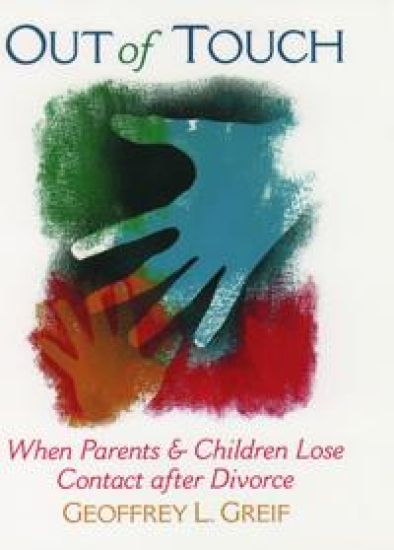
Out of Touch

Out of Touch

Geoffrey L. Greif

Oxford University Press Inc
1997
sidottu
Why do parents stop having contact with their children after separation and divorce? How does this falling out of touch affect them and their children, and what can noncustodial parents do to maintain contact? This book offers a new perspective for parents who are "out of touch" by exploring what the loss of contact means in their lives as well as the lives of their children. Greif presents the portraits of parents pushed away by the other parent or by their children after painful and emotional divorces. He discusses the emotional, legal and public policy issues involved for divorced parents and their children.
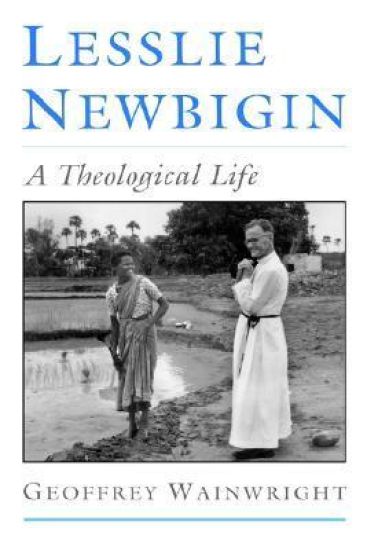
Lesslie Newbigin

Lesslie Newbigin

Geoffrey Wainwright

Oxford University Press Inc
2000
sidottu
Lesslie Newbigin was a figure of patristic proportions in the twentieth-century history of the Church. In this intellectual and spiritual biography Geoffrey Wainwright displays the theological character of his subject's multifarious engagement in the search for Christian unity, the practice of evangelism and the strategy of mission, the compassionate service of society, and the responsible statement of the scriptural and traditional faith amid the complexities of late modern culture. Himself a distinguished ecumenist and theologian, Geoffrey Wainwright draws on thirty-five years of personal and literary acquaintance with his subject and on a thorough examination of the Newbigin archives in crafting this rich and varied portrait of an outstanding figure in the ecumenical movement.
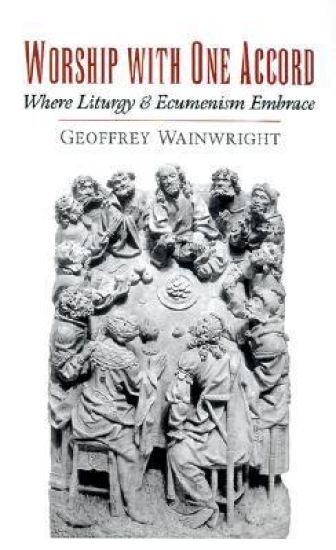
Worship with One Accord

Worship with One Accord

Geoffrey Wainwright

Oxford University Press Inc
1997
sidottu
The historical course of Christianity in the twentieth century has been strongly marked by the Ecumenical Movement and the Liturgical Movement, and often these currents for the recovery of the Church's unity and the renewal of its worship have flowed together. In this book Geoffrey Wainwright draws on his three decades of active participation in both movements to offer a theologically informed account of what has been at stake in them, what their achievements have been, and what tasks remain for them to accomplish.
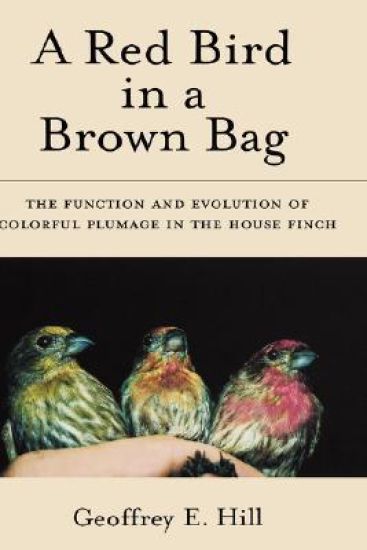
A Red Bird in a Brown Bag

A Red Bird in a Brown Bag

Geoffrey E. Hill

Oxford University Press Inc
2002
sidottu
This is an account of studies of the function and evolution of colorful plumage in the House Finch. It is also an engaging study on the evolution of sexual selection in birds and a lively portrait of the challenges and constraints of experimental design facing any field investigator working with animal behavior. Part I sets the stage for modern studies of the function of plumage coloration with a review of the nineteenth and beginning of the twentieth centuries. Part II focuses on the proximate control and present function of plumage coloration. Part III takes a more explicitly evolutionary approach to the study of plumage coloration using biogeography and phylogeny to test hypotheses for why specific forms of plumage color display have evolved. It concludes with an account of comparative studies that have been conducted in the House Finch and other cardueline finches and the insight these studies have provided on the evolution of carotenoid-based ornamental coloration.
Churchill

Churchill

Geoffrey Best

Oxford University Press Inc
2005
nidottu
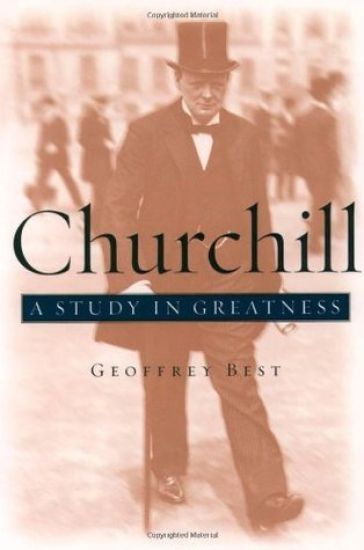
One of the glorious triumvirate of World War II and founder of the strong Anglo-American friendship that is still apparent today, Winston Churchill stands out in history as a man who led his country through one of its most difficult times, with all of the steadfastness of a fierce and loyal bulldog. Churchill was already recognized as the most diversely gifted man in British politics before, at the ripe old age of 66, he suddenly emerged as a figure of world importance. Becoming Prime Minister on the very day in 1940 that Hitler invaded France and the Low Countries, he braced the British people to continue fighting and even to counterattack the, up to that point, all-victorious Germans. A clever and confident statesman, with an obvious love for the people he served, for years Churchill's character went unchallenged and his inspiring leadership left him above criticism. Recently, however, his record has come under attack. In Churchill: A Study in Greatness, one of Britain's most distinguished historians makes sense of this extraordinary man, and his long, controversial, colorful, contradictory and heroic career. Geoffrey Best illuminates both his strengths and his weaknesses, looking past the many received versions of Churchill, in a biography that balances the private and the public man and offers a clear insight into what made him truly great.
All Possible Worlds

All Possible Worlds

Geoffrey J. Martin

Oxford University Press Inc
2005
sidottu
Updated and revised to include theoretical and other developments, bibliographical additions, new photographs and illustrations, and expanded name and subject indexes, the fourth edition of All Possible Worlds: A History of Geographical Ideas is the most complete and comprehensive book of its kind. The text also features a layout and readability that make the material easy to navigate and understand. The book investigates the ways in which the subject of geography has been recognized, perceived, and evaluated, from its early acknowledgment in ancient Greece to its disciplined form in today's world of shared ideas and mass communication. Strong continuities knit the Classical Period to the Age of Exploration, then carry students on through Varenius to Humboldt and Ritter--revealing the emergence of "the new geography" of the Modern Period. The history of American geography--developed in seven of the twenty chapters--is strongly emphasized pursuant to the formal origins of geography in late nineteenth-century Germany, Darwin's theory of evolution, and the great surveys of the American west. This treatment is enhanced by chapters concerning parallel histories of geography in Germany, France, Great Britain, Russia (including the USSR and CIS), Canada, Sweden, and Japan-countries that at first contributed to and later borrowed from the body of US geographical thought. All Possible Worlds: A History of Geographical Ideas, Fourth Edition, is ideal for upper-level undergraduate or graduate courses in the history and philosophy of classical, medieval, and modern geographical thought.
Why Mothers Kill

Why Mothers Kill

Geoffrey R. McKee

Oxford University Press Inc
2006
sidottu
Few crimes generate public reaction than those where a mother murders her child. We are repelled, yet mesmerised by the emerging details of cases such as Andrea Yates and Susan Smith. Annually, hundreds of infants and young children perish at the hands of their mothers. How could a mother destroy the first and most fundamental relationship we experience? In Why Mothers Kill: A Forensic Psychologist's Casebook, Geoffrey R. McKee, Ph.D uses more than a dozen case studies from his 29-year forensic psychological evaluation practice to help us understand, and most importantly, prevent these horrific events from occurring. He applies current research findings to analyse, explain and suggest practical interventions to alter the personal, familial and situational circumstances that may influence some mothers to kill. With an emphasis on prevention, Dr McKee sets out specific strategies that might have been employed at various "risk intervention points" occurring before the child's death. Through the use of extended narratives the author brings to life the thoughts and emotions experienced by women in each of the five categories of mothers he has identified from his years of practice. Additionally, the author presents the Maternal Filicide Risk Matrix which he developed to help mental health and medical professionals determine the risk and protective factors that lead mothers to kill their children. Students, as well as mental health and medical professionals will find this an important and unique resource.