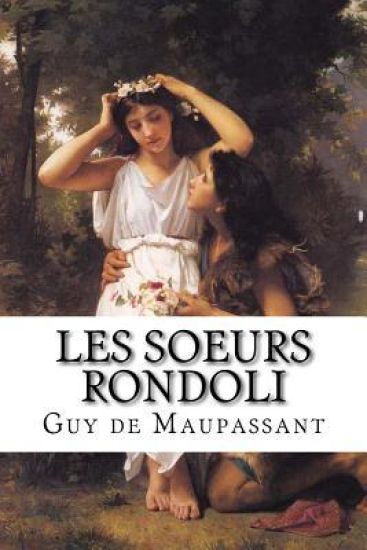
Olivier Bertin, un peintre c l bre et mondain, voit d filer dans son atelier parisien les plus belles femmes de la haute soci t . Il se montre difficile et se fait payer fort cher . Il tombe un jour amoureux d'une d'elle, Anne de Guilleroy, s duit par sa gr ce et son l gance. Fille d'un riche commer ant, elle est mari e un d put enrichi de la petite noblesse normande et m re d'une fillette de six ans. Elle devient tr s vite sa ma tresse.
Pierre Jouvenet offre son ami Paul d' tre son compagnon de voyage pendant un court s jour en Italie. Paul h site un peu, mais finit par accepter quand Pierre voque la beaut des jeunes femmes italiennes. Dans le train qui les m ne vers G nes, une inconnue s'installe dans le wagon des deux hommes qui ne tardent pas lier connaissance. Pas tr s aimable, mais fort jolie, la jeune femme se nomme Francesca. Pour Paul, elle repr sente la beaut f minine comme il n'a jamais os en r ver. Gr ce l'intervention de Pierre qui parle italien, il souhaite bient t la s duire.
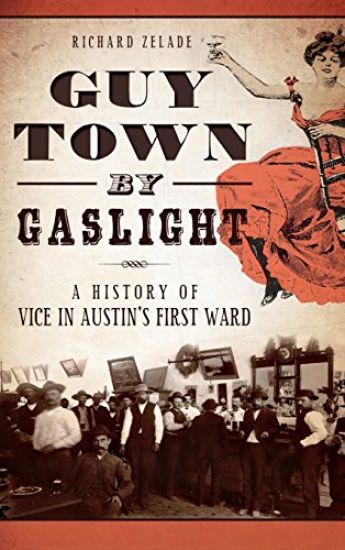
Crime and vice plagued Austin after the Civil War, and Guy Town was a red-light hub with a most curious legacy. Today's pleasure-seeking visitors to the Warehouse District walk on top of Guy Town--the chic neighborhood of today is built on the most decadent and deadly area of the city's past. With the old county courthouse at its core, the district rose from the Colorado River up to Fifth Street and spanned from Congress Avenue to Shoal Creek, infesting Austin's eclectic First Ward neighborhood. Guy Town was a haven for notorious madams, prostitutes, druggies and drunkards lost to history, as well as names still remembered--Ben Thompson, O. Henry and Johnny Ringo roamed its streets looking for a good time. From murderers to con men, crooked cops and more, meet the cast of characters that gave Guy Town its reputation in author Richard Zelade's lurid account of the Capital City's historic underbelly.
Extract: CHAPTER I. Lady Alice and Varbarriere t te- -t te in the Library. "Well, he told you something, did not he?" persisted Lady Alice. "In the sense of a distinct disclosure, nothing," said the Bishop, looking demurely over his horizontal leg on the neatly-shorn grass. "He did speak to me upon subjects-his wishes, and I have no doubt he intended to have been much more explicit. In fact, he intimated as much; but he was overtaken by death-unable to speak when I saw him next morning." "He spoke to you, I know, about pulling down or blowing up that green chamber," said Lady Alice, whose recollections grew a little violent in proportion to the Bishop's reserve and her own impatience. "He did not suggest quite such strong measures, but he did regret that it had ever been built, and made me promise to urge upon his son, as you once before mentioned you were aware, so soon as he should come of age, to shut it up." "And you did urge him?" "Certainly, Lady Alice," said the Bishop, with dignity. "I viewed it in the light of a duty, and a very sacred one, to do so." "He told you the reason, then?" inquired Lady Alice. "He gave me no reason on earth for his wish; perhaps, had he been spared for another day, he would have done so; but he expressed himself strongly indeed, with a kind of horror, and spoke of the Italian who built, and his father who ordered it, in terms of strong disapprobation, and wished frequently it had never been erected. Perhaps you would like to take a little turn. How very pretty the flowers still are "
Guy Wetmore Carryl (4 March 1873 - 1 April 1904) was an American humorist and poet Carryl was born in New York City, the first-born of author Charles Edward Carryl and Mary R. Wetmore. He had his first article published in The New York Times when he was 20 years old. In 1895, at the age of 22, Carryl graduated from Columbia University. During his college years he had written plays for amateur performances, including the very first Varsity Show. One of his professors was Harry Thurston Peck, who was scandalized by Carryl's famous quote "It takes two bodies to make one seduction," which was a somewhat risqu statement for those times.
Mother Goose for Grownups is an anthology of Carryl's humorous light verse, published in 1900 by Harper & Brothers, New York and London. These poems are parodies of the old traditional Mother Goose nursery rhymes. The volume was illustrated by Peter Newell and Gustave Verbeek. The dedication was a poem "To Constance". The author added this foreword:
Guy Wetmore Carryl (4 March 1873 - 1 April 1904) was an American humorist and poet Carryl was born in New York City, the first-born of author Charles Edward Carryl and Mary R. Wetmore. He had his first article published in The New York Times when he was 20 years old. In 1895, at the age of 22, Carryl graduated from Columbia University. During his college years he had written plays for amateur performances, including the very first Varsity Show. One of his professors was Harry Thurston Peck, who was scandalized by Carryl's famous quote "It takes two bodies to make one seduction," which was a somewhat risqu statement for those times.