Kirjahaku
Etsi kirjoja tekijän nimen, kirjan nimen tai ISBN:n perusteella.
1000 tulosta hakusanalla HENRY CONSTABLE



Twice Born; Or, the Two Lives of Henry O. Wills, Evangelist
Henry O Wills
Trieste Publishing
2018
nidottu
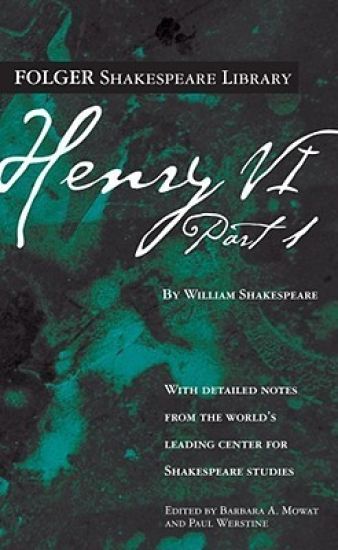
The authoritative edition of Henry VI, Part 1 from The Folger Shakespeare Library, the trusted and widely used Shakespeare series for students and general readers.Henry VI, Part 1 is an uncompromising celebration of early English nationalism that contrasts the English with the French, portrayed here as effeminate and scheming. A boy king, Henry VI, is on the English throne, and the indomitable Talbot leads the English cause in France. Joan La Pucelle (Joan of Arc), who becomes captain of the French, claims to be chosen by the Virgin Mary to liberate France. The English, however, consider her a sensual witch. Many of the English nobility remain, quarreling, at home. Once in France, some seek permission to fight each other there. Talbot and his son cannot prevail; the English defeat themselves by preying on each other. This edition includes: -Freshly edited text based on the best early printed version of the play -Full explanatory notes conveniently placed on pages facing the text of the play -Scene-by-scene plot summaries -A key to the play’s famous lines and phrases -An introduction to reading Shakespeare’s language -An essay by a leading Shakespeare scholar providing a modern perspective on the play -Fresh images from the Folger Shakespeare Library’s vast holdings of rare books -An annotated guide to further reading Essay by Phyllis Rackin The Folger Shakespeare Library in Washington, DC, is home to the world’s largest collection of Shakespeare’s printed works, and a magnet for Shakespeare scholars from around the globe. In addition to exhibitions open to the public throughout the year, the Folger offers a full calendar of performances and programs. For more information, visit Folger.edu.
Henry VI, Part 2 presents a kind of story that was popular before Shakespeare began writing, tracing the fall of powerful individuals to their untimely deaths. The first to go is the Duke of Gloucester, Lord Protector of England and the most powerful man in the kingdom, who is murdered after his wife goes into exile. Next to meet a bad end is the Duke of Suffolk, the queen’s lover, who rules England through her. After Suffolk conspires with the cardinal of Winchester to kill Gloucester, he is banished and assassinated. The cardinal dies raving of his own guilt. Ultimately, the king’s weakness lies behind these events. Preferring spiritual contemplation, he has left others to contend for power. Now his liberty is at risk as Jack Cade, and then the Duke of York, rise against him. The play leaves us in suspense about Henry’s fate by ending with the start of the Wars of the Roses—a conflict setting the white rose of the Duke of York against the red rose of King Henry, of the House of Lancaster. The authoritative edition of Henry VI, Part 2 from The Folger Shakespeare Library, the trusted and widely used Shakespeare series for students and general readers, includes: -Freshly edited text based on the best early printed version of the play -Full explanatory notes conveniently placed on pages facing the text of the play -Scene-by-scene plot summaries -A key to the play’s famous lines and phrases -An introduction to reading Shakespeare’s language -An essay by a leading Shakespeare scholar providing a modern perspective on the play -Fresh images from the Folger Shakespeare Library’s vast holdings of rare books -An annotated guide to further reading Essay by Nina Levine The Folger Shakespeare Library in Washington, DC, is home to the world’s largest collection of Shakespeare’s printed works, and a magnet for Shakespeare scholars from around the globe. In addition to exhibitions open to the public throughout the year, the Folger offers a full calendar of performances and programs. For more information, visit Folger.edu.
The authoritative edition of Henry VI, Part 3 from The Folger Shakespeare Library, the trusted and widely used Shakespeare series for students and general readers.Henry VI, Part 3 is dominated by a struggle between two military forces, neither of which can achieve victory for long. Until the end, the Yorkists and Lancastrians strive for the English crown. The conflict between these two families began under Richard II. Half a century later, during the reign of Henry VI, it moved toward civil war. Now, in Henry VI, Part 3, Henry’s long reign becomes intermittent as his cousin Richard, Duke of York, seeks the crown and York’s son Edward sporadically succeeds in seizing it. As we watch the crown pass back and forth between Henry VI and Edward IV, our attention is caught by other characters: the Earl of Warwick, Queen Margaret, and Richard, Duke of Gloucester. Warwick is the power behind the challenge to Henry VI, until he shifts to Henry. Margaret raises an army in England and later leads one from France, all in a futile attempt to secure the throne for her son, Prince Edward. Historically, his death destroyed her, but Shakespeare wisely saves Margaret to bring her back in Richard III. Richard, Duke of Gloucester, increasingly draws our attention. Both attractive and repellent, he is energetic, self-aware, bitter about his deformity (which may not have existed historically), ruthless, and unable to care about others. This edition includes: -Freshly edited text based on the best early printed version of the play -Full explanatory notes conveniently placed on pages facing the text of the play -Scene-by-scene plot summaries -A key to the play’s famous lines and phrases -An introduction to reading Shakespeare’s language -An essay by a leading Shakespeare scholar providing a modern perspective on the play -Fresh images from the Folger Shakespeare Library’s vast holdings of rare books -An annotated guide to further reading Essay by Randall Martin The Folger Shakespeare Library in Washington, DC, is home to the world’s largest collection of Shakespeare’s printed works, and a magnet for Shakespeare scholars from around the globe. In addition to exhibitions open to the public throughout the year, the Folger offers a full calendar of performances and programs. For more information, visit Folger.edu.
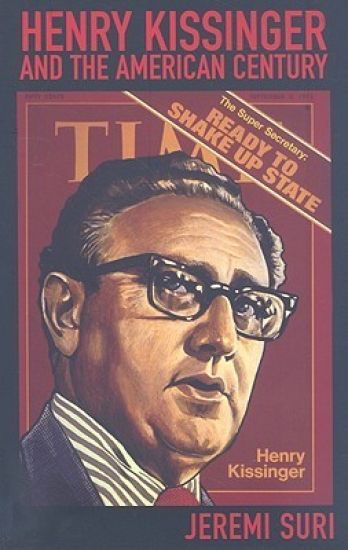
What made Henry Kissinger the kind of diplomat he was? What experiences and influences shaped his worldview and provided the framework for his approach to international relations? Jeremi Suri offers a thought-provoking, interpretive study of one of the most influential and controversial political figures of the twentieth century.Drawing on research in more than six countries in addition to extensive interviews with Kissinger and others, Suri analyzes the sources of Kissinger's ideas and power and explains why he pursued the policies he did. Kissinger's German-Jewish background, fears of democratic weakness, belief in the primacy of the relationship between the United States and Europe, and faith in the indispensable role America plays in the world shaped his career and his foreign policy. Suri shows how Kissinger's early years in Weimar and Nazi Germany, his experiences in the U.S. Army and at Harvard University, and his relationships with powerful patrons--including Nelson Rockefeller and Richard Nixon--shed new light on the policymaker.Kissinger's career was a product of the global changes that made the American Century. He remains influential because his ideas are rooted so deeply in dominant assumptions about the world. In treating Kissinger fairly and critically as a historical figure, without polemical judgments, Suri provides critical context for this important figure. He illuminates the legacies of Kissinger's policies for the United States in the twenty-first century.
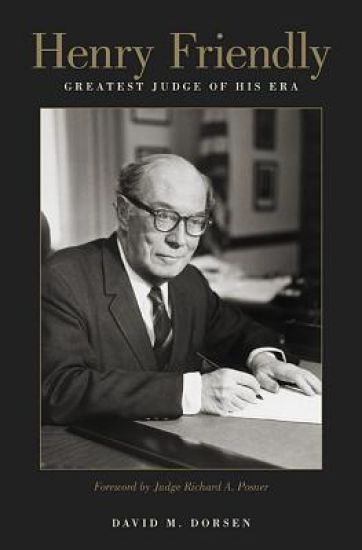
Henry Friendly, Greatest Judge of His Era
David M. Dorsen; Richard A. Posner
The Belknap Press
2012
sidottu
Henry Friendly is frequently grouped with Oliver Wendell Holmes, Louis Brandeis, Benjamin Cardozo, and Learned Hand as the best American jurists of the twentieth century. In this first, comprehensive biography of Friendly, David M. Dorsen opens a unique window onto how a judge of this caliber thinks and decides cases, and how Friendly lived his life.During his time on the Court of Appeals for the Second Circuit (1959–1986), Judge Friendly was revered as a conservative who exemplified the tradition of judicial restraint. But he demonstrated remarkable creativity in circumventing precedent and formulating new rules in multiple areas of the law. Henry Friendly, Greatest Judge of His Era describes the inner workings of Friendly’s chambers and his craftsmanship in writing opinions. His articles on habeas corpus, the Fourth Amendment, self-incrimination, and the reach of the state are still cited by the Supreme Court. Dorsen draws on extensive research, employing private memoranda between the judges and interviews with all fifty-one of Friendly’s law clerks—a veritable Who’s Who that includes Chief Justice John R. Roberts, Jr., six other federal judges, and seventeen professors at Harvard, Yale, Stanford, and elsewhere. In his Foreword, Judge Richard Posner writes: “David Dorsen has produced the most illuminating, the most useful, judicial biography that I have ever read . . . We learn more about the American judiciary at its best than we can learn from any other . . . Some of what I’ve learned has already induced me to make certain changes in my judicial practice.”
Henry James
Harvard University Press
1987
sidottu
"He was a supreme artist in the intimacies and connections that bind people together or tear them apart," says Leon Edel in his introduction to this collection of Henry James's best letters. Edel has chosen, from the four-volume epistolarium already published, those letters which especially illuminate James's writing, his life, his thoughts and fancies, his literary theories, and his most meaningful friendships. In addition, there are two dozen letters that have never before been printed. In its unity, its elegance, and its reflection of almost a century of Anglo-American life and letters, this correspondence can well be said to belong to literature as well as to biography. Besides epistles to James's friends and family--including his celebrated brother, William--there are letters to notables such as Flaubert and Daudet in France; Stevenson, Gosse, Wells, and Conrad in England; and Americans from William Dean Howells to Edith Wharton. The latter correspondence, in particular, enlarges our understanding of James's complex involvements with Wharton and her circle; among the previously unpublished letters are several to Wharton's rakish lover, Morton Fullerton. This masterly selection allows us to observe the precocious adolescent, the twenty-six-year-old setting out for Europe, the perceptive traveler in Switzerland and Italy, and the man-about-London consorting with Leslie Stephen and William Morris, meeting Darwin and Rossetti, hearing Ruskin lecture, visiting George Eliot. The letters describe periods of stress as well as happiness, failure as well as success, loneliness as well as sociability. They portray in considerable psychological depth James's handling of his problems (particularly with his family), and they allow us to see him adjust his mask for each correspondent.
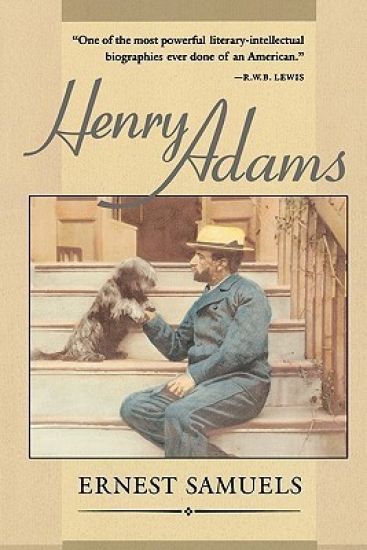
Henry Adams sought, late in life, to thwart prospective biographers by writing his own biography. Published soon after his death in 1918, The Education of Henry Adams was rightly greeted as a masterpiece. Not until thirty years later, with the appearance of the first volume of Ernest Samuels’s biography, did it become apparent how much the story had been colored by Adams’s singular philosophy of history and how great was the disparity between the protagonist of the Education and Adams as he actually was. Upon its completion in 1964, Samuels’s life of Henry Adams was hailed as “one of the great biographical achievements of our time”; its laurels included a Pulitzer Prize.Ernest Samuels has now distilled his ample narrative into a single absorbing volume. We see Adams as a lively undergraduate, in contrast to the jaded young man of the Education; as budding writer, newspaper correspondent, eager participant in political maneuverings in Washington and at the American embassy in London; as teacher at Harvard and editor of the North American Review; settled in Washington, as scholar, biographer, historian, novelist; as insatiable traveler; as friend and adviser to statesmen; as elderly cosmopolite spending half of each year abroad; and always as witty chronicler of the social scene and trenchant commentator on the events of his time. We are drawn into the personal drama of Adams’s middle years: his married life with Clover; the halcyon period in Washington in the early 1880s, catastrophically terminated by Clover’s depression and suicide; his growing passion for Elizabeth Cameron; and his flight to the South Seas. Throughout the book we follow the genesis and progress of his writings, from his muck-raking journalism in President Grant’s Washington, through the social and political criticism of his novels, his biographies, and his great History, to the classic Mont Saint Michel and Chartres, the daring theories of the Education, and his last essays.Few biographies have so broad a canvas—sixty years of American political, social, and intellectual life, from the pre–Civil War years to the First World War. And few offer so revealing a portrait of a complex human being and an extraordinary career.

Henry Adams has been called an indispensable figure in American thought. Although he famously “took his own life” in the autobiographical Education of Henry Adams, his letters—more intimate and unbuttoned, though hardly unselfconscious—are themselves indispensable for an understanding of the man and his times.This selection, the first based on the authoritative 6-volume Letters, represents every major private and public event in Adams’s life from 1858 to 1918 and confirms his reputation as one of the greatest letter writers of his time. Adams knew everyone who was anyone and went almost everywhere, and—true to the Adams family tradition—recorded it all. These letters to an array of correspondents from American presidents to Henry James to 5-year-old honorary nieces reveal Adams’s passion for politics and disdain for politicians, his snobbish delight in society and sincere affection for friends, his pose of dilettantism and his serious ambitions as writer and historian, his devastation at his wife’s suicide and his acquiescence in the role of Elizabeth Cameron’s “tame cat,” his wicked humor at others’ expense and his own reflexive self-depreciation.This volume allows the reader to experience 19th-century America through the eyes of an observer on whom very little was lost, and to make the acquaintance of one of the more interesting personalities in American letters. As Ernest Samuels says in his introduction, “The letters lift the veil of old-age disenchantment that obscures the Education and exhibit Adams as perhaps the most brilliant letter writer of his time. What most engages one in the long course of his correspondence is the tireless range of his intellectual curiosity, his passionate effort to understand the politics, the science, and the human society of the world as it changed around him… It is as literature of a high order that his letters can finally be read.”

Here at last is the first volume of the long-awaited edition of Henry James letters by the world's foremost Jamesian scholar. James was a superlative letter-writer; his correspondence constitutes one of the greateat self-portraits in all literature. In this edition Mr. Edel, respecting James's view that only the best of a writer's letters deserve publication, skims the cream of the fifteen thousand letters collected or discovered, many by the biographer himself, since the novelist's death in 1916. In volume one, the first of a projected four, he provides a general introduction and a necessary minimum of annotation, and prefaces each section--Boyhood and Youth; Beginnings; The Grand Tour; A Season in Cambridge; Travel and Opportunity; and The Choice--with an informative account of James's attitudes and activities during the period in question. The volume closes, appropriately, with James's decision in 1875, at age thirty-two, to move permanently to Europe.
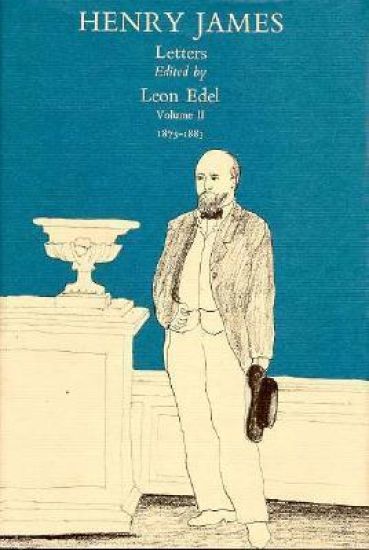
In this, the second volume of Leon Edel's superb edition of the letters, we see Henry James in his thirties, pursuing his writing in Paris and London and finding his first literary successes in Daisy Miller and The Portrait of a Lady. The letters of these years, describing for family and friends in Boston the expatriate's days, reveal the usual wit and sophistication, but there is a new tone: James is relentlessly building a personal career and begins to see himself as a professional writer. Few other letters so fully document the process of an artist in the making.James was a social success in London: in Mr. Edel's words, "England speedily opened its arms to him, as it does to anyone who is at ease with the world." The letters of this period pull us into the atmosphere of Victorian England, its drawing rooms, manors, and clubs, and James's keen American eyes give us views of this world probably unique in our literary annals. He used these observations to forge his great international theme, the confrontation of the Old and New Worlds.
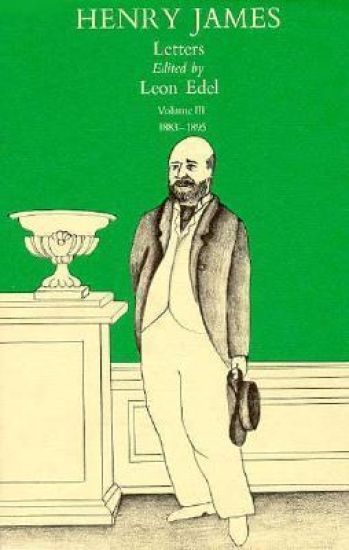
The third volume of Leon Edel’s superb edition of Henry James’s letters finds the novelist settled in Europe and his expatriation complete. The letters of this time reflect the growth of James’s literary and personal friendships and introduce the reader to the frescoed palazzos, Palladian villas, and great estates of the Roseberys, the Rothschilds, the Bostonian-Venetian Curtises, and the Florentine-American Boott circle. In all his travels, James closely observes the social scene and the dilemmas of the human beings within it. During this fruitful period he writes The Bostonians, The Princess Casamassima, The Tragic Muse, and some thirty-five of his finest international tales.Undermining his success, however, are a devastating series of disappointments. Financial insecurity, an almost paraniod defensiveness following the utter failure of his dramatic efforts, and the deaths of his sister, his friend Robert Louis Stevenson, and his ardent admirer Constance Fenimore Woolson all combine to take him to what he recognizes is the edge of an abyss of personal tragedy.And yet James endures, and throughtout these trials his letters reveal the flourish, the tongue-in-cheek humor, and the social insight that marked his genius. As Edel writes in his Introduction: “The grand style is there, the amusement at the vanities of this world, the insistence that the great ones of the earth lack the imagination he is called upon to supply, and then his boundless affection and empathy for those who have shown him warmth and feeling.”In an appendix Mr. Edel presents four remarkable unpublished letters from Miss Woolson to James. These throw light on their ambiguous relationship and on James’s feelings of guilt and shock after her suicide in Venice.
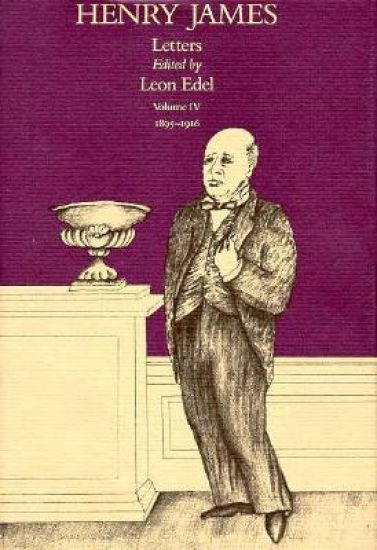
This volume, the conclusion of Leon Edel's splendid edition, rounds off a half century of work on James by the noted biographer-critic. In the letters of the novelist's last twenty years a new Henry James is revealed. Edel's generous selection shows us, as he says, a "looser, less formal, less distant" personality, a man writing with greater candor and with more emotional freedom, who "has at last opened himself up to the physical things of life." The decade embracing the turn of the century is the most productive period of James's career. Happily settled in an English country house and now dictating to a typist, he is able to write The Ambassadors, The Wings of the Dove, and The Golden Bowl in three years. The letters show clearly how his fiction turned from his world-famous tales of international society to the life of passion in his last novels. His new friends and correspondents include Conrad, H. G. Wells, Stephen Crane, Edith Wharton, and several young men to whom he writes curious, half-inhibited love letters. Mrs. Wharton, with her chauffered "chariot of fire," introduces him to the thrill of motoring and welcomes him into her cosmopolitan circle; to him she embodies the affluence and driving energy of the America of the Gilded Age. For the first time in over twenty years he revisits his homeland, traveling not only in the East but through the South to Florida and west to California. He is dismayed by the materialism he finds and the changed ways of life. Back in England, he plunges into several projects; for the New York edition of his works he revises the early novels and writes his famous prefaces. His relations with agents and publishers as well as family and friends are fully documented in the letters, as are his trips to the Continent and visits with Edith Wharton in Paris. His last years are darkened by a long siege of nervous ill health and by the death of his beloved brother William. But he carries on, moves back to London, and continues to work. Among the most eloquent of all his letters are those describing his anguished reaction to the Great War. To show his allegiance to the Allied cause, he becomes a British citizen, six months before his death. The volume concludes with his "final and fading words" dictated on his deathbed.