Kirjojen hintavertailu. Mukana 11 238 995 kirjaa ja 12 kauppaa.

Kirjahaku

Etsi kirjoja tekijän nimen, kirjan nimen tai ISBN:n perusteella.

1000 tulosta hakusanalla Irene Nemirovsky

Inside a Gestapo Prison

Inside a Gestapo Prison

Irene Tomaszewski

Wayne State University Press
2006
nidottu
On the eve of World War II, Krystyna Wituska, a carefree teenager attending finishing school in Switzerland, returned to Poland. During the occupation, when she was twenty years old, she drifted into the Polish Underground. By her own admission, she was attracted first by the adventure, but her youthful bravado soon turned into a mental and spiritual mastery over fear. Because Krystyna spoke fluent German, she was assigned to collect information on German troop movements at Warsaw's airport. In 1942, at age twenty-one, she was arrested by the Gestapo and transferred to prison in Berlin, where she was executed two years later. Eighty of the letters that Krystyna wrote in the last eighteen months of her life are translated and collected in this volume. The letters, together with an introduction providing historical background to Krystyna's arrest, constitute a little-known and authentic record of the treatment of ethnic Poles under German occupation, the experience of Polish prisoners in German custody, and a glimpse into the prisons of Berlin. Krystyna's letters also reflect her own courage, idealism, faith, and sense of humor. As a classroom text, this book relates nicely to contemporary discussions of racism, nationalism, patriotism, human rights, and stereotypes. This is a new edition of the book originally titled ""I Am First a Human Being: The Letters of Krystyna Wituska"" (Vehicule Press, 1997).
Sing a New Song

Sing a New Song

Irene Nowell

Liturgical Press
1993
pokkari
The Hebrew Scriptures relate many instances of the people of God breaking into song when they experience the presence of God in their lives. Where is that song of praise in the Christian's life today?The responsorial psalm of the Sunday liturgy both summarizes the Word of God for the day and invites the community to join, mind and spirit, in affirming their part in that Word. Many books have examined the readings of the Sunday Lectionary. Sing a New Song focuses on the psalms (1991 NAB translation), grouping them by genre, then considering each in its relationship to the set of readings it accompanies.While the insights of scholarship are used, the intent of the work is to inspire more insightful and imaginative celebration of God's Word. It will therefore be of service to those who preach the Word, those who plan the liturgy and provide music, and most of all to everyone who prays and is nourished by the Sunday readings.
Women in the Old Testament

Women in the Old Testament

Irene Nowell

Liturgical Press
1997
pokkari
The women in the Old Testament, too long invisible, have rich stories that are vital to the on-going revelation of God's relationship with a covenant people. Women in the Old Testament introduces readers to some biblical women. Here, readers meet mothers and wives, queens and slaves, prophets and warriors, powerful women and victims; women whose stories offer us courage and insight.In Women in the Old Testament Sister Irene explores not only the lives of such well-known women as Sarah, Deborah, Ruth, Eve, and Naomi, but also those of lesser-known women such as Michal, Tamar, and Jezebel. Each of these women has unique characteristics; each of their stories is food for our imaginations. In addition, Sister Nowell looks at those Bible stories that tell us what it means to be a woman created in the image of God and that portray God in the image of a woman.Biblical stories help us imagine the relationship of God with human beings, and they give us words to describe our own relationship with God. This introduction to the lives of biblical women encourages readers - in adult study groups and those who are interested in the many women in the Old Testament - to search for more accounts of biblical women and also to find the narrative of faith reflected in the stories of their own lives.Sister Irene begins each chapter with suggestions for readings and includes biblical excerpts.Chapters are: Women of Israel's Beginnings: Sarah and Hagar;" "More Women of Israel's Beginnings: Rebekah, Leah and Rachel, The Maids, Dinah, Tamar;" "Women of Israel's Passover: The Midwives, Moses' Mother, Pharaoh's Daughter, Miriam, Zipporah;" "Women of Israel's Early Tribes: Rahab, Deborah and Jail, Jephthah's Daughter, Samson's Mother, Samson's Wife, Delilah;" "More Women of Israel's Early Tribes: Ruth, Naomi, and Orpah ,Hannah and Peninnah;" "Women of Israel's Monarchy: Michal, Bathsheba, Tamar, Queen of Sheba, Jezebel;" "Woman, The Image of God: Eve, Wisdom/Sophia;" "Women of Courage and Strength: Judith, Susanna;" and "Queen Esther." A bibliography is also included.Irene Nowell, OSB, is the director of community formation for the Benedictine sisters of Mount St. Scholastica in Atchison, Kansas. She is an experienced college and adult education teacher of Scripture and a workshop and retreat presenter. She is the author of Sing a New Song: The Psalms in the Sunday Lectionary, also published by The Liturgical Press. She is also a member of the editorial board for the revised Old Testament of the NAB."
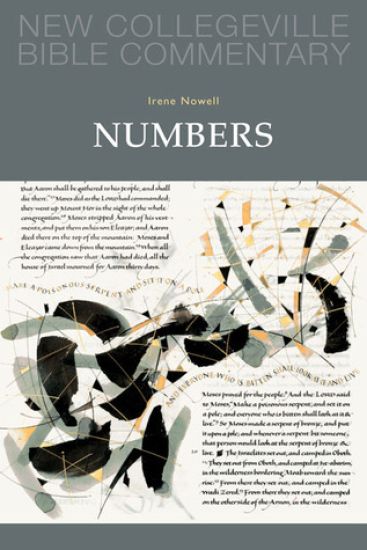
Numbers

Numbers

Irene Nowell

Liturgical Press
2011
pokkari
Irene Nowell admits that the book of Numbers rarely makes the top ten list of favorite biblical books." But through her insightful interpretations and practical reflections, readers will gain a new and positive appreciation of the text. With Nowell, readers will relish the harassment and humor of the prophet Balaam and his talking donkey in chapters 22 '24. We too are blessed by this delightful and ingenious God who communicates through a loquacious animal. This same God lives and moves with us, meets our needs as we wander through our personal and communal wilderness, defends us against the enemies of our sinfulness better than we can ever do in our weakness and fickleness, and eventually brings us to our promised place of glory. And God wants all of us to "be in that number."
Song of Songs, Ruth, Lamentations, Ecclesiastes, Esther
Irene Nowell's lively and thoughtful exploration of these poetic and powerful books promises to ignite appreciation and understanding in the hearts and minds of readers.The five books abound with vivid stories of faith. The Song of Songs, dedicated to Solomon, celebrates the wonder of human love. The book of Ruth, a masterpiece of storytelling, tells of two valiant women who move from emptiness to fullness, desolation to redemption. Lamentations, telling of the destruction of Jerusalem, recognizes that the Lord has struck and that only the Lord can heal. Ecclesiastes teaches the futility of vanity and storing up riches. The book of Esther tells the story of a Jewish woman and her uncle who, by their courage and wit, deliver the Jews from threatened genocide.Gathered together and artfully explored, this volume offers readers a wealth of information to inspire deeper understanding of the human journey and God's presence in the lives of those who trust in him.
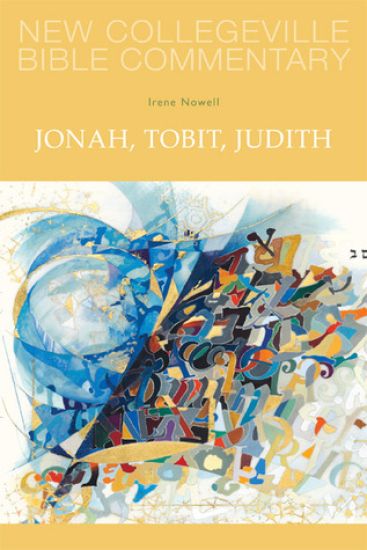
Jonah, Tobit, Judith

Jonah, Tobit, Judith

Irene Nowell

Liturgical Press
2015
pokkari
These three colorful books offer gripping stories of how God shows his mercy and accomplishes his will through human actions. Jonah is a reluctant prophet who must be swallowed by a whale before he delivers his message to Israel's ancient enemies at Nineveh that they must repent or face doom. Tobit tells of the trials and tribulations of a family, and the power of prayer as God sends an angel to guide Tobit's son Tobiah on a journey of resolution. In the book of Judith, a simple and courageous widow, rather than an army, saves her people from destruction by a powerful enemy.This rich commentary explores the significant themes of each book, showing that God is intimately involved with the destiny of humankind.
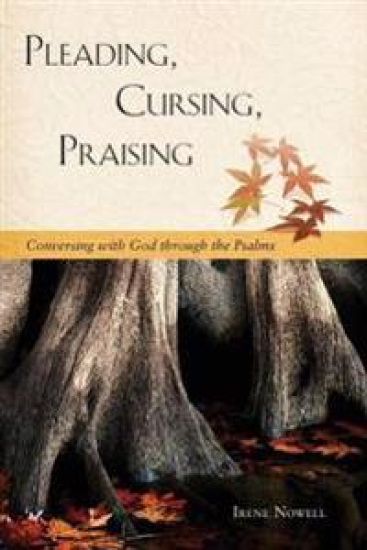
Pleading, Cursing, Praising

Pleading, Cursing, Praising

Irene Nowell

Liturgical Press
2013
pokkari
Irene Nowell's work would be both impressive and important if she were only" a masterful Scripture scholar or a gifted spiritual guide or a compelling teacher. The fact that she is all three makes her an extraordinary resource for Christians today. In Pleading, Cursing, Praising, Nowell puts all of these gifts to use to offer a guide to praying with the psalms.Nowell maintains that the psalms teach us to tell our story, to cry out our pain, and to give praise to God. They also teach us to listen - to the voice of God, the voice of Christ, the voices of the people around us, and the voice of all creation. This book includes questions and exercises for personal reflection, brief prayers for praying along the way, and suggestions for composing one's own psalm-prayers. It promises to enrich the spiritual life of everyone who reads it.
Wisdom

Wisdom

Irene Nowell; John Klassen

Liturgical Press
2017
pokkari
We all want to live well, but how can we put that desire into action? With thoughtful reflection on the biblical wisdom writers and the Rule of Benedict, Irene Nowell shows us how we too can live the good life. Each chapter includes reflection questions and meditative prayers, guiding us on a renewed journey toward wisdom and encouraging us to embody this wisdom more in our daily lives.
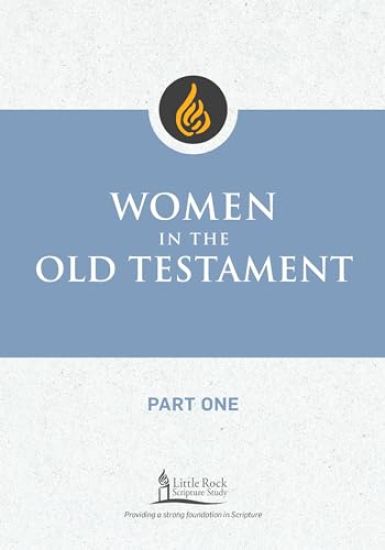
Women in the Old Testament, Part One

Women in the Old Testament, Part One

Irene Nowell

Liturgical Press
2024
pokkari
In Scripture we encounter God and come to know God’s people. Women in the Old Testament, Part One,takes you on a journey through Israel’s beginnings, Israel’s captivity and freedom, and Israel’s tribal period from the perspective of the earliest women of salvation history, such as Sarah, Deborah, and Ruth. Guided by the classic commentary of Irene Nowell, OSB, and the contemporary scholarship of Jaime Waters, enter into these ancient stories of women of the Bible that remain rich and relevant for believers today. Commentary, study and reflection questions, prayers, and access to online lectures are included. 5 lessons.
Women in the Old Testament, Part Two

Women in the Old Testament, Part Two

Irene Nowell

Liturgical Press
2024
pokkari
While we may know the Bible stories of Israel’s military leaders, kings, and prophets, we are often less familiar with the stories of the women who helped to establish a monarchy, defend Israel’s interests, and reflect God’s image in unique ways. In Women in the Old Testament, Part Two, a continuation of the classic commentary by Irene Nowell, OSB, in conversation with the contemporary voice of Jaime Waters, you will explore stories of women of the Bible such as Judith and Esther, whose complexities and gifts broke stereotypes and continue to reveal God to us. Commentary, study and reflection questions, prayers, and access to online lectures are included. 4 lessons.
Statebuilding in the Middle East and North Africa
This book examines the regime changes in Iraq and Libya to unravel the complexity of statebuilding in countries emerging from authoritarianism and conflict in the Middle East and North Africa (MENA) region. Framed in a comparative study of post-2003 Iraq and post-2011 Libya, the book examines changes in key state dimensions – representation and political authority, security, and wealth creation and distribution – in a continuous dialogue with past trajectories in these two countries. To grasp the nature and degree of these changes, the mechanisms of state formation are explored in light of a statebuilding agenda that, in its application from Iraq to Libya, has adapted to different political prerogatives. The analysis of Iraq and Libya serves the book’s ultimate goal to address the debate on statebuilding from a regional (MENA) perspective and to lay the ground for the study of other contemporary cases undergoing radical and violent process of changes, such as in Syria and Yemen. The book grapples with problems associated with the difficult process of transition from authoritarianism through conflict and towards peace by focusing on the state, its structure and function. The work is informed by a large quantity of materials collected over the past five years, including secondary literature, policy papers and reports, and semi-structured interviews with key informants on Iraq and Libya. This book will be of much interest to students of statebuilding, Middle Eastern studies, peace and conflict studies, and International Relations in general.
The Autocratic Parliament

The Autocratic Parliament

Irene Weipert-Fenner

Syracuse University Press
2020
sidottu
When protests erupted in response to the 2010 Egyptian parliament elections that were widely viewed as fraudulent, many wondered. Why now? Voters had never witnessed free and fair elections in the past, so why did these elicit such an outcry? To answer this question, Weipert-Fenner conducted the first study of politics in modern Egypt from a parliamentary perspective. Contrary to the prevailing opinion that autocratic parliaments are meaningless, token institutions, Weipert-Fenner's long-term analysis shows that parliament can be an indicator, catalyst, and agent of change in an authoritarian regime. Comparing parliamentary dynamics over decades, Weipert-Fenner demonstrates that autocratic parliaments can grow stronger within a given political system. They can also become contentious when norms regarding policies, political actors, and institutions are violated on a large scale and/or at a fast pace. Most importantly, a parliament can even turn against the executive when parliamentary rights are withdrawn or when widely shared norms are violated. These and other recurrent patterns of institutional relations identified in The Autocratic Parliament help explain long spans of stable, yet never stagnant, authoritarian rule in colonial and postcolonial periods alike, as well as the different types of regime change that Egypt has witnessed: those brought about by external intervention, by revolution, or by military coup.
The Autocratic Parliament

The Autocratic Parliament

Irene Weipert-Fenner

Syracuse University Press
2020
nidottu
When protests erupted in response to the 2010 Egyptian parliament elections that were widely viewed as fraudulent, many wondered. Why now? Voters had never witnessed free and fair elections in the past, so why did these elicit such an outcry? To answer this question, Weipert-Fenner conducted the first study of politics in modern Egypt from a parliamentary perspective. Contrary to the prevailing opinion that autocratic parliaments are meaningless, token institutions, Weipert-Fenner's long-term analysis shows that parliament can be an indicator, catalyst, and agent of change in an authoritarian regime. Comparing parliamentary dynamics over decades, Weipert-Fenner demonstrates that autocratic parliaments can grow stronger within a given political system. They can also become contentious when norms regarding policies, political actors, and institutions are violated on a large scale and/or at a fast pace. Most importantly, a parliament can even turn against the executive when parliamentary rights are withdrawn or when widely shared norms are violated. These and other recurrent patterns of institutional relations identified in The Autocratic Parliament help explain long spans of stable, yet never stagnant, authoritarian rule in colonial and postcolonial periods alike, as well as the different types of regime change that Egypt has witnessed: those brought about by external intervention, by revolution, or by military coup.
More Than Bread

More Than Bread

Irene Glasser

The University of Alabama Press
2010
nidottu
More Than Bread examines life in the dining room of the Tabernacle Soup Kitchen, located in Middle City in a New England state. What happens when one hundred guests, which include single mothers, drug addicts, alcoholics, the mentally ill, and the chronically unemployed, representing diverse age groups and ethnicities, come together in the dining room for several hours each day? Irene Glasser challenges the popular assumption that soup kitchens function primarily to provide food for the hungry by refocusing our attention on the social aspects of the dining room. The soup kitchen offers a model of a de-professionalized, nonclinical, nurturing setting that is in contrast to the traditional human services agency.
The Vanishing Hebrew Harlot

The Vanishing Hebrew Harlot

Irene E. Riegner

Peter Lang Publishing Inc
2009
sidottu
The Vanishing Hebrew Harlot is written with two objectives: First, to recover the core meaning of the Hebrew stem ZNH as a complex of non-Yahwist rituals, deities, institutions and beliefs prevalent in ancient Israel and Judah. With this understanding, the author assigns the translation value «participate in non-Yahwist religious praxis» to ZNH. The second objective is to understand how this core meaning came to be encrusted with promiscuity, prostitution, and detestable things, and, above all, with adultery, a capital offense, as well as with religious contamination and its destructive consequences. In the biblical texts, the stem ZNH, which encompasses a complex of non-Yahwist religious practices, operates in a powerful, adversarial relationship to the Yahwist complex of religious practices. Since non-Yahwist sacrifices signify the repudiation of Yahweh, non-Yahwist sacrifices arouse fierce opposition. The prophets Hosea and Jeremiah grasp this adversarial relationship and in their advocacy for Yahweh infuse non-Yahwist praxis with images of illicit sexual encounters and with the production of religious contamination that will lead to the devastation of Israel and Judah and to the exile of their inhabitants. The new structure of ZNH that emerges with Hosea and Jeremiah is one that re-visions ZNH activities by incorporating repugnant sexual imagery and devastating theological contamination into the core of non-Yahwist praxis. However, ZNH also has a sexual signification in contexts that are independent of and distinct from cultic contexts. The stem ZNH is examined in its Ancient Near Eastern environment, but the thrust of this research is the analysis of ZNH in its Hebrew textual environment using concepts from cognitive linguistics: network of associations, associated commonplaces, and blending.
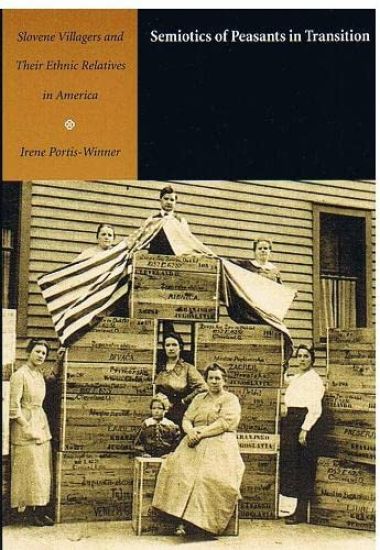
Semiotics of Peasants in Transition

Semiotics of Peasants in Transition

Irene Portis-Winner

Duke University Press
2002
sidottu
In Semiotics of Peasants in Transition Irene Portis-Winner examines the complexities of ethnic identity in a traditional Slovene village with unique ties to an American city. At once an investigation into a particular anthropological situation and a theoretical exploration of the semiotics of ethnic culture-in this case a culture permeated by transnational influences-Semiotics of Peasants in Transition describes the complex relationships that have existed between and among the villagers remaining in Slovenia and those who, throughout the nineteenth and twentieth centuries, emigrated to Cleveland, Ohio.Describing a process of continuous and enduring interaction between these geographically separate communities, Portis-Winner explains how, for instance, financial assistance from the emigrants enabled their Slovenian hometown to survive the economic depressions of the 1890s and 1930s. She also analyzes the extent to which memories, rituals, myths, and traditional activities from Slovenia have sustained their Cleveland relatives. The result is a unique anthropological investigation into the signifying practices of a strongly cohesive-yet geographically split-ethnic group, as well as an illuminating application of semiotic analyses to communities and the complex problems they face.
Semiotics of Peasants in Transition

Semiotics of Peasants in Transition

Irene Portis-Winner

Duke University Press
2002
pokkari
In Semiotics of Peasants in Transition Irene Portis-Winner examines the complexities of ethnic identity in a traditional Slovene village with unique ties to an American city. At once an investigation into a particular anthropological situation and a theoretical exploration of the semiotics of ethnic culture-in this case a culture permeated by transnational influences-Semiotics of Peasants in Transition describes the complex relationships that have existed between and among the villagers remaining in Slovenia and those who, throughout the nineteenth and twentieth centuries, emigrated to Cleveland, Ohio.Describing a process of continuous and enduring interaction between these geographically separate communities, Portis-Winner explains how, for instance, financial assistance from the emigrants enabled their Slovenian hometown to survive the economic depressions of the 1890s and 1930s. She also analyzes the extent to which memories, rituals, myths, and traditional activities from Slovenia have sustained their Cleveland relatives. The result is a unique anthropological investigation into the signifying practices of a strongly cohesive-yet geographically split-ethnic group, as well as an illuminating application of semiotic analyses to communities and the complex problems they face.
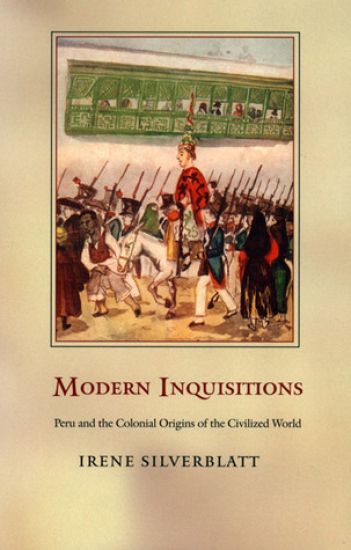
Modern Inquisitions

Modern Inquisitions

Irene Silverblatt

Duke University Press
2004
sidottu
Trying to understand how “civilized” people could embrace fascism, Hannah Arendt searched for a precedent in modern Western history. She found it in nineteenth-century colonialism, with its mix of bureaucratic rule, racial superiority, and appeals to rationality. Modern Inquisitions takes Arendt’s insights into the barbaric underside of Western civilization and moves them back to the sixteenth century and seventeenth, when Spanish colonialism dominated the globe. Irene Silverblatt describes how the modern world developed in tandem with Spanish imperialism and argues that key characteristics of the modern state are evident in the workings of the Inquisition. Her analysis of the tribunal’s persecution of women and men in colonial Peru illuminates modernity’s intricate “dance of bureaucracy and race.”Drawing on extensive research in Peruvian and Spanish archives, Silverblatt uses church records, evangelizing sermons, and missionary guides to explore how the emerging modern world was built, experienced, and understood by colonists, native peoples, and Inquisition officials: Early missionaries preached about world history and about the races and nations that inhabited the globe; Inquisitors, able bureaucrats, defined who was a legitimate Spaniard as they executed heretics for “reasons of state”; the “stained blood” of Indians, blacks, and descendants of Jews and Moors was said to cause their deficient character; and native Peruvians began to call themselves Indian. In dialogue with Arendt and other theorists of modernity, Silverblatt shows that the modern world’s underside is tied to its origins in colonialism and to its capacity to rationalize violence. Modern Inquisitions forces the reader to confront the idea that the Inquisition was not only a product of the modern world of the sixteenth and seventeenth centuries, but party to the creation of the civilized world we know today.
Modern Inquisitions

Modern Inquisitions

Irene Silverblatt

Duke University Press
2004
pokkari
Trying to understand how “civilized” people could embrace fascism, Hannah Arendt searched for a precedent in modern Western history. She found it in nineteenth-century colonialism, with its mix of bureaucratic rule, racial superiority, and appeals to rationality. Modern Inquisitions takes Arendt’s insights into the barbaric underside of Western civilization and moves them back to the sixteenth century and seventeenth, when Spanish colonialism dominated the globe. Irene Silverblatt describes how the modern world developed in tandem with Spanish imperialism and argues that key characteristics of the modern state are evident in the workings of the Inquisition. Her analysis of the tribunal’s persecution of women and men in colonial Peru illuminates modernity’s intricate “dance of bureaucracy and race.”Drawing on extensive research in Peruvian and Spanish archives, Silverblatt uses church records, evangelizing sermons, and missionary guides to explore how the emerging modern world was built, experienced, and understood by colonists, native peoples, and Inquisition officials: Early missionaries preached about world history and about the races and nations that inhabited the globe; Inquisitors, able bureaucrats, defined who was a legitimate Spaniard as they executed heretics for “reasons of state”; the “stained blood” of Indians, blacks, and descendants of Jews and Moors was said to cause their deficient character; and native Peruvians began to call themselves Indian. In dialogue with Arendt and other theorists of modernity, Silverblatt shows that the modern world’s underside is tied to its origins in colonialism and to its capacity to rationalize violence. Modern Inquisitions forces the reader to confront the idea that the Inquisition was not only a product of the modern world of the sixteenth and seventeenth centuries, but party to the creation of the civilized world we know today.
Six o'Clock Mine Report

Six o'Clock Mine Report

Irene McKinney

University of Pittsburgh Press
1989
nidottu
The speaker in Irene McKinney's poems is most often alone, sitting at the side of a stream, or standing at her own chosen gravesite in the Appalachian mountains, and the meditations spoken out of this essential solitude are powerfully clear, witty, and wide-ranging in content and tone. The center sequence of poems in the Emily Dickinson persona explores and magnifies that great and enigmatic figure. The poems are firmly grounded in concern for the ways in which the elemental powers are at work in the earth and in us: on the surface of our lives, and deeper in the underworld of the coalmines. In McKinney's poems, the human world is never seen as separate from the natural one.