Kirjojen hintavertailu. Mukana 11 244 527 kirjaa ja 12 kauppaa.

Kirjahaku

Etsi kirjoja tekijän nimen, kirjan nimen tai ISBN:n perusteella.

1000 tulosta hakusanalla Jeff Stapleton

Respect and Loathing in American Democracy

Respect and Loathing in American Democracy

Jeff Spinner-Halev; Elizabeth Theiss-Morse

THE UNIVERSITY OF CHICAGO PRESS
2024
nidottu
A deep examination of why respect is in short supply in politics today and why it matters. Respect is in trouble in the United States. Many Americans believe respecting others is a necessary virtue, yet many struggle to respect opposing partisans. Surprisingly, it is liberal citizens, who hold respect as central to their view of democratic equality, who often have difficulty granting respect to others. Drawing on evidence from national surveys, focus groups, survey experiments, and the views of political theorists, Jeff Spinner-Halev and Elizabeth Theiss-Morse explain why this is and why respect is vital to—and yet so lacking in—contemporary US politics. Respect and Loathing in American Democracy argues that liberals and conservatives are less divided than many believe, but alienate one another because they moralize different issues. Liberals moralize social justice, conservatives champion national solidarity, and this worldview divide keeps them at odds. Respect is both far-reaching and vital, yet it is much harder to grant than many recognize, partly because of the unseen tension between respect, social justice, and national solidarity. Respect and Loathing in American Democracy proposes a path forward that, while challenging, is far from impossible for citizens to traverse.
John Gavin

John Gavin

Jeff Hopkins

Tellwell Talent
2024
pokkari
On the sixth of April, 1844, John Gavin was the first European hanged in the Swan River Colony. He was fifteen years old. His crime, trial, and execution still stir controversy and passions almost one hundred and eighty years after the event.John Gavin was a convicted street thief in Birmingham and became incarcerated at Parkhurst Prison on the Isle of Wight. In 1843 he made the voyage to the Swan River Colony on the barque the 'Shepherd'. Subsequently he became an assigned servant on the Pollard family farm in North Dandalup.Significant personalities like Guardian John Schoales, Barrister Richard Nash, and the Reverend George King had important roles to play in the Parkhurst apprentice's life.John Gavin's life spanned approximately five thousand, five hundred days. The one hundred and sixty-three days he spent in the Swan River Colony have been reimagined here.
Dad's Daily Quotes

Dad's Daily Quotes

Jeff Konemann

Tellwell Talent
2024
pokkari
"Experience is a hard teacher because she gives the test first and the lesson afterwards". Vernon Sanders Law. Like all of us, Jeff has learned from the tests and lessons that life throws at us and that we all have to navigate on a daily basis. Dad's Daily Quotes is the first volume of daily musings and thoughts that Jeff sent to his children by email when they were growing up to ensure he got the first word of the day when his children checked their email accounts. Subscribers from around the world joined in to also gain some benefit from Jeff 's thoughts from time to time. All of Jeff 's children are now married and this first Volume was constructed by his children for them all to enjoy and read once (or maybe twice ) again. You will find DDQ Vol 1 will be illuminating and instructive in your own life as you take this journey of life. As Jeff would say "take the test and get the lesson". I dare you.
Dad's Daily Quotes

Dad's Daily Quotes

Jeff Konemann

Tellwell Talent
2024
sidottu
"Experience is a hard teacher because she gives the test first and the lesson afterwards". Vernon Sanders Law. Like all of us, Jeff has learned from the tests and lessons that life throws at us and that we all have to navigate on a daily basis. Dad's Daily Quotes is the first volume of daily musings and thoughts that Jeff sent to his children by email when they were growing up to ensure he got the first word of the day when his children checked their email accounts. Subscribers from around the world joined in to also gain some benefit from Jeff 's thoughts from time to time. All of Jeff 's children are now married and this first Volume was constructed by his children for them all to enjoy and read once (or maybe twice ) again. You will find DDQ Vol 1 will be illuminating and instructive in your own life as you take this journey of life. As Jeff would say "take the test and get the lesson". I dare you.
Health Mind Soul

Health Mind Soul

Jeff Simpson; Tara Clements

Tellwell Talent
2020
pokkari
Are you ready to make real-life changes? Have you had your share of struggles? We continue to repeat the same mistakes when we're satisfied with ordinary. Learn to live life in the present and strive for greatness. This book is about finding the best version of YOU. Follow these 8 steps in search of what makes you great. It's time to "Dream Big." Life is too short for anything less.
The Legend of the Frenchman River Valley
Two things are constant in the Frenchman River Valley: excellent farming and excellent hockey players-hockey players so good that many of them have made their way to the professional level and had or have excellent careers. Jake has a burning question about this incredible success: could it be due to the rugged lifestyle of a farmer and the rigours of farm life, or could it be The Legend of the Frenchman River Valley at work? Join Jake and his friends as he seeks to find the answer to this burning question.The Legend of the Frenchman River Valley leads you on an exciting journey of discovery and adventure. See how Jake and his friends learn about inclusion and tolerance as they grow together to be an incredible group of young hockey players.
Dying to Live

Dying to Live

Jeff Watson

Tellwell Talent
2021
pokkari
Maslow's hierarchy defined the literal physical and base esoteric needs which every human on average needs to satisfy in order to remain alive. As a species, we have grown and contracted, evolved and devolved, generally in pursuit of those basic requirements. As civilizations or epochs approach their zeniths, the balance of needs shifts and skews, since our base-level needs are often no longer a factor in our day-to-day lives. As life becomes easier-as we become more successful collectively-the original mechanisms for existential validation and purpose generation recede and we are often left struggling to find meaning in a world that no longer causes us to suffer as we used to.Enter the modern Western democratic world, a society experiencing a peak like few others have before it, and a time of unparalleled technological growth and progress.In a period when we have never had so much available to us-food, water, shelter, education, mobility, medicine, intelligent machines, universal access to knowledge, constant entertainment, and on average nearly no individual existential threats- why is it that we've never been more at war with ourselves and each other? How is it that we are arguably the most divided, militarized, radicalized, ideologically captured, and outcome-independent we have ever been as a species?Dying to Live explores some of the root causes of our societal entropy, existential malaise, and the divisive ideological extremism that permeates nearly every facet of our lives. We explore how the nexus of a type of "novel hierarchy of needs" that exists in an advanced civilization plays a central role in explaining, causing, or solving the crises we find ourselves in. Humans need certain things to simply remain biologically alive, but in the twilight of an apex civilization, we are only now beginning to reckon with what we need to truly live. Drawing on insights from his childhood, military service, and central position within the bleeding-edge technologies of our time, author Jeff Watson seeks not to tell you what or how to think, but to challenge you to introspectively analyze your life to better understand why you think, believe, say, and do what you do. As we approach cataclysmic levels of disunity and hatred within our societies, Watson offers a glimpse into the unconscious mechanisms that drive us into ever more tribal and isolated places. The hope for this book is to shine a light on the existential deficiencies and proclivities of modern humans in order to allow for de-escalation and deradicalization. This is not about a specific ideology, but rather the mechanism through which we become vulnerable and ultimately captured and radicalized by different ideologies.There is so little that actually divides us, and yet those tiny differences, real or imagined, dominate our realities in ways that may soon be unrecoverable.
Dying to Live

Dying to Live

Jeff Watson

Tellwell Talent
2021
sidottu
Maslow's hierarchy defined the literal physical and base esoteric needs which every human on average needs to satisfy in order to remain alive. As a species, we have grown and contracted, evolved and devolved, generally in pursuit of those basic requirements. As civilizations or epochs approach their zeniths, the balance of needs shifts and skews, since our base-level needs are often no longer a factor in our day-to-day lives. As life becomes easier-as we become more successful collectively-the original mechanisms for existential validation and purpose generation recede and we are often left struggling to find meaning in a world that no longer causes us to suffer as we used to.Enter the modern Western democratic world, a society experiencing a peak like few others have before it, and a time of unparalleled technological growth and progress.In a period when we have never had so much available to us-food, water, shelter, education, mobility, medicine, intelligent machines, universal access to knowledge, constant entertainment, and on average nearly no individual existential threats- why is it that we've never been more at war with ourselves and each other? How is it that we are arguably the most divided, militarized, radicalized, ideologically captured, and outcome-independent we have ever been as a species?Dying to Live explores some of the root causes of our societal entropy, existential malaise, and the divisive ideological extremism that permeates nearly every facet of our lives. We explore how the nexus of a type of "novel hierarchy of needs" that exists in an advanced civilization plays a central role in explaining, causing, or solving the crises we find ourselves in. Humans need certain things to simply remain biologically alive, but in the twilight of an apex civilization, we are only now beginning to reckon with what we need to truly live. Drawing on insights from his childhood, military service, and central position within the bleeding-edge technologies of our time, author Jeff Watson seeks not to tell you what or how to think, but to challenge you to introspectively analyze your life to better understand why you think, believe, say, and do what you do. As we approach cataclysmic levels of disunity and hatred within our societies, Watson offers a glimpse into the unconscious mechanisms that drive us into ever more tribal and isolated places. The hope for this book is to shine a light on the existential deficiencies and proclivities of modern humans in order to allow for de-escalation and deradicalization. This is not about a specific ideology, but rather the mechanism through which we become vulnerable and ultimately captured and radicalized by different ideologies.There is so little that actually divides us, and yet those tiny differences, real or imagined, dominate our realities in ways that may soon be unrecoverable.
The Twisted Ladder

The Twisted Ladder

Jeff Hopkins

TellWell Press
2025
pokkari
Two young men, Kit Ganderton and Dougie Bourgore, born over one hundred and seven years apart, face the vicissitudes of life without knowing what connects them. Claris Feutrill tries to establish the relationship using DNA traces and genealogy research. Warwick Faulkner strives to get Kit out of trouble, while Detective Inspector Bethany Collins realises sometimes you have 'to measure people in'.Discovering Kit and Dougie's shared traits is a revelation for their family, friends, and supporters. The unravelling of this story proves to be complex and confusing, reflecting the DNA double helix, sometimes referred to as the 'twisted ladder'.
Human Resource Development

Human Resource Development

Jeff Gold; Rick Holden; Paul Iles

Red Globe Press
2013
nidottu
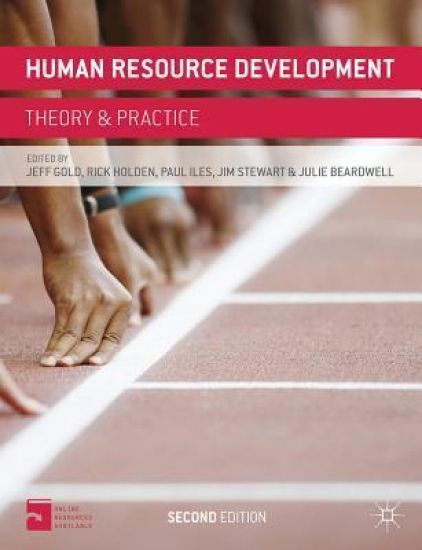
This core textbook, edited by five leading scholars of the subject, provides a comprehensive overview of the key topics, debates and themes in this increasingly important field. Balancing research-led theory with industry best-practice to provide students with a definitive overview of HRD, the book draws on the international experience of its authors to tackle topics as diverse as leadership and managing development, change and diversity, workplace learning, and graduate employability. The book’s approachable yet thorough writing style and lively presentation helps students to understand the topic from a critical perspective while also demonstrating how HRD plays out in reality.This is an essential textbook for undergraduate, postgraduate and MBA students of Human Resource Development on HRD or Business and Management degree programmes.
The Sounds of Commerce

The Sounds of Commerce

Jeff Smith

Columbia University Press
1998
pokkari
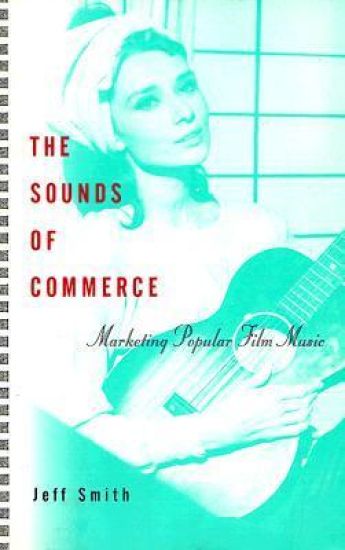
The Sounds of Commerce is the first book to present a detailed historical analysis of popular music in American film, from the era of sheet music sales, to that of orchestrated pop records by Henry Mancini and Ennio Morricone in the 1960* to the MTV-ready pop songs that occupy soundtrack CDs of today. Jeff Smith's landmark exploration of film and music cross-promotion investigates the combination of historical, economic, and aesthetic factors that brought about the rise of popular music in the movies.Smith employs a sophisticated yet accessible fusion of musicology, film theory, and social history. In one chapter, a musicological unpacking of the theme song from Goldfinger is used to show how the repeated refrain developed massive cultural appeal, leading to huge singles sales and a ubiquitous tune that most Americans can recognize several decades after the film's release. Other chapters look at how the film and music industries became so heavily intertwined, how soundtrack music progressed from orchestral score to pop song, and how certain soundtracks today become chart successes while their accompanying films generate scant box-office interest.Throughout the text, Smith persuasively argues that the popular film score has been as successful as its classical predecessor at enhancing emotions and moods, cueing characters and settings, and signifying psychological states and points of view. With The Sounds of Commerce, he challenges film music scholarship to recognize the significance of popular music in modern film.
The Manhattan Project

The Manhattan Project

Jeff Hughes

Columbia University Press
2003
sidottu
Launched in 1942, the Manhattan Project was a well-funded, secret effort by the United States, the United Kingdom, and Canada to develop an atomic bomb before the Nazis. The results-the bombs named "Little Boy" and "Fat Man"-were dropped on Hiroshima and Nagasaki in August of 1945. A vast state within a state, the Manhattan Project employed 130,000 people and cost the United States and its allies 2 billion dollars, but its contribution to science as a prestigious investment was invaluable. After the bombs were dropped, states began allocating unprecedented funds for scientific research, leading to the establishment of many of twentieth century's major research institutions. Yet the union of science, industry, and the military did not start with the development of the atomic bomb; World War II only deepened the relationship. This absorbing history revisits the interactions among science, the national interest, and public and private funding that was initiated in World War I and flourished in WWII. It then follows the Manhattan Project from inception to dissolution, describing the primary influences that helped execute the world's first successful plan for nuclear research and tracing the lineages of modern national nuclear agencies back to their source.
The Manhattan Project

The Manhattan Project

Jeff Hughes

Columbia University Press
2016
pokkari
Launched in 1942, the Manhattan Project was a well-funded, secret effort by the United States, the United Kingdom, and Canada to develop an atomic bomb before the Nazis. The results—the bombs named "Little Boy" and "Fat Man"—were dropped on Hiroshima and Nagasaki in August of 1945.A vast state within a state, the Manhattan Project employed 130,000 people and cost the United States and its allies 2 billion dollars, but its contribution to science as a prestigious investment was invaluable. After the bombs were dropped, states began allocating unprecedented funds for scientific research, leading to the establishment of many of twentieth century's major research institutions. Yet the union of science, industry, and the military did not start with the development of the atomic bomb; World War II only deepened the relationship. This absorbing history revisits the interactions among science, the national interest, and public and private funding that was initiated in World War I and flourished in WWII. It then follows the Manhattan Project from inception to dissolution, describing the primary influences that helped execute the world's first successful plan for nuclear research and tracing the lineages of modern national nuclear agencies back to their source.
Post-Fordist Cinema

Post-Fordist Cinema

Jeff Menne

Columbia University Press
2019
sidottu
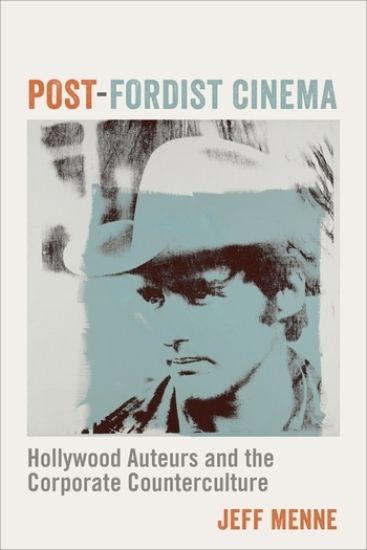
The New Hollywood boom of the late 1960s and 1970s is celebrated as a time when maverick directors bucked the system. Against the backdrop of counterculture sensibilities and the prominence of auteur theory, New Hollywood directors such as Robert Altman and Francis Ford Coppola seemed to embody creative individualism. In Post-Fordist Cinema, Jeff Menne rewrites the history of this period, arguing that auteur theory served to reconcile directors to Hollywood’s corporate project.Menne traces the surprising affinities between auteur theory and management gurus such as Peter Drucker, who envisioned a more open and flexible corporate style. In founding production companies, New Hollywood filmmakers took part in the creation of new corporate models that emphasized entrepreneurial creativity. For firms such as Kirk Douglas’s Bryna Productions, Altman’s Lion’s Gate Films, the Zanuck-Brown Company, and BBS Productions, the counterculture ethos limbered up the studio system’s sclerotic production process—with striking parallels to how management theory conceived of the role of the individual within the firm. Menne offers insightful readings of how films such as Lonely Are the Brave, Brewster McCloud, Jaws, and The King of Marvin Gardens narrate the conditions in which they were created, depicting shifting notions of work and corporate structure. While auteur theory allowed directors to cast themselves as independent creators, Menne argues that its most consequential impact came as a management doctrine. An ambitious rethinking of New Hollywood, Post-Fordist Cinema sheds new light on the cultural myth of the great director and the birth of the “creative economy.”
Post-Fordist Cinema

Post-Fordist Cinema

Jeff Menne

Columbia University Press
2019
pokkari
The New Hollywood boom of the late 1960s and 1970s is celebrated as a time when maverick directors bucked the system. Against the backdrop of counterculture sensibilities and the prominence of auteur theory, New Hollywood directors such as Robert Altman and Francis Ford Coppola seemed to embody creative individualism. In Post-Fordist Cinema, Jeff Menne rewrites the history of this period, arguing that auteur theory served to reconcile directors to Hollywood’s corporate project.Menne traces the surprising affinities between auteur theory and management gurus such as Peter Drucker, who envisioned a more open and flexible corporate style. In founding production companies, New Hollywood filmmakers took part in the creation of new corporate models that emphasized entrepreneurial creativity. For firms such as Kirk Douglas’s Bryna Productions, Altman’s Lion’s Gate Films, the Zanuck-Brown Company, and BBS Productions, the counterculture ethos limbered up the studio system’s sclerotic production process—with striking parallels to how management theory conceived of the role of the individual within the firm. Menne offers insightful readings of how films such as Lonely Are the Brave, Brewster McCloud, Jaws, and The King of Marvin Gardens narrate the conditions in which they were created, depicting shifting notions of work and corporate structure. While auteur theory allowed directors to cast themselves as independent creators, Menne argues that its most consequential impact came as a management doctrine. An ambitious rethinking of New Hollywood, Post-Fordist Cinema sheds new light on the cultural myth of the great director and the birth of the “creative economy.”
The Black Circle

The Black Circle

Jeff Love

Columbia University Press
2018
sidottu
Alexandre Kojève (1902–1968) was an important and provocative thinker. Born in Russia, he spent most of his life in France. His interpretation of Hegel and his notorious declaration that history had come to an end exerted great influence on French thinkers and writers such as Raymond Aron, Georges Bataille, Maurice Merleau-Ponty, Jacques Lacan, and Raymond Queneau. An unorthodox Marxist, he was a critic of Martin Heidegger and interlocutor of Leo Strauss who played a significant role in establishing the European Economic Community; a polyglot with many unusual interests, he wrote works, mostly unpublished in his lifetime, on quantum physics, the problem of the infinite, Buddhism, atheism, and Vassily Kandinsky’s paintings.In The Black Circle, Jeff Love reinterprets Kojève’s works, showing him to be an essential thinker who challenged modern society and its valuation of individuality, self-interest, and freedom from death. Emphasizing Kojève’s neglected Russian roots, The Black Circle puts him in the context of the late-nineteenth- and early-twentieth-century Russian debates over the proper ends of human life. Love explores notions of perfection, freedom, and finality in Kojève’s account of Hegel and his neglected later works, clarifying Kojève’s emancipatory thinking and the meaning of the oft-misinterpreted “end of history.” Combining intellectual history, close textual analysis, and philosophy, The Black Circle reveals Kojève’s thought as a profound critique of capitalist individualism and a timely meditation on human freedom.
The Black Circle

The Black Circle

Jeff Love

Columbia University Press
2021
pokkari
Alexandre Kojève (1902–1968) was an important and provocative thinker. Born in Russia, he spent most of his life in France. His interpretation of Hegel and his notorious declaration that history had come to an end exerted great influence on French thinkers and writers such as Raymond Aron, Georges Bataille, Maurice Merleau-Ponty, Jacques Lacan, and Raymond Queneau. An unorthodox Marxist, he was a critic of Martin Heidegger and interlocutor of Leo Strauss who played a significant role in establishing the European Economic Community; a polyglot with many unusual interests, he wrote works, mostly unpublished in his lifetime, on quantum physics, the problem of the infinite, Buddhism, atheism, and Vassily Kandinsky’s paintings.In The Black Circle, Jeff Love reinterprets Kojève’s works, showing him to be an essential thinker who challenged modern society and its valuation of individuality, self-interest, and freedom from death. Emphasizing Kojève’s neglected Russian roots, The Black Circle puts him in the context of the late-nineteenth- and early-twentieth-century Russian debates over the proper ends of human life. Love explores notions of perfection, freedom, and finality in Kojève’s account of Hegel and his neglected later works, clarifying Kojève’s emancipatory thinking and the meaning of the oft-misinterpreted “end of history.” Combining intellectual history, close textual analysis, and philosophy, The Black Circle reveals Kojève’s thought as a profound critique of capitalist individualism and a timely meditation on human freedom.
Rethinking Readiness

Rethinking Readiness

Jeff Schlegelmilch; Irwin Redlener

Columbia University Press
2020
sidottu
As human society continues to develop, we have increased the risk of large-scale disasters. From health care to infrastructure to national security, systems designed to keep us safe have also heightened the potential for catastrophe. The constant pressure of climate change, geopolitical conflict, and our tendency to ignore what is hard to grasp exacerbates potential dangers. How can we prepare for and prevent the twenty-first-century disasters on the horizon?Rethinking Readiness offers an expert introduction to human-made threats and vulnerabilities, with a focus on opportunities to reimagine how we approach disaster preparedness. Jeff Schlegelmilch identifies and explores the most critical threats facing the world today, detailing the dangers of pandemics, climate change, infrastructure collapse, cyberattacks, and nuclear conflict. Drawing on the latest research from leading experts, he provides an accessible overview of the causes and potential effects of these looming megadisasters. The book highlights the potential for building resilient, adaptable, and sustainable systems so that we can be better prepared to respond to and recover from future crises. Thoroughly grounded in scientific and policy expertise, Rethinking Readiness is an essential guide to this century’s biggest challenges in disaster management.
Rethinking Readiness

Rethinking Readiness

Jeff Schlegelmilch; Irwin Redlener

Columbia University Press
2020
pokkari
As human society continues to develop, we have increased the risk of large-scale disasters. From health care to infrastructure to national security, systems designed to keep us safe have also heightened the potential for catastrophe. The constant pressure of climate change, geopolitical conflict, and our tendency to ignore what is hard to grasp exacerbates potential dangers. How can we prepare for and prevent the twenty-first-century disasters on the horizon?Rethinking Readiness offers an expert introduction to human-made threats and vulnerabilities, with a focus on opportunities to reimagine how we approach disaster preparedness. Jeff Schlegelmilch identifies and explores the most critical threats facing the world today, detailing the dangers of pandemics, climate change, infrastructure collapse, cyberattacks, and nuclear conflict. Drawing on the latest research from leading experts, he provides an accessible overview of the causes and potential effects of these looming megadisasters. The book highlights the potential for building resilient, adaptable, and sustainable systems so that we can be better prepared to respond to and recover from future crises. Thoroughly grounded in scientific and policy expertise, Rethinking Readiness is an essential guide to this century’s biggest challenges in disaster management.
Catastrophic Incentives

Catastrophic Incentives

Jeff Schlegelmilch; Ellen Carlin

Columbia University Press
2023
sidottu
Silver Award Winner, 2024 Nonfiction Book AwardsSocieties are vulnerable to any number of potential disasters: earthquakes, hurricanes, infectious diseases, terrorist attacks, and many others. Even though the dangers are often clear, there is a persistent pattern of inadequate preparation and a failure to learn from experience. Before disasters, institutions pay insufficient attention to risk; in the aftermath, even when the lack of preparation led to a flawed response, the focus shifts to patching holes instead of addressing the underlying problems.Examining twenty years of disasters from 9/11 to COVID-19, Jeff Schlegelmilch and Ellen Carlin show how flawed incentive structures make the world more vulnerable when catastrophe strikes. They explore how governments, the private sector, nonprofits, and academia behave before, during, and after crises, arguing that standard operational and business models have produced dysfunction. Catastrophic Incentives reveals troubling patterns about what does and does not matter to the institutions that are responsible for dealing with disasters. The short-termism of electoral politics and corporate decision making, the funding structure of nonprofits, and the institutional dynamics shaping academic research have all contributed to a failure to build resilience.Offering a comprehensive and incisive look at disaster governance, Catastrophic Incentives provides timely recommendations for reimagining systems and institutions so that they are better equipped to manage twenty-first-century threats.